
Home Blog Page 184

The Pros And Cons Of Having A Pet Friendly Apartment Or Rental Property

The Pros And Cons Of Having A Pet Friendly Apartment Or Rental

To have a pet friendly apartment, or not, is the maintenance checkup this week provided by Keepe.

As a landlord, one of the important decisions you have to make is outlining a pet policy for your property and whether you want to have a pet friendly apartment or rental.

Pets can cause damage to a property and disturb neighboring tenants, but are the pros worth it?

Here are the top pros and cons landlords should review when developing a pet policy.

4 pros for having a pet friendly apartment

Charge Higher Rent: If other rental properties in your area are not pet-friendly, you might be able to charge more for pet fees. Higher rent premiums can work in your favor long-term.

Happier Tenants: Animals can help reduce stress and be a great companion for people of all ages. Having a pet around can make your property feel more like a home for tenants.

Increase Renewals: Decrease tenant turnover and vacancy by investing in a pet-friendly property. Due to the scarcity of pet-friendly rentals, your property can remain competitive by choosing to allow pets.

Larger Tenant Pool: If you make your property pet-friendly, you will have more interested tenants interested due to demand for pet-friendly rental housing. Similarly, responsible pet owners often make suitable tenants.

3 cons of having a pet friendly apartment

The Pros And Cons Of Having A Pet Friendly Apartment Or Rental
Having a pet friendly apartment can help bring in a larger pool of renters.

Property Damage: Animals may damage wood flooring and carpets. Pet owners may not be very responsible at cleaning up after their pets which can lead to property damage throughout the building. Prevent this by screening pets for behavior prior to accepting a pet-owning tenants.

Odor: Pets that are not properly groomed or clean can spread unwanted pet odors throughout the building. Other tenants in the building might be allergic or move when an animal odor becomes overpowering and unpleasant.

Liability: Unauthorized pets at your property can cause a huge amount of damage towards your property and other tenants on your property if the pet bites or attacks others. With a pet policy, pet damage is covered through a pet deposit and liability coverage is covered through renter’s insurance. Without a clear pet policy, all of these potential issues will be the property owners’ responsibility.

 Know the laws on assistance animals, service and emotional support animals

Remember know the law and stay out of trouble as  assistance animals, service and emotional support animals are not “pets” and do not fall under a typical pet policy. Landlords are required to make reasonable accommodation for tenants with these animals.

Three laws relate to rental housing and service and assistance animals:

  • The Fair Housing Act (FHA)
  • Section 504 of the Rehabilitation Act of 1973 (Section 504)
  • The Americans with Disabilities Act (ADA

The FHA and Section 504 use “assistance animal” as a broad term to describe any animal that works, provides assistance, or performs tasks for the benefit of a person with a disability or provides emotional support that alleviates one or more symptoms or effects of a person’s disability.

Under the FHA and Section 504, service animals, emotional support animals, and companion animals are all considered assistance animals. An assistance animal may be any type of animal and is not required to have specific training.

 Other recent rental property maintenance Keepe posts you may have missed:

4 Outdoor Flooring Options For Your Rentals

20 Easy, Affordable Maintenance Projects To Update Your Rentals

7 Tech Gadgets For A Safer And More Efficient Rental Property

5 Maintenance Tips For Long-Lasting Rental Carpet Flooring

Is The Water Heater At Your Rental Property Ready For The Big One?

7 Types Of Kitchen Countertops For Your Apartments

Which Cooktop Is Best For Your Rental Property?

A Guide To 4 Types Of Flat Roof Systems

6 Ways To Trash Your Apartment Waste Management Issues

About Keepe:

Keepe is an on-demand maintenance solution for property managers and independent landlords. The company makes a network of hundreds of independent contractors and handymen available for maintenance projects at rental properties. Keepe is available in the Greater Seattle area, Greater Phoenix area, San Francisco Bay area, Portland, San Diego and is coming soon to an area near you. Learn more about Keepe at https://www.keepe.com

 

Tacoma City Council Passes Rental Housing Code Ordinance Restricting Landlords

Tacoma rental housing code ordinance

The Tacoma City Council has passed a new Rental Housing Code ordinance that sets out new rules for landlords who want to do extensive renovation of apartments and need to move tenants out.

The Rental Housing Code outlines notice requirements including:
• 120-day notice to vacate and relocation assistance for low-income tenants authorized by RCW 59.18.440, when a landlord intends to change the use, substantially rehabilitate, or demolish a dwelling unit.
• 60-day notice to vacate for no-cause eviction
• 60-day notice requirement for rent increase

The new Rental Housing Code also provides a requirement that landlords:

  • Distribute certain information
  • Prohibits retaliation
  • Allows installment payments for various deposits and fees
  • Provides authority to enforce violations, as well as codification of relocation assistance when the City declares a building uninhabitable.

The Rental Housing Code, which passed unanimously on November 20, permanently replaces the City’s temporary tenant protections that will sunset on January 31, 2019.

“In recent months, we have heard the stories of Tacoma residents whose lives were upended and put into crisis by eviction notices,” Mayor Victoria Woodards said in a release.

“… with the adoption of the rental housing code, we are taking a step to provide stability for renters in an increasingly expensive and tumultuous housing market,” she said.

The city said in the release “the Rental Housing Code was created through collaborative process that listened to both landlords and tenants to determine how to create policy that helps address protection needs while continuing to make Tacoma a place businesses want to operate.”

Some push back by landlords

However there was some push back by some landlords in Tacoma – some told city council the government overreach in the new ordinance could force property owners to sell their buildings and abandon their job as landlords altogether.

“I am proud the City has taken steps to prevent something like what happened at the Tiki apartments from happening again, and I appreciate the hard work from staff, landlords, and tenants that went into crafting these regulations,” Council Member Keith Blocker said in the release.

The “Notice to Increase Rent” portion of the ordinance will be effective 10 days after the publication of the ordinance, but no penalties will be issued before February 1, 2019 when the full ordinance goes into effect.

Resources:

Tacoma City Council Approves New Rental Housing Code

Tacoma passes sweeping tenant’s rights ordinance

Tacoma renters’ rights just got stronger


How to Attract Eco-Conscious Tenants With Organic Decor Elements

How to Attract Eco-Conscious Tenants With Organic Decor Elements

If you are managing properties, your goal is to try and put together a liveable space people will actually want to rent and knowing what eco-conscious tenants want can be important.

However, before you start, you should first try to determine your target audience, so to speak. Today, the majority of renters are, of course, young people who are just starting out in the world.

So, it’s important to keep in mind that these young people are much more eco-conscious than the previous generations and they have fully embraced the green mentality, implementing it in every single aspect of their lives. That, of course, means that you should offer them a chance to rent out green living units.

Greening up your rentals will not only boost you on the market, but it will also make your renters happier as they will finally get the chance to rent out a space that perfectly reflects their lifestyles. If you’re not quite sure how to do that, check out these tips.

Bring the nature indoors

Aside from making sure that you equip your properties with eco-friendly and energy-efficient appliances, which will only work to your advantage, you should also incorporate natural elements in your interior design as much as possible.

Natural materials such as wood, stone, brick, bamboo, jute, as well as various types of greenery, have the power to instantly transform any space, making it look and feel more soothing, cosier and homier. Therefore, implement as many of these elements as you can in your interior design, and here’s how to do it properly:

Create a statement wall with bricks

How to Attract Eco-Conscious Tenants With Organic Decor Elements
Create a statement with a brick wall and attract eco-conscious tenants. Photos credit KatarzynaBialasiewicz via istockphoto.com

An exposed brick wall looks simply stunning.

Depending on the color of the brick you decide to use, you can pair it up with virtually any style. Use basic grey brick to make a statement wall in your monochrome living room, red brick if the living room style is a bit more rustic and yellow brick for an eclectic or industrial vibe. Alternatively, for a true Scandi vibe, you can even paint the bricks white. No matter which style you opt to go for, an exposed brick wall will work as an amazing backdrop, enhancing the natural vibe in the room.

Use wood in every room

Wood is one of the most versatile natural elements.

The raw beauty of wood makes it a highly sought-after element in the world of interior design. Wood comes in many finishes – from raw to high-gloss – which leaves plenty of room for imagination. So, don’t hide your wooden floors but expose them and make them work in your advantage. Also, consider adding a wooden wall panel in the bathroom to boost the spa-like feel. Finally, by using salvaged or reclaimed wood, you will add more character to your interior making it more sustainable at the same time.

Pay attention to rugs

Rugs are a somewhat controversial interior design element – people usually either love them or hate them – but that’s because a lot of people make the mistake of choosing the wrong kind of rug for their interiors.

The thing is that a good rug acts as the “it” element in any design and has the power to instantly boost any interior. Therefore, when choosing a floor covering option for your rental, you should check out natural jute rugs, not only to additionally accentuate the eco-friendly vibe in the space, but also to make cleaning and maintenance super easy.

Fill the space up with greenery

What better way to make the space greener than to actually fill it with greenery.

When choosing plants for your rental, make sure you go with the ones that are low maintenance and easy to take care of, as the last thing you want is to welcome your new tenants in an apartment filled with dead houseplants. You should also try to layer the plants instead of just randomly placing them throughout the space. The floors of your rental are reserved for tall plants with lush green leaves, window sills are the perfect place for smaller pants and succulents and there are amazing spider plants you can hang on the walls.

By including all of these solutions in your rental property’s interior design, you will make the space instantly look and feel more eco-friendly, which will help you significantly in attracting eco-conscious tenants and making your property more desirable on the market.

Eco-conscious tenants resources:

https://freshome.com/2013/10/01/10-ways-to-bring-natural-organic-elements-into-your-interiors/

https://greenerideal.com/guides/0311-10-tips-to-make-your-rental-more-eco-friendly/

https://www.treehugger.com/htgg/how-to-go-green-rentals.html

https://rmi.org/three-top-trends-driving-green-lease-leaders/

Seattle’s Avenue5 Hires New Head Of Property Marketing

Seattle’s Avenue5 Hires New Head Of Property Marketing

Seattle’s Avenue5 Residential, a private third-party multifamily property management services firm, has hired Catherrine Swaback-Jacobson as its vice president of property marketing.

In her new role, Swaback-Jacobson will lead Avenue5’s property marketing team, which includes nearly 20 multifamily experts nationwide who possess specialized knowledge of property marketing operations, holistic branding strategies, innovative demand-generation solutions, comprehensive client reporting, digital marketing automation, and in-house creative services.

“Catherine is a strategic hire for us, as we continue to focus on driving measurable marketing results by building high-performance teams and creating customized solutions that align with our clients’ diverse goals,”  Kate Sibbern, chief marketing officer at Avenue5, said in a release.

“It’s critical to have the right marketing leadership in place at Avenue5, and Catherine’s expertise and technological acumen will help to support our clients in navigating a multifamily and marketing landscape that is constantly changing.”

Swaback-Jacobson is a multifamily industry veteran who has a proven track record in creating strategic marketing and branding initiatives that drive occupancy and revenue, planning and executing national marketing program rollouts, implementing successful multi-channel digital campaigns, measuring marketing program ROI, developing new business strategies and pitches, and hiring, training, and coaching associates.

She also served in marketing and operations roles at Alliance Residential for the past several years. Prior to joining the multifamily industry, Swaback-Jacobson held brand strategy and account management roles at former Phoenix-based advertising agencies E.B. Lane and Martz Agency.

Swaback-Jacobson is actively involved in industry associations, and has served as a panelist and thought leader at NAA Apartmentalize, NMHC OPTECH, the Apartment Internet Marketing Conference (AIM), and other key multifamily events.

Swaback-Jacobson’s hiring comes at an essential time for Avenue5’s marketing team, which continues to expand and develop technology-based solutions and partnerships that generate leasing traction and revenue for all properties. She will oversee Avenue5’s property marketing operations, digital marketing automation, and national programs and reporting.

“As Avenue5 continues to grow, we are committed to generating innovative marketing solutions and partnerships that ensure success across markets, property types, and asset strategies,” Sibbern said in the release. “We’re thrilled to have an industry veteran join our team, and we are confident that Catherine’s leadership vision and strong alignment with Avenue5’s culture will prove invaluable in accelerating leasing performance and revenue for the clients we serve.”

About Avenue5 Residential
Avenue5, a multifamily property management services firm, oversees over 250 properties and 50,000 units in 11 states. The company is headquartered in Seattle, and has offices in Denver, Orange County, Phoenix, Portland, Salt Lake City, San Diego, Spokane, and greater Washington, DC. In addition, Avenue5 retains local experts in major markets including Northern California, Reno, Las Vegas, Albuquerque, Colorado Springs, Austin, San Antonio, Dallas, and Baltimore. The firm employs about 1,400 associates nationwide. www.avenue5.com

What Do Your Apartment Employees Know About Discrimination And Retaliation?

What Do Your Apartment Employees Know About Discrimination And Retaliation?

Apartment employees who complain about discrimination or harassment and how that relates to retaliation is the topic this week of the Grace Hill training tip.

By Ellen Clark

If an employee complains to you about discrimination or harassment, you must treat that employee with care because any action you take which the employee could view as punishment or retaliation for the complaint might be construed as illegal retaliation, and result in legal action against you and your company.

Recently, the U.S. Equal Employment Opportunity Commission (EEOC) announced preliminary sexual harassment data from the 2018 fiscal year (FY).

Based on the preliminary data, in FY 2018:

  • The EEOC filed 66 harassment lawsuits, including 41 that included allegations of sexual harassment. That reflects more than a 50 percent increase in suits challenging sexual harassment over FY 2017.
  • In addition, charges filed with the EEOC alleging sexual harassment increased by more than 12 percent from FY 2017.
  • Overall, the EEOC recovered nearly $70 million for the victims of sexual harassment through litigation and administrative enforcement in FY 2018, up from $47.5 million in FY 2017.

Anti-retaliation laws ensure that people are not discouraged from speaking out against discrimination.

According to the EEOC, “Retaliation is the most frequently alleged basis of discrimination in the federal sector and the most common discrimination finding in federal sector cases. “

The increase in charges filed with the EEOC, along with the heightened awareness brought about by the #MeToo movement and the promotion of prevention strategies such as bystander intervention, make it more important than ever that employees and supervisors are aware of another illegal behavior: retaliation.

Property manager cannot act in a way that appears to retaliate for a complaint

A manager may not fire, demote, harass or otherwise retaliate against an individual for filing a complaint of discrimination, participating in a discrimination proceeding, or otherwise opposing discrimination. This type of behavior is called retaliation and it is illegal.

Anti-retaliation laws serve important purposes. Not only do they protect employees from retaliatory behavior, but they also help ensure that people are not discouraged from speaking out against discrimination or participating in the EEOC’s administrative process or other employment discrimination proceedings.

To address retaliation, organizations must recognize the potential for retaliation and also make sure supervisors know the acceptable and unacceptable responses to protected activity under the law.

If you are in a multifamily supervisory role, here are some important things to know about discrimination 

  • Any employee who voices a concern about discrimination or harassment must be treated equally.
  • Make sure that no one is treated differently for voicing a concern, and don’t avoid an employee who has done so. This might create a retaliation claim instead of preventing one.
  • It is also important to have thorough and timely communications with HR, and document all supervisor actions involving employee counseling and discipline, complaints, or other possible situations which could be used to create a retaliation claim.

While it may be difficult not to take an Equal Employment Opportunity (EEO) allegation personally, it is important, if you are involved in such a situation, to take a step back to consider your reactions.

A negative change of behavior toward an employee after an EEO allegation can be perceived as retaliatory.

Ways a manager can prevent retaliation

Here are some ways you, as a supervisor, can prevent retaliation:

  • Avoid publicly discussing the allegation
  • Do not share information about the EEO activity with any other managers or subordinates
  • Be careful not to isolate the employee
  • Avoid reactive behavior such as denying the employee information, equipment, or benefits provided to other employees who are performing similar duties
  • Do not interfere with the EEO process
  • Provide clear and accurate information to the EEO staff, EEO Investigator, or judge
  • Do not threaten the employee, witnesses or anyone else involved in the processing of a complaint

Read Ellen’s full blog post here.

Recent Grace Hill training tips you may have missed:

Are You Confused By Requests For Service, Emotional Support And Assistance Animals?

What Do You Do When Assistance Animals Break The Rules?

7 Ways To Stay Out Of Trouble When Checking Criminal History

5 Ways To Protect Applicants, Residents And Employees From Sexual Harassment

Do You Have A Smoke-Free Policy That Adequately Protects Residents?

How To Handle Suspicious Documentation For Assistance Animals

How A No Pet Policy Can Be Discriminatory

Property Management Cyber attack Risks Overlooked, Underestimated

Do You Know How To Respond To a Sexual Harassment Complaint?

Have You Reviewed Your Criminal Background Checks Policy Lately?

Multifamily Managers And Marijuana: Caught In A Pot Crossfire

Fair Housing Discrimination Against Someone You’ve Never Talked To?

4 Ways To Avoid Screening Pitfalls With Applicants

Red Flags In Evaluating Documentation For Assistance Animals

Did You Know Fair Housing Laws Apply To Vendors Working At Your Property?

About the author:

Ellen Clark is the Director of Assessment at Grace Hill.  Her work has spanned the entire learner lifecycle, from elementary school through professional education. She spent over 10 years working with K12 Inc.’s network of online charter schools – measuring learning, developing learning improvement plans using evidence-based strategies, and conducting learning studies. Later, at Kaplan Inc., she worked in the vocational education and job training divisions, improving online, blended and face-to-face training programs, and working directly with business leadership and trainers to improve learner outcomes and job performance. Ellen lives and works in Maryland, where she was born and raised.

About Grace Hill

For nearly two decades, Grace Hill has been developing best-in-class online training courseware and administration solely for the Property Management Industry, designed to help people, teams and companies improve performance and reduce risk. Contact Grace Hill at 866.472.2344 to hear more.

Photo credit Siphotograhy via istockphoto.com

Multifamily Rent Gains In Many Metros Overshadow Seasonal Decline

Multifamily Rent Gains In Many Metros Overshadow Seasonal Decline

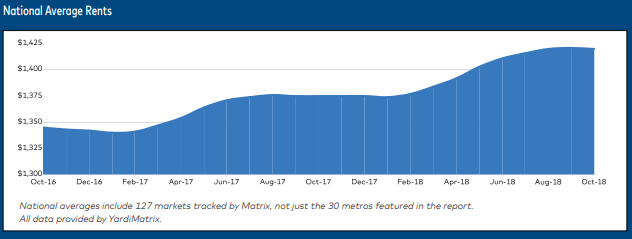
U.S. multifamily rent dropped by $1 to $1,420 in October 2018, the second straight month of decline, according to a survey of 127 markets by Yardi® Matrix Multifamily.

The 3.3% year-over-year multifamily rent growth for the month was unchanged from September.

The overall slowdown follows an anticipated seasonal trend. Two highlights from the Yardi Matrix report which says:

  • “Nationally, rent growth is hitting its seasonal slowdown phase, but there is a wide discrepancy in metro performance.
  • Rent gains have accelerated over the last three months in warm-weather markets that include Las Vegas, Phoenix and Atlanta, while Seattle, Boston and San Jose have cooled off.
  • We expect that the full-year rent increase for 2018 will remain near the year-to-date figure of 3.3%, with occupancy rates stable at current high levels.”

Multifamily Rent Gains In Many Metros Overshadow Seasonal Decline

Sizzling rent growth in the Southwest as gains accelerate in Phoenix and Las Vegas

Rent gains have accelerated recently in warm-weather markets such as Las Vegas, Phoenix and Atlanta.

“The strength of the national market is demonstrated by the fact that rent growth is less than 2% in only a handful of metros, and the lowest is Houston at 1.6%. No market is even remotely in trouble,” the report says. “The market’s groove will be hard to knock off course as long as employment and wage growth maintain their current path.”

Year-over-year rent growth leaders for October were Las Vegas, Phoenix, Orlando, Fla., and the Inland Empire and San Jose metros in California.

Phoenix and Las Vegas strong for job growth

Both Las Vegas and Phoenix have seen strong acceleration since the beginning of the year. Las Vegas leads U.S. metros with 7.4% year-over-year growth through October, up from 5.8% in January, while Phoenix rose to 7.0% in October from 4.0% in January.

Both markets benefit from their long-term population shifts and healthy job growth.

Affordability and the impacts of 2017 tax reform have positioned Las Vegas to benefit from the outmigration of people and businesses from California and other high-cost regions.

Phoenix is attractive due to its weather, while its economy increasingly attracting a diverse set of businesses.

Download the full report here.

About Yardi

Yardi® develops and supports industry-leading investment and property management software for all types and sizes of real estate companies.  Established in 1984, Yardi is based in Santa Barbara, Calif., and serves clients worldwide.  For more information, visit www.yardi.com.

Top 25 Most Bed-Bug Infested Cities

Top 25 Most Bed-Bug Infested Cities

With many people starting to travel for the holidays, the annual list of the top 25 most bed-bug infested cities is out with cities in Ohio taking four of the top 10 spots.

Cleveland crawled its way to the top of the list for a second consecutive year, followed by Philadelphia and Los Angeles, according to a release from Terminix.

Ohio had the most cities on the list, taking four of the top ten spots. Texas, Tennessee and Pennsylvania each had two cities make the list.

Terminix based its rankings on the number of services rendered in each city from October 1, 2017 to September 30, 2018.

Top 25 most bed-bug infested cities

  1. Cleveland
  2. Philadelphia
  3. Los Angeles
  4. Indianapolis
  5. Cincinnati
  6. Dallas-Fort Worth
  7. New York
  8. Columbus, Ohio
  9. Houston
  10. Dayton, Ohio
  11. Louis
  12. Chicago
  13. Detroit
  14. Atlanta
  15. San Francisco
  16. Baltimore
  17. Tampa
  18. Washington, D.C.
  19. Louisville
  20. Phoenix
  21. Nashville
  22. Pittsburgh
  23. Memphis
  24. Boston
  25. Denver

Contrary to their name, bed bugs can be found in many household places in addition to bedding, including upholstered furniture, in curtain rods or even behind baseboards.

These pests can easily hitchhike from place to place by crawling into personal belongings such as jackets, purses and luggage.

As Americans travel for the upcoming holidays, they should be aware of the increased potential for bed bugs to join them on their journey through airports, mass transit, hotels and rental vehicles, according to the release.

Take precautions when traveling

Travelers who believe they may have come into contact with bed bugs during their holiday vacations should take precautions to reduce their risk.

Bed bugs can be killed with heat, so travelers who suspect a bed bug infestation when arriving home should launder clothing and other belongings as recommended on the clothing label, or use a portable heat chamber for non-heat sensitive items such as luggage as soon as possible.

In addition, tenants as well as homeowners can place potentially compromised luggage in a plastic bag to prevent bed bugs from spreading among other belongings.

Bed bugs are most active at night, so infestations can be difficult to spot.

The bloodsucking insects are oval-shaped, wingless and reddish-brown. In lieu of spotting the pests themselves, travelers can look for signs of an infestation, which can include shed bed bug skins and blood spots on mattresses or sheets. Anyone who suspects a bed bug infestation should schedule an inspection with a pest control company as soon as possible.

“At Terminix, our mission is to deliver seamless experiences for our customers,” Matthew Stevenson, President of Terminix Residential, said in the release.

“When we do so, this allows our customers to focus on spending time with their families this holiday season, rather than worrying about combating bed bugs.”

Methodology of the survey:

The ranking was created by compiling bed bug-specific data of services rendered at more than 300 Terminix branches across the country. The rankings represent Metropolitan Statistical Areas (MSAs) with the highest number of actual services between October 1, 2017 and September 30, 2018.

How To Measure The Effectiveness Of Your Compliance Training

The Grace Hill training tip this week focuses on the fifth in the series on compliance training. Compliance training is important for landlords and property managers to keep up with ever-changing rental housing laws at federal, state and local levels.

 By Ellen Clark

The great hope of training is that it results in behavior changes that improve employees’ job performance and ultimately positively impact your business.

The ability of an employee to successfully apply what was learned in training to his or her job is called transfer.

To successfully transfer lessons learned in training to an employee’s activity on the job is the ultimate goal of training.

In this series on measuring training effectiveness we’ve looked at:

    • Measuring implementation – Did employees complete the training?
    • Learning – Did employees master the learning objectives?
    •  Reaction – Did employees find the training valuable and feel they benefitted from it?

To help reinforce new learnings, consider a post-training plan that focuses on measuring and supporting transfer of what they’ve learned.

How do you measure what happens in the weeks and months after compliance training?

Employees may leave training excited about transferring new skills to their job, but when back on the job it is easy to get caught up in the day-to-day and fall into old habits.

To guard against this, consider a post-training plan that focuses on both measuring and supporting transfer.

Here are some tips for a post-training plan to gather information on how employees are using strategies learned in training and simultaneously create an environment that supports and reinforces transfer.

To measure use of strategies learned in training, leverage mechanisms you already have in place.  Instead of creating a new set of measurement tools, think about aligning existing performance review forms, mystery shops, or observation protocols with training.  This allows you to gather information without putting extra tasks on the busy managers and employees.

Use informal tools to measure and support transfer.

By positioning training as ongoing, rather than a one-time event, learnings are more apt to stay fresh in their minds as they are regularly reinforced.

Regular, structured discussions between managers and employees can provide insights into implementation of training strategies. They are also an opportunity to signal that the things addressed in training are important, and to offer support to employees who are having trouble applying what they learned on the job.

Hold employees accountable for behavior not just leasing rates or satisfaction scores

Hold employees accountable for behaviors in addition to outcomes.

It is common to track outcome such as leasing rates, customer satisfaction scores or incident/claims rates.

Think about also holding people accountable for the behaviors that influence those outcomes. For example, choose a few observable strategies from training, and make them an element of performance reviews.

Position training as ongoing, rather than a one-time event. Think about a post-training plan that regularly reviews job aids or key points from training to ensure things stay fresh in employees’ minds. Consider running employees through practice scenarios to help show or reinforce the application of skills in real-life scenarios.

For many learners, applying what they learned in training will take ongoing encouragement and reinforcement. Having a post-training plan in place to measure and support the use of strategies learned in training will increase the likelihood of transfer, and ultimately the overall impact of your training.

If you missed the previous Part 1, Part 2, Part 3 and Part 4 here they are:

Part 1 –  Is Your Property Management Compliance Training Working?

Part 2 – Why Completing All Compliance Training Is Critical To Your Protection

Part 3 – Ask Key Questions To Be Sure Your Employees Have Mastered Compliance

Part 4 – Want To Know If Your Training Is Working? – Ask Your Employees

Read Ellen’s full blog post here.

About the author:

Ellen Clark is the Director of Assessment at Grace Hill.  Her work has spanned the entire learner lifecycle, from elementary school through professional education. She spent over 10 years working with K12 Inc.’s network of online charter schools – measuring learning, developing learning improvement plans using evidence-based strategies, and conducting learning studies. Later, at Kaplan Inc., she worked in the vocational education and job training divisions, improving online, blended and face-to-face training programs, and working directly with business leadership and trainers to improve learner outcomes and job performance. Ellen lives and works in Maryland, where she was born and raised.

About Grace Hill

For nearly two decades, Grace Hill has been developing best-in-class online training courseware and administration solely for the Property Management Industry, designed to help people, teams and companies improve performance and reduce risk.


online compliance training from grace hill


New Short-Term Multifamily Rental Player In Portland, Seattle

short-term multifamily rentals
Vacasa Multifamily has launched in top urban markets Including Portland and Seattle.

A Portland based vacation rental management company has launched a new short-term multifamily rental site that claims it is “ready to become your most reliable tenant,” according to a release.

Vacasa, the largest vacation rental management company in North America, announced the launch of Vacasa Multifamily, a new initiative dedicated to building its rental inventory for guests seeking short-term stays in urban city centers.

Vacasa Multifamily will partner with leading real estate developers and property managers to provide short-term rental management services for vacant units, resulting in stable and reliable revenue for the properties.

“The industry has seen an increase in guest demand for urban short-term rentals, and we’ve been approached by developers and property managers seeking our vacation rental management services,” Joshua Viner, senior manager of Vacasa Multifamily, based in Portland,  said in the release.

“We’re excited to bring our decade-long property management experience to the multifamily space and offer diverse inventory for business and leisure travelers, as well as families looking to stay in urban destinations.”

Vacasa Multifamily enters into long-term lease agreements with real estate developers and property managers that are looking to turn their vacant units into short-term rentals that adhere to regulations. From navigating complex local regulations and increasing operational efficiencies, to driving bookings and optimizing nightly rates, according to the release.

Demand for short-term multifamily rental accommodations

“As the demand for alternative accommodations has grown, so has the opportunity for Vacasa,” Eric Breon, CEO and founder of Vacasa, said in the release.

“The multifamily industry is on the rise and to be successful, property managers need to deliver a high-quality and consistent experience for guests, while providing stable revenue for building developers and landlords. What we’ve traditionally brought to the vacation rental industry, we’ll be offering in the multifamily space: provide great guest experiences and increased revenue for our owners.”

Over the last year, Vacasa has launched new programs and services to help homeowners and guests in every aspect of the vacation rental process. In July, the company launched Vacasa Real Estate to connect vacation home buyers and sellers with the most qualified local real estate agents. Earlier this month, Vacasa Community Association Management began providing management services to vacation rental homeowners through their community associations. Vacasa Multifamily is the next step in the fast-growing company’s evolution.

Real estate developers and property managers that enter into agreements with Vacasa Multifamily will be working with a partner to drive stable revenue for the property or assist during lease-up. Additionally, partners will have access to Vacasa’s breadth of resources, including:

  • Dedicated compliance and legal team: The short-term rental industry is evolving daily and it can be difficult to keep up with changing regulations. We work closely with our legal and compliance team to ensure we have the necessary permits and licenses for each unit.
  • Property automation partners: Vacasa currently works with NoiseAwarePointCentral and VirtualKEY and will offer these industry leading property automation solutions in its urban short-term rentals. These technologies enable Vacasa to better screen guests and monitor noise levels without imposing on the guests’ stay, all while creating a safer, more secure experience for other residents in the buildings, according to the release.
  • On-site and local teams: In every market where Vacasa manages vacation rentals, there’s a local team of employees ready to care for our properties and serve our guests, homeowners, and partners. All full-time Vacasa employees are paid a minimum hourly wage of $15 and provided free health and dental benefits.
  • Interior design experts: Vacasa’s in-house interior design team will work with developers to furnish rental units to meet guests’ expectations when booking an urban short-term rental. Our team can also work directly with developers to help design purpose-built rentals with travelers in mind from day one.
  • Booking platform partnerships: Vacasa partners with the industry’s leading booking platforms – such as Booking.com, Airbnb, and HomeAway – to drive year-round bookings for our more than 10,600 properties around the world.

Vacasa Multifamily operates in seven urban markets, Boise, Chicago, Dallas, Houston, Portland, San Antonio, and Seattle, with more to come in 2019. To learn more about partnering with Vacasa Multifamily visit: www.vacasa.com/multifamily.

About Vacasa

Vacasa is the largest vacation rental management company in North America and offers property management and other real estate services directly and through licensed subsidiaries. Leveraging industry-leading technology, Vacasa maximizes revenue for homeowners and its partners, and provides unforgettable experiences for guests. Founded in 2009 and headquartered in Portland, Oregon, Vacasa and its subsidiaries manage a growing portfolio of more than 10,600 vacation homes in the U.S., Europe, South and Central America, and Africa. In nine years, Vacasa has grown to more than 2,500 employees, has been honored as the Oregon Better Business Bureau Large Business of the Year and was ranked ninth on the Inc. 5000 Fastest-Growing Companies list. For more information, visit www.vacasa.com.


Portland Apartment Technology Company Cozy Sells For $68 Million

Portland Apartment Technology Company Cozy Sells For $68 Million

CoStar Group has acquired Portland apartment technology company Cozy Services Ltd., and plans to integrate its Innovative renter screening and rent payments solutions into Apartments.com, according to a release.

Cozy is considered an industry leader in the online rental property market, with more than 50,000 landlords using the Cozy platform, according to the release.

Cozy provides a broad spectrum of services to both landlords and tenants, including property listings, rent estimates, rental applications, tenant screening, online rent payments, and expense tracking. There are currently over 120,000 tenants making online payments through the Cozy platform, totaling over $1.4 billion in payments over the past 12 months.

“We believe that if we continue to focus on delivering a fantastic renter experience on Apartments.com, we will continue to be the most heavily trafficked website offering the most valued advertising solutions,” Andrew C. Florance, CoStar Group Founder and Chief Executive Officer, said in the release.

“Cozy’s technology makes the renting and payments process simple, secure, and intuitive. When combined with Apartments.com, the 40 million prospective renters that visit our network each month will be able to effortlessly locate, apply, lease and pay for their new rental home completely online.”

Portland Apartment Technology Company Cozy Sells For $68 Million

CoStar expands capability to multifamily

Currently, CoStar is a leading solution provider in online lease management for commercial real estate through its Real Estate Manager products. Over 200,000 commercial leases for office, retail and industrial clients are managed through the Real Estate Manager platform, which represents approximately $30 billion in lease payments on an annual basis.

Extending this capability to multifamily properties, CoStar expects to fully integrate the Cozy technology into the Apartments.com platform in the first half of 2019.

This integrated online rental solution is expected to create significant value and efficiency in the rental process for independent rental owners. These owners operate over 22 million rental units in properties that contain five units or less – representing a significant “long tail” opportunity for CoStar, according to the release.

Based on what property owners are currently willing to pay to fill their properties with a qualified renter, CoStar believes the total addressable market is well over $8 billion.

In addition, once integrated with Apartments.com, renters will be able to use the platform to save time and money by leveraging a single rental application and credit check across multiple properties. This, in turn, creates a large population of quality renters for landlords to access for future vacancies.

Gino Zahnd, Founder and Chief Executive Officer of Cozy said in the release, “We are excited to be able to bring our landlord and renter services to a larger audience by joining the CoStar team and the Apartments.com network.

The combination of CoStar’s leadership in multifamily marketing with our integrated solutions for renters and landlords makes for a very exciting future for all of us.”