
Home Blog Page 175

Confused Over Service, Assistance Animals And Emotional Support Animals?

Apartment emotional support dog and nearby tenant with dog allergy

The Grace Hill training tip of the week focuses on the confusing issue and definitions of service animal, assistance animals and emotional support animals.

By Ellen Clark

You probably hear the terms service animal, assistance animal, and emotional support animal a lot. But do you really know what these terms mean? If not, you are not alone!

There are three laws that relate to rental housing and service and assistance animals:

    • The Fair Housing Act (FHA)
    • Section 504 of the Rehabilitation Act of 1973 (Section 504)
    • The Americans with Disabilities Act (ADA).

The FHA applies to almost all rental housing. Among other things, it prohibits discrimination based on disability and requires housing providers to make reasonable accommodations for people with disabilities, such as making an exception to a no-pet policy or a breed restriction.

Housing that receives federal financial assistance from the U.S. Department of Housing and Urban Development (HUD) must also comply with Section 504. Like the FHA, Section 504 prohibits discrimination based on disability and requires housing providers to make reasonable accommodations for people with disabilities.

Whereas the FHA and Section 504 prohibit discrimination in housing, the ADA prohibits discrimination based on disability in all areas of public life, including schools, transportation, and all public and private places that are open to the public.

 What does this mean for you in relation to support animals?


Confused Over Service, Assistance And Emotional Support Animals?


The ADA requires you to let service dogs accompany their owners in any area of the community that is open to the public, such as the leasing office.

These laws use different terms and definitions, which can be confusing.

The ADA uses the term “service animal” and defines it specifically as a dog trained to do work or perform tasks for people with disabilities.

The FHA and Section 504 use “assistance animal” as a broad term to describe any animal that works, provides assistance, or performs tasks for the benefit of a person with a disability or provides emotional support that alleviates one or more symptoms or effects of a person’s disability. Under the FHA and Section 504, service animals, emotional support animals, and companion animals are all considered assistance animals. An assistance animal may be any type of animal and is not required to have specific training.

The ADA uses the term “service animal” and defines it specifically as a dog that has been individually trained to do work or perform tasks for people with disabilities. Emotional support animals, companion animals and animals other than dogs (and sometimes miniature horses) are not considered service animals under the ADA.

 Consider these important takeaways:


    • You cannot deny a reasonable accommodation request because an animal does not meet the ADA definition of a service animal. Under the FHA and Section 504, reasonable accommodations must be granted for assistance animals, which include service animals, emotional support animals and companion animals.
    •  Residents making accommodation requests are not required to use specific terminology. If an animal works, assists, or performs tasks for the benefit of a person with a disability or provides emotional support that alleviates one or more symptoms or effects of a person’s disability, it doesn’t matter what term someone uses, it is an assistance animal under the FHA and Section 504.

ULTIMATE GUIDE TO ASSISTANCE ANIMALS IN RENTAL HOUSING

Recent training tips you may have missed:

How A No Pet Policy Can Be Discriminatory

Read Ellen’s full blog post here.

About the author:

Ellen Clark is the Director of Assessment at Grace Hill.  Her work has spanned the entire learner lifecycle, from elementary school through professional education. She spent over 10 years working with K12 Inc.’s network of online charter schools – measuring learning, developing learning improvement plans using evidence-based strategies, and conducting learning studies. Later, at Kaplan Inc., she worked in the vocational education and job training divisions, improving online, blended and face-to-face training programs, and working directly with business leadership and trainers to improve learner outcomes and job performance. Ellen lives and works in Maryland, where she was born and raised.

About Grace Hill

For nearly two decades, Grace Hill has been developing best-in-class online training courseware and administration solely for the Property Management Industry, designed to help people, teams and companies improve performance and reduce risk

Confused Over Service, Assistance And Emotional Support Animals?

Photo credit Bobbymn via istockphoto.com


A One-Size-Fits-All Approach by Governments To Multifamily Housing Does Not Work

A One-Size-Fits-All Approach by Governments To Multifamily Housing Does Not Work

Renting is now seen as a desirable housing choice, and government needs to help the multifamily industry with housing-finance reform to help create more affordable housing options in the future.

That was the message delivered recently by Susan Ansel, President and Chief Executive Officer, Gables Residential, to the Senate Committee on Banking, Housing and Urban Affairs.

Rental Housing Background – The Supply-Demand Imbalance

There has been a fundamental shift in our nation’s housing dynamics as changing demographics and lifestyle preferences have driven more people towards the convenience of renting, Ansel told the committee.

“This demand is fueled by several demographic factors. There are over 75 million people between 18 and 34 years old (traditionally the “prime renter” age group) who have recently entered or will soon be entering the housing market, primarily as renters.

“Similarly, nearly 93 million Americans aged 55 or older have the option of downsizing as their children leave the house, and many will choose the convenience of renting, and we are already seeing that. Over half (59.2 percent) of the net increase in renter households between 2007 and 2017 came from householders 55 years or older.

“Immigration accounts for a significant portion of apartment demand – over one in four (25.1%) apartment householders were born outside of the United States. Given these demographics, it is unsurprising that the apartment vacancy rate has remained at or below five percent for the past five years,” she told the committee.

A One-Size-Fits-All Approach by Governments To Multifamily Housing Does Not Work
Susan Ansel said, “The committee has an opportunity to examine what role the government-sponsored entities could provide in facilitating the reduction of these barriers and promoting the development of apartments for all income levels.”

Western states will have highest demand

The western United States, as well as states such as Texas, Florida and North Carolina, are expected to have the greatest need for new apartment housing through 2030, although all states will need more multifamily rental housing moving forward.

Across all markets, the supply of multifamily rental housing at a variety of price points will play a role in promoting economic growth, attracting and retaining talent and encouraging household stability for all American families.

32 percent of multifamily cost in local, state and federal regulation requirements

A recent study by NMHC and the National Association of Home Builders (NAHB) based on responses from a variety of multifamily developers throughout the country found that on average, 32 percent of multifamily development costs are attributable to the costs associated with complying with local, state, and federal regulations. In a quarter of the cases, that number can reach as high as 42.6 percent.

“The committee has an opportunity to examine what role the government-sponsored entities could provide in facilitating the reduction of these barriers and promoting the development of apartments for all income levels,” she said.


Principles of multifamily housing finance reform

Many factors influence the apartment industry’s health and its ability to meet the nation’s growing demand for rental housing, but the availability of consistently reliable and competitively priced capital is absolutely essential, according to the testimony before the committee.

“While our organizations remain agnostic regarding the source of our debt financing, we strongly believe capital must be consistently available across all markets and product types. In that spirit, NMHC and NAA urge the Committee to recognize the unique needs of the multifamily rental industry. We believe the goals of a reformed housing finance system should be to:

  • “Maintain an explicit, appropriately priced and paid-for federal guarantee for multifamily-backed mortgage securities available in all markets at all times;
  • “Recognize the inherent differences of the multifamily business from the single-family business;
  • “Promote private market competition;
  • “Protect taxpayers by keeping the concept of the enterprises’ multifamily first-loss risk sharing models;
  • “Retain the successful components of the existing multifamily programs in whatever succeeds them; and
  • “Avoid market disruptions during the transition to a new finance system.”

Recognize differences between multifamily and single-family businesses

“A one-size-fits-all solution will not work. The two sectors operate differently, have divergent performance records and require distinct reform solutions,” Ansel told the committee.

“The capital sources for multifamily are not as wide or as deep as those financing single-family and the loans themselves are not as easily commoditized. The GSEs’ (government sponsored enterprise) multifamily programs adhere to a business model that includes prudent underwriting standards, sound credit policy, effective third-party assessment procedures, risk-sharing and risk-retention strategies, effective loan portfolio management and standardized mortgage documentation and execution.

“Moreover, the financing process, mortgage instruments, legal framework, loan terms and requirements, origination, secondary market investors, underlying assets, business expertise and systems are all separate and unique from single-family home mortgage activities.

“We strongly recommend that any reform measure include a separate multifamily title. This separate title should not only address the successors to the GSEs’ multifamily programs, but also how the transition to that new system will be handled,” she said.

Summary

“As this committee continues its important work of assessing and crafting a reformed housing-finance model, Congress must understand that a one-size-fits-all approach will not work,” Ansel said.

“The meaningful differences between the single-family and multifamily sectors, both in how they operate and how they have performed, require different solutions to avoid putting at risk the 39 million Americans who rely on the apartment industry for their housing. In keeping with principles for housing-finance reform, the apartment industry asks that you focus your efforts on the importance of a government guarantee to ensure capital is available in all markets in all economic circumstances and the important role a government guarantee plays in the development and preservation of rental housing at all income levels in America today.

“The existing enterprise frameworks for protecting taxpayers and requiring private-capital participation should serve as a guide for any discussions on a reformed system. By retaining the successful elements of the current system and providing an explicit guarantee for multifamily debt, we believe this committee can succeed in ‘doing no harm’ to our industry, a goal expressed by members on both sides of the aisle and the administration,” she said.

Read the full statement here.
Susan Ansel is Chief Executive Officer and President of Gables Residential, a private real estate investment trust (REIT) focused on development, acquisition and management of institutional quality apartment communities throughout the United States. Ms. Ansel has been with Gables Residential since its Initial Public Offering and with its predecessor Trammell Crow Residential since 1987.

A Rental Property Pool Safety Guide

A Rental Property Pool Safety Guide

As the weather starts to get warmer, it may be time to look at a rental property pool safety guide and what you need to know as this week’s maintenance checkup from Keepe.

And, a pool can be a great feature to keep your rental units in demand and current tenants happy. But pool and hot-tub maintenance is crucial to keep up, not just for convenience, but for safety as well. So you need to learn what types of maintenance can keep you from having a pool-related accident on your property.

Liability and fencing

Landlords are required to maintain pools and pool fencing located on rental properties.

A landlord or property manager can be held liable for tenant and non-tenant injuries. Also, if a person drowns in the pool or slips nearby, you could be responsible for the accident.

Dirty water can affect pool usability, and result in sick children or pets if access to the pool is not monitored.

A Rental Property Pool Safety Guide
Dirty water can affect pool usability, and result in sick children or pets.

Also, residential swimming pools must also be surrounded by a suitable barrier. It can be a fence or pool cover to ensure safety in the pool area, especially for children. If there is no preventative barrier, you can be held responsible for an accident, such as an unsupervised child falling into the pool.

A Rental Property Pool Safety Guide
If there is no preventative barrier, you can be held responsible for an accident, such as an unsupervised child falling into the pool.

State- and county-specific laws may vary on the specifics of the guideline, so refer to your local code to ensure you are not violating any pool fence laws that apply to your property.

Rental Property Pool Safety Guide And Maintenance

Also, poorly maintained pools can make a property less desirable and lead to numerous types of accidents.

So, keep the pool clean and safe with these tips.

A Rental Property Pool Safety Guide
A pool can be a great feature to keep your rental units in demand and current tenants happy

Weekly tasks:

  • Remove debris, both from the surface of the water and the bottom of the pool
  • Maintain chlorine levels or salt levels
  • Check the water level and adjust as needed
  • Check the filter pressure and backwash as needed

Monthly tasks:

  • Test for water hardness (calcium content), pH, and dissolved solids and add chemicals as needed
  • Clean the pool filter
  • Check the operation of the pump and motor

Additional tasks, as needed:

  • Update pool rules and safety changes
  • Learn local laws and regulations surrounding pool areas
  • Schedule tasks and making sure maintenance services are carried out
  • Monitor access, chemical storage and pool furniture storage
  • Access the need for lifeguards and manage that staff if needed
  • Monitor restroom, locker and shower facilities and ensure they are clean
  • Monitor rule enforcement and field any complaints and issues

You can do all these chores yourself, or you can hire a handyperson to do it for you. Regardless, landlords and property managers should have a regular check-in with the pool system to ensure daily operations aren’t neglected.

Other recent rental property maintenance Keepe posts you may have missed:

4 Outdoor Flooring Options For Your Rentals

20 Easy, Affordable Maintenance Projects To Update Your Rentals

7 Tech Gadgets For A Safer And More Efficient Rental Property

5 Maintenance Tips For Long-Lasting Rental Carpet Flooring

Is The Water Heater At Your Rental Property Ready For The Big One?

7 Types Of Kitchen Countertops For Your Apartments

Which Cooktop Is Best For Your Rental Property?

A Guide To 4 Types Of Flat Roof Systems

6 Ways To Trash Your Apartment Waste Management Issues

About Keepe:

Keepe is an on-demand maintenance solution for property managers and independent landlords. The company makes a network of hundreds of independent contractors and handymen available for maintenance projects at rental properties. Keepe is available in the Greater Seattle area, Greater Phoenix area, San Francisco Bay area, Portland, San Diego and is coming soon to an area near you. Learn more about Keepe at https://www.keepe.com


A Guide To 4 Types Of Flat Roof Systems

A Guide To 4 Types Of Flat Roof Systems

The maintenance checkup this week provided by Keepe focuses on a guide to flat roof systems for your rental property.

Flat roofs can offer a clean look to an apartment building and add efficient space that tenants like.

But remember roofing is the first line of defense towards any natural disasters. Without a sturdy roof, your apartment and residents may be left at risk. If you are installing a roof on a new building or considering a replacement on an existing property, use this guide to help decide if a flat roof design fits your budget, geography, and style.

A Guide To 4 Types Of Flat Roof Systems

Pros of flat roof systems

Aesthetic: Flat roofs offer a clean aesthetic to a building. If your property is in the city or overlooks a beautiful landscape, a flat roof can complement the environment. Flat roofs are also a characteristic of modern design, so if your property is contemporary, this might be a priority for you and your tenants.

Useable Space: A flat roof allows for more efficient use of space both inside and out. Unlike a pitched roof, a flat roof offers rooftop space can be used as a rooftop patio, flower garden or give you the option to install solar panels out of view.

Cost: A flat roof is significantly cheaper than a pitched roof since the surface area of a flat roof is less than that of a sloped roof. Although installation is cheaper, depending on the amount of rainfall your property’s area receives, the maintenance costs might override the initial short-term costs.

Maintenance: The flat roof design makes it easier to inspect and maintain the roof. Issues can be addressed easier, but don’t underestimate the importance of regular maintenance.

Improved Energy Efficiency: Flat roofs may be more energy efficient depending on the climate and what materials are used for the roofing system.

A Guide To 4 Types Of Flat Roof Systems

Cons of flat roof systems

Climate Limits: Low slope roofs have an increased tendency to collect water. If you live in a rainy or snowy climate, this option might not be ideal for your property.

Increased Maintenance: Flat roof drainage is not as effective as a pitched roof. Without regular inspection, drains can become clogged, leading to damage and leaks.

Lifespan: Standing water, debris and clogged drainage systems may shorten your roof’s lifespan to as short as 10 years if not monitored regularly. Many flat roof leaks are due to the lack of regular inspection, so be sure you have regular maintenance checks if you choose a flat roof for your property.

Types of flat roof systems

If you decide that flat roofing is right for you and your property, take the next step and consider which material is best. There are several flat roof options – here are the three most common kinds of flat roof systems.

No. 1 – BUR (Built-Up Roof)

This flat roof systems contains layers of waterproof membrane, tar and gravel to seal the flat roof surface. This flat roof system is a great affordable option, plus it has fire resistant properties that are a great safety factor multi-family property. Built-up roofs are also very sturdy and efficient insulators due to their several layers. BUR systems can last 15 – 20 years and lasts longer in warmer climates. When installing this roofing system, your property must be empty and free of tenants during installation. BUR systems cost between $5 and $7 per square foot.

No. 2 – PVC (Polyvinyl Chloride)

PVC is one of the most popular roofing materials used for flat roofs. Sheets of PVC are an attractive option for waterproof performance as well as pedestrian traffic coating. PVC allows you to turn a flat roof into a usable space – ideal for multi-family properties. This type of roofing is also easy to install and maintain. It typically costs between $5 and $8.50 per square foot.

No. 3 – EPDM Rubber (Ethylene Propylene Diene Monomer)

A Guide To 4 Types Of Flat Roof Systems

EPDM is made of synthetic rubber made of recycled materials. Roofs of EPDM are durable, inexpensive and have a longer lifespan than metal roofs. EPDM roofs require seaming which means that there are more chances for water to seep through seams and lead to damage. If roofs are spray-applied, then the chance of damage is significantly lower. EPDM installation costs between $4 and $8 per square foot.

No. 4 – Modified Bitumen

Bitumen roofing is another long lasting option for flat roofs. This is a single ply roofing system that is rolled onto the roof surface. These roofs can last at least 20 years due to their durability. They are ideal for extreme weather climates that have high winds, hail and heat. Bitumen roofs range from $3 – $6 per square foot.

Other recent rental property maintenance Keepe posts you may have missed:

4 Outdoor Flooring Options For Your Rentals

20 Easy, Affordable Maintenance Projects To Update Your Rentals

7 Tech Gadgets For A Safer And More Efficient Rental Property

5 Maintenance Tips For Long-Lasting Rental Carpet Flooring

Is The Water Heater At Your Rental Property Ready For The Big One?

7 Types Of Kitchen Countertops For Your Apartments

Which Cooktop Is Best For Your Rental Property?

About Keepe:

Keepe is an on-demand maintenance solution for property managers and independent landlords. The company makes a network of hundreds of independent contractors and handymen available for maintenance projects at rental properties. Keepe is available in the Greater Seattle area, Greater Phoenix area, San Francisco Bay area, Portland, San Diego and is coming soon to an area near you. Learn more about Keepe at https://www.keepe.com

Sign Up For Our Weekly Email Newsletter For Rental Property And Apartment Owners, Managers and Maintenance Personnel

* indicates required


Rent Prices Rising Faster Than IT Wages Even in Tech Hubs

Rent Prices Rising Faster Than IT Wages Even in Tech Hubs

Most people think of tech jobs as providing nice high salaries, but in many tech hubs rent prices are rising even faster than the tech salaries may be able to support, according to new research.

“While there are clear advantages to living in or near a tech hub, more people relocating to these cities can put a certain pressure on the rental market, leading to rising rents,” says a new report from RentCafe.

And with a new generation of startups going public soon, things will get scorching in America’s hottest housing markets, even for renters with high-paying tech jobs, the report says.

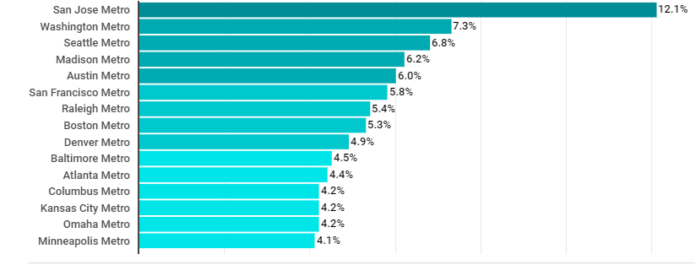
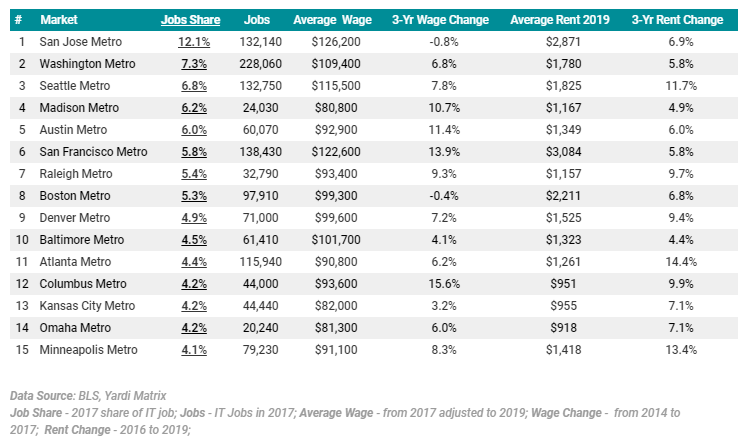
“Over a 3-year period, rents grew faster than the wages of IT employees in 10 of the top 15 largest tech hubs, according to our latest analysis of US Census, BLS and Yardi Matrix data.” And here’s the real kicker: half of the top 10 emerging tech hubs are already seeing this trend as well.

Rent prices rising in tech hubs: Quick facts from the study

  • San Jose, the pride of Silicon Valley, has the largest share of IT jobs, 12%, and is one of two metros where wages of IT employees have decreased while rents soared. So much so that metro San Jose exhibits the largest gap between rent and wage growth.
  • Other established tech hubs where wages didn’t keep up with rents were SeattleAtlanta and Boston.
  • Looking at up-and-coming metros, Charlotte ranks first with a 37.5% increase in the number of IT jobs between 2014 and 2017. And the rental market is already reacting: Prices here jumped by 7.6% since 2016, outpacing wages in terms of growth. The same scenario applies to Salt Lake City and Miami.
  • For those looking for more affordable emerging tech hubs, Madison and Nashville are go-to destinations, thanks to healthy growth rates in IT of 26% and 22% respectively. (Though relocating here means you have to be happy with a lower wage than in other areas.)
  • The ubiquitous San Francisco is again the exception that proves the rule. With the priciest apartments among all tech hubs ($3,084/month) and a strong 5.8% rent growth, The Golden City has seen its pool of IT employees increase by 19%. Moreover, it managed to boost tech salaries by 13.9%, the biggest wage growth seen by any tech hub in the top 10 over a 3-year period. However, with expected IPOs, these positive trends might turn dire for some social groups.

Seattle near the top

Seattle is a top metro tech hub, where the presence of both Microsoft and Amazon has certainly helped the metro reach its high 6.8% share of IT jobs.

Salaries in the metro remain considerably high at $115,500, but so are rents, which increased by 11.7% in a 3-year period, reaching an average of $1,825 in 2019.

Rent Prices Rising Faster Than IT Wages Even in Tech Hubs

See the full RentCafe report here.

Methodology:

RentCafé used the ‘Computer and Mathematical Occupations’ from The Bureau of Labor Statistic database for IT jobs-related data and took into consideration the 2014 and the 2017 data at metro level (most recent BLS data). The average wages in IT jobs were calculated based on the most current wage data from The Bureau of Labor Statistics (2017) adjusted for inflation to 2019 dollars and rounded to the nearest hundreds. The rent data were provided by Yardi Matrix, a RentCafé sister company focusing on  apartment market intelligence and providing up-to-date information on large-scale multifamily properties of 50 units or more in over 130 U.S. markets.


Multifamily Growth Shows No Signs of Slowing, New Report Says

Multifamily Growth Shows No Signs of Slowing, New Report Says

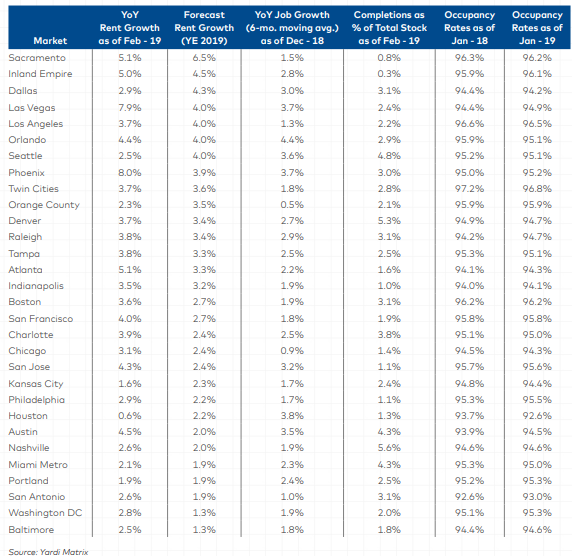
The multifamily market is entering the time of year when rent growth typically occurs and there is no indication of any slowing in the market, according to Yardi Matrix’s latest report.

“Our latest multifamily national report presents a $2 rise in average U.S. rents in February and year-over-year growth of 3.6% as evidence of the sector’s continuing strength,” the company says in the report.

“Our February survey of 127 major U.S. real estate markets shows that demand, bolstered by a strong job market, shows no signs of slowing. Rents averaged $1,426 for the month.

“The market has strength to perform well for a while, even if the economy or other commercial real estate segments slow down,” the report says. “Occupancy rates have ticked down slightly, but absorption has been no problem.”

Phoenix takes over the top spot in rent growth

  • Rent growth has steadily increased since bottoming at 2.2% in the fall of 2017. The consistent growth is a sign of the strength of the sector’s fundamentals and an indication that the cycle has a ways to run.
  • Phoenix (8.0%) has taken over the top spot in the rankings, edging out the former leader, Las Vegas (7.9%). Sacramento, Atlanta and the Inland Empire also have year-over-year growth topping 5.0%. Portland, Kansas City and Houston are the only metros below 2.0% growth year-over-year.

Multifamily continues to perform well despite a long market run

Demand has shown no signs of slowing, as the job market has remained very strong, with unemployment below 4% and wage growth accelerating to more than 3%, the report says.

Metros with strong population gains and healthy job growth have benefited the most from the demand picture. Phoenix and Las Vegas are well above the rest, with growth dominated by Southwest and West Coast markets. Other top rent-growth markets—such as Sacramento and the Inland Empire—are near the top due to the combination of robust demand and weak supply growth.

With the marketing entering the rent growth phase, all signs point to this year being no different.

Multifamily Growth Shows No Signs of Slowing, New Report Says

Home purchases increased as some millennials start buying single-family homes

It is notable that the homeownership rate has climbed over the past year to 64.8% in the fourth quarter of 2018, from 64.2% a year earlier.

The most significant change came from 35-to-44- year-olds, whose homeownership rose 220 basis points year-over-year to 61.1% in fourth quarter of 2018.

“What’s interesting about this is that it could portend social change heralded by some analysts, who have forecast that millennials were merely delaying— not shelving—marriage and family. In this scenario, older millennials will increasingly settle down in the suburbs, have children and seek to re-create the picket-fence lifestyle of their parents. If that’s correct, there could be a weakening of demand for urban apartments, since these households will give up the more amenity-rich cities and inner-ring suburbs in favor of better schools and more privacy.

“Could this be the start of a longer-term trend? Possibly. The data would have to change more significantly and for a longer period of time before we can make any pronouncements with certainty,” the report says.

View the full Yardi Matrix multifamily national report for February 2019 for additional detail and insight into 127 major markets.

Yardi Matrix is the industry’s most comprehensive business development and asset management tool for investment professionals, equity investors, lenders and property managers who underwrite and manage real estate investments in multifamily, industrial, office and self storage. Email [email protected], call 480-663-1149 or visit yardimatrix.com to learn more.

About Yardi
Yardi® develops and supports industry-leading investment and property management software for all types and sizes of real estate companies. Established in 1984, Yardi is based in Santa Barbara, Calif., and serves clients worldwide. For more information on how Yardi is Energized for Tomorrow, visit yardi.com.

Legislation Changing in Many States to Make Them Less Landlord-Friendly

Legislation Changing in Many States to Make Them Less Landlord-Friendly

Legislation recently passed or pending in many states is making them more tenant-friendly and less landlord-friendly, according to some new research by RentCafe.

With Oregon passing a first-in-the nation rent-control bill, and Washington State considering extending the amount of time before a landlord can evict a tenant, it is clear landlord-tenant laws are evolving in many places in the United States.

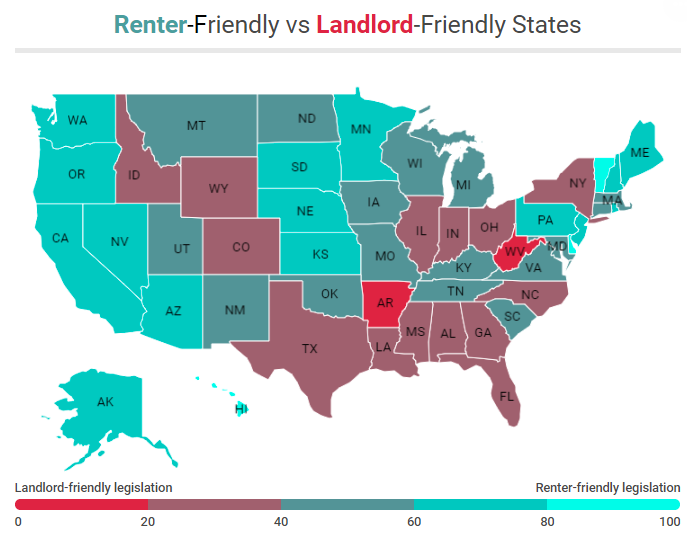
In a recent study, RentCafe compared and contrasted landlord-tenant laws in 50 states and the District of Columbia. The study focused on 10 common aspects of the landlord-tenant relationship, which includes security deposits, rent increases, the warranty of habitability and eviction notices.  It also created a ranking system based on the best and worst scenarios for renters and landlords.

Most tenant-friendly states

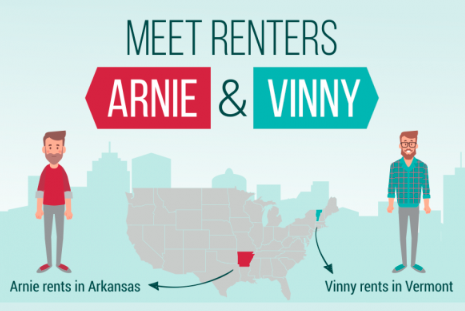
Vermont ranked first among the renter-friendly states, followed closely by Delaware and Hawaii. Rhode Island, Arizona, D.C., Maine and Alaska statutes also seem to favor tenants over landlords, according to the analysis.

More landlord-friendly states

On the other end of the spectrum, the laws in Arkansas and West Virginia were the least friendly to their renters, with Louisiana, Georgia, Wyoming, North  Carolina, Idaho, Ohio, Mississippi and Colorado following. Arkansas and West Virginia registered the same score on the scale, but since Arkansas is the only state where tenants can face criminal charges for failure to vacate, it earned the last place on the renter-friendly scale.

How rental laws were shaped by regional culture

The United States is in some ways a nation of nations, with each state having the right to create its own constitution and government. Over time, this facilitated the creation of very different laws and regulations,  with local culture and sensibilities playing a huge role in shaping the state’s legislation.

  • Southern states,which relied mostly on agriculture during the first days of our nation, valued land ownership above all else and subsequently shaped their laws to protect landlords and their properties.
  • Northern states, on the other hand, focused more on manufacturing and trade, encouraging constant immigration from Europe.  Since most of the population worked in factories and lived in crowded cities, it only makes sense that eventually they developed more and more laws that regulated renting.
  • Mountain states also seem to mostly favor landlords, but probably because renting was less common and there wasn’t much opposition from renters. Conversely, in areas where renters outnumber owners, the laws lean toward protecting renters.

Legislation Changing in Many States to Make Them Less Landlord-Friendly

Legislation Changing in Many States to Make Them Less Landlord-Friendly

The best states for common renting issues

The relationship between landlords and tenants may sometimes prove tricky to manage, and problems emerge when either side doesn’t hold up their end of the agreement. That’s why it is important for states to have concise and unbiased legislation in place so as to avoid any misunderstandings.

The security deposit is an issue that every renter faces at the beginning of a new lease. There are 10 states that limit the security deposit amount to the equivalent of one month’s rent (for unfurnished apartments on a one-year lease). Among them are Hawaii, District of Columbia, Rhode Island, Massachusets, and Kansas.

Not having to wait forever to get your security deposit back (after any applicable deductions) at the end of your lease can also be a blessing, especially when you need that money to put down a deposit on your next apartment. Renters in Montana are the luckiest in that regard, as they’ll get theirs back in no more than 10 days. In Hawaii, South Dakota, Nebraska, Arizona, and Vermont, landlords are required to return security deposits within 14 days.

Length of time for termination for nonpayment of rent and rent increases

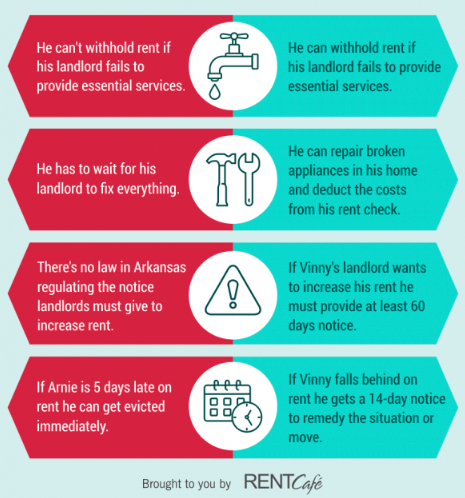
If you live in the District of Columbia, you get the longest termination notice for nonpayment of rent: 30 days.

In the following 5 states, renters receive a 14-day notice: Vermont, Wisconsin,  Minnesota, Massachusetts, and Tennessee.

Renters in Georgia, Vermont, and Delaware receive a generous 60-day notice of rent increase for month-to-month contracts, while those in Maine, Hawaii, and Nevada receive 30 days.

The worst states for common renting issues

Vermont might have the best laws for renters, but it’s also one of 24 states that don’t set a limit for security deposits. Other examples are Georgia, Washington, Texas, Illinois, and New York.

Being able to withhold rent for failure to provide essential services (heat, hot water, and electricity) is another law that many would consider common sense, yet there are 11 states which don’t specifically allow this.

Furthermore, 14 states empower landlords to use harsh measures like serving an Unconditional Quit Notice against renters who violate their leases. Arizona, Hawaii, Virginia, Rhode Island, and South Carolina are some of them. To be fair, the situations in which this practice is allowed usually relate to serious breaches of the rental agreement, such as illegal drug possession, prostitution or other criminal activities. But there are also states where this type of notice can be used for simply being late on rent (Georgia, South Carolina, and West Virginia).

Also, in 8 states, including Maryland, Georgia, New Jersey, South Dakota, and Missouri, landlords have the option to immediately terminate a lease and file for eviction when the tenant is just a few days late on rent.

Methodology

This analysis was performed by RENTCafé’s research team, which analyzed Landlord – Tenant laws across the 50 states and the District of Columbia. This analysis does not discuss rent prices and does not include legislation that specifically regulates rent prices.

In order to rank the states, the following 10 common aspects of the landlord-tenant relationship were used.

  • Security-deposit maximums
  • Deadlines for returning security deposits
  • Rent-increase notices
  • Repair-and-deduct policies
  • Withholding-rent policies
  • Landlord’s access to the property
  • Termination notices for nonpayment
  • Regular termination notices for tenancies at will
  • Termination notices for lease violations
  • Abandoned tenant property


Wet, Cold Weather Means It’s Time To Check Your Seasonal Basement Maintenance

Wet, Cold Weather Means It’s Time To Check Your Seasonal Basement Maintenance

Wet, cold weather is a signal, in this week’s maintenance checkup, to look into your seasonal basement maintenance says Keepe .

Wet, cold weather can often lead to basement problems, so check your seasonal basement maintenance to avoid a wet basement.

  • Does your finished basement need foundation repair?
  • Have you noticed persistent leaks, dampness or cracks in the basement?

As a property manager, managing the waterproofing, plumbing, electrical and insulation work can take some extra maintenance planning on your part. Make basement maintenance a priority for your property by addressing the most common issues early on.

Foundation cracking can occur any time of the year, but often occurs during the cold and rainy months, when heavy rains and floods occur. If you are considering finishing your basement or are currently managing a finished basement, consider the following solutions to ensure your basement remains safe and functional:

Seasonal basement maintenance check list

Wet, Cold Weather Means It’s Time To Check Your Seasonal Basement Maintenance

  1. Replace Defective Gutters: Make sure the property’s drainage systems including gutters and spouts are working effectively and diverting water away from the property. Gutters must be sized large enough for the amount of rainfall your property gets. Compromised drainage systems are often easy to identify; if your property needs a drainage system cleaning, it can significantly improve your property’s safety.
  2. Fix Ineffective Grading: The mulch beds and soil around the foundation of your property should slope away from the exterior walls, redirecting any water flow. Similarly, ensure that other material surrounding the property, such as driveways and sidewalks, are installed at a slope that goes away from the basement.
  3. Repair Interior Water Leaks: Basement windows should be installed above ground level with waterproof seals. Inadequate seals can easily put your property at risk of being damaged by water. Prevent damage by waterproofing windows and features across the interior walls to ensure leaking doesn’t occur.
  4. Combat Condensation: When warm, moist air interacts with the cool basement walls and floors, condensation can occur. To combat this issue, you want to reduce the humidity in the air; make sure the the exhaust of your dryer is sealed so that moist air does not enter the basement, and make sure the central air conditioner drains properly. Next, make sure problem areas such as walls, pipes and ducts are covered with insulation. For further protection, install an exhaust fan, a dehumidifier, or an air conditioner to promote increased air circulation.

Wet, Cold Weather Means It’s Time To Check Your Seasonal Basement Maintenance

Maintaining regular maintenance across these four areas is vital to protecting your property from a compromised basement.

Cleanup costs for basement-related issues tend to be higher than preventative expenses, due to extended damage to furniture, utility equipment and interior room walls. Schedule regular preventative maintenance to make cost-effective improvements to your property every season.

Other recent rental property maintenance Keepe posts you may have missed:

4 Outdoor Flooring Options For Your Rentals

20 Easy, Affordable Maintenance Projects To Update Your Rentals

7 Tech Gadgets For A Safer And More Efficient Rental Property

5 Maintenance Tips For Long-Lasting Rental Carpet Flooring

Is The Water Heater At Your Rental Property Ready For The Big One?

7 Types Of Kitchen Countertops For Your Apartments

Which Cooktop Is Best For Your Rental Property?

A Guide To 4 Types Of Flat Roof Systems

6 Ways To Trash Your Apartment Waste Management Issues

About Keepe:

Keepe is an on-demand maintenance solution for property managers and independent landlords. The company makes a network of hundreds of independent contractors and handymen available for maintenance projects at rental properties. Keepe is available in the Greater Seattle area, Greater Phoenix area, San Francisco Bay area, Portland, San Diego and is coming soon to an area near you. Learn more about Keepe at https://www.keepe.com

7 Ways To Build A Sense of Community In Your Apartment Building

7 Ways To Build A Sense of Community In Your Apartment Building

How to build a sense of community in your apartment building has become a more important job for many property managers in the multifamily industry. Here are 7 ways to potentially build a sense or community.

By Holly Welles

Running an apartment complex is a gift and a challenge all wrapped in one box. On one hand, you get to interact with different people every day. You provide them with a sense of home and safety in what may be an entirely new city. Tenants trust you and your skills to make your community the best in your area. It’s a big responsibility, and one every property manager should feel honored to provide.

On the other hand, property managers are responsible for the feeling of community in their apartment complex. People may live side by side, but that doesn’t mean they get the chance to know each other outside of regular work or school hours. It’s difficult for people to break their routine when they’re busy, which is where the property manager can step in.

Read on to learn some easy ways you can build a sense of community in your apartment building. Tenants will appreciate getting to know their neighbors while also being cared for by the management team. You can go all out or start with baby steps, depending on your budget, but there’s always something you can do to encourage a sense of community.

1. Designate an Outdoor Space

If your complex doesn’t have one already, find a way to designate an outdoor space for your tenants to use as a community center. This could look like a pool, a garden or even a plot of grass with some picnic tables. Many apartment communities are also building dog parks, if they have the infrastructure.

Consider the average life experiences of your tenants to determine what outdoor space they would enjoy best. You don’t want to spend your money on an amenity that tenants will likely ignore. It’s more important to build the right outdoor space than to jump to provide anything at all.

2. Set Up Regular Events

A great way to get tenants to interact with each other is to set up regular events that will make them want to step out of their possible comfort zones and meet new people. Events can be centered around fun holidays, like the Fourth of July or Halloween, so everyone can participate. Encourage tenants to come out and have fun at a cookout or networking event, for example.

This is a great way to encourage residents to establish neighborly ties. If you manage a city rental, post local activities every week or so to see if your tenants want to form a get-together
. Encourage tenants to come out and have fun at a cookout or networking event, for example.
When your tenants get to know each other, your business benefits.

When your tenants get to know each other, your business benefits. Not only will familiarity make them more considerate of each other’s space and quality of life, but you’re likely to reduce tenant turnover in the long run. Creating community events doesn’t have to be resource-intensive, and it results in connections that will help you and your tenants enjoy the rental experience more.

3. Host Contests

If you have the budget, you may want to try engaging with tenants through fun contests. Contests can range from food-drive competitions to costume contests to even who can get the most likes on a pet picture on social media.

Think about what your tenants might like and pitch ideas with the management team to come up with ideas. Your community will love the interactive side of contests without necessarily having to carve out time from their schedule to participate.

4. Create a Social-Network Page

7 Ways To Build A Sense of Community In Your Apartment Building
This is a great way to encourage residents to establish neighborly ties. If you manage a city rental, post local activities every week or so to see if your tenants want to form a get-together.

Most businesses automatically get social-network profiles to represent themselves online. After all, people want the online experience of seeing 3D models, floor plans and pictures. In addition to your main profiles, create a unique community page where only residents are allowed into the group.

This is a great way to encourage residents to establish neighborly ties. If you manage a city rental, post local activities every week or so to see if your tenants want to form a get-together. For more suburban regions, where commutes are often 30 minutes or more, set up carpooling threads to help tenants save on driving costs. Social media is a powerful tool for helping residents feel like they have a community they can rely on.

5. Remember to Say Thanks

People need a place to live, so tenants may feel like they’re taken for granted by property managers. One way to get around this feeling and continue building a sense of community is to always remember to say thanks. Put notes on doors or in mailboxes that remind residents you care. Celebrate their six-month or one-year move-in anniversaries to show that you pay attention and value their choice to stay with you. Tenants will be pleasantly surprised to have an interactive and caring management team, leading to feelings of community and worth.

6. Communicate With Maintenance Workers

People will only admit so much to management staff. You may send out emails with surveys, asking for people to give their honest opinions about what they like and what they think should change. That doesn’t mean tenants will feel comfortable enough to be totally honest. That’s where the maintenance team comes in.

The maintenance crew has the advantage of getting one-on-one interactions with tenants. They get to hear what people like and don’t like about their apartment in very honest conversations. They’ll be able to feel out the mood of tenants regarding community upgrades or apartment changes more than office staff could. Meet with your maintenance workers and keep the line of communication open with them. They’ll provide valuable feedback you can use to keep your community tight-knit and happy.

7. Encourage Community Feedback

Whatever kind of community outreach you decide to do, make sure to encourage feedback from those who participate. A contest or event might seem like a fantastic idea to you, but would it really enjoyable for the tenants it was created for? The only way to know that is to be open to feedback.

At physical events, provide slips of paper that residents can fill out anonymously and drop in a locked box. Online events or emails can include a survey link that people can take online in just minutes. The key is to make these surveys quick and anonymous. You can always include a note that people are welcome to visit the management office during regular business hours to speak about an issue or concern more in-depth, too.

Summary: Build A Sense Of Community in Your Apartment Building

Never forget that the community is why you’re looking to do these things. Whatever event you put together, your tenants should be just as excited about it as you are. A younger generation won’t enjoy a potato-salad cookout as much as an older generation would, much like older tenants may not participate in social-media outreaches.

Consider your tenants, think about their needs and get feedback. Feedback may come from the tenants themselves or people like the maintenance crew, but it will all be valuable. You’ll quickly be able to find what your community enjoys and continue to build that sense of family between everyone in the future.

About the author:

Holly Welles writes about real estate market trends from a millennial perspective. She is the editor behind The Estate Update, a residential real estate blog, and keeps up with the industry over on Twitter @HollyAWelles


Eviction Bills Moving Forward In Washington Legislature

3 Areas Where Congressional Legislation Falls Short, Could Be Detrimental to Rental Housing Market

Bills that would extend the time a landlord must wait before filing an eviction due to non-payment of rent in Washington State are continuing to move through the legislature.

HB 1453, which extends the number of days a tenant has to pay or vacate after failing to pay rent from the current three days to 14 days, has passed the house. Senate Bill 5600 has also passed. Here is a summary of SB 5600:

  • Extends the 3-day notice for default in rent payment to 14 days’ notice for tenancies under the Residential Landlord-Tenant Act.
  • Requires the 14-day notice be written in plain language and include information on civil legal aid resources available, if any, to the tenant.
  • Extends the mandatory-notice period from 30 to 60 days when landlords propose a rent-change amount. Requires a landlord to first apply any tenant payment to rent before applying the payment toward other charges.
  • Prohibits continued tenancy and relief from forfeiture to be conditioned upon tenant payment or satisfaction of any monetary amount other than rent.
  • Provides the court with discretion to provide relief from forfeiture or to stay a writ of restitution.
  • Requires a landlord to provide a tenant with documentation regarding any damages for which the landlord intends to retain any of the deposit amount.

Seattle Democratic Representative Nicole Macri says the state is facing a true eviction crisis

“I can think of no other instance where somebody can lose their home so quickly,” Macri said on the House floor ahead of a vote on her bill, HB 1453. “It’s important to note that nine out of 10 evictions in our state are related to non-payment of rent. In a recent study in Washington State we found that when folks have been evicted, only close to 10 percent of them have been able to find another home. Meaning that eviction is directly related to the crisis of homelessness that we’re experiencing.”

Summary of support for the bill

“Until recent work by Mathew Desmond of Princeton and Timothy Thomas of the University of Washington, the enormous impact of evictions was not understood. Rents have soared in the last decade. More than 70 percent of low-income residents pay more than half of their income towards rent in our state. Average rents have increased from $1,034 in 2010 to $1,725 in the central Puget Sound region today; this equates to $8,300 in extra cost per year. The crisis is reaching all corners of our state. It was once thought that eviction was an outcome of poverty, but it is now known that eviction can be a cause of poverty. When people are evicted, they have to leave their neighborhoods and children must leave their schools. The impact is severe,” the bill summary says.

Summary in opposition to the bill

“Affording 21 days to pay or vacate is too long, but the discussions should continue. Other issues in the bill are problematic, such as a definition of rent that does not include utilities. In one situation, it was only after the unlawful detainer action was filed that the tenant paid their $6,000 utility bill. Many landlords will leave the business with these changes. One national entity reports the loss of 30 percent of its portfolio of housing in the last several years. That is a huge loss. People need to be encouraged, not discouraged, from being landlords. Only four states afford more than 10 days. The focus should be upon education and also upon the provision of sources of money to pay. There needs to be common sense brought to this issue. Most landlords try to work with tenants. The loss of rental housing will only lead to a bigger problem. A landlord in Tacoma with over 34 years’ experience as a residential landlord reports over 550 rental contracts and zero evictions. The five-day notice to pay or vacate that is found in House Bill 1463 is what is needed. The problem is affordability of land and the cost of building permits,” the bill summary says.

Among those testifying in opposition to the bill were Kathryn Hedrick, Washington Multifamily Housing Association; Kyle Woodring, Rental Housing Association; and Lyle Crews, National Association of Rental Property Managers.

Resources:

Concerns linger as eviction reform bills advance in Olympia

Washington State Senate Passes Eviction Reform with (gasp!) Bipartisan Support

Lawmakers in Olympia look to eviction reform to tackle homelessness

African-American legislators called white supremacists over eviction reform

Photo credit designer491 via istockphoto.com