Home Blog Page 14

Tariffs, Rising Construction Costs Mean Trouble Ahead for Supply?

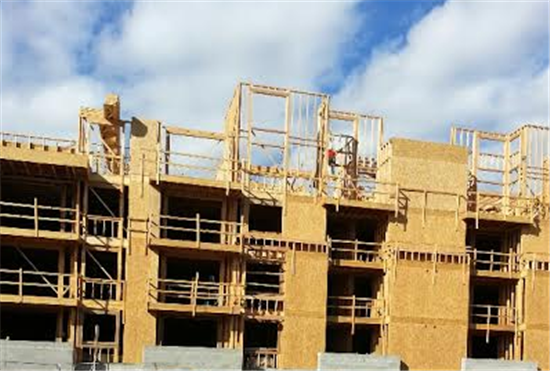
A growing pullback in multifamily development is driven by rising construction costs and new tariffs on such key materials as aluminum, steel

A growing pullback in multifamily development driven by rising construction costs and new tariffs on such key materials as aluminum and steel is signaling potential trouble ahead for future rental supply, according to the July Realtor.com Monthly Rent Report.

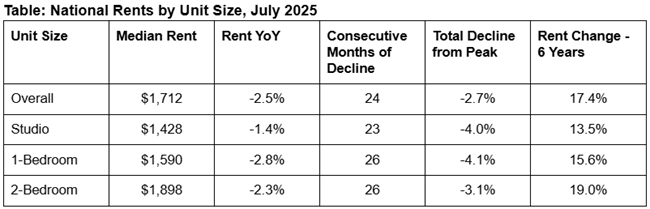
Rent prices declined for the 24th month in a row in July, marking a full two years of easing rental pressure in the U.S. rental market.

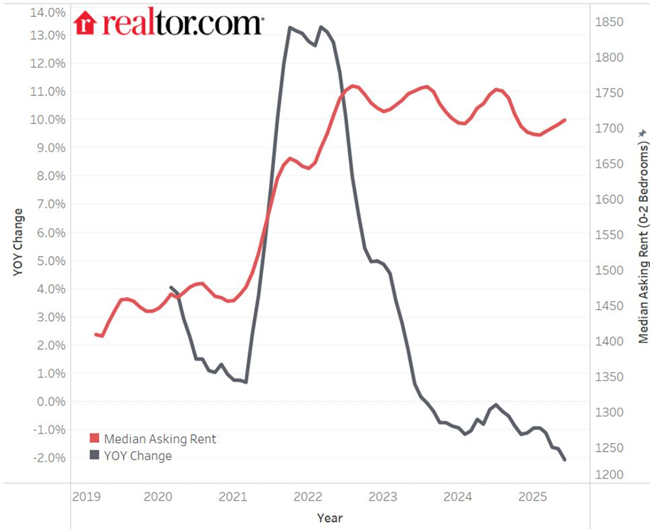
The median asking rent for 0–2-bedroom properties in the 50 largest metros fell to $1,712 in July, a $43 (-2.5%) decline compared to the same time last year.

Rents Decline Again, but Nationwide Rent Is 2.7% Below 2022 Peak
A growing pullback in multifamily development driven by rising construction costs and new tariffs on such key materials as aluminum and steel

While monthly rent growth continues to follow a typical seasonal pattern, it has consistently lagged behind last year’s pace, indicating a persistently cooler rental market. Rent prices remain $254 (17.4%) higher than their pre-pandemic levels, but are now $47 (-2.7%) below the peak reached in August 2022.

“Rents have now declined for two full years, giving renters more leverage and financial breathing room than they’ve had in some time,” said Danielle Hale, chief economist at Realtor.com in a release. “But there are early signs that relief may not last forever. Developers are pulling back in key markets, and construction headwinds—especially tariffs on steel, lumber and aluminum—could create a shortfall in new rental supply down the line.”

All Units Saw Rent Declines
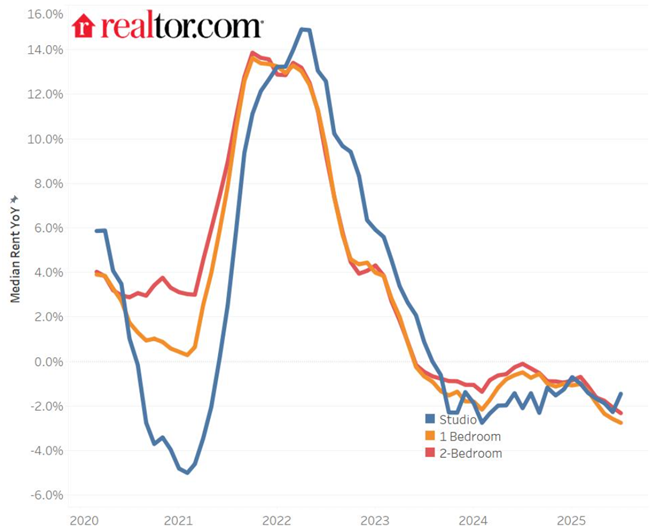
A growing pullback in multifamily development driven by rising construction costs and new tariffs on such key materials as aluminum and steel

Multifamily Development Pulls Back Sharply

In June 2025, multifamily completions for buildings with two or more units fell 38.1% year-over-year, dropping from a seasonally adjusted annual rate of 656,000 units in June 2024 to just 406,000.

This significant decline reflects the growing challenges facing developers, including elevated construction costs, shrinking profit margins due to lower rents, and newly expanded tariffs on imported building materials.

The impact is being felt unevenly across the country. The Midwest saw the steepest annual drop in completions (–55.7%), followed by the South (–33.5%), Northeast (–33.0%), and West (–28.9%).

Disrupted Local Permitting Trends with New Higher Tariffs Signals More Pullbacks Ahead

Permitting trends across large metro areas show that some markets are already feeling the effects from rising construction costs and compressed profits:

  • Orlando: Permits for multifamily units dropped -54.9% from Q1 to Q2 2025—the first Q2 decline since 2022.
  • Philadelphia and San Antonio, Texas also saw their first Q2 permitting dips in three years.
  • Charlotte, N.C. and Las Vegas experienced their largest quarterly permitting declines in Q2 since 2022.
  • Even San Francisco, which saw a modest increase, posted its slowest Q2 growth in permitting in three years.

These local slowdowns suggest that developers are responding to worsening conditions by reducing plans for new projects—an early warning sign that the supply of new rental units could tighten over time.

Looking ahead, the doubled tariffs on imported steel and aluminum announced in June could make this condition worse.

“If construction pullbacks continue, today’s renter-friendly market could give way to a tighter, more competitive landscape,” said Hale. “It’s a trend we’ll be watching closely, especially in markets that had previously led the way in multifamily development.”

Rent Trends by Unit Size

While rent prices typically rise during spring and summer, this year’s seasonal lift in rent trends has been softer than usual. As of July, rents were up just 1.2% year-to-date, compared to 2.8% growth over the same period in 2024.

Despite near-term affordability gains for renters, the sharp drop in multifamily completions and early signs of weakening permitting activity may shift market dynamics later this year or in 2026, the report says.

A growing pullback in multifamily development driven by rising construction costs and new tariffs on such key materials as aluminum and steel

Read the full report here.

Sign Up For Our Weekly Newsletter And Get Rental Property And Apartment News And Helpful, Useful Content Each Week.

* indicates required

Greystar Reaches Settlement to End Algorithmic Rent Pricing

Photo credit Michael Vi via istockimages.

ICE Agents Seek Tenant Info, Calling It ‘Welfare Check’

ICE agents seek tenant information at apartment leasing offices saying it is a welfare check to make sure kids are not being trafficked

Some apartment leasing offices in Oklahoma City say Immigrations and Customs Enforcement (ICE) agents are showing up asking for tenant information, saying they are doing “welfare checks” to make sure kids are not being trafficked, according to reports.

Oklahoma is among other states, including Georgia, where immigration authorities are demanding landlords turn over leases and rental applications, and even want them to provide forwarding addresses.

ICE agents seek tenant information

On Wednesday, leasing office staff in Oklahoma City told News 9 that ICE agents came into their office saying they were doing welfare checks to make sure kids were not being trafficked.  Leasing office staff declined to give their names out of fear of retaliation.

Oklahoma Sen. Michael Brooks-Jimenez, who is a lawyer and a Democrat, said he is aware that something similar is happening.

Brooks-Jimenez said, “ICE officers are showing up, and they’re – they’re going to the leasing offices and asking for tenant information, the leases, and they’re saying that they’re doing welfare calls.”

Brooks-Jimenez said this makes him suspicious. He added, ” I would anticipate that landlords wouldn’t be able to share this type of information without a subpoena.”

One leasing office told News 9 that ICE officers showed up and were looking in different apartments and car windows.

Brooks-Jimenez adds that the area is a part of town that is heavily populated with Central Americans.

He said it makes sense that this is an area being targeted but also said many of these people had received temporary protected status, allowing them to work for a period of time. “President Trump has begun to terminate that status in those programs. And so as a result, those people are now here without permission,” added Brooks-Jimenez.

He adds that tenants, regardless of where they are from, have a right to privacy and they do not have to open their doors.

ICE agents sometimes show up with subpoenas in leasing offices.

Denise Holliday, an Arizona attorney, noted that ICE commonly issues administrative subpoenas that can feel a bit intimidating but she encourages all business owners to learn the difference between a court-ordered subpoena and an administrative subpoena and create a policy under which they will response to ICE-related communications.

Sign Up For Our Weekly Newsletter And Get Rental Property And Apartment News And Helpful, Useful Content Each Week.

* indicates required

More New Completions Now Expected in 3rd Quarter

A declining but still sizable under-construction pipeline is leading to more new completions, up 2%, in the full-year 2025 and 2026 forecasts

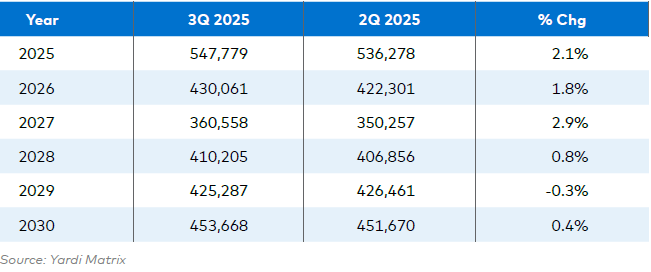
A declining but still sizable under-construction pipeline is leading to more new completions, up 2%, in the full-year 2025 and 2026 forecasts, Yardi Matrix says in a special bulletin.

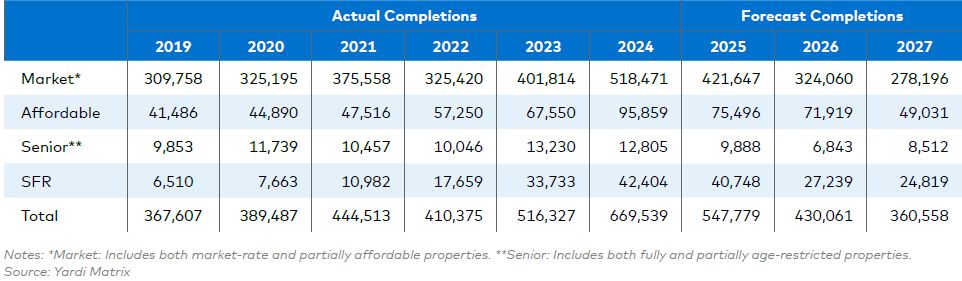
“New multifamily construction starts through mid-year 2025 are at a similar pace to the same period a year ago. As a result, the Q3 forecast update has increased 2027 completions by nearly 3.0% to 360,000 units,” the report says.

Ben Bruckner, senior research analyst writes, “the increase was driven by a slightly larger-than-anticipated under-construction pipeline at mid-year 2025.

“On a year-over-year basis, the under-construction pipeline has declined by 16.4% to 1.027 million units. Despite the decline, this level easily supports a modest increase in forecast completions to nearly 550,000 units for 2025 and 430,000 units in 2026.”

A declining but still sizable under-construction pipeline is leading to more new completions, up 2%, in the full-year 2025 and 2026 forecasts

Forecast Coverage

The supply forecast covers market rate, senior housing, multifamily property types, as well as single-family rental units.

Since most under-construction and planned properties have identified property types, the first three years of the forecast can be broken out by sector.

A declining but still sizable under-construction pipeline is leading to more new completions, up 2%, in the full-year 2025 and 2026 forecasts

Long-Term Forecast: 2027 Through 2030

The Yardi Matrix report says the administration’s tariff policies will not be sufficient to push the economy into recession.

“The longer-term forecast assumes continued steady but unspectacular economic and employment growth, continued deceleration in service-related inflation, and a transitory increase in goods-related inflation. This leaves room for the Federal Reserve to lower short-term rates by 50 basis points in late 2025, with additional moderate easing to follow in 2026,” Bruckner writes.

“Lower interest rates and continued modest economic growth provide a tailwind for new multifamily development in 2026. As a result, the forecast continues to model construction starts bottoming in 2025 and rebounding in 2026, with further growth in new development activity in subsequent years. The end result is new supply increasing to 410,000 units in 2028 and gradually increasing to more than 450,000 units by 2030.”

Read the full report here.

About Yardi Matrix

Yardi Matrix researches and reports on multifamily, office and self-storage properties across the United States, serving the needs of a variety of industry professionals. Yardi Matrix Multifamily provides accurate data on 18+ million units, covering more than 90 percent of the U.S. population. Contact the company at (480) 663-1149.

About Yardi Matrix

Yardi Matrix researches and reports on multifamily, office and self-storage properties across the United States, serving the needs of a variety of industry professionals. Yardi Matrix Multifamily provides accurate data on 18+ million units, covering more than 90 percent of the U.S. population. Contact the company at (480) 663-1149.

Sign Up For Our Weekly Newsletter And Get Rental Property And Apartment News And Helpful, Useful Content Each Week.

* indicates required

5 Exterior Improvements To Increase Your ROI

Here are 5 exterior improvement suggestions for your rental that will get you the best rent from the best tenants the first time.
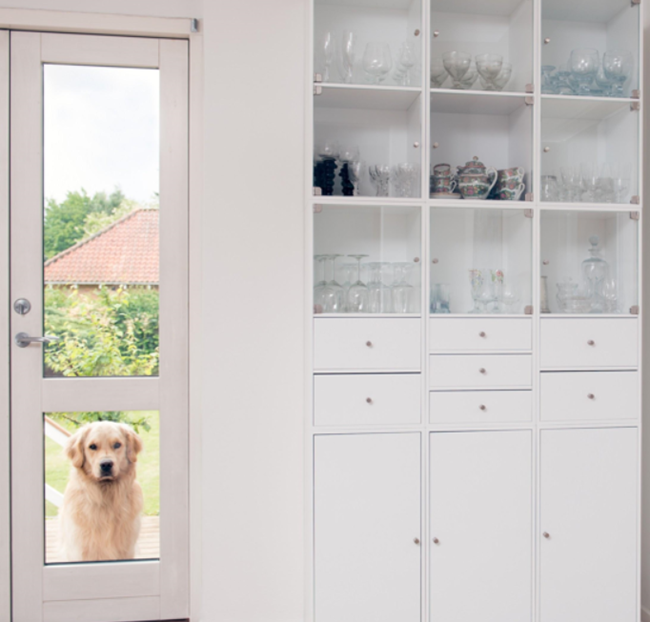
Glass doors made for the purpose of being a property’s front door are generally reinforced to make it difficult for intruders to gain access.

Here are 5 exterior improvement suggestions for your rental that will get you the best rent from the best tenants the first time.

By Nancy Abrams

Whether you are managing a single-family home, apartment or condominium, your investment will reach its maximum potential when you consistently attract the best tenants. In order to get the best rents from the best tenants, your property needs to look its best and make an excellent first impression.

It’s often said that you never get a second chance to make a first impression. When a potential tenant sees your property for the first time, it is imperative that it looks its best and makes them think, “I want to live here.”

According to a 2024 Cost vs Value Report compiled by Zonda, a leading provider of data to the residential home building industry, exterior improvements provided the highest return on investment (ROI) for property owners.

Here are five ways to improve your property’s first impression and your ROI with exterior improvements:

1. Replace the garage door

The No. 1 ranking improvement according to Zonda is the replacement of the garage door. It is estimated that 194% of the cost of the new door will be recovered when the property is ultimately sold. An updated, attractive garage door with an electronic opener will help create a great first impression.

2. Upgrade the front door

The second thing your potential renter notices when visiting your property for the first time is the building’s front door. Zonda’s research concluded that the cost of a new steel entry door will increase your ROI 188%. In addition to providing better insulation, the new door will also add security. If you cannot afford a new door, add a fresh coat of paint in a contrasting color.

3. Add a smart-lock security system with camera

Even the oldest property will suddenly seem high-tech when your prospect sees an up-to-date smart lock and a front-door camera system. A new SmartRent survey indicates that 58% of new renters will pay $50.03 more for this amenity.

4. Replace single-pane windows

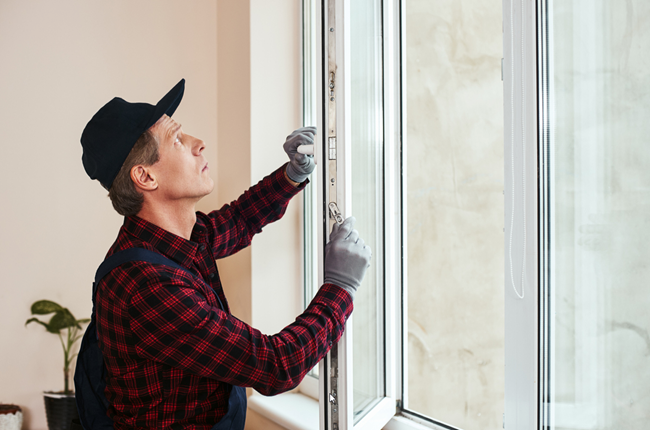
Window replacement is also high on the list of improvements that will benefit your bottom line. Replacing single-pane windows with energy-efficient double-pane vinyl windows can change the whole look of your investment property and add 67% to your ROI. It will also create better insulation and cut down on ambient noise while adding visual appeal.

5. Repair or replace the roof

A new tenant wants the security of knowing that the building’s roof can withstand extreme weather conditions. When they can see that a roof is in disrepair, it can certainly make a bad first impression and cause them to hesitate about moving in. The Zonda report notes that a roof replacement can add up to 57% to your ROI.

Be strategic as you look around your rental property, deciding which exterior improvements you want to revamp so tenants will visualize your place as the place they want to live. Choose neutral colors and traditional finishes that will stand the test of time rather than going with trendy alternatives that you will have to change in a few years.

The key to getting the most out of your investment and the highest ROI is finding the right balance between affordability and visual impact with exterior improvements.

About the author:

Nancy Abrams serves as content editor for the American Apartment Owners Association (AAOA). AAOA assists landlords, property managers, real estate owners and brokers across the country with managing their properties, including tenant credit checks and tenant background screening as well as state-specific landlord forms, such as a rental application or rental agreement.  The association also offers resources from educational webinars and landlord tenant law to approved providers for insurance, rent collection and financing. Contact us today to learn more.

Sign Up For Our Weekly Newsletter And Get Rental Property And Apartment News And Helpful, Useful Content Each Week.

* indicates required

Portland Rents Rose Slightly in July

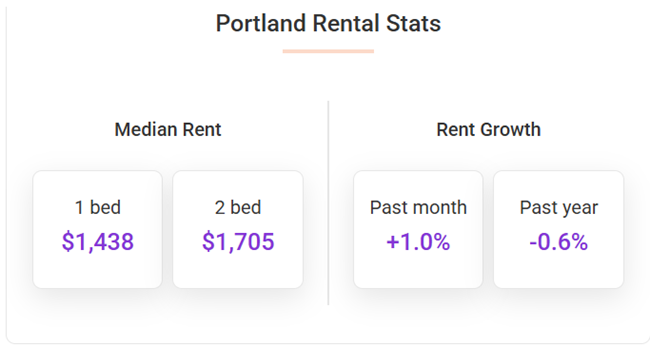
Portland rents were up 1% in July, according to the August report from Apartment List while the overall median rent in Portland is $1,583.

Portland Oregon rents were up 1% in July, according to the August report from Apartment List.

The overall median rent in Portland is $1,583. As far as Portland rents in July the median rent for a one-bedroom apartment is $1,438, and $1,705 for a 2-bedroom. Rent prices remain down 0.6% year-over-year.

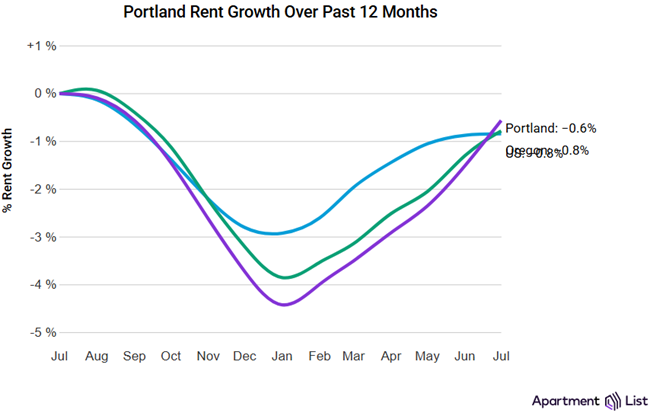
Portland’s rent growth over the past year is similar to both the state (-0.8%) and national averages (-0.8%).

Portland rent growth in 2025 pacing similar last year

Seven months into the year, rents in Portland have risen 4.0%.

This is a similar rate of growth compared to what the city was experiencing at this point last year; from January to July 2024, rents had increased 4.4%.

Portland rents were up 1% in July, according to the August report from Apartment List while the overall median rent in Portland is $1,583.

For comparison to Portland rents in July, the median rent across the nation as a whole is $1,231 for a 1-bedroom, $1,387 for a 2-bedroom, and $1,402 overall. The median rent in Portland is 12.9% higher than the national, and is similar to the prices you would find in Aurora, CO ($1,603) and Madison, WI ($1,582).

Portland rents are 6.0% lower than the metro-wide median

Across the Portland metro area, the median rent is $1,685, meaning that the median price in Portland proper ($1,583) is 6.0% lower than the price across the metro as a whole. Metro-wide annual rent growth stands at -0.8%, below the rate of rent growth within just the city.

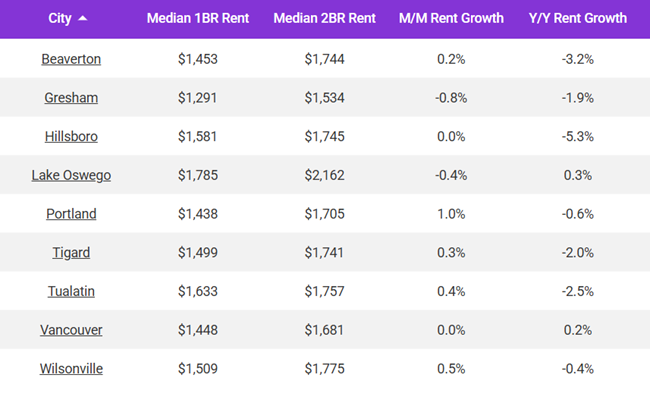
The table shows the latest rent stats for 9 cities in the Portland metro area that are included in the Apartment List database.

Among them, Lake Oswego is currently the most expensive, with a median rent of $2,039. Gresham is the metro’s most affordable city, with a median rent of $1,513. The metro’s fastest annual rent growth is occurring in Lake Oswego (0.3%), while the slowest is in Hillsboro (-5.3%).

Portland rents were up 1% in July, according to the August report from Apartment List while the overall median rent in Portland is $1,583.

Sign Up For Our Weekly Newsletter And Get Rental Property And Apartment News And Helpful, Useful Content Each Week.

* indicates required

Rents Hold Steady In July: Vacancies Tick Up

National rents in July held steady as the vacancy rate hit a new peak and have now been flat during the peak moving season.

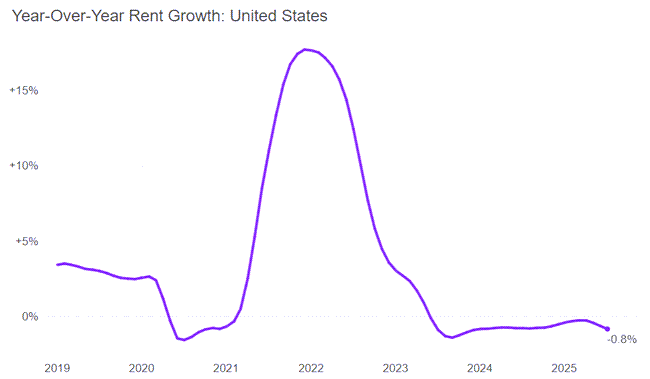
National rents held steady in July as the vacancy rate hit a new peak, according to the August report from Apartment List. Rents grew month-over-month early in the year, but have now been flat during the peak moving season.

“After increasing by 0.6 in March, our national rent index has seen its growth rate trending down over the past four months, at odds with the typical seasonal trend,” the Apartment List Research Team writes in the report.

“The late spring and summer months are normally the peak season for moving activity, and rent growth tends to ramp up at this time of year in tandem with demand. The fact that we’ve instead seen rent growth get increasingly sluggish indicates softness in the market, possibly reflecting declining consumer confidence amid a more uncertain macroeconomic outlook,” the report says.
National rents in July held steady as the vacancy rate hit a new peak and have now been flat during the peak moving season.

In dollar terms, the national median monthly rent now stands at $1,402, down $11 compared to July 2024. With the overall trajectory of rents trending modestly downward in recent years, the national median rent has now fallen below its August 2022 peak by a total of 2.8 percent, or $40 per month.


But that cooldown came following a period of record-setting rent growth, and the typical rent price remains 22 percent higher than its January 2021 level.

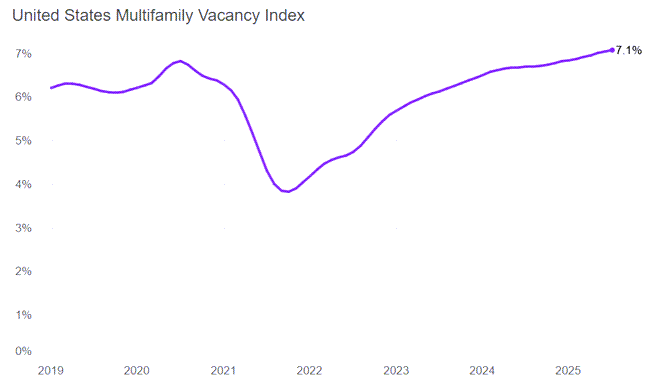
Multifamily vacancy rate hits 7.1%, a new peak

“Our national vacancy index – which measures the average vacancy rate of stabilized properties in our marketplace – ticked up this month and now stands at 7.1 percent.

“This represents an all-time high for this data series, which goes back to the start of 2017. We are now past the peak of the apartment construction wave, but even as the level of new supply hitting the market falls sharply compared to last year, it remains robust by historic standards. The vacancy rate will begin to tighten eventually, but for now it continues to rise as the market is still absorbing a swell of new units,” the report says.
National rents in July held steady as the vacancy rate hit a new peak and have now been flat during the peak moving season.

List-to-Lease time ticks up for first time this year

July saw time on market tick up from the first time this year, increasing from 27 days in June to 28 days in July.

As more vacant units have come onto the market, those units have also been sitting vacant for somewhat longer.

Report Summary

The research team writes, “All of our key indicators are pointing toward ongoing sluggishness in the multifamily rental market – rent growth is slipping and the vacancy rate is at an all-time high. The outlook has been complicated by macroeconomic whiplash being caused by tariffs and other policies being pursued by the Trump administration.

“That uncertainty appears to have modestly dampened demand during this moving season. And although the supply wave is receding, the number of units that hit the market in the first half of this year was still above the long-run average. With construction expected to slow further in the second half of this year and into 2026, conditions are likely to shift.”

Read the full report here.

Seattle Rents Ramp Up 1.2% In July

Seattle rents rose 1.2% in July with median rent now $2,140 as rent growth over the past year has outpaced both state and national averages.

Seattle rents rose 1.2% in July and the median rent in the city is now $2,140, according to the August report from Apartment List.

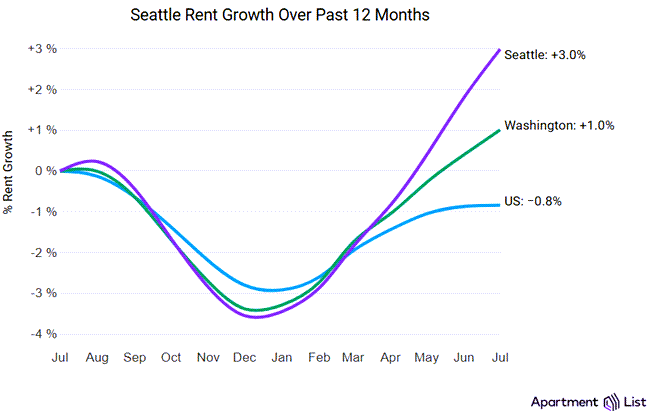
Seattle’s rent growth over the past year has outpaced both state (1.0%) and national (-0.8%) averages.

Seattle rent growth in 2025 pacing above last year

Seven months into the year, rents in Seattle have risen 6.7%. This is a faster rate of growth compared to what the city was experiencing at this point last year: from January to July 2024 rents had increased 5.5%.

Seattle rents rose 1.2% in July with median rent now $2,140 as rent growth over the past year has outpaced both state and national averages.

July rent growth in Seattle ranked #4 among large U.S. cities

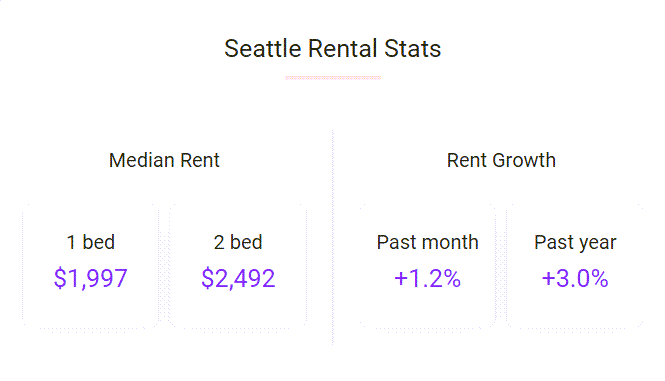
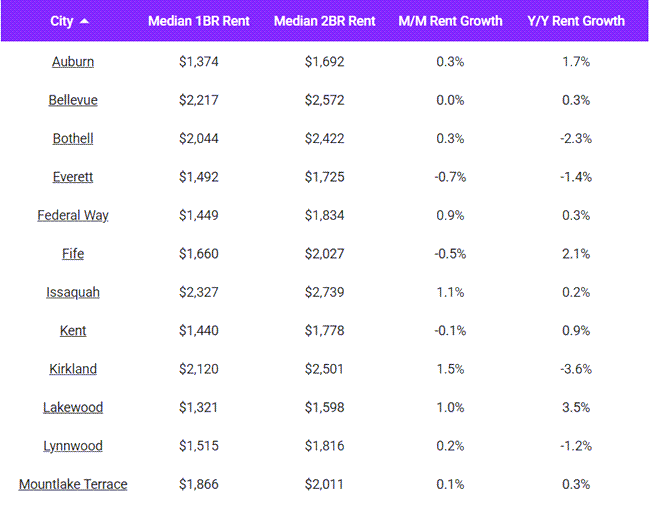
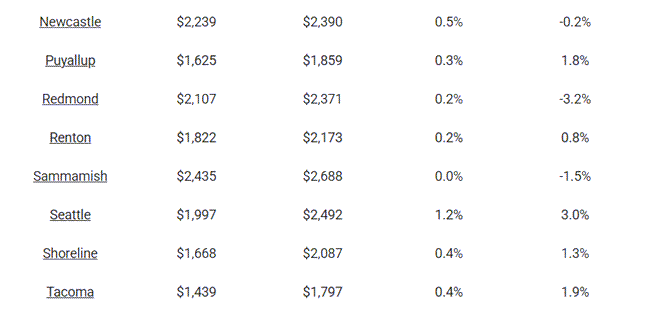
Seattle rents went up 1.2% in the past month, compared to the national rate of 0.0%. Among the nation’s 100 largest cities, this ranks #4. Citywide, the median rent ist $1,997 for a 1-bedroom apartment and $2,492 for a 2-bedroom. Across all bedroom sizes  the median rent is $2,140.

Seattle rents are 4.9% higher than the metro-wide median

Across the Seattle metro area, the median rent is $2,040 meaning that the median price in Seattle proper ($2,140) is 4.9% greater than the price across the metro as a whole. Metro-wide annual rent growth stands at 1.1%, below the rate of rent growth within just the city.

The table below shows the latest rent stats for 20 cities in the Seattle metro area that are included in the Apartment List database. Among them, Sammamish is currently the most expensive, with a median rent of $3,028. Lakewood is the metro’s most affordable city, with a median rent of $1,504. The metro’s fastest annual rent growth is occurring in Lakewood (3.5%) while the slowest is in Kirkland (-3.6%).

Seattle rents rose 1.2% in July with median rent now $2,140 as rent growth over the past year has outpaced both state and national averages.

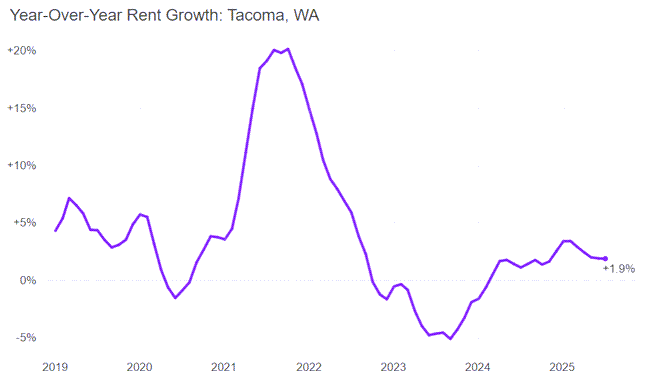
Tacoma year over year rent growth

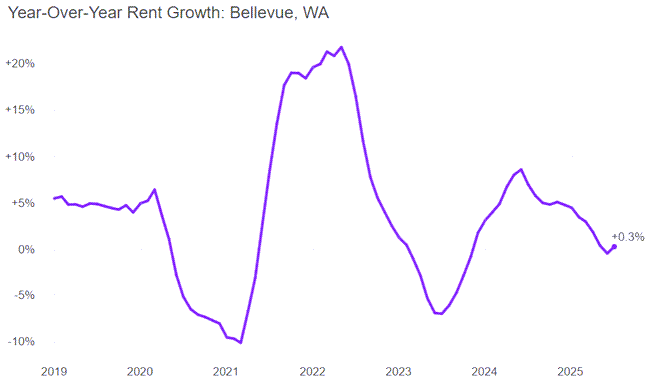
year over year rent growth in Bellevue

Read the full report here.


Sign Up For Our Weekly Newsletter And Get Rental Property And Apartment News And Helpful, Useful Content Each Week.

* indicates required

Pet Owning Renters Face Barriers Despite “Pet-Friendly” Ads

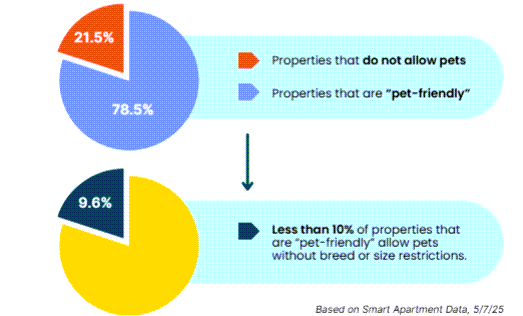
While 79% of rental properties are labeled “pet-friendly,” less than 10% actually allow pets without breed restrictions or size restrictions.

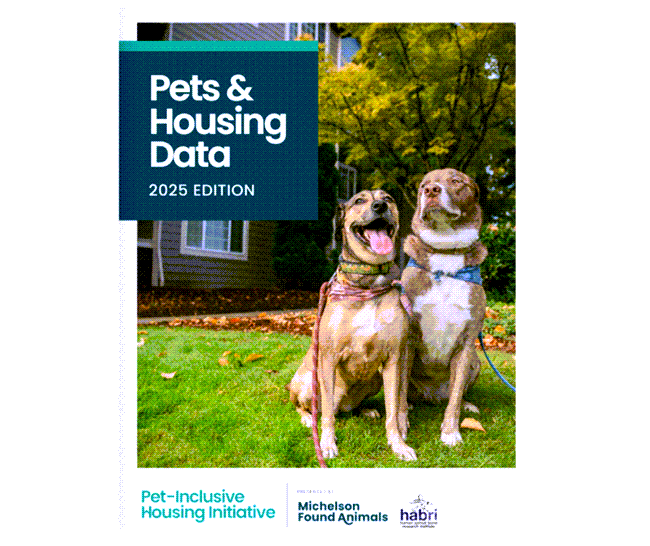
A new national report from the Pet-Inclusive Housing Initiative (PIHI), a Michelson Found Animals Foundation program, reveals a critical gap between perception and reality in the U.S. rental housing market. While 79% of rental properties are labeled as “pet-friendly,” less than 10% actually allow pets without breed or size restrictions.

While 79% of rental properties are labeled “pet-friendly,” less than 10% actually allow pets without breed restrictions or size restrictions.

The 2025 Pet-Inclusive Housing Report analyzes current housing policies and renter experiences across all 50 states, uncovering the financial and emotional toll restrictive pet policies place on millions of families. With updated data from Smart Apartment Data and original research conducted by PIHI, the report paints a detailed and urgent picture of the need for policy reform.

Pet-Friendly: Key Findings from the 2025 Report Include:

  • Less than 10% of “pet-friendly” properties allow pets without breed or size restrictions nationally.
  • Monthly pet rent is the most burdensome cost for renters across all income levels.
  • LA ranks among the worst major cities for pet-friendly housing access, with just 64% of properties allowing pets—and only 5% without restrictions.
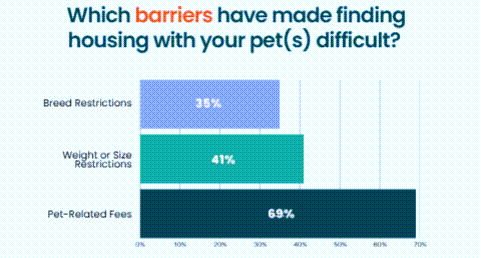
  • Breed and size restrictions are among the top three barriers renters face when searching for housing with pets.
  • Nearly 1 in 4 renters have declared a pet an emotional support animal (ESA) primarily to overcome housing barriers.
  • Over 70% of renters report no pet-related damage to their units, debunking common myths about property risk.
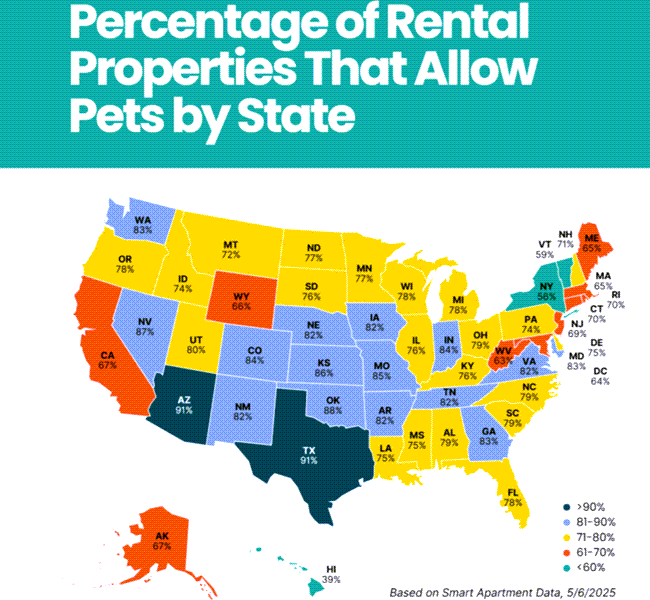
  • Access to pet-friendly housing varies dramatically by state, from 91% in Arizona and Texas to just 39% in Hawaii and 56% in New York.

While 79% of rental properties are labeled “pet-friendly,” less than 10% actually allow pets without breed restrictions or size restrictions.

“This report confirms what too many pet owners already know: ‘pet-friendly’ often doesn’t mean accessible,” said Ross Barker, Director of the Pet Inclusive Housing Initiative.

“Breed and size restrictions, added fees, and inconsistent policies keep families in a constant state of housing insecurity. Our hope is that these findings will galvanize policymakers, housing providers, and advocates to align on common-sense reforms that recognize pets as part of the family and housing as a stabilizing force.”

While 79% of rental properties are labeled “pet-friendly,” less than 10% actually allow pets without breed restrictions or size restrictions.

To access the full report and learn more about pet-inclusive housing reform, visit: Pet-Inclusive Housing Reports.

Michelson Found Animals Foundation, founded in 2005, directly provides animal welfare services and champions pets at every point they intersect with our society. The foundation operates a range of initiatives, including grants and programs that put resources in the hands of communities in need, research that promotes pet-friendly policies, and more. Learn more at foundanimals.org.

The report also includes survey responses from over 500 U.S. pet-owning renters, with more than 80% of dog owners reporting difficulty finding rental housing with their pets. The consequences of these restrictions are profound: families are forced to rehome beloved pets, misrepresent them as ESAs, or hide them altogether, driving up shelter populations and deepening housing instability.

“At MFA, we know that one of the most impactful ways to drive change is by removing barriers to housing for pet owners, increasing access to housing, and preventing pets from unnecessarily entering shelters,” said Dr. Gary K. Michelson, Founder & Co-Chair of Michelson Found Animals. “This report shines a light on where those barriers continue to exist and how we can work together to remove them.”

https://heyzine.com/flip-book/2025petsandhousingdata.html

Sign Up For Our Weekly Newsletter And Get Rental Property And Apartment News And Helpful, Useful Content Each Week.

* indicates required

6 Ways to Arm Yourself Against Deadbeat Tenants

Here are 6 ways to arm yourself against deadbeat tenants to safeguard your property and financial interests.

Here are 6 ways to arm yourself against deadbeat tenants to safeguard your property and financial interests.

By Nancy Abrams

Finding reliable tenants is the key to successful property management. But how can you be confident that tenants will pay their rent on time and will not do damage to your rental property?

You can’t trust your intuition or cross your fingers when you sign a lease with a tenant. Without careful screening, you may have to eventually contend with tenants who don’t uphold their lease obligations.

Here’s how to safeguard your property and financial interests from deadbeat tenants:

1. Thorough tenant screening

  • Implement a robust screening process: An immediate, comprehensive landlord credit check will help shield your real estate assets against deadbeat tenants, expensive eviction costs and loss of rental income in addition to avoiding a great deal of aggravation.
  • Run background checks and confirm the applicant’s financial stability with employment and income verifications to ensure they can comfortably afford the rent.
  • Verify references: Contact previous landlords to gain insight into a potential tenant’s past behavior.
  • Be consistent and fair: Apply the same screening criteria to all applicants to comply with fair housing laws and avoid discrimination claims.

2. Strong lease agreement

Draft a comprehensive lease agreement. Clearly outline payment terms, due dates, late fee policies, property maintenance responsibilities and behavior expectations, such as noise levels, guest limits, etc.

Include clauses for lease violations and eviction procedures. Ensure the lease covers subletting restrictions, rules for breaking the lease and the legal process for resolving disputes.

Ensure that your lease complies with local landlord-tenant laws and is legally enforceable.

3. Financial safeguards

  • Cover potential damages or unpaid rent by requiring a security deposit.
  • Protect yourself from property damage, lost rent and legal expenses by investing in landlord insurance.

4. Effective communication and documentation

Maintain professional communication: To develop a positive relationship and prevent disputes from escalating, address tenant concerns promptly and respond to maintenance requests quickly.

Document everything: Keep detailed records of all interactions, including rent payments, repair requests and rule violations. These records can be crucial evidence if legal action becomes necessary.

Conduct regular inspections: Schedule inspections at least twice a year to check the property’s condition and address potential issues early.

5. Proactive measures for non-payment

  • Some state or local laws require a grace period before late fees can be charged.
  • Keep a legal record of non-payment and send late-rent notices as soon as the rent is overdue.
  • Communicate with the tenant and offer potential solutions, such as payment plans, if appropriate.

6. Taking legal action when necessary

  • Understand your rights by familiarizing yourself with landlord-tenant laws and eviction procedures in your area.
  • If rent remains unpaid, serve a “Pay or Quit” notice. This formal notice gives the tenant a specific timeframe (e.g., three to seven days, depending on local laws) to pay the overdue rent or vacate the property.
  • Consider “Cash for Keys” as a last resort. In some situations, offering a financial incentive to vacate can be more cost-effective than a lengthy eviction process.
  • If the tenant fails to comply with the “Pay or Quit” notice, you may need to file an unlawful detainer lawsuit and follow the formal eviction process to regain possession of your property.
  • Hire an attorney specializing in landlord-tenant law to navigate complex cases and ensure compliance with all regulations.

By implementing these preventative measures and taking appropriate action when issues arise, you can minimize the risk associated with renting to deadbeat tenants and protect your investment.

About the author:

Nancy Abrams currently serves as Content Editor for AAOA (the American Apartment Owners Association). AAOA assists landlords, property managers, real estate owners and brokers across the country with managing their properties, including tenant credit checks and tenant background screening as well as state-specific landlord forms, such as a rental application or rental agreement.  The association also offers resources from educational webinars and landlord tenant law to approved providers for insurance and financing. Contact us today to learn more.

Sign Up For Our Weekly Newsletter And Get Rental Property And Apartment News And Helpful, Useful Content Each Week.

* indicates required

7 Summer Rental Property Maintenance To-Do’s

Here are 7 summer rental property maintenance to-do's for summer to keep your investment looking good for your tenants.

Here are 7 summer rental property maintenance to-do’s for summer to keep your investment looking good for your tenants.

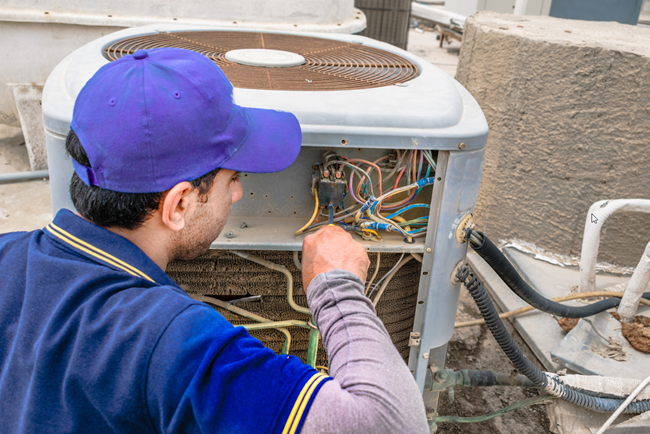
No. 1 – Air Conditioning System. Ensure your tenants will be able to enjoy a functional air conditioning system in the summer, so check now instead of waiting for them to call later. An HVAC specialist can check whether the air conditioning system is in optimal shape and clean condensers and evaporators from debris that naturally accumulate after the air conditioning is not being utilized regularly.

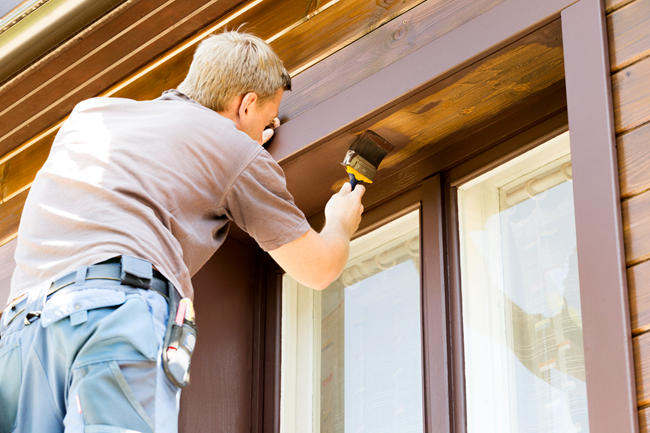
No. 2 – Painting. Good rental property maintenance includes tending to worn and discolored walls, doors, windows, fences and porches is a perfect activity for the spring. A professional can get your exteriors back to like-new condition with a fresh coat of paint.

Here are 7 summer rental property maintenance to-do's for summer to keep your investment looking good for your tenants.

No. 3 – Window and Door Screens. All screens should be thoroughly checked for tears, as they represent an easy point of entry for those bugs and critters that start showing up as the weather gets hotter. Older, loose and worn screens or frames should be promptly replaced to avoid the annoyances of bugs’ activities within the home.

maintenance to-do's for summer to keep your investment looking good for your tenants.

No. 4 – Porches and Fences. Wooden fences and porches should be treated with protective sealant every four to six years. A professional can assess the condition of porches and fences to recommend necessary treatments, which protect wood from the cracks, warping, rotting and discoloration that can happen as a result of wet weather and/or direct sunshine exposure.

No. 5 – Decks. Especially in older properties, exterior decks can begin to wear down, rot and become unstable and unsafe. A specialist can check the conditions of a deck’s structure and recommend necessary repairs to ensure that tenants can safely enjoy spending time outside as the weather gets warmer.

Here are 7 to-do's for summer to keep your investment looking good for your tenants.

No. 6 – Landscaping. If your property is surrounded by greenery, a professional should be hired to trim overgrown vegetation, remove debris and leaves, and inspect plants that are actively growing on the property’s structure or fencing. This allows for vegetation to grow neatly around the property, which is both aesthetically pleasant and safe, since overgrown surroundings make for perfect living spaces for pests and other wildlife.

No. 7 – Garden Sprinklers: If you rely on a sprinkler system to maintain your property’s lawn check it after it was unused for several months and before it starts beings used often. A professional can check for leaky valves, inefficient lines, water pressure levels and faulty sprinkler heads.

These items for your summer rental property maintenance will keep tenants and property managers happy.

Sign Up For Our Newsletter And Get Apartment News And Helpful, Useful Content Each Week.

* indicates required

Rental Property Maintenance Checklist, Part One: Plumbing

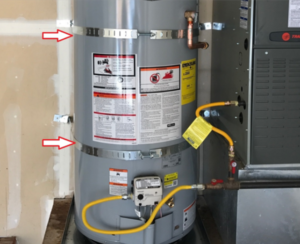
rental property maintenance plumbing and water heater secured with straps in earthquake prone areas of the country

3 Common Plumbing Emergencies In Rental Properties And What To Do

Rental Property Maintenance: 6 Items to Troubleshoot in Your Crawl Spaces

How to Waterproof Your Basement</

Part 2 – Rental Property Maintenance: Security, Pest Control, & Exteriors