
Home Blog Page 13

Plenty of Women at the Table – Until the Table Gets Smaller

Women in multifamily: The vibrant, female-driven workforce at the property and regional levels seemed to disappear in the upper leadership.

Careers for women in multifamily housing: The vibrant, female-driven workforce I knew at the property and regional levels seemed to disappear in the upper tiers of leadership.

By Judy Bellack

When I began my career in multifamily housing nearly 40 years ago, women were already a strong presence in the leasing offices, property-management teams, and regional leadership roles.

From my earliest days, I called on and worked alongside smart, capable women who could fill a building, solve a crisis, lead a team, and manage a budget with the same ease they brought to welcoming new residents.

Yet as I advanced in my own career, moving from my first entry-level role into mid-management and then executive levels, I noticed something troubling: The higher I climbed, the fewer women I saw beside me (and as a supplier, across the table from me).

The vibrant, female-driven workforce I knew at the property and regional levels seemed to disappear in the upper tiers of leadership. In its place was a far more male-dominated landscape—one that didn’t reflect the talent I knew was out there.

While I’ve seen progress in the decades since—more women at the table, more companies embracing the business case for diversity—the reality is that our industry still has a long way to go. And this isn’t just about women.

True equity and inclusion must extend to people of color, the LGBTQ+ community, and anyone historically shut out of decision-making spaces. It’s time we name this inversion gap for what it is and commit to closing it—not someday, but now.

The Pipeline Is Robust. The Promotions Aren’t

The numbers tell a story many of us already sense from lived experience.

At the property level, women are not just present—they are the majority. Across the United States, roughly 60–62% of property managers are women, and in many markets, regional managers and directors are also predominantly female. On paper, this should mean the industry has a robust leadership pipeline.

But something happens as you climb the ladder. While women represent about 36–37% of the broader commercial real estate workforce, they make up only 9% of C-suite roles.

Some analyses report an even starker picture—just 1.3% of women in the C-suite, with over one-third of firms having no women in any senior executive positions at all. And for women who do make it to the top, the pay gap widens dramatically—from 9% less than men in entry-level roles to 33% less at the executive level.

In multifamily development leadership, the picture varies by market: In major metro areas, the share of women in top roles can be as low as 6% or as high as 23%—a sign that geography and local culture still heavily influence who gets the keys to leadership.

Clarifying the Concepts: Inequality, Equality, Equity, and Justice

When we talk about this dynamic, it’s important to be precise with our language.

Inequality is the imbalance itself—when one group, in this case women, is underrepresented in leadership or paid less for the same work.

Equality means everyone gets the same access, resources, and opportunities—important, but insufficient if starting points are wildly different.

Equity goes further, ensuring that resources and support are tailored to close gaps and remove disadvantages. Equity recognizes that the same opportunity offered to everyone doesn’t always yield the same outcome.

Justice is the ultimate goal: dismantling the systemic barriers—bias, exclusionary networks, inflexible work cultures—that created the inequity in the first place.

In multifamily, we’ve made strides toward equality—there are more women in leadership programs, on panels, and in professional networks than there were 20 years ago. But true equity is uneven, and justice is still aspirational. Until systemic barriers are addressed, progress will remain fragile.

Personal Reflection & Industry Trends

In nearly four decades in this business, I’ve seen real change worth celebrating.

I’ve watched women become business-line leaders, presidents of management companies, and CEOs of supplier partners. I’ve seen companies embrace family-friendly policies and, in some cases, actively recruit diverse talent for senior roles.

Yet, I’ve also seen how slow and uneven this progress is.

I personally hit the glass ceiling–hard. I ultimately left the industry for a brief period to accept my first C-suite role.

Industry data shows that while female candidate placements in top roles ticked up in recent years, the overall percentage of women in the C-suite has barely moved.

Too often, I still hear from women who are the “only” in the boardroom—or who’ve had to fight twice as hard for the same title or pay as their male peers. The persistence of this pattern is not just frustrating; it’s a business problem, because diverse leadership teams outperform homogenous ones in innovation, employee engagement, and profitability.

Why This Matters

When women’s advancement stalls, the industry loses more than fairness—it loses talent, perspective, and competitive advantage.

Studies show that diverse leadership teams make better decisions and deliver stronger financial results. Conversely, every time a qualified woman leaves because the path ahead is blocked, we weaken the leadership pipeline for the entire sector.

This is not a “nice-to-have” problem. Multifamily companies are in a war for talent. We cannot afford to overlook the very people who are driving operational success on the ground—people who, given the opportunity, could shape the industry’s future from the top.

Actionable Suggestions for Industry Leaders

If you’re serious about changing this dynamic, it requires intention—not just aspiration.

  • Measure and publish the data: Track gender representation and pay at every level, and make those numbers visible. Transparency forces accountability.
  • Invest in mentorship and sponsorship: Mentors offer guidance; sponsors open doors. Pair high-potential women with leaders who can advocate for their advancement.
  • Design policies that work for everyone: Flexible schedules, equitable parental leave, and remote options aren’t perks—they’re retention strategies.
  • Examine your culture: From the language in job postings to who gets invited to networking dinners, culture signals who belongs and who doesn’t.
  • Be intentional in promotions and hiring: Require diverse candidate slates, and hold leaders accountable for developing talent inclusively.
  • Tie DEI to performance goals: If leadership compensation is linked to operational metrics, it should also reflect progress on diversity, equity, and inclusion.

A special note here given the unavoidable politics of our current administration: Have the leadership courage to pursue DEI initiatives rather than ditch them to the detriment of your companies and our industry.

Advice to Women in the Industry

For women navigating this space, my advice is simple but not always easy:

  • Don’t accept being the “only” quietly. Seek out allies—both male and female—and build networks that lift you up and keep you connected.
  • Ask for what you deserve—whether it’s a promotion, a raise, or a seat at the table. Your work is valuable, and your compensation should reflect it.
  • Choose your culture wisely. No role is worth staying in a place where your voice is muted or your growth is limited.
  • Push for change where you are. If your company’s panels, leadership teams, or recruitment pools are homogenous, say so. Offer solutions.
  • Support others. When you reach a milestone, extend your hand to the next woman coming up behind you.

The road to equity and justice is long, but it’s easier to travel when we refuse to walk it alone.

Wrapping Up

The multifamily industry has the people, the talent, and the will to lead the way in building truly equitable leadership pipelines.

But good intentions without measurable action will only keep us moving at the same slow pace we’ve seen for decades. Equality—offering the same opportunity to everyone—is a starting point, but equity and justice require deeper, structural changes that remove barriers and make advancement a realistic outcome for all.

For industry leaders, this means making equity a business priority with the same seriousness as revenue or NOI. It means holding ourselves accountable for who sits in leadership chairs and who’s still waiting outside the door.

For women—and for all underrepresented voices—it means refusing to accept a career ceiling that’s invisible only to those not standing beneath it. It means speaking up, negotiating fiercely, and advocating for one another, because no one should have to navigate this path alone.

If we do this right, the next generation of women in multifamily won’t have to tell the same story I’m telling today. They’ll have a different one—a story not of the gaps we tolerated, but of the progress we made together.

About the author:

Women in multifamily: The vibrant, female-driven workforce at the property and regional levels seemed to disappear in the upper leadership.

Judy Bellack is a seasoned business executive and consultant with 30 years’ experience leading sales/operations/marketing teams for suppliers to the multifamily industry. Former NAA Supplier’s Council Chair, NMHC Supplier Partner Alliance Chair and NAA Paragon Award Winner. Industry Principal for Michelson Found Animals.


Sign Up For Our Weekly Newsletter And Get Rental Property And Apartment News And Helpful, Useful Content Each Week.

* indicates required

7 Ways Landlords Can Keep Rental Properties Bed Bug-Free

Here are 7 smart measures for landlords to take that can keep rental properties bed bug free and avoid costly remediation.

Here are 7 smart measures for landlords to take that can keep rental properties bed bug free and avoid costly remediation.

By Daniel Clark

Maintaining a rental property comes with numerous responsibilities, and one of the most critical is ensuring a safe, clean, and pest-free environment for tenants.

Bed bugs are a persistent problem in rental properties, capable of causing distress, health issues, and costly remediation. For landlords, understanding preventive measures and incorporating a business such as Pest Control Naperville into property-management routines is essential to protect tenants and maintain property value.

Understanding Bed Bugs

Bed bugs are small, reddish-brown insects that feed on human blood, typically at night. They are not known to transmit diseases, but their bites can cause itching, allergic reactions and sleep disturbances. These pests are highly resilient and can survive in furniture seams, mattresses, wall crevices, and even behind picture frames.

Because bed bugs reproduce quickly and spread easily, early detection and preventive strategies are crucial for landlords. Once an infestation takes hold, treatment can become time-consuming, expensive, and disruptive to tenants.

How Bed Bugs Enter Rental Properties

Preventing bed-bug infestations begins with understanding how they spread. Bed bugs typically enter properties through:

  1. Tenants’ belongings – Luggage, clothing, or second-hand furniture can carry bed bugs from hotels, public transportation, or other infested spaces.
  2. Adjacent units – In multi-unit buildings, bed bugs can migrate through walls, electrical outlets, or ventilation ducts.
  3. Shared spaces – Common areas like laundry rooms or storage units can serve as points of entry if not properly maintained.

Understanding these entry points allows landlords to take proactive measures to reduce the likelihood of an infestation.

Preventive Measures for Landlords

1. Regular Property Inspections

Frequent inspections are one of the most effective ways to detect early signs of bed bugs. Landlords should check beds, mattresses, upholstered furniture, and wall crevices. Early signs include:

  • Small reddish or brown spots on bedding or mattresses
  • Shed bed-bug skins
  • Tiny eggs or eggshells in seams or cracks

By identifying infestations early, landlords can address the problem before it spreads throughout the property.

2. Educating Tenants

Tenant awareness is key in preventing bed bugs. Providing educational materials on how to spot bed bugs, report bites, and minimize risk can significantly reduce the chances of an infestation. Encourage tenants to:

  • Inspect second-hand furniture before bringing it into the property
  • Wash and dry clothing on high heat after returning from travel
  • Report any suspicious bites or sightings promptly

3. Investing in Protective Covers

Using bed bug-proof mattress and box-spring encasements is a practical preventive measure. These covers eliminate hiding spots for bed bugs, making inspection easier and reducing the potential for infestations.

4. Reducing Clutter

Clutter provides hiding places for bed bugs, making detection and treatment more difficult. Encouraging tenants to keep spaces organized and minimize excess items, particularly in bedrooms and storage areas, can limit potential infestation zones.

5. Regular Cleaning and Maintenance

Maintaining a clean environment reduces the likelihood of bed bugs establishing themselves. Regular vacuuming of carpets, rugs, and upholstered furniture helps remove eggs and insects. Additionally, steam-cleaning mattresses and furniture can kill bed bugs on contact.

6. Prompt, Professional Pest Control

Even with preventive measures, bed bugs can still infiltrate rental properties. Partnering with a professional business like Pest Control Naperville ensures that any signs of infestation are addressed quickly and effectively. Regular scheduled treatments, particularly in high-risk areas, can significantly reduce the likelihood of widespread infestations.

7. Isolating and Treating Infested Units

If a bed-bug problem is detected, isolating the affected unit is critical to prevent spread. Furniture, bedding, and clothing should be treated according to recommended pest-control guidelines. Early intervention limits the need for large-scale treatments and reduces disruption to tenants.

Legal and Financial Considerations

Landlords are responsible for maintaining habitable rental properties, and in many regions, this includes ensuring the property is pest-free. Failing to manage bed-bug infestations can result in:

  • Tenant complaints and potential legal disputes
  • Property damage from untreated infestations
  • Loss of rental income during remediation

Investing in preventive measures is not just a matter of tenant comfort—it protects landlords from financial and legal risks associated with infestations.

Benefits of Proactive Bed Bug Prevention

Implementing preventive strategies offers multiple advantages:

  • Tenant satisfaction – Tenants are more likely to renew leases in properties free from pests.
  • Reduced costs – Early detection and treatment are far less expensive than addressing widespread infestations.
  • Property preservation – Preventing infestations protects flooring, furniture, and walls from damage.
  • Peace of mind – Both landlords and tenants benefit from a safe, healthy living environment.

Conclusion

Bed bugs are a serious concern for rental-property owners, but with diligence and preventive strategies, infestations can be minimized. By incorporating regular inspections, tenant education, protective measures, and professional pest control companies, landlords can keep their properties safe, clean, and comfortable for tenants.

Taking proactive steps not only protects your investment but also enhances tenant satisfaction and long-term rental stability.

About the author:

Daniel Clark is a professional blogger who writes on numerous topics such as home, pest control, property issues and more.

Sign Up For Our Weekly Newsletter And Get Rental Property And Apartment News And Helpful, Useful Content Each Week.

* indicates required

Government Interference On Landlords Can Be Profound

The impact of government interference on landlords can be profound as governments aim to regulate the rental housing market.

The impact of government interference on landlords can be profound as governments aim to regulate the rental housing market. These interventions often spark debates about fairness, economic impact, and the rights of property owners.

By Scot Aubrey

If you’ve been a housing provider for any period of time, you’ve likely been rattled by some restriction imposed by a governmental body.

And usually that frustration is followed up by the statement uttered under your breath (or maybe at the top of your lungs), “But it’s my property!”

Government interference with landlords is often a contentious issue, drawing both criticism and support from various parties.  As governments aim to regulate the rental-housing market, their interventions often spark debates about fairness, economic impact, and the rights of property owners.

Rent control

A rapidly expanding area where governments extend their control over your rights can be seen in communities where rent-control policies are being introduced and enforced.

These regulations typically limit how much landlords can increase rents annually, aiming to protect tenants from steep hikes that could lead to housing instability.

Proponents argue that rent control ensures affordable housing, prevents the wealthy from overtaking, and stabilizes communities.

However, critics contend that it discourages new construction, decreases housing quality, reduces tenant mobility, and increases administrative costs.  Simply put, it helps people who are in trouble right now but it has the potential to harm everyone else involved in the business relationship.

Eviction policies

Another area where the government can interfere is in the creation of eviction policies.

Legislatures often set strict guidelines on when and how landlords can evict tenants, aiming to prevent unfair evictions and homelessness.

Depending on where you have investments, these regulations vary widely, with some jurisdictions requiring just cause for eviction, such as non-payment of rent or lease violations, while others impose longer notice periods.  If you have properties in multiple markets, make sure you are familiar with the particular nuances of each area and adhere to those policies with accuracy.

Property taxes and government subsidies

Taxation is also a significant area of government involvement.

Property taxes, in particular, can substantially affect landlords’ profitability.

Governments use property taxes to fund public services, and rates can vary widely depending on local budgets and assessments.

We have seen some areas in the country penalize property owners with significantly higher tax rates for rental properties.  Deductions and incentives for landlords may exist to mitigate these costs, but navigating tax codes adds complexity and cost to property management.

Government subsidies and incentives also play a role in landlord-tenant dynamics.  Programs that subsidize low-income tenants or incentivize landlords through tax breaks when they  provide affordable housing aim to bridge the gap between market forces and social needs.

The challenge often lies in the bureaucratic administration of these programs that generate outcomes that vary in effectiveness.

The legal side

Lastly, the legal frameworks that affect landlord-tenant relationships are another critical area of government interference.

Lease agreements, security deposits, tenant-screening limitations and repair responsibilities are often regulated to protect both parties’ rights.

These laws seek to balance the power dynamic between landlords and tenants, ensuring fair treatment and resolving disputes through judicial processes; although it often feels like landlords are always made out to be the villains in the media.

The impact of government interference on landlords can be profound.

Well-intended regulations aim to create stable housing markets and protect vulnerable tenants, but they can also impose financial burdens and limits on property rights for the beleaguered landlord.

Compliance costs, reduced flexibility in managing investments, and potential for legal disputes create a complex landscape that landlords have to navigate with extreme care.

So next time you want to shout to the rooftops, “But it’s my property,” realize there is more at play here than just you trying to effectively manage your investment.

About the author:

Scot Aubrey is vice-president of Rent Perfect, a private investigator, and a fellow landlord who manages short-term rentals.  Subscribe to the weekly Rent Perfect podcast (available on YouTube, Spotify, and Apple) to stay up to date on the latest industry news and for expert tips on how to manage your properties.

Sign Up For Our Weekly Newsletter And Get Rental Property And Apartment News And Helpful, Useful Content Each Week.

* indicates required

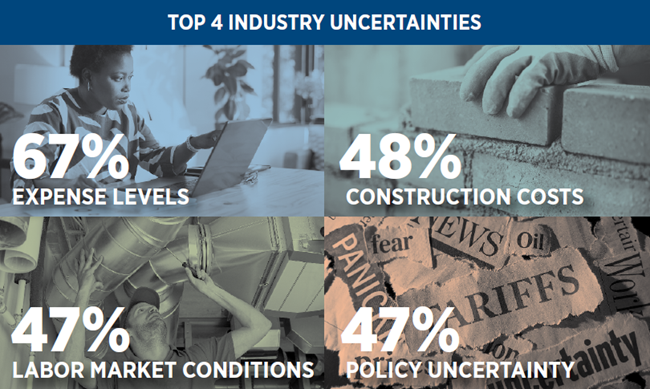
Top 4 Uncertainties Facing the Rental Housing Industry

The top four uncertainties facing the rental housing industry are set out in a new in-depth study by the National Apartment Association

The top four uncertainties facing the rental housing industry are set out in a new in-depth study by the National Apartment Association (NAA) that shows how operators across the country are navigating them.

The apartment industry is facing a complex landscape marked by economic uncertainties, technological disruptions, and evolving regulatory environments across the country.

The findings reveal these key insights about the top four industry uncertainties facing rental housing.

The top four uncertainties facing the rental housing industry are set out in a new in-depth study by the National Apartment Association

No. 1 – Expense levels

During the past 12 months, expense levels emerged as the most pressing operational challenge, outpacing interest rates and labor issues, with 67% of survey respondents rating rising expenses as a highly significant issue that has affected business operations.

These findings underscore the broad inflationary pressures on line-item costs such as materials, repairs, ongoing maintenance and vendor contracts. Companies are facing increased difficulty in maintaining profitability amid rising baseline operational costs.

No. 2 – Construction costs

Due to consistent labor shortages, supply-chain disruptions, extended project timelines and inflationary pressures, 48% of respondents believe that construction costs are second in severity of the challenges currently facing the industry.

The impact reflects the deep interconnectedness between macroeconomic trends and development feasibility.

No. 3 – Labor-market conditions

In the survey, 47% of respondents believe that labor-market conditions are highly significant, as operators have faced challenges finding skilled talent despite increased employment growth. Interest rates are a key concern, with 45% of respondents rating them as highly significant.

This indicates that while interest rates remain a central pressure point, staffing constraints and regulatory ambiguity are weighing more heavily on business operators.

No. 4 – Policy uncertainty

Policy uncertainties, including active and proposed tariffs, federal funding volatility, and shifting regulatory reforms at the state and local levels, continue to weigh heavily on operator decisions.

Here are more survey details from the respondents in the NAA study:

Interest rate shifts

The impact of higher rates is felt nationwide and across the property-value spectrum, affecting both large corporate entities and individual rental owners and operators. Interview participants highlighted several headwinds stemming from higher interest rates, including delayed acquisitions and a pause on new development projects.

The top four uncertainties facing the rental housing industry are set out in a new in-depth study by the National Apartment Association

Construction costs

There is a clear divide between those actively adapting to construction-cost pressures and those deferring action because of uncertainty or strategic misalignment.

Among active respondents, strategies span from contract renegotiation and value engineering to delayed execution and internal planning.

Those who remain inactive often do so intentionally, with valid operational or investment priorities elsewhere. As cost pressures persist, more firms may shift from passive observation to active preparation.

Labor-market challenges

Changes in the labor market over the past year have affected apartment owners and operators. Despite continued employment growth, companies emphasize that finding skilled talent remains both a priority and a challenge.

The survey results indicated that labor-supply challenges pose a greater threat to multifamily housing operations than wage increases. Sixty percent of survey respondents identified labor shortages as more disruptive than rising compensation costs. The inability to secure reliable, skilled labor – particularly in maintenance, repairs and other front-line roles – is straining operational capacity and elevating turnover risks.

Centralization

Centralization was not broadly perceived as a major disruptive force to operations in the current market environment. Only 11% of respondents rated it as a highly significant challenge. This suggests that while many firms are pursuing centralization for strategic efficiency or experimenting with centralized models, it has not created widespread operational friction in the rental housing industry.

Single-family versus multifamily

The responses revealed a varied and shifting landscape. Some industry professionals focus only on multifamily buildings, while others manage only single-family properties. And some larger firms own and manage a combination of both. The interviews highlighted a growing demand for both types of rentals with a renewed focus on affordability.

The top four uncertainties facing the rental housing industry are set out in a new in-depth study by the National Apartment Association

Revenue impact

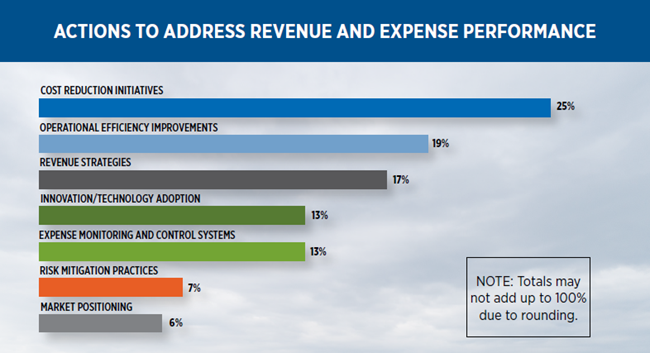
For many professionals, rent growth has been moderate over the past year. In some cases, companies are resorting to concessions or rent reductions to either retain or attract renters. Respondents emphasized the importance of having strong rent-collection systems in place, including automation strategies.

Looking ahead, operators identified regulatory changes and pricing limitations as the biggest looming threats to their revenue strategy. Sixty-eight percent saw regulatory uncertainty as a moderate to severe risk, while 73% identified pricing limitations (e.g. rent control, market caps) as a major threat.

Fraud and bad debt in the rental housing industry

Fraud and bad debt have become more than routine nuisances; they are now recognized as persistent operational threats. Industry participants in NAA’s interview panel stated that fraud and bad debt are both rising concerns and challenges, especially with the technological advances of artificial intelligence.

On the fraud side, concerns are focused on the application process, where fake income documents, identification forms, credit history and other documents are much easier to create with AI.

About the survey:

The NAA study and survey about uncertainties facing rental housing, sponsored by MRI Software and conducted by the NAA, approached the research study with a two-pronged methodology. One prong involved fielding a survey of senior-level real estate professionals, collecting insights and information from more than 350 respondents across the industry.  The other prong consisted of a series of in-depth interviews with C-suite and Independent Rental Owners (IRO) to uncover deeper concerns and provide more detail about the ways in which the industry is responding to current challenges.

The top four uncertainties facing the rental housing industry are set out in a new in-depth study by the National Apartment Association (NAA)

Read the full in-depth report here

Sign Up For Our Weekly Newsletter And Get Rental Property And Apartment News And Helpful, Useful Content Each Week.

* indicates required

Can You Use Technology to Detect Tenant Smoking?

Can you use technology to detect tenant smoking is the question this week for Hank as tenant smoking is hard to detect and prove

Can you use technology to detect tenant smoking is the question this week for Ask Landlord Hank. Remember Hank is not an attorney and he is not offering legal advice. If you have a question for him please fill out the form below.

Dear Landlord Hank,

There are plug-in sensors that have been available for several years that I believe are tamper-proof and can detect various kinds of smoking and vaping.

Why is this not being talked about more?

-Nikki

Hi Nikki,

I’m aware of one company, Sentry, that has a very reliable detector that can detect and distinguish between cigarette, vaping, marijuana smoke and also noise.

You can’t buy it, though, you have to pay for it monthly.

One detector is about $200/year.

Sincerely,

Hank Rossi

Each week I answer questions from landlords and property managers across the country in my “Dear Landlord Hank” blog in the digital magazine Rental Housing Journal.    https://rentalhousingjournal.com/asklandlordhank/

Ask Landlord Hank Your Question

Ask veteran landlord and property manager Hank Rossi your questions from tenant screening to leases to pets and more! He provides answers each week to landlords.

  • This field is for validation purposes and should be left unchanged.

Can you use technology to detect tenant smoking is the question this week for Hank as tenant smoking is hard to detect and prove
Landlord Hank Rossi says, “Sentry, that has a very reliable detector.”

Can I Get Tenant’s Inoperable Car Towed Off My Rental Property?

How To Handle Ugly Feud Between Two Sets of Tenants?

Tenants Pouring Grease Down Sink And Flushing Paper Towels

Do You Know The 5 Questions Landlord Hank Asks Tenants When They Call?

Sign Up For Our Newsletter And Get Rental Property News And Helpful, Useful Content Each Week.

* indicates required

Photo credit Liudmila Chernetska via istockimages

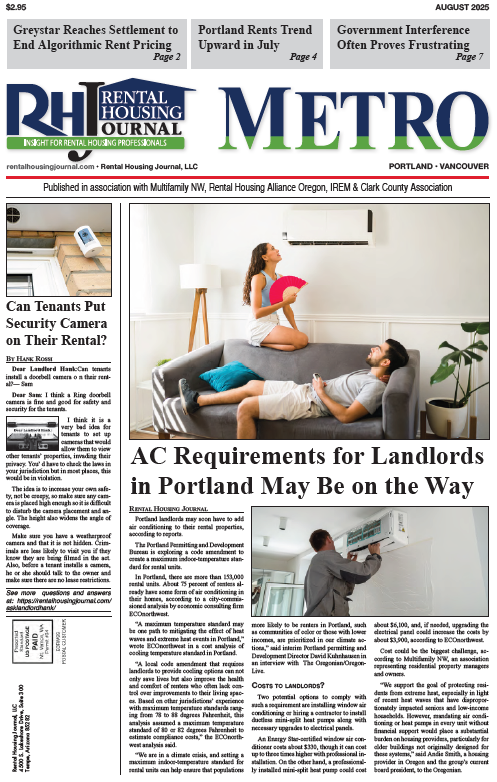
Portland Metro Rental Housing Journal August Here

https://rentalhousingjournal.com/issues/metro/metro-august-2025/

See the Portland Metro Rental Housing Journal here with helpful, useful news and content for Portland rental housing owners, landlords, property managers and maintenance personnel.

Fix And Flip Real Estate Investors Pull Back

Fix and flip real estate investors are pulling back amid high interest rates and a fast-shrinking labor market due to immigration raids

Fix and flip real estate investors are pulling back amid high interest rates and a fast-shrinking labor market are taking their toll on the fix-and-flip housing market, Diana Orlick, senior real estate correspondent, writes in her CNBC Property Play blog.

Not only are costs rising, but the also the time it takes to sell a fix and flip home is taking longer and longer and finding workers due to immigration raids.

Roughly one third of flippers pointed to reduced labor availability due to immigration enforcement and fear-driven absences from jobsites. Labor and material costs for flips hit a record high, but costs as a percentage of sales price were flat.

The Fix and Flip Market

The fix-and-flip market contracted slightly in the second quarter of this year from the first quarter and even more sharply from the second quarter of last year, according to an index from John Burns Research and Consulting and Kiavi, a lender focused on the real estate investor.

“Sentiment remains muted, as economic uncertainty, elevated mortgage rates and rising resale inventory weigh on demand for flipped homes,” wrote Alex Thomas of John Burns Research and Consulting, the primary author of the report.

The index surveys roughly 400 flippers and measures current sales, expected sales and flipper competition for deals. All of those sub-indices fell last quarter. Days-on-market for flipped homes increased as the supply of both new and existing homes for sale rose.

Just 30% of flippers reported “good” sales in the second quarter of this year compared to the seasonal norm, down from 38% in the same quarter of 2024.

“We’re definitely seeing the more professional cohorts take a step back, be more conservative, be more choosy, right?,” Mohan said. “If they were going to buy four out of six opportunities a year ago now, they may be buying like two or three out of six just to make sure that they are prepared. As the market resets, they can reset their purchase price and keep the ROI metrics constant.”

Regionally, flippers in Florida, Northern California and the Southwest rated sales more poorly than flippers elsewhere.

Sign Up For Our Weekly Newsletter And Get Rental Property And Apartment News And Helpful, Useful Content Each Week.

* indicates required

Training For Gray Areas: Age in Fair-Housing Compliance

Age in fair housing compliance training can be a gray area as some state and local laws do apply to age as a protected class.

Age in fair housing compliance training can be a gray area as some state and local laws do apply even though in the Fair Housing Act age is not a protected class.

By The Fair Housing Institute

In the world of property management, training often zeroes in on the familiar—race, disability, familial status.

But what about age?

While not a federally protected class under the Fair Housing Act, age continues to show up in housing-related decisions, marketing language, and resident interactions.

For compliance professionals and property managers, the absence of federal protection doesn’t mean a free pass. Instead, it signals an opportunity to refine staff training and tighten internal policy to prevent unintentional bias.

When Age Isn’t Protected—But Still Matters

The Fair Housing Act doesn’t include age as a protected category, which can create a false sense of security.

Teams may think, “If it’s not federally regulated, we’re in the clear.” But that’s a risky mindset.

States and local municipalities across the country have filled in that legal gap by adding age as a protected class in their own civil rights or housing codes.

If you’re developing or delivering fair-housing training, this nuance needs to be front and center. Policies or preferences that appear neutral—like marketing to “working professionals” or “retirees”—could trigger compliance issues in states that recognize age-based protections.

Federal Funding Raises the Stakes

Properties that receive federal funding or subsidies operate under another set of rules.

The Age Discrimination Act of 1975 prohibits age discrimination in federally supported programs. Even if your staff is familiar with the Fair Housing Act, they may not be aware of how these layered protections work.

A key part of staff onboarding and continuing education should include understanding how different laws intersect and apply in federally supported housing communities.

Age-Adjacent Pitfalls: The Training Gap

The danger with age-based decisions isn’t always blatant.

A leasing agent might casually mention that a unit is “ideal for an older couple,” or that “young families may prefer something more spacious.” These comments, while seemingly harmless, can easily be interpreted as steering—especially if they intersect with familial status, a federally protected class.

Fair-housing education must emphasize how subtle, subjective language can lead to discriminatory practices.

And without proper training, staff may be unaware that they’re treading into legally questionable territory.

In today’s regulatory environment, good intentions are not a defense. Training should focus on clarity, consistency, and the importance of neutral language.

Older Adult Communities Require Clear Policy and Proof

Some communities are legitimately designed for older residents and can legally restrict families with children—but only if they meet specific criteria under the Housing for Older Persons Act (HOPA).

This exemption doesn’t happen automatically. Staff should be trained to understand what documentation is needed to prove compliance, how to advertise appropriately, and why vague marketing language can undermine legal protections.

“55 and older” is more than a tagline—it’s a legal threshold that comes with specific obligations. If your team isn’t trained to recognize the requirements, your community may unintentionally misrepresent its legal status and put your property at risk.

Managing the Legal Patchwork: Empowering Local Knowledge

Because age protections vary so widely across jurisdictions, training can’t rely on a one-size-fits-all approach.

Staff must be taught how to access and understand local housing laws. This is where property managers and HR leaders play a pivotal role—by reinforcing the expectation that teams stay informed about both federal and local obligations.

Even better? Build this flexibility into your policies. Instead of focusing solely on what’s legal, focus on what’s fair. Inclusive housing practices don’t just prevent violations—they strengthen community trust and enhance your company’s reputation.

Make Age Awareness a Core Training Topic

Age isn’t always front-of-mind during fair-housing training—but it should be.

Even when not explicitly protected, age-based assumptions and language can creep into housing decisions in ways that carry legal and ethical risks. By proactively addressing age-related concerns in your staff education, marketing policies, and resident interactions, you’re creating a stronger foundation for compliance—and for community.

Because when we say “fair housing,” it should apply to everyone—no matter their age.

About the author:

In 2005, The Fair Housing Institute was founded as a company with one goal: to provide educational and entertaining fair-housing compliance training at an affordable price at the click of a button.

Sign Up For Our Weekly Newsletter And Get Rental Property And Apartment News And Helpful, Useful Content Each Week.

* indicates required

Washington Rent Control Enforcement Makes Landlords Return Rent Increases

Washington rent control enforcement has started under the state's new rent control law forcing landlords to return rent increases

Washington Attorney General Nick Brown has entered into eight resolutions with landlords across the state in the first enforcement action under Washington’s new rent control law, according to a release.

The landlords — with properties in Bothell, Edmonds, Issaquah, Kennewick, Lakewood, Montesano, Port Angeles, Puyallup, Ridgefield, Royal City, University Place, Vancouver, and Yakima — agreed to withdraw rent increase notices they had sent and refund any excess rent amounts that tenants paid.

For the first wave of enforcements, Brown prioritized rent increase notices issued by landlords before the law was signed but that were slated to take effect for tenants after May 7. Because HB 1217 prohibits any increase higher than the rent cap that takes place on or after May 7, these increases run counter to the law.

The first rent control enforcement to make landlords return rent increases under Washington’s rent control law were filed in Superior Court in Clark, Grays Harbor, King, Pierce, and Snohomish counties.

“Our office will do all it can to address the housing challenges impacting Washingtonians across the state,” Brown said. “Protecting tenants under this new law is one piece of the work we’re doing to ensure more people have safe, affordable places to live.”

Washington Rent Control Law

The new rent control law (HB 1217) caps the amount landlords can raise a tenant’s rent under both the Residential Landlord Tenant Act (RLTA) and the Manufactured/Mobile Home Landlord Tenant Act (MHLTA).

The law was signed on May 7 of this year and went into effect immediately. The Attorney General’s Office has created a “Know Your Rights” flyer to help tenants understand the rent stabilization law.

The rent stabilization law applies to both residential and manufactured/mobile home communities. For manufactured or mobile home tenancies the maximum annual increase is 5%. For residential tenancies the maximum annual increase is 10% or 7% plus the Consumer Price Index (CPI), whichever is higher.

Rent Increases Allowed Under Washington Rent Control

The Washington state Department of Commerce determines the CPI and publishes the maximum annual rent increase percentage for residential tenancies on its website. The maximum annual increase allowed through December 31, 2025, is 10%. The maximum annual increase allowed between January 1, 2026, and December 31, 2026, is 9.683%.

Senate Republican Leader John Braun argued that HB 1217 will have negative impacts while imposing price controls on rent, according to mynorthwest.com.

“Price controls on rent have proven time and again to make the availability of affordable housing worse,” Braun stated.

Senator Keith Goehner, the lead Senate Republican on housing, claimed that rent increase caps reduce housing supply by discouraging developers from building new units, lead to housing deterioration due to a lack of available funds for landowners, and encourage black-market practices.

“Let’s call it what it is — House Bill 1217 is price control, plain and simple,” Goehner said. “And price control has a long, proven track record of failure.”

Sign Up For Our Weekly Newsletter And Get Rental Property And Apartment News And Helpful, Useful Content Each Week.

* indicates required

Greystar Reaches Settlement to End Algorithmic Rent Pricing

Greystar has reached a settlement with the Justice Department to end its participation in algorithmic rent-pricing schemes

The nation’s largest landlord, Greystar, has reached a settlement with the U.S. Department of Justice to end its participation in algorithmic rent-pricing schemes, according to a release.

The Justice Department’s Antitrust Division filed a proposed settlement to resolve the United States’ claims against Greystar Management Services LLC as part of its ongoing enforcement against algorithmic coordination and other anticompetitive practices in rental markets across the country, according to the release.

The settlement proposal was filed in the federal district court for the middle district of North Carolina.

Greystar manages almost 950,000 rental units across the country.

“As alleged in plaintiffs’ complaint, Greystar and other landlords, including five co-defendants, shared competitively sensitive data to generate pricing recommendations using RealPage’s algorithms, which also included anticompetitive rules that aligned competitors’ pricing.

“In addition, Greystar and other landlords discussed competitively sensitive topics — including pricing strategies, rents, and selected parameters for RealPage’s software — directly with each other,” according to the release.

What the Settlement to End Algorithmic Rent Pricing Says

If approved by the court, the proposed consent decree would require Greystar to:

  • Refrain from using any anticompetitive algorithm that generates pricing recommendations using its competitors’ sensitive data or that incorporates certain anticompetitive features;
  • Refrain from sharing competitively sensitive information with competitors;
  • Accept a court-appointed monitor if it uses a third-party pricing algorithm that is not certified pursuant to the terms of the consent decree;
  • Refrain from attending or participating in RealPage-hosted meetings of competing landlords; and
  • Cooperate with the United States’ monopolization claims against RealPage.

“American greatness has always depended on free-market competition, and nowhere is competition more important than in making housing affordable again,” Attorney General Pamela Bondi said in the release.

Assistant Attorney General Abigail Slater of the Justice Department’s Antitrust Division said the department is committed to promoting competition to help working class Americans pay for life’s necessities, including rent.

“Whether in a smoke-filled room or through an algorithm, competitors cannot share competitively sensitive information or align prices to the detriment of American consumers,” she said.

“Greystar remains committed to being at the forefront of innovation in service of its clients and residents, all within the bounds of the law,” the company said in a statement.

ProPublica reported in 2022 that some of the biggest landlords in the country were using an algorithm developed by RealPage to set rents on open units. RealPage’s algorithm uses data collected from its clients — landlords who compete with each other for renters — to create price recommendations.

In August 2024, the DOJ and several state attorneys general, sued RealPage for “its unlawful scheme to decrease competition among landlords in apartment pricing and to monopolize the market for commercial revenue management software.”

Read the full proposed settlement agreement here.

Sign Up For Our Weekly Newsletter And Get Rental Property And Apartment News And Helpful, Useful Content Each Week.

* indicates required