
Home Blog Page 15

Landlords: The Power of Knowing Your Property Neighbors

One often-overlooked but crucial aspect of property management for landlords is the power of knowing the neighbors of the properties you own.

One often-overlooked but crucial aspect of property management for landlords is the power of knowing the neighbors of the properties you own. Here are 4 steps you can take.

By Scot Aubrey

For many, the fear of the unknown is devastating. For landlords, it can be paralyzing.  However, getting rid of that fear might be as easy as walking next door.

As a landlord, managing properties isn’t just about collecting rent and maintaining the structure; it’s also about fostering a sense of community.

One often-overlooked but crucial aspect of property management is knowing the neighbors of the properties you own.  This practice not only enhances safety and security for your tenants and your investment but also helps create a more cohesive and harmonious environment for everyone involved, including the neighbors.

An Extra Set of Eyes

Knowing your neighbors can significantly improve the safety and security of your rental properties.

Neighbors, especially the nosy ones, keep an eye out for unusual activities or suspicious individuals, acting as an additional layer of vigilance for your investment.

By building relationships with neighbors, landlords can establish a network of trust and communication that helps prevent crime and creates an easy line of communication should an incident occur.  Neighbors are also valuable sources of information about the condition of your rental properties.

They can alert you to maintenance issues that might otherwise go unnoticed, such as leaking pipes, overgrown yards, or unauthorized occupants.

This can save you time and money by alerting you to problems before they escalate into more significant issues that could potentially affect property value or the ability to rent the property.

Positive Tenant and Community Relations

Every action you take tells the tenant how much you value them.

When you are familiar with the neighbors and community, your tenants see that you care about more than just the monthly rent payment, and that their well-being is a priority.

Increased tenant satisfaction leads to longer lease periods where they are more likely to renew their leases.

Additionally, knowing the neighbors allows landlords to address any concerns or complaints more effectively, demonstrating proactive management and a commitment to resolving issues promptly.

A strong sense of community, where residents take pride in their surroundings, benefits everyone involved, from landlords and tenants to neighbors themselves.

Practical Steps for Landlords

To effectively get to know the neighbors of your rental properties, consider the following practical steps:

  1. Introduce yourself: Take the initiative to introduce yourself to neighboring residents.  A friendly conversation can go a long way in establishing rapport and building trust.  Leave behind your contact information.  Neighbors are a great source for referrals as well, and just might help you find your next tenant.
  2. Attend community events: Participate in neighborhood events or meetings to connect with residents and stay informed about local issues and developments.
  3. Establish communication channels: Provide neighbors with contact information and encourage them to reach out if they notice any concerns related to your properties.
  4. Encourage open dialogue: Foster an environment where neighbors feel comfortable sharing feedback or reporting incidents, ensuring prompt and respectful responses from you or your team.

One Good Investment Deserves Another

Knowing the neighbors of the properties you own is more than just a good practice, it’s an investment in creating safer, more vibrant communities.

By building relationships with neighbors, landlords can enhance security, monitor property conditions, foster positive tenant relations, and mitigate potential risks.

These efforts not only benefit your investment but also contribute to a sense of belonging and mutual support among residents.

Ultimately, landlords who prioritize neighborly engagement are likely to see greater tenant satisfaction, reduced turnover, and increased long-term value in their rental properties.

About the author:

Scot Aubrey is vice-president of Rent Perfect, a private investigator, fellow landlord and cohost of the weekly Rent Perfect Podcast.  Subscribe to his podcast to stay up to date on the latest industry news, and for expert tips on how to manage your properties.

Sign Up For Our Weekly Newsletter And Get Rental Property And Apartment News And Helpful, Useful Content Each Week.

* indicates required

AC Requirements for Portland Landlords May Be Coming

Portland landlords may soon have air conditioning requirements for their rental properties, according to reports.

Portland landlords may soon have air conditioning requirements for their rental properties, according to reports.

The Portland Permitting and Development Bureau is exploring a code amendment to create a maximum indoor-temperature standard for rental units.

In Portland, there are more than 153,000 rental units. About 75 percent of renters already have some form of air conditioning in their homes, according to a city-commissioned analysis by economic consulting firm ECOnorthwest.

“A maximum temperature standard may be one path to mitigating the effect of heat waves and extreme heat events in Portland,” wrote ECOnorthwest in a cost analysis of cooling temperature standard in Portland.

“A local code amendment that requires landlords to provide cooling options can not only save lives but also improve the health and comfort of renters who often lack control over improvements to their living spaces.

“Based on other jurisdictions’ experience with maximum temperature standards ranging from 78 to 88 degrees Fahrenheit, this analysis assumed a maximum temperature standard of 80 or 82 degrees Fahrenheit to estimate compliance costs,” the ECOnorthwest analysis said.

“We are in a climate crisis, and setting a maximum indoor-temperature standard for rental units can help ensure that populations more likely to be renters in Portland, such as communities of color or those with lower incomes, are prioritized in our climate actions,” said interim Portland permitting and Development Director David Kuhnhausen in an interview with  The Oregonian/OregonLive.

Costs to landlords?

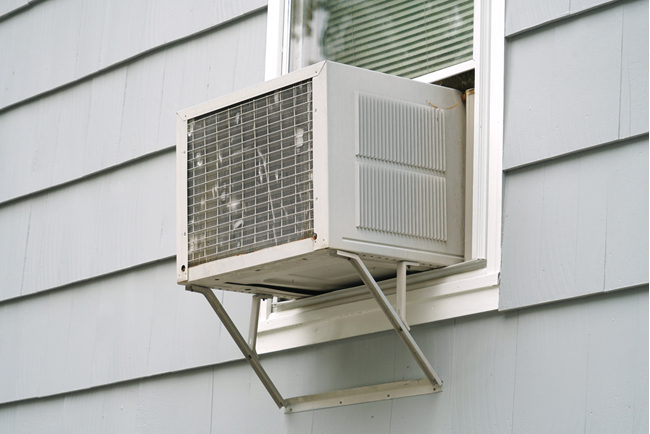
Two potential options to comply with such a requirement are installing window air conditioning or hiring a contractor to install ductless mini-split heat pumps along with necessary upgrades to electrical panels.

An Energy Star-certified window air conditioner costs about $330, though it can cost up to three times higher with professional installation.

On the other hand, a professionally installed mini-split heat pump could cost about $6,100, and, if needed, upgrading the electrical panel could increase the costs by about $3,900, according to ECOnorthwest.

Cost could be the biggest challenge, according to Multifamily NW, an association representing residential property managers and owners.

“We support the goal of protecting residents from extreme heat, especially in light of recent heat waves that have disproportionately impacted seniors and low-income households.

“However, mandating air conditioning or heat pumps in every unit without financial support would place a substantial burden on housing providers, particularly for older buildings not originally designed for these systems,” said Andie Smith, a housing provider in Oregon and the group’s current board president, to the Oregonian.

Accidental Landlords Growing as Home Sellers Delist Properties

Accidental landlord numbers are growing with high interest rates and frustrated sellers delisting properties and offering them as rentals

The number of accidental landlords is expected to grow as interest rates remain high and frustrated sellers are deciding to delist their properties and instead offer them on the rental market, according to reports.

Delistings jumped 47% nationally in May from a year earlier, according to the Realtor.com® economic research team’s latest monthly housing trends report. Year to date, delistings are up 35% from the same period in 2024.

“This year’s market is a study in contrasts,” says Danielle Hale, chief economist of Realtor.com. “Buyers are seeing more choices than they’ve had in years. But many sellers, anchored by peak price expectations and upheld by strong equity positions, are deciding to step back if they don’t get their number.”

With the rising supply of homes for sale, plus high mortgage rates and waning consumer confidence, more potential buyers are staying on the sidelines, writes Diana Orick in the CNBC Property Play newsletter. Some frustrated sellers are deciding to delist their properties and instead offer them on the rental market.

“When these home sellers cannot find buyers, they face three choices: delist and wait, cut price to find market-clearing level, or convert to rental. The last option creates what Parcl Labs terms ‘accidental landlords’: Owners who enter the single-family rental market not by design, but by necessity,” wrote Jesus Leal Trujillo, principal data scientist at Parcl Labs.

The inventory of homes for sale has already been growing steadily over the past year, especially in formerly hot pandemic-migration markets like the Sun Belt.

Homes are sitting on the market longer as sellers, used to the heady price hikes of the last five years, are reluctant to lower their prices. As more for-sale supply enters the rental pool, that could limit landlord pricing power.

“You’re not going to see big reductions in rent, but maybe you won’t be able to get 4% or 5% increases on your rent. Maybe it’s just 1% to 2% in some cases,” said Haendel St. Juste, a senior equity research analyst at Mizuho Securities, in an interview with CNBC. “But the professional big guys have been getting 4% to 5% renewal rates and 75% retention in their portfolio. So, keeping people in the homes at 4% to 5% rent is a key part of their business model.”

What The Big Institutional Landlords Are Doing

“We saw something like this in 2022 after mortgage rates doubled: A huge uptick in the number of people who owned one property besides their primary residence,” said Rick Sharga, CEO of CJ Patrick Co., a real estate advisory firm.

“They are deploying more funds into build-to-rent projects, rather than competing with smaller investors and traditional homebuyers for resale properties,” he said, suggesting that doing so limits the threat from those so-called accidental landlords.

That minimizes some of the risk, but St. Juste said the biggest landlords will have to incur some occupancy decline in order to optimize their revenue, as opposed to just slashing rents.

“The incremental risk from this slow selling season is that there could be more supply, you know, come this fall, come next spring, that could limit some of the rental growth upside for next year,” he said.

Sign Up For Our Weekly Newsletter And Get Rental Property And Apartment News And Helpful, Useful Content Each Week.

* indicates required

California AG Warns Landlords On Immigrant Tenant Discrimination

California Attorney General Rob Bonta issued a warning to landlords against immigrant tenant discrimination and immigration authorities

California Attorney General Rob Bonta issued a stark warning to landlords across the state: Housing discrimination against immigrant tenants is illegal and will not be tolerated, according to a release.

Bonta said in the release that it is illegal for landlords to, “retaliate against tenants, or influence tenants to move out by threatening to disclose a tenant’s immigration status to Immigration and Customs Enforcement (ICE) or law enforcement.

“Especially as the federal administration carries out an inhumane campaign of mass deportation and creates a culture of fear and mistrust, it is crucial that landlords and tenants understand their obligations and rights under California law.”

Landlords cannot threaten to disclose a tenant’s immigration status in order to pressure a tenant to move out. (Civil Code § 1940.2.)  In most cases, landlords are not allowed to ask a tenant or potential tenant their immigration or citizenship status in California.

“Landlords who violate these laws may be required to pay tenants for damages, penalties, and attorney’s fees. For example, a landlord who discloses a tenant’s immigration status to any immigration authority may be ordered to pay the tenant statutory damages equal to 6 to 12 times the monthly rent (Civil Code § 1940.35(b).) Tenants have an array of other rights and protections under California law,” Bonta said in the release.

Landlords and Immigration Authorities  

If immigration authorities like ICE demand tenant information from a landlord, such as a tenant’s rental application or other documents, the landlord may ask to see a warrant or other authority, Bonta said in the release. Landlords should immediately seek legal advice to determine whether they must comply and to ensure that they do not violate California’s anti-discrimination and privacy laws. There are different types of documents that ICE may present:

  • An ICE administrative warrant or a notice to appear for an immigration hearing does not give ICE special powers to search a landlord’s records. Landlords should seek legal advice about how to respond.
  • If ICE presents a warrant issued by a federal court or other court order signed by a judge, landlords should comply promptly and, where feasible, seek legal advice before responding.
  • Landlords presented with a subpoena for documents or evidence should seek legal advice on how to respond.
  • Landlords should not physically interfere with ICE officers in the performance of their duties.

Sign Up For Our Weekly Newsletter And Get Rental Property And Apartment News And Helpful, Useful Content Each Week.

* indicates required

How Video is Revolutionizing Resident Communication

Effective property management videos can revolutionize resident communication with video of actual team members engaging residents.

Effective property management videos can revolutionize resident communication with video of actual team members engaging residents.

By Stephanie Anderson

As artificial intelligence and automated responses continue to grow exponentially in multifamily, residents are seeking something that feels genuine.

They want to know there’s a real person behind the property management; someone who understands their needs, celebrates their milestones and truly cares about their living experience.

Video communication, paired with smart AI tools, provides multifamily operators with a perfect solution for authentic, scalable resident engagement that fosters trust. When done right, video doesn’t just communicate; it creates connections that truly transform how residents view and engage with their community.

The results speak for themselves. According to data from Realync by Grace Hill, properties using strategic video are seeing impressive results, including 50% pre-leased occupancy during construction, 75% closing rates on prospects and notable reductions in maintenance touchpoints. These aren’t just numbers; they represent real relationships built through genuine communication.

Feature Real Team Members to Foster Familiarity and Trust

People connect with people, not just logos or corporate messaging. Property managers, along with leasing and maintenance teams, are a multifamily company’s greatest assets in building resident relationships.

When team members appear on camera, they transform from faceless voices into trusted neighbors that residents recognize and feel comfortable approaching.

7SEVENTY7 in Milwaukee, Wisc., and managed by Bozzuto, discovered this power during their pre-leasing phase.

Rather than relying on generic marketing materials, they featured actual team members hosting personalized walkthroughs and live open houses. The approach was so effective that they achieved 50% pre-leased occupancy during construction, a remarkable feat that directly resulted from residents feeling connected to real people before even moving in.

Consider these authentic touchpoints, where real team members make the biggest impact:

  • New team member introductions that help residents put faces to names
  • Digital event invitations delivered by community managers
  • Maintenance tutorials by the onsite maintenance team members
  • Property updates shared by residents themselves

The key lies in consistency. When residents repeatedly see the same friendly faces in videos, familiarity breeds trust. They’re more likely to reach out with concerns, participate in community events and ultimately renew their leases.

Make It Conversational to Ensure Content Feels Natural and Relatable

Authenticity beats perfection every time.

The most effective property-management videos sound like conversations, not corporate presentations. This means embracing the natural pauses, occasional filler words and genuine enthusiasm that make human communication compelling.

CityWay Communities in Indianapolis exemplified this approach by prioritizing human-to-human interaction over polished presentations. Their team created nearly 150 videos in just two months, generating more than 4,200 views because the content was genuine and approachable. Residents and prospects could sense the authenticity, making them more likely to engage.

Professional doesn’t mean perfect. It’s perfectly acceptable to:

  • Pause to gather your thoughts
  • Keep natural filler words like “um” or “you know”
  • Start a sentence over if needed
  • Show genuine excitement about community features

This conversational approach works because it mirrors how people actually communicate.

Keep It Quick to Promote Engagement

In our attention-deficit world, brevity is your best friend. Every second counts in video communication.

Research consistently shows that engagement drops dramatically after the 60-second mark, making concise messaging preferable and essential for effectiveness.

Watermark at Jordan Creek exemplifies this principle by creating quick, focused DIY maintenance videos that empower residents to handle simple tasks independently. By keeping each video under a minute and focusing on one specific task, residents could quickly absorb the information and take action. The result was significantly reduced maintenance touchpoints and more empowered residents.

The 60-second rule applies across all video types, including:

  • Property Tours: Focus on 2-3 key features per video
  • Maintenance Tutorials: Cover one specific task completely
  • Event Announcements: Include essential details only
  • Welcome Messages: Highlight the most important information first

Quick videos also perform better across multiple viewings. Residents are more likely to re-watch a 45-second tutorial when they need a refresher than struggle through a lengthy explanation.

Personalize with Purpose: Using AI Tools

The magic happens when artificial intelligence amplifies authentic human communication rather than replacing it. Smart AI tools can help multifamily teams deliver personalized experiences at scale while maintaining a genuine touch.

Waterton Property Management in Chicago demonstrates this balance, achieving a 75% closing rate on prospects by combining real-time human interaction with AI-powered personalization. Their approach includes real-time tours, recorded walkthroughs, property data overlays and chat capabilities enhanced by AI insights while still maintaining authenticity.

Modern AI tools enable several powerful personalization strategies:

  • Template-Based Personalization: Create video templates that incorporate CRM data like unit preferences, move-in dates or previous interactions. Leasing professionals can record one welcome message template, then AI personalizes it with specific details for each new resident.
  • Behavioral Targeting: AI can analyze resident behavior and interests to automatically suggest relevant videos. So, if someone mentions having a pet, the system can automatically send a tour of pet-friendly amenities.
  • Content Optimization: AI-powered analytics help identify the video topics that generate the most engagement, allowing teams to focus on content that truly resonates.
  • Scheduling Intelligence: AI can determine optimal sending times based on individual resident behavior patterns, ensuring videos reach people when they’re most likely to engage.

Using genuine video communication that features real team members, along with keeping a natural, friendly tone and adding AI-driven personalization, are key strategies for building trust and creating a sense of community in the multifamily industry.

By embracing these fresh and modern methods, property teams can connect more personally with residents, boost engagement and see positive results such as higher pre-leasing rates and happier residents.

About the author:

Stephanie Anderson is the senior director of communications and social media at Grace Hill, with more than 18 years of experience in the rental housing industry. She was named 2024 Supplier Individual of the Year by the Virginia Apartment Management Association, a Top Voice by LinkedIn, and one of GlobeSt.’s Most Influential People in Multifamily Housing

Sign Up For Our Weekly Newsletter And Get Rental Property And Apartment News And Helpful, Useful Content Each Week.

* indicates required

Seattle Tacoma Bellevue Rental Housing Journal

See the article from the Washington Multi-Family Housing Association on what owners and investors say about new rent control in Washington.

See The Seattle-Tacoma-Bellevue Rental Housing Journal for July, especially see the article from the Washington Multi-Family Housing Association on what multifamily owners and investors are saying about the new rent control law in Washington.
RHJ-Onsite July2025 – FINALw

Landlord Sentiment Shifts in 2025: Fewer Acquisitions, More Spending on Existing Properties

Survey results from RentRedi show a shift in landlord sentiment for 2025 with fewer acquisitions and more spending on existing rentals

New survey results from RentRedi, including joint data from BiggerPockets, show a measurable shift in landlord priorities for 2025.

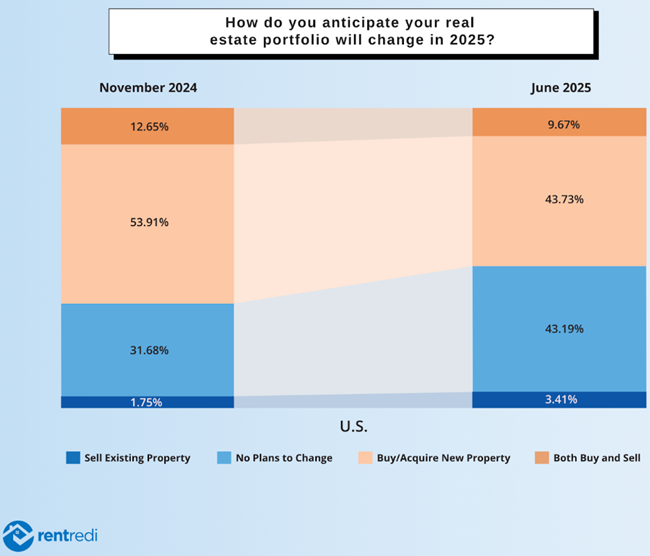
The survey shows a 14-point drop in landlords planning to buy, amid concerns over home prices and interest rates. At the same time, investments in existing rental properties are rising.

Compared to late 2024, fewer landlords plan to expand their portfolios, while more are investing in property improvements and optimizing operations. RentRedi’s rental-market survey examines notable shifts in trends relating to investment strategies, renovation spending, and business priorities over time.

The survey of 1,600+ U.S. landlords, conducted in June and compared to similar data from late 2024, found:

  • A 14-point drop in landlords planning to buy, down from 67% in November to 53% in June
  • A growing number—especially in the West—say they have no plans to expand or sell
  • High-dollar spending on upgrades is rising, with over one-third planning to invest $20K+
  • Large landlords are leading the spending surge, while small landlords are more cautious
  • Top reasons for pausing purchases include high prices, interest rates, and slow revenue growth

As a follow-up to a survey that was conducted in November 2024, the same questions were posed to U.S. landlords between June 3-26, 2025, and responses were analyzed by region and landlord size.

Survey results from RentRedi show a shift in landlord sentiment for 2025 with fewer acquisitions and more spending on existing rentals

Over the past six months, the share of landlords planning to buy new properties dropped from 67% in November 2024 to 53% in June 2025—a 14-point decline. During the same period, the portion of landlords with no plans to change their portfolio rose by 11%, from 32% to over 43%. Fewer than 1 in 25 landlords say they plan to sell a rental property this year.

Regionally, the West experienced the biggest shift in sentiment, with the number of landlords saying they have no plans to make portfolio changes rising from 39% to 53%, a 14-point increase. In contrast, the Northeast was the most acquisition-oriented region, with 57% of investors still planning to buy property in 2025, outpacing the national average.

Differences by landlord size also emerged. While all portfolio sizes saw a decline in buying plans, landlords with 20 or more units remain more active than their smaller counterparts. A little over 1 in 5 large landlords plan to both buy and sell property this year, compared to just 5% of small landlords. Nearly half of small landlords say they have no plans to change their portfolio, compared to 38% of large landlords.

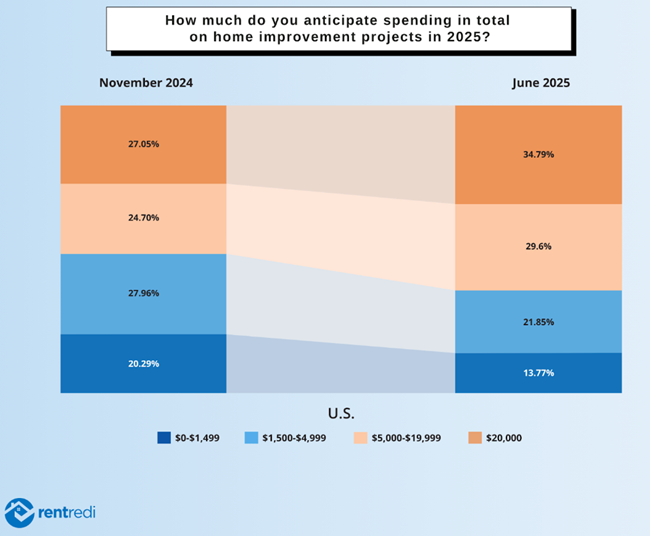
Another major shift is visible in home improvement plans. As of June, 35% of landlords expect to spend more than $20,000 on property upgrades this year, up from 27% in November. Nearly 2 in 3 respondents anticipate spending over $5,000 in total. Landlords with large portfolios are leading the charge: nearly two-thirds expect to spend more than $20,000, up from 36% in November. Small landlords remained more conservative, with nearly half still budgeting under $5,000.

Survey results from RentRedi show a shift in landlord sentiment for 2025 with fewer acquisitions and more spending on existing rentals

Regionally, the Midwest and West saw the most dramatic increases in high-dollar spending. In both regions, the share of landlords expecting to invest more than $20,000 rose by 10 points or more. At the same time, a June joint survey with BiggerPockets found that exactly half of landlords have paused some or all home improvement projects planned for 2025, suggesting a range of financial strategies and priorities depending on portfolio structure and resources.

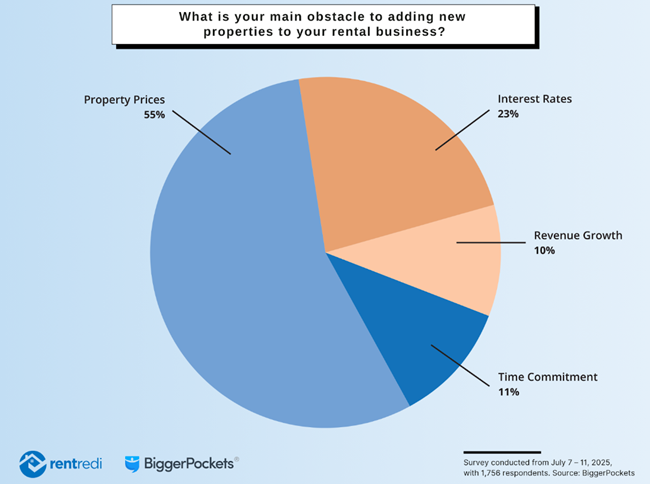
A separate July survey from RentRedi and BiggerPockets explored the reasons behind declining acquisition plans. More than half of landlords cited property prices as the biggest barrier to buying, while nearly a quarter pointed to interest rates. Others said slow revenue growth or time commitment were their main challenges.

When asked what they hoped to achieve by using tools or resources in their rental business, more than one-third said increasing revenue was most important. Another one-third prioritized saving time and effort, followed by reducing costs and increasing property value.

“With tools like RentRedi, landlords are managing their properties more efficiently, even as they face evolving challenges,” said RentRedi Co-founder and CEO Ryan Barone. “From automation to mobile access to financial reporting, we’re focused on giving landlords the control and visibility they need to make smarter decisions—whether they’re expanding, renovating, or holding steady.”

Landlord motivations remained consistent across the board. Income generation continues to be the top reason for managing rental properties, selected by over 40% of respondents, followed by long-term investment and financial freedom. Larger landlords are more focused on income—more than half selected it as their primary goal, compared to about one-third who emphasized long-term investment and 16% who cited financial freedom, which is slightly below the 18% national average.

Diversification appears to be a low priority in 2025. About 40% of landlords said they do not plan to diversify their portfolios by property type or location, and another quarter are unsure. Slightly more than 1 in 3 landlords say they plan to diversify in any way this year.

This report is part of RentRedi’s ongoing initiative to surface real-world insights from landlords and property managers through data, direct surveys, and collaborations with trusted communities like BiggerPockets. For more data insight and survey result reports, visit RentRedi’s Rental Market Insights.

About RentRedi

RentRedi offers a comprehensive rental property management platform that simplifies the renting process for landlords and renters by automating and streamlining processes. For more information visit RentRedi.com.

Sign Up For Our Weekly Newsletter And Get Rental Property And Apartment News And Helpful, Useful Content Each Week.

* indicates required

The Consumer Review Fairness Act and Its Marketplace Impact

Recent reports about non-disparagement lease clauses banning tenants from leaving negative reviews-what the consumer review fairness act says

Recent reporting shows issues with lease clauses banning tenants from leaving negative reviews, sometimes called non-disparagement clauses in leases, so see what the consumer review fairness act says about this.

By Denise Holliday, Esq.
Hull, Holliday & Holliday, PLC

Caveat emptor is a Latin phrase that translates to “let the buyer beware.”  It’s been used for hundreds of years and puts the burden of researching the quality of products and services on the buyer in a transaction.  Because of that assertion, P.T. Barnum is often credited with the phrase “There’s a sucker born every minute” which implies there is a continuous supply of gullible individuals just waiting to be fleeced. (By the way, there’s no actual proof P.T ever actually said that).

For centuries, the only way for a consumer to voice pleasure or disdain about their experience in the marketplace was by word-of-mouth. Over the past two decades, the rise of online shopping, subscription services, and digital products has caused an explosion in the marketplace.  It also gave the consumer the ability to publish or broadcast online reviews of nearly every business and product, both good and bad, around the world instantly.

No one likes a bad review, and some businesses sought to limit what their customers could post online.  Some companies put contract provisions in place, including in their online terms and conditions, that allowed them to sue or penalize consumers for posting negative reviews.  As a result, the Consumer Review Fairness Act (CRFA) was signed into law in 2016 to protect people’s ability to share their honest opinions about a business’s products, services, or conduct, in any forum, including social media.

What the Consumer Review Fairness Act Says

The CRFA makes it illegal for companies to include standardized provisions that threaten or penalize people for posting honest online reviews, including negative reviews.  It also covers social media posts, uploaded photos, videos, etc.  and consumer evaluations of a company’s customer service (the law doesn’t apply to employment contracts or agreements with independent contractors).

A company or business can prohibit or remove a post or review that contains confidential or private information – for example, a person’s financial, medical, or personal information or a company’s trade secrets.  A post or review that is libelous, harassing, abusive, obscene, vulgar, sexually explicit, or is inappropriate with respect to race, gender, sexuality, ethnicity, or another intrinsic characteristic can also be prohibited or removed.

If the post is unrelated to the company’s products or services or is clearly false or misleading, it may be prohibited or removed.  However, it’s unlikely that a consumer’s assessment or opinion with which the company or business disagree meets the “clearly false or misleading” standard. The CRFA does not affect a business’s right to pursue civil actions for defamation, libel, or slander.

The Federal Trade Commission and state attorneys general have the authority to enforce the CRFA.  A violation of the CRFA is considered as an unfair or deceptive act or practice. This means that your company could be subject to financial penalties and other sanctions, such as federal court orders.

Every company or business needs to evaluate its compliance with the CRFA and review all the forms or standardized contracts used in the business, including online terms and conditions.  Any provision that restricts people from sharing their honest reviews, penalizes those who do, or claims copyright over peoples’ reviews must be removed.

It’s always a good practice to monitor your company’s reviews.  If a post is clearly false or misleading, or violates the standards of your industry or community, take steps to have it removed.  Otherwise, let people speak honestly about your products and their experience with your company.  If you strive to make the best product, provide the best customer service and work hard to earn positive reviews, you’ll get the five-star rating every time.

About the author:

Denise Holliday is managing partner of Hull, Holliday & Holliday, PLC and has been engaged in landlord/tenant law practice since 1996. She is a certified instructor for the Arizona Department of Real EstateArizona Association of RealtorsProperty Management Institute, and National Association of Real Property Managers.

Vancouver Requires Landlords to Pay Annual Registration Fee

The city of Vancouver, Washington has approved a program that will enforce rental registration fees for landlords

The city of Vancouver, Wash., has approved a program that will enforce rental registration fees for landlords, according to reports.

The new municipal code will require landlords to pay a registration fee of $30 per unit by Feb. 15 of each calendar year, in addition to applying for or renewing a business license.

Councilmember Bart Hansen, one of three city leaders who voted against the program, said he believes tenants will be forced to pay the $30 registration fee in the form of a rent increase.

The registration will ask landlords for information such as the year their property was built, the number of units it holds and what type of rental it is — from multifamily housing to accessory dwelling units.

Vancouver is part of the Portland metro area, and the city has watched as Portland has put in place regulations for landlords such as registration, tenant protections and rental increases.

Housing Programs Manager Samantha Whitley said the city won’t enforce fees for the first 90 days of the program in an effort to encourage property owners and managers to comply.

Benjamin Moody, managing attorney for the Clark County Volunteer Lawyers Program’s Housing Programs, said the new rental registration policies could benefit low-income tenants.

“Our clients are vulnerable and, like so many renters, they don’t have resources,” Moody added. “They don’t know their rights and, even if they do know them, they also understand the reality that they are vulnerable to the retaliation and mismanagement of landlords.”

Law could present unintended consequences

The Washington Multi-family Housing Association argued it could prompt “unintended consequences” for residents and those who manage their properties.

“Combined with recent state legislative changes and an already complex regulatory landscape, the program would add significant costs and staffing burdens — factors that are often overlooked as these programs are rolled out,” WMFHA’s William Schneider told council members. “This structure penalizes the very developers and operators who are working to build and maintain the 38,000 multifamily housing units the city of Vancouver desperately needs.”

The city plans to open registration at the beginning of 2026.

Sign Up For Our Weekly Newsletter And Get Rental Property And Apartment News And Helpful, Useful Content Each Week.

* indicates required

See The Portland Metro Edition Of Rental Housing Journal Here

Portland Metro Rental Housing Journal

See the Portland Metro edition of Rental Housing Journal below with helpful, useful information and news about Portland rental properties for rental property owners, landlords, property managers and maintenance personnel.

RHJ Metro July2025 – FINALw
See the June edition here.