

A growing pullback in multifamily development driven by rising construction costs and new tariffs on such key materials as aluminum and steel is signaling potential trouble ahead for future rental supply, according to the July Realtor.com Monthly Rent Report.
Rent prices declined for the 24th month in a row in July, marking a full two years of easing rental pressure in the U.S. rental market.
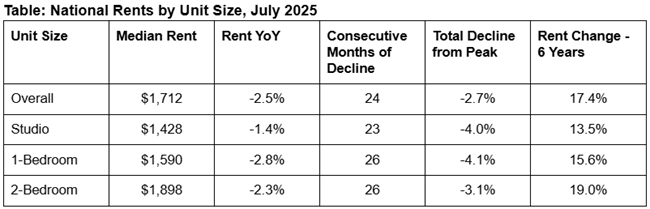
The median asking rent for 0–2-bedroom properties in the 50 largest metros fell to $1,712 in July, a $43 (-2.5%) decline compared to the same time last year.
Rents Decline Again, but Nationwide Rent Is 2.7% Below 2022 Peak
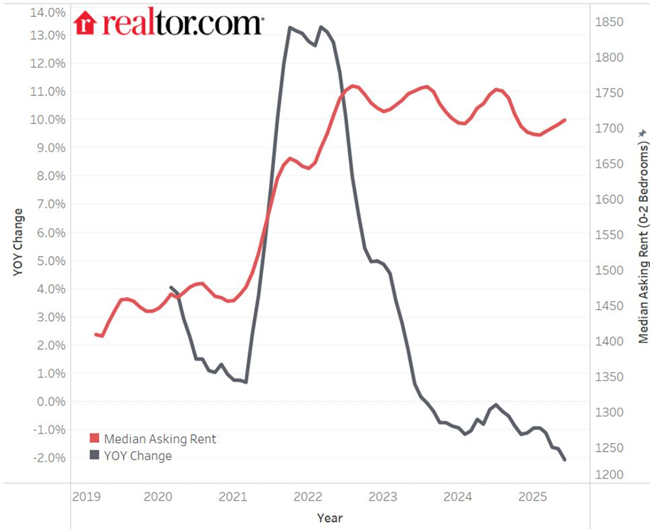
While monthly rent growth continues to follow a typical seasonal pattern, it has consistently lagged behind last year’s pace, indicating a persistently cooler rental market. Rent prices remain $254 (17.4%) higher than their pre-pandemic levels, but are now $47 (-2.7%) below the peak reached in August 2022.
“Rents have now declined for two full years, giving renters more leverage and financial breathing room than they’ve had in some time,” said Danielle Hale, chief economist at Realtor.com in a release. “But there are early signs that relief may not last forever. Developers are pulling back in key markets, and construction headwinds—especially tariffs on steel, lumber and aluminum—could create a shortfall in new rental supply down the line.”
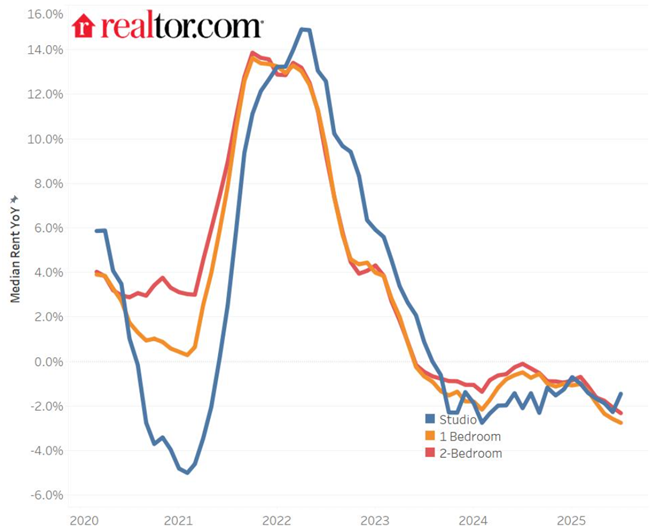
All Units Saw Rent Declines
Multifamily Development Pulls Back Sharply
In June 2025, multifamily completions for buildings with two or more units fell 38.1% year-over-year, dropping from a seasonally adjusted annual rate of 656,000 units in June 2024 to just 406,000.
This significant decline reflects the growing challenges facing developers, including elevated construction costs, shrinking profit margins due to lower rents, and newly expanded tariffs on imported building materials.
The impact is being felt unevenly across the country. The Midwest saw the steepest annual drop in completions (–55.7%), followed by the South (–33.5%), Northeast (–33.0%), and West (–28.9%).
Disrupted Local Permitting Trends with New Higher Tariffs Signals More Pullbacks Ahead
Permitting trends across large metro areas show that some markets are already feeling the effects from rising construction costs and compressed profits:
- Orlando: Permits for multifamily units dropped -54.9% from Q1 to Q2 2025—the first Q2 decline since 2022.
- Philadelphia and San Antonio, Texas also saw their first Q2 permitting dips in three years.
- Charlotte, N.C. and Las Vegas experienced their largest quarterly permitting declines in Q2 since 2022.
- Even San Francisco, which saw a modest increase, posted its slowest Q2 growth in permitting in three years.
These local slowdowns suggest that developers are responding to worsening conditions by reducing plans for new projects—an early warning sign that the supply of new rental units could tighten over time.
Looking ahead, the doubled tariffs on imported steel and aluminum announced in June could make this condition worse.
“If construction pullbacks continue, today’s renter-friendly market could give way to a tighter, more competitive landscape,” said Hale. “It’s a trend we’ll be watching closely, especially in markets that had previously led the way in multifamily development.”
Rent Trends by Unit Size
While rent prices typically rise during spring and summer, this year’s seasonal lift in rent trends has been softer than usual. As of July, rents were up just 1.2% year-to-date, compared to 2.8% growth over the same period in 2024.
Despite near-term affordability gains for renters, the sharp drop in multifamily completions and early signs of weakening permitting activity may shift market dynamics later this year or in 2026, the report says.
Read the full report here.