Home Blog Page 60

Renters Survey Shows Many Residents Plan To Move

Renters surveyed said they are happy with their property manager, but only 50 percent plan to renew their expiring lease this year

Renters surveyed said they are happy with their property manager, but only 50 percent plan to renew their expiring lease this year, according to AppFolio.

The top three reasons that unsatisfied renters are considering moving are for a better apartment/house (63 percent), lower rent (49 percent) and a better property manager (45 percent). Millennials say the may reason they are moving is to pay less.

In the survey of 1,000 renters for the 2023 Property Manager Renter Preferences report, AppFolio found that 66 percent of renters reported that they are satisfied with their property manager – up from 55 percent from last year’s study, but many still plan to move.

“This reveals a need for property managers to better understand renter expectation,” the report says.

“With the rental industry evolving, property managers need to take a critical look at their offerings to ensure they are competitive and keep pace with resident expectations,” Stacy Holden, Senior Director, Industry Principal at AppFolio, said in a release.

“Today’s renter preferences will help shape the housing of tomorrow, so it’s important for property managers to up level their service now through tech and other thoughtful offerings. This will help rental teams retain current residents and entice others.”
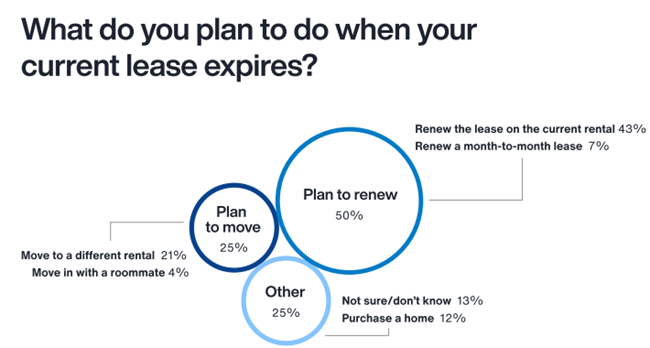
Renters surveyed said they are happy with their property manager, but only 50 percent plan to renew their expiring lease this year
Chart from App Folio

Key takeaways from the 2023 Property Manager Renters Preferences Report include:

  • Property managers will be in fierce competition to retain and attract residents and play a key role in tenant satisfaction.
    • A great property manager is a key factor in retaining current residents. Of satisfied renters, 57 percent say their property manager is a main reason they are considering renewing their lease.
    • Outside of property attributes, a property manager’s reputation is key for attracting new residents. 68 percent of renters say a property manager’s reputation on review sites is important when evaluating a new rental.
  • Renters demand online payment options from their property manager.
    • Paying rent online is a primary factor when finding a new rental property. More than half (60 percent) of renters say online rent payments are important or very important when evaluating a new rental.
    • Of those renters without the option to pay online, 58 percent would like their property manager to offer the option according to the renters survey.
    • Younger demographics are more likely to embrace online payments. Gen Z (65 percent) and Millennials (61 percent) are most likely to pay their rent online (compared to 40 percent of Gen X and 46 percent of Boomers).
  • Younger residents expect much more from their property manager.
    • Renting to Gen Z? Property managers need to do more to satisfy them. Only 56 percent of Gen Z renters are satisfied with their property manager (compared to 64 percent of Millennials, 66 percent of Gen X and 75 percent of Boomers).
    • There’s room for growth when it comes to retaining younger residents. Only one-third (35 percent) of Gen Z renters are likely to renew their lease (compared to 44 percent of Millennials, 53 percent of Gen X and 67 percent of Boomers).
    • Why are Millennials leaving? They want to pay less. Millennials are the most price sensitive, with 51 percent citing lower rent as their reason for moving (compared to 38 percent of Gen Z and Gen X).
See the whole survey here.

Sign Up For Our Weekly Newsletter And Get Rental Property And Apartment News And Helpful, Useful Content Each Week.

* indicates required

Where Are The Most Popular Cities And Regions For Renters?

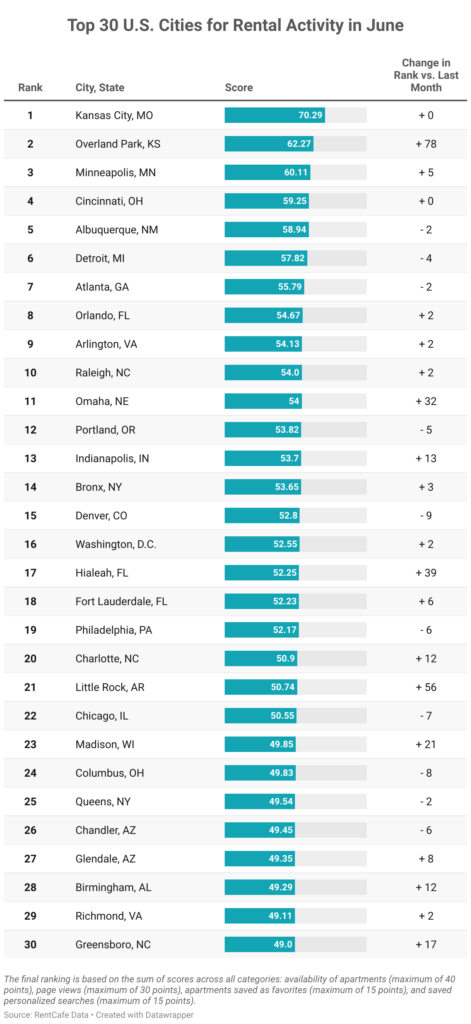
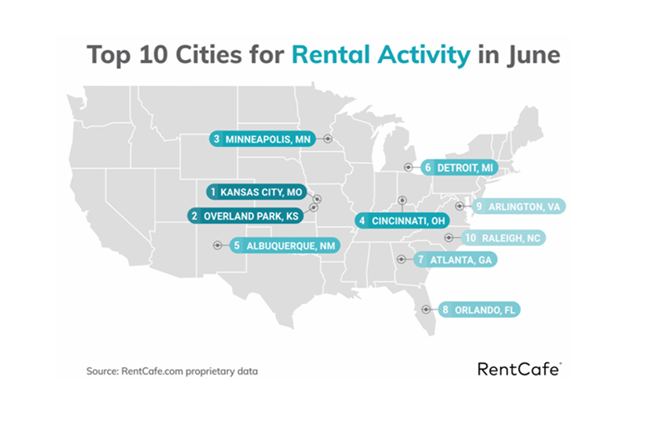
The most popular cities and regions for renters in June 2023 are in the Midwest and the South according to the latest report from RentCafe

This month, the Midwest is the most popular region for renters, followed by the South, according to RentCafe’s monthly June ranking based on searches on their site.

“Overall, the South claims 12 entries in our June ranking — the most out of all regions. The Midwest follows with 10 spots, including the top four. Atlanta (#7) goes on as the highest-ranking city in the South for the third consecutive month.

Most Popular Cities for Renters?

Kansas City, MO, is June’s most desired city by renters, maintaining its top spot from last month. Neighboring Overland Park, KS, comes next, followed by Minneapolis in third place. Overland Park – climbs an impressive 78 positions to the 2nd spot thanks to a ninefold year-over-year increase in apartments marked as favorites. This is a clear sign that renters are very close to signing a new lease.

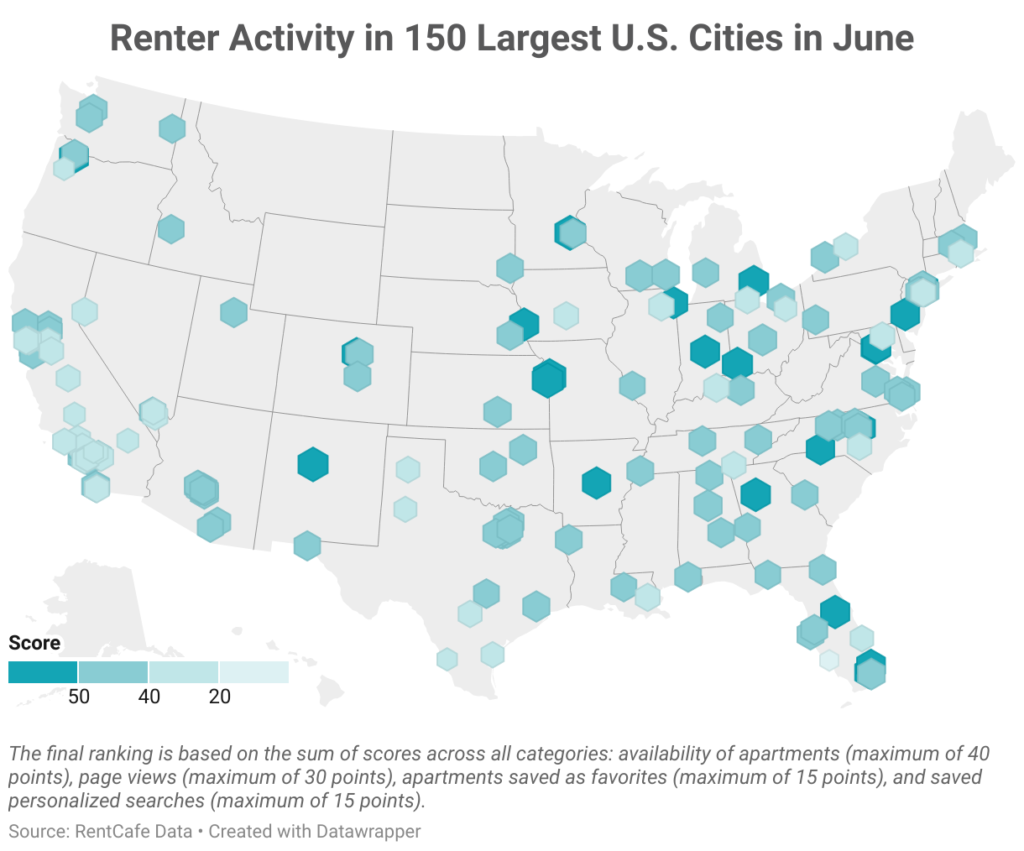
“Apartment listings in these cities saw the most engagement on RentCafe.com this month due to high rates of rental properties saved to favorites, personalized searches, scarce unit availability and overall high listing views,” according to the report.

Prominent rental hubs like Manhattan and San Diego have been outperformed by smaller Midwestern and Southern cities showing more robust rental activity compared to one year ago.

activity in the 150 largest cities popular with renters

Popular Cities For Renters

Here’s the Rent Café’s snapshot to help renters stay ahead of the game this peak rental season:

  • In light of recent policies aimed at renters, Minneapolis is seeing more interest from apartment hunters and lands on the 3rd spot in June. This comes after the number of personalized searches saved by renters doubled compared to one year ago.
  • Overall, the South claims 12 entries in our June ranking — the most out of all regions. Atlanta (#7) goes on as the highest-ranking city in the South for the third consecutive month. Here, the number of apartments favorited by renters doubled year-over-year.
  • Most of this month’s new entries are Southern cities: Hialeah (#17) joins the other Florida cities (Orlando #8 and Fort Lauderdale #18) in our ranking. North Carolina tech hub Charlotte (#20) and college town Greensboro (#30) are also part of our top 30 most in-demand cities for renters for the first time.
  • Meanwhile, the Bronx is the Northeast’s highest-ranking location at #14 after climbing three spots since last month. The borough saw an impressive 46% year-over-year decline in the number of apartments available for rent, reflecting high demand from renters.
  • However, Queens (the other NYC borough in our top 30) fell to #25. Similarly, Philadelphia (the third Northeastern urban hub on our list) dropped six spots to #19. Manhattan exits our top 30 after securing the last spot in May’s ranking.

the top 30 most popular cities for renters

Read the full report here.

As Apartment Size Shrinks, Storage-Unit Demand Grows

Fake Landlords Indicted In Rental Assistance Fraud In Seattle

Six people indicted on federal charges of rental assistance fraud using fake documents, posing as landlords, to get rental assistance money

Six people have been indicted on federal charges of rental assistance fraud by using fake documents and posing as landlords using fake tenant applications to claim emergency rental assistance money meant to help avoid evictions, according to a release from the U.S. Department of Justice.

The rental assistance fraud occurred in Seattle where the group is charged with stealing over $2.7 million from the King County rental assistance program designed to give emergency help to renters facing eviction. In addition to the rental assistance fraud, members of the group defrauded or attempted to defraud the unemployment systems in Washington, California, South Carolina, and Nevada.

The U.S. Attorney for the Western District of Washington, Nick Brown, said the 26-count indictment was “a wide-ranging fraud scheme, led by 29-year-old Paradise Williams, of Phoenix.” Two defendants were arrested in Phoenix, a third was arrested in Houston, and three defendants were arrested in Washington State.

Six people indicted on federal charges of rental assistance fraud using fake documents, posing as landlords, to get rental assistance money
U.S. Attorney for the Western District of Washington, Nick Brown.

“The participants in this fraud were relentless in exploiting pandemic relief programs that were intended to assist small businesses and people who were vulnerable to eviction,” Brown said in the release. “The need for the emergency rental assistance greatly outweighed the funds available, and we know that fraud schemes such as this one stole money that should have gone to those desperately needing help.”

According to the indictment, Williams was the hub in a wheel of rental assistance fraud. She created fake documents and told her accomplices how to pose as landlords and tenants claiming to need rental assistance. Because the program would pay for back rent and future payments, the person posing as the fraudulent landlord got payments of tens of thousands of dollars for each fake tenant application.

Williams received kickback payments from those who used the scheme for fraud. Williams herself received more than $740,000 in emergency funds by posing as the landlord on at least 21 different applications for rental aid. In fact, neither Williams nor her accomplices owned any rental properties and were not the tenants they impersonated.

In addition to Williams the grand jury indicted:

Rayvon Darnell Peterson, 32, of Seattle, Washington

Tia Janee Robinson, 28, of Fife, Washington

Jahari Asad Cunningham, 45, of Houston, Texas

D’arius Akim Jackson, 37, Bonney Lake, Washington

David Jesus Martinez, 32, Pacific, Washington

The indictment says that, between June 2020 and August 2021, Williams and others submitted at least 35 fraudulent applications for Economic Injury Disaster Loans (EIDL) seeking more than $3.7 million from the Small Business Administration (SBA). Two of the loans were funded for a loss of $300,000. Williams assisted her accomplices with forging documents and fake tax statements to defraud the SBA. Williams used multiple common email addresses and a common naming convention for business names as she attempted the fraud.

Williams and others also sought to defraud a different SBA program, the Paycheck Protection Program (PPP). In April and May 2021, Williams, Jackson, and others submitted at least 13 fraudulent applications to the SBA PPP program seeking approximately $253,000. Nearly $212,000 was paid out.

According to the indictment the money was used for luxury cars, lavish trips, designer clothes, jewelry, and even plastic surgery.

Wire fraud in connection with a presidentially declared major disaster or emergency is punishable by up to 30 years in prison and a $1 million fine. Money laundering is punishable by up to 20 years in prison.

The case was investigated by the FBI with assistance from SBA-OIG. The case is being prosecuted by Assistant United States Attorney Cindy Chang.

Sign Up For Our Weekly Newsletter And Get Rental Property And Apartment News And Helpful, Useful Content Each Week.

* indicates required

As Apartment Size Shrinks, Storage-Unit Demand Grows

Sluggish Demand And Increasing Supply Slowing Rent Growth

Rent prices nationally were up slightly in May at 0.5 percent but sluggish demand and increasing supply of new units is slowing rent growth

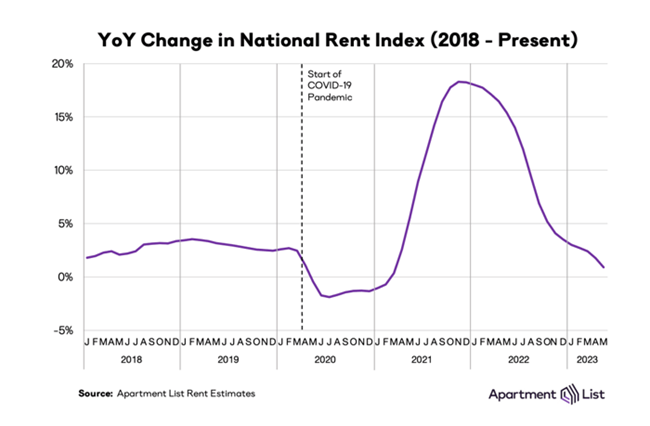
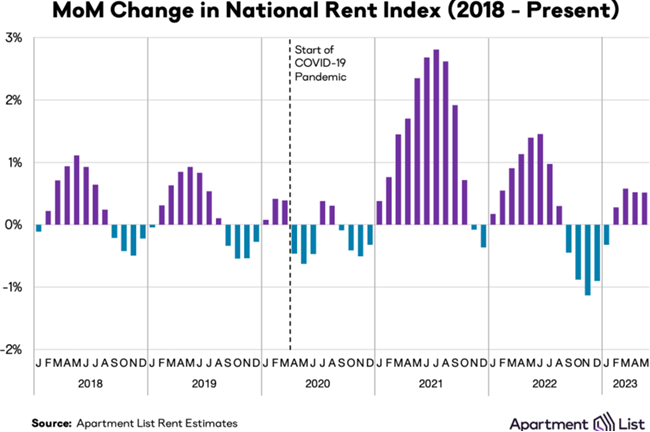
Rent prices nationally were up slightly in May at 0.5 percent but sluggish demand and increasing supply of new units is slowing rent growth, Apartment List says in the June report.

“This is the fourth straight monthly increase in rent prices, but rent growth is flattening out at a time of year when it’s normally picking up steam,” Apartment List economists write in the report.

While rent prices may be trending up again, rent growth is still slower for this time of year.

“Year-over-year rent growth is continuing to decelerate, and now stands at just 0.9 percent, its lowest level since March 2021. Year-over-year growth is now solidly below the average rate from 2018 to 2019 (2.8 percent), and could possibly even dip into slightly negative territory in the months ahead,” the repot says.

Rent prices nationally were up slightly in May at 0.5 percent but sluggish demand and increasing supply of new units is slowing rent growth

Some cities showing negative year-over-year rent growth

Rents increased in May in 76 of the nation’s 100 largest cities, but at the same time, 48 of the top 100 cities are currently logging negative year-over-year growth up from 40 cities last month.

Scottsdale, AZ saw the nation’s sharpest month-over-month rent declining in May (-0.9%), continuing a broader slowdown in the Phoenix metro.

“We are in peak season for the rental market, when rent growth usually ramps up. However, this month’s data shows rent growth stalling, not accelerating. Prices have been rising for four straight months, but rent growth in April and May (+0.5 percent) came in slightly slower than what we saw in March (+0.6 percent).

“The stagnant rent growth that we’ve seen over the past couple of months indicates that the market cooldown that started in the second half of 2022 is continuing, even if prices are now trending up.

“This month’s 0.5 percent increase was the second slowest May rent growth of any year in the history of our rent estimates (going back to 2017), ahead of only 2020, when prices fell in May amid the turmoil of the early pandemic. From 2017 to 2019, rents increased by an average of 1.1 percent in May, more than double this month’s increase.

On the supply side

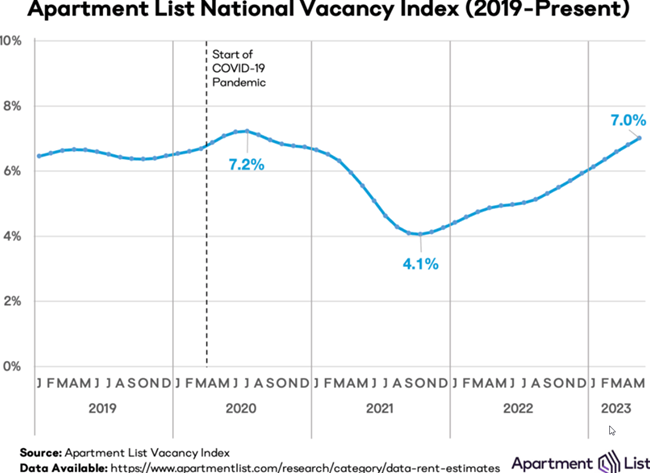
“Our vacancy index currently stands at 7 percent, surpassing the average pre-pandemic rate and continuing to trend upward.

With a record number of multifamily apartment units currently under construction, some property owners may start struggling to fill vacancies for the first time since the early stages of the pandemic.

There are now more apartment units under construction than at any time since 1970.

“As this new inventory continues to hit the market over the course of the year, we are now entering a phase in which property owners are beginning to compete for renters to fill their units, a marked change from the prevailing conditions of the past two years, in which renters have been competing for a limited supply of available inventory.”

Rent prices nationally were up slightly in May at 0.5 percent but sluggish demand and increasing supply of new units is slowing rent growth

Conclusion

The economists conclude that, “Year-over-year growth could even dip into negative territory within the next couple of months.

“And even if demand rebounds over the summer, a strong construction pipeline should temper rent growth for the remainder of the year.”

Read the full report from Apartment List here.

Sign Up For Our Weekly Newsletter And Get Rental Property And Apartment News And Helpful, Useful Content Each Week.

* indicates required

5 Ways To Mitigate Risks to Multifamily Revenue

There are risks to multifamily revenue in the current economy so here is a look at those issues and 5 ways mitigate those risks.

There are risks to multifamily revenue in the current economy so here is a look at those issues and 5 ways mitigate those risks.

By Mark Peters

It’s critical for owners and operators to prepare and protect themselves ahead of a potential economic downturn. This process begins with identifying the top five risks to multifamily revenue and determining the best approaches to mitigating these risks:

Risk 1: NSF Returns, payment errors and chargebacks

Transaction errors and fraud pose a notable risk during rent collection cycles, particularly during recessions. According to the NAA, property managers lose around $17,000 annually per property to collections.

Payment technology tools offer one remedy to identify and prevent fraud. These tools ensure sufficient funds are available to cover payments, by instantly verifying bank account information. Additionally, chargeback defense teams offer further protection by helping to recover lost revenue.

Risk 2: Delinquent rent

Late or missing rent payments reduce cash flow and interrupt productivity by diverting resources to collections and evictions.

Fraud detection providers can offer respite by verifying renters’ identification in real time, eliminating the risk of fraud and delinquencies before a lease is signed. Operators can also reduce delinquencies by offering residents payment flexibility, which is a major upside as high rents continue to burden many people. This solution allows operators to get paid in full and on time, while allowing residents to pay in installments that work within their budget.

Risk 3: Paper-based payment processing

Manually processing paper rent payments is inefficient and error-prone. Yet, 42 percent of rent payments are still made with a check and 16 percent with money orders. This is due to the portion of renters that remain unbanked, are unwilling to change their check writing habits or want to avoid digital processing fees.

As an alternative, forward-thinking operators are offering digital payment portals, modern lockbox solutions and digital cash payment solutions. Not only are these systems more secure than checks or money orders, they can also improve cash flow and negate fraud by reducing the time money is tied up in accounts receivable, thanks to immediate deposits.

Risk 4: Paying utility invoices without auditing them

Utilities are a major expense for apartment communities. While operators don’t have a hand in bringing utility costs down, there is an opportunity to save significant sums of money by catching errors in utility invoices.

At least 17 percent of utility invoices contain errors, which can amount to hundreds of thousands of dollars on operator’s books. Establishing a consistent and standardized process for monthly utility invoice audits can help operators avoid this.

Outsourcing this task to a provider can also prove beneficial for smaller teams that may lack adequate resources to take on another task. Enlisting the help of a third party frees up time for property teams to focus on more important, mission-critical tasks.

Risk 5: Suboptimal utility cost recoupment 

While there are a variety of present day factors driving energy costs at any given time, one aspect of navigating the utility market as a property manager remains true –  including utilities in rent or charging a flat fee leaves cash flow vulnerable to rate fluctuations.

Billing residents for their actual usage mitigates the risks associated with utilities-included or flat-fee approaches and also creates a new revenue stream through recuperated costs. This added revenue increases NOI and, after factoring in cap rates, can also lead to a spike in property value.

While there isn’t a magic path that would allow operators to completely avoid the impacts of a less-than-ideal economy on business, years of property management data and analysis have brought incredibly helpful solutions to the marketplace.

By leveraging solutions specifically designed to address risks to multifamily revenue, operators can position themselves in the best possible way for weathering an economic challenge.

About the author:

Mark Peters is president of Zego a property management automation company.

Sign Up For Our Weekly Newsletter And Get Rental Property And Apartment News And Helpful, Useful Content Each Week.

* indicates required


Quartz: The Future of Countertops in Rental Housing

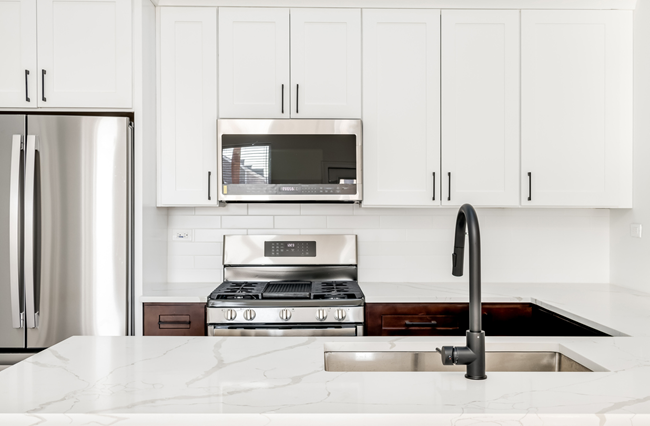
The future of countertops in rental housing is the modern, fresh look of white and gray quartz countertops, sought-after by tenants.

The future of countertops in rental housing is the modern and fresh look of white and gray quartz countertops, a sought-after feature for tenants.

By Precision Countertops

In the world of rental housing, maintaining an attractive and functional living space is vital for property owners, managers, and maintenance professionals.

One area that often requires attention is the countertops. Many older apartments suffer from damaged or stained laminate countertops that can diminish the overall appeal of the property.

Changing Industry

There was a time that laminate countertops reigned supreme in the rental housing community. More and more, however, quartz has become the popular choice due to its durability, longevity, and aesthetic versatility. This modern and fresh look of white and gray quartz countertops has become a sought-after feature for tenants.

Looks That Last

The benefits of quartz countertops extend beyond their visual appeal. Unlike laminate, quartz is known for its exceptional durability and is highly resistant to damage and staining, often outlasting laminate by more than double the lifespan. This longevity translates to long-term savings for property owners, as they minimize future replacement costs. Moreover, quartz countertops are easy to maintain, reducing the workload for maintenance managers and improving overall efficiency.

Upgrade Quality, Not Cost

In terms of cost, quartz countertop replacements are surprisingly affordable, with an average cost ranging between $2,000 and $2,500 per unit. With the price of laminate on the rise, it makes sense to increase the appeal of properties by switching to quartz. This investment pays off in the form of higher rents and increased tenant demand, maximizing the return on investment for property owners.

Let’s Recap

Making the switch from laminate to quartz is a simple, surefire way for property owners, managers, and maintenance professionals to enhance the value and appeal of their properties.

By replacing outdated and damaged laminate countertops with durable, attractive, and cost-effective quartz countertops, apartments can attract higher-quality tenants, drive increased rental rates, and benefit from long-term savings. Elevate your property’s appeal and enjoy the rewards of quartz countertops!

About the Author:

Precision Countertops is the leader in rental housing countertop replacement. With a track record of over 10,000 successful apartment countertop upgrades in the Portland metro area, Precision Countertops specializes in transforming apartments with durable and visually appealing quartz countertop.

Amenities That Will Turn the Heads of Prospective Residents

6 Tips for Keeping Maintenance and Onsite Teams Safe in the Summer Heat

Hot summer months can put a strain on rental property maintenance personnel onsite so here are some tips to keep your team safe.

Summer heat can put a strain on rental property maintenance personnel onsite so here are some tips to keep your team safe.

By Casey Hale

Something that isn’t talked about nearly enough in our industry is taking care of our team members working outside in the heat.

Temperatures on a roof or inside an attic can range from 20-30 degrees higher than the outdoor temperature. From extreme heat to urgent needs such as air conditioning repair, our maintenance and onsite teams are faced with extreme working conditions during our busiest time of year.

Here are a few tips to keep people safe and healthy throughout the hot summer months.

 Provide and Promote Proper Hydration & Sun Protection

Avoid caffeinated beverages and drink more water, juice, and sports drinks prior to and throughout the workday. Sweating removes needed salt and minerals from the body which need to be replenished. Have electrolyte beverages on hand for your team. When working outside, wear a hat and sunscreen and utilize cooling towels and shirts with cooling sleeves to keep cool.

 Offer Flex Summer Hours & Show You Care

Show your team you care by saying thank you, offering refreshing treats and providing flexible hours. Scheduling outdoor maintenance as early as possible is key to avoiding heat and sun exposure throughout the midday. Offering flexible summer hours will allow people to start and end their day earlier and avoid working during the hottest time of the day.

 Ensure Team Members Have a Place to Cooldown & Encourage Breaks

For every hour spent in the heat, another hour should be taken to cool down. Be sure team members have an air-conditioned indoor space or shaded environment with air movement for cooling down. The time spent in the heat should be balanced with the amount of time in a cool down space.

 Stay in Contact and Know Your Team’s Whereabouts

Know the location of your team members and vendors working onsite at all times and be sure to check in on them frequently.

 Know the Warning Signs for Heat Exhaustion and Heat Stroke

Faint or dizziness, excessive sweating, cool, pale, clammy skin, nausea or vomiting, rapid, weak pulse, and muscle cramps are all signs of heat exhaustion. Throbbing headache, no sweating, body temperature above 103 degrees, red, hot, dry skin, nausea or vomiting, rapid, strong pulse, and loss of consciousness are all signs of heat stroke.

 What To Do if Someone is Suffering from Heat Exhaustion or Heat Stroke

If someone is experiencing any symptoms of heat exhaustion, get them to a cooler, air-conditioned place immediately. Provide water and cold compresses to cool down. If someone is experiencing any symptoms of heat stroke, call 911 and take immediate action to cool the person until help arrives. In either case, stay with the person and do not leave them alone.

Hot summer months can put a strain on rental property maintenance personnel onsite so here are some tips to keep your team safe.

About the author:

Casey Hale is the Maintenance Director for P.B Bell and is responsible for the training and mentoring of the maintenance staff.

Sign Up For Our Weekly Newsletter And Get Rental Property And Apartment News And Helpful, Useful Content Each Week.

* indicates required

Keeping Your Communications Compliant with Fair Housing

5 Ways to Communicate Better with Challenging Tenants

What to Look for in Property Management Software

5 Things Your Company Can Do To Retain Top Talent in Multifamily

Evicted Tenant Charged With Arson In Portland Apartment Fire

Police have charged an evicted tenant with felony arson and reckless endangerment in a fire that destroyed a Portland apartment building.
Photo courtesy of Portland Fire & Rescue

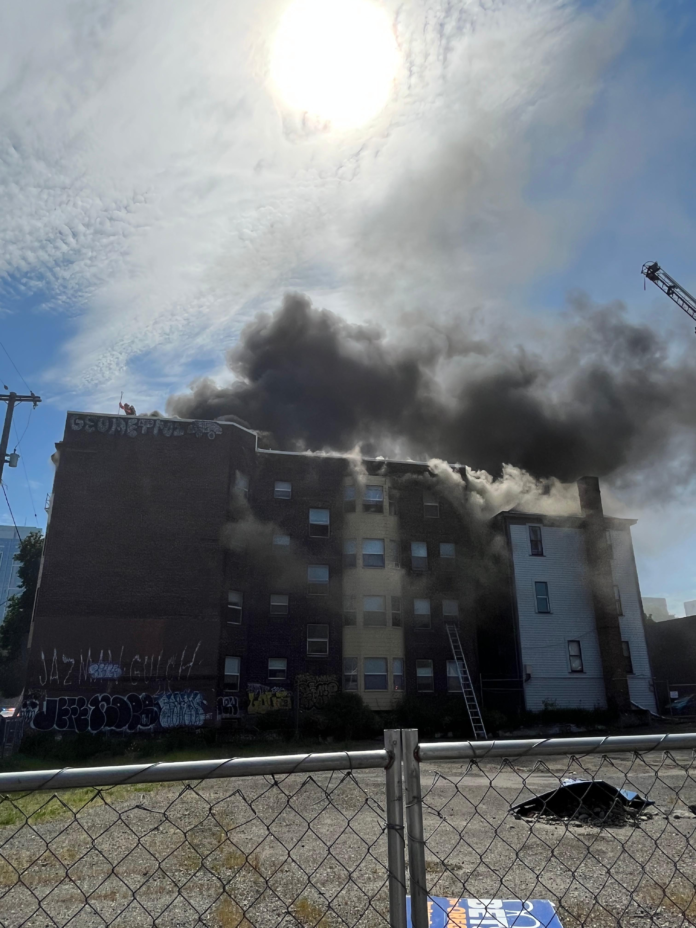
Police have charged an evicted tenant with felony arson, criminal mischief and misdemeanor reckless endangerment in a fire that destroyed a Portland apartment building, according to reports.

The 116-year-old apartment building was destroyed and residents of all 42 units of the May Apartments, were displaced. No one was seriously injured in the fire but an unknown number of pets were lost in the arson fire according to a spokesman for Portland Fire & Rescue.

Officials said the apartment building will likely be torn down.

Police arrested 30-year-old Garrett Repp, a former tenant who was evicted in May, on 31 charges,including arson, related to the fire.

Repp’s ex-girlfriend told The Oregonian/OregonLive he had lived in the May Apartments since November. The landlord, SkyNat Property Management, initiated an eviction order against Repp in February saying he owed $3,180 in rent and late fees, court records show.

The Oregonian reported that on April 17, the Multnomah County Circuit Court Landlord Tenant Department ordered Repp to move out by midnight on April 23. An amended order was filed May 1, ordering him to move out by midnight May 7. A third order was issued May 3, ordering him to move out by midnight May 8. On May 10 a judge ordered sheriff’s deputies to remove him from his third-floor apartment. The fire broke out May 16.

The four-alarm fire at the May Apartments at 1410 S.W. Taylor Street in the Goose Hollow neighborhood sent heavy, black smoke throughout downtown Portland and surrounding areas, leading to the closure of streets and highways.

Portland Police spokesperson Sgt. Kevin Allen said Repp, 30, was arrested the day of the blaze because building management had reported him on May 9 for “breaking through the wall of his apartment” and tunneling into the vacant unit next door. Repp was charged with one count of first-degree criminal mischief and released later on May 16. The case has since been closed.

Repp was well-known to residents at The May Apartments, according to interviews with three tenants and a former property manager, who said he had pulled the fire alarm for no reason more than a dozen times since he moved in last December and had repeatedly clashed with other residents.

According to its website, SkyNat is a family business with more than 500 residential units in Portland, Gresham, Vancouver and Tigard.

Sign Up For Our Weekly Newsletter And Get Rental Property And Apartment News And Helpful, Useful Content Each Week.

* indicates required

Leasing Season Is Here, and Pet-Friendly Rentals Can Help You Attract New Residents

Residents say pet-friendly rentals are hard to find so here are some ideas on how to help during leasing season to attract pet lovers

Residents say pet-friendly rentals are hard to find so here are some ideas on how to help during leasing season to attract pet lovers to your community.

By David Stunja

It may be hard to believe, but summer is almost here. And in the apartment industry, that means it’s leasing season.

Forward-thinking operators are always thinking about how they can maximize the appeal of their communities to new residents. Innovative marketing campaigns, self-guided and virtual tours, and cutting-edge onsite amenities are just a few of the ways that today’s apartment owners and managers are trying to lure new renters.

But operators shouldn’t overlook the impact that their pet policies and amenities can have on their efforts to attract new residents. After all, we are a nation of pet lovers: 70 percent of U.S. households own a pet, according to the American Pet Products Association.

The 2021 Pet-Inclusive Housing Report, from Michelson Found Animals and the Human Animal Bond Research Institute, hints at some of the business opportunities and benefits of rolling out the welcome mat to pet owners. According to the report, 72 percent of rental-housing residents say pet-friendly housing is hard to find, pointing to the competitive advantage of offering communities that pet-owning residents find appealing. In addition, 83 percent of owner/operators say pet-friendly vacancies are filled faster, and the report also found that residents in pet-friendly housing stay 21 percent longer than those in non-pet-friendly housing.

So how can operators best position their communities to attract pet lovers? Below are some steps to consider.

  • Relax breed and weight restrictions. A reduction or elimination of these restrictions results in a larger pool of potential residents who will now consider your communities. Scaling back creates the opportunity for other operational and financial benefits, as well.

For example, with more pets onsite, operators can collect more pet rent. Reduced restrictions also make it less likely that a resident will try to hide a pet or sneak a pet into the community under the guise of it being an assistance animal. Operators lose out on pet-related revenue when this happens because HUD and the Fair Housing Act prohibit charging pet rent or other pet fees for legitimate service or support animals.

Operators that are considering reducing or eliminating their pet restrictions shouldn’t worry too much that these changes will be met with stiff opposition from residents. According to the Pet Policies and Amenities in Multifamily report by PetScreening and J. Turner Research, 53% of residents are against breed restrictions and 23% are indifferent. Only 24% are in favor. Similarly, 56% of residents are against weight-related restrictions, while 24% are indifferent. Only 20% support these restrictions.

Operators should also know that these restrictions often have their basis in the myth of the dangerous breed. However, a 2022 study published in the journal Science showed that a dog’s breed is not a good predictor of its behavior.

MAA and RPM Living are among the operators that have dropped breed restrictions to create more welcoming environments for pet-owning residents. The Management Group, Oculus Realty and Milhaus have eliminated both breed and weight restrictions.

Despite the host of potential benefits offered by reducing or eliminating restrictions, this article is not advocating that operators immediately eliminate breed and weight restrictions and just accept all pets with no questions asked. Apartment communities should thoroughly screen pets and pet owners on an individual basis to determine if they pose any risk and make data-driven decisions accordingly.

  • Have the right pet amenities in place. It’s not enough to simply allow more pets than your competitors. Prospective residents will want to know that they and their pets will have a high quality of life after they move in. And that’s where amenities come in. Across the industry, operators are equipping their communities with shady pet parks, pet-washing stations, pet-sitting services and pet concierges.

The good news is that residents’ needs in this area are fairly straightforward and easy to meet. According to the PetScreening-J Turner report, the two pet-related amenities most desired by residents are waste-bag stations and onsite dog parks, both of which can be relatively affordable to install.

Additionally, when you have progressive pet policies and appealing pet amenities, be sure to feature them prominently in your marketing campaigns, community websites, ILSs and social media outlets. Be assertive in spreading the good  word that your communities want to provide pet owners and their pets with a best-in-class living experience. After all, it creates a meaningful and relevantl competitive advantage for your communities.

Apartment residents – just like the rest of the U.S. population – are simply crazy about their pets. And when apartment owners and operators lean into this fact, they’re bound to find that their leasing seasons will be extremely busy with pet-friendly rentals.

David Stunja is chief operating officer at PetScreening.

Sign Up For Our Weekly Newsletter And Get Rental Property And Apartment News And Helpful, Useful Content Each Week.

* indicates required

When It Comes to Residential Wi-Fi, Invest in a Managed Solution with a Measurable Difference

To evaluate quality of managed Wi-Fi solutions in Multi-Dwelling Units (MDU), property owners typically look at numbers that drive up costs

It’s easy to know who is winning when you keep score. To evaluate the quality of managed Wi-Fi solutions in Multi-Dwelling Units (MDU), property owners typically keep score by looking at the hard numbers that drive costs up. These include the following:

  • Number of resident complaints about the Wi-Fi per month
  • Hours of Wi-Fi downtime per month
  • Hours of a technician monitoring the network per month
  • Hours of a technician performing maintenance and repair per month

This is why it’s important to select a technology solution that will drive those hard numbers down and keep them at a minimum. But how do you achieve that? Which factors should you take into consideration?

High-Performance Wi-Fi for Tenants

Are all residents able to use the Wi-Fi for the applications they need? Is there sufficient bandwidth to support multiple streaming services in a unit for streaming conference calls on one device and concurrently streaming entertainment on others?

Seamless Roaming Across the Property

Are tenants able to roam the entire property without logging in multiple times? Does this include all indoor locations such as gathering areas, laundry and other facilities? Does this include outdoor patio areas?

Simple Onboarding of All Devices

Is it easy for tenants to add a new device without assistance? Each unit can have 12 or more devices, and new ones are added every day. Are their guests able to easily log in without a conversation with their host?

Secure Personal Networks

Is each unit’s traffic private and password protected? Can you ensure that other residents are unable to see a tenant’s activity?

Easy Monitoring and Reporting

How is the network performance monitored, and who monitors it? Does it require a skilled technician to look at the data on demand? Or is there a system that senses problems, makes adjustments and notifies an administrative person with no technical training when problems require attention?

 Choose the Best Option for the Long Run

It costs time and money to handle complaints, describe problems and dispatch skilled technicians. When choosing a solution, remember that the initial cost is only the starting point. A few dollars saved on the front-end can be easily wiped out by a solution that simply does not work. It could drive the total cost of ownership through the roof with outages and repair costs – and ultimately a significant total replacement cost.

Cambium Networks works with several leading MSPs that help property owners get access to reliable, fast internet. For more information on the various architectures and the views of property owners and MSPs, read the solution paper, “Take Control of Your MDU Network.” You can download the paper here. Contact us to connect you with qualified MSPs that fit your needs.

To evaluate quality of managed Wi-Fi solutions in Multi-Dwelling Units (MDU), property owners typically look at numbers that drive up costs

About Cambium Networks
Cambium Networks enables service providers, enterprises, industrial organizations, and governments to deliver exceptional digital experiences, and device connectivity, with compelling economics. Our ONE Network platform simplifies management of Cambium Networks’ wired and wireless broadband and network edge technologies. Our customers can focus more resources on managing their business rather than the network. We deliver connectivity that just works.

Cheap isn’t Always Cheerful: When it’s time to Retrofit Your Building with Seamless Wi-Fi, Choose the Right MSP Partner

Improve MDU Profitability AND Resident Satisfaction