
Home Blog Page 41

4 Kinds Of Front Doors For Your Rental And Pros And Cons Of Each

4 Kinds Of Front Doors For Your Rental And Pros And Cons Of Each

Here is a look at 4 kinds of front doors you can choose for your rental property when you are making repairs or replacing and the pros and cons of each.

The look, feel and features of a rental property’s front door are more important to tenants than landlords and property managers might think.

So taking a look at front door material and the look of the door is the maintenance checkup from Keepe.

The front door is one of those subtle elements that can actually make a big difference to the overall feel of a property. Experts point out that a property’s front door can actually be responsible for significant fluctuations in the value of the property.

Potential tenants will likely take notice of a damaged, flimsy or older-looking entryways. They could interpret this as a sign of lack of upkeep for the property or concern for the well-being of tenants.

Additionally, a damaged front door can make it easy for burglars to identify a certain property as one that they could successfully break into.

Pros and cons of front door material for your rental property

Purchasing a brand new front door is not be a routine expense. So if you are thinking of replacing old doors or upgrading doors on your property, here are some front door materials to consider:

Pros and cons of wooden front doors

1. Ultra-customizable – wooden doors can be tailored to match countless designs, shapes and color schemes, while also being able to house additional decorative elements, such as glass mosaics and panels

2. Flexible price points – the unique natural look of wood can be accessible for most budgets as different varieties of woods are available at a variety of price points

3. Unique look – Many property owners and designers find wood to be worth the investment as it presents a naturally variegated and “high-end” refined look that other man-made materials cannot replicate

Cons:

1. Weather-sensitive – wood is a material that is prone to be affected by its exposure to the weather and other environmental elements. Direct sunlight can fade the natural coloring of the wood, and high-moisture levels in the air (or from precipitation alone) can lead to warping and even rotting of the wood

2. High-maintenance – to ensure that the wood ages well and without being damaged by the natural elements discussed above, it’s essential to regularly treat the wood. Tinctures and sealants should be regularly applied by a reliable maintenance professional, which will be an added maintenance cost to consider.

3. High-price for top-quality – some wood varieties are naturally more resistant and sophisticated-looking, which contributes to their one-of-a-kind appeal and/or ability to last through the years without needing major attention. Premium varieties, such as mahogany or cedar, will be considerably pricier.


4 Kinds Of Front Doors For Your Rental Property And Pros And Cons Of Each
Steel stands out as being far more affordable, while still offering the safety element that it shares with fiberglass and being more low-maintenance.

Pros and cons of steel front doors

1. Super safe – when it comes to property intrusions, reinforced steel doors are known to be safest against breaches, allowing for increased confidence in a property’s overall defenses against unwanted visitors.

2. Affordable but effective – when considering its wood and fiberglass counterparts, steel stands out as being far more affordable, while still offering the safety element that it shares with fiberglass and being much more low-maintenance than wood and its issues with exposure and aging.

Cons:

1. Insulation is not its forte – steel is a known conductor of heat and electricity, which makes it problematic when it comes to wanting to keep a property’s interior temperature at a set level. Steel will contribute to heating up the space when heated by outside temperatures and/or sunlight and will struggle to keep the cold out during the winter months. Insulating layers and treatments can improve this downside, but they will come at an added cost.

2. Denting – steel can easily become dented or chipped following impact, and this often results in unappealing marks that are difficult to completely erase. To effectively get right of the unappealing look of those visible surface damages, an entirely new door might need to be purchased.

3. Rusting – while steel is not as sensitive to moisture as wood, it can easily rust over time as it is exposed to moisture and precipitation. Our experts encourage consulting the manufacturer to understand whether and how professional treatments can help with rust-proofing.

Pros and cons of glass front doors

4 Kinds Of Front Doors For Your Rental Property And Pros And Cons Of Each
Glass doors made for the purpose of being a property’s front door are generally reinforced to make it difficult for intruders to gain access.

1. Unique look – solid glass doors can be made to match a great variety of preferred styles, with varying cuts, shapes and opacity available to be reproduced as desired.

2. Luminosity – glass allows natural light to enter the home like no other material can, which some property owners find to be a valuable addition to the look and feel of their property.

Cons:

1. Fragility – experts agree that glass is naturally delicate even when it is reinforced, making it essential to be mindful of potential scratches, cracks and chipping that could easily occur.

2. Privacy – while some might be excited about the way glass allows for natural light to illuminate the home, some can be put off by the way glass makes it easy for passerby’s to peek inside a property

3. Questionable safety factor – glass door made for the purpose of being utilized as a property’s front door are generally reinforced to make it difficult for intruders to gain access by easily shattering the glass surface. This being said, glass remains rather fragile and much more easy to break than wood, steel, and fiberglass combined.

Pros and cons of fiberglass front doors for your rental

4 Kinds Of Front Doors For Your Rental Property And Pros And Cons Of Each
Many property owners choose fiberglass front doors as opposed to wood because they are not vulnerable to discoloration and damage from exposure, while still closely resembling the look of wood.

1. Versatile – fiberglass paneling is man-made, which allows for creating a variety of unique textures and styles. Fiberglass doors can be made to resemble a natural wood grain, or also present smooth and glossy or matte and satin surfaces for distinguished coloring that can match a variety of architectural elements.

2. Resistant – many property owners choose fiberglass front doors as opposed to wood because they are not vulnerable to discoloration and damage from exposure, while still closely resembling the look of wood. They are also more resistant to wear and tear than their steel counterpart.

3. Low-maintenance – these door should be maintained occasionally as they age, but they do not require sealants to be regularly applied, which does help with saving considerable amounts when it comes to maintenance expenses.

4. Secure – our experts confirm that fiberglass doors are just as secure as their steel counterpart, which allows them to stand strong and dent-free following forced impact

5. Efficient – while all door types can be treated to add insulating properties, fiberglass vastly surpasses wooden and steel door when it comes to insulation. While steel will always struggle with efficiently insulating and wood is vulnerable to temperature and humidity changes, fiberglass is not affected by any of these issues. Having optimal insulation can help ensure lower energy use and expenses as it allows for a property to easily remain hot or cool temperatures as desired.

6. Affordable –  while aesthetic additions – such as integrated wood or glass decors – will rise costs, basic fiberglass door models are generally rather affordable.

Cons:

Pricey add-ons – fiberglass doors are fairly affordable. But can get expensive as they are further customized with the addition of decorative elements or coats.

About Keepe:

Keepe is an on-demand maintenance solution for property managers and independent landlords. The company makes a network of hundreds of independent contractors and handymen available for maintenance projects at rental properties. Learn more about Keepe at https://www.keepe.com

What to Do During Plumbing Emergencies In Rental Property

Sign Up For Our Newsletter And Get Apartment News And Helpful, Useful Content Each Week.

* indicates required

A Tenant Poured Grease Down Drain Who Is Responsible?

A tenant poured grease down the kitchen sink so who is responsible for the plumbing repair is the question this week for Ask Landlord Hank.

A tenant poured grease down the kitchen sink so who is responsible for the plumbing repair is the question this week for Ask Landlord Hank. Remember Hank is not an attorney and he is not offering legal advice. If you have a question for him please fill out the form below.

Dear Hank:

Turns out in checking on a stopped up sink drain in the kitchen it looks like the tenants poured grease down there. Anything we can do about this?

Is this the landlord’s problem or the city’s sewer problem?

-Sam

Dear Landlord Sam,

If the tenant causes damage to your property, then they are responsible.

If the plumbing was working fine and draining properly when they moved in, and per most leases, it is the tenant’s responsibility to “keep all plumbing fixtures in good repair.”

Check your lease-but if tenants caused drain blockage then they are responsible for the repair. Good luck!

Sincerely,

Hank Rossi
www.rentsrq.com

Each week I answer questions from landlords and property managers across the country in my “Dear Landlord Hank” blog in the digital magazine Rental Housing Journal.  https://rentalhousingjournal.com/asklandlordhank/


A Tenant Poured Grease Down Drain Who Is Responsible?
Landlord Hank says, “If the tenant causes damage to your property, then they are responsible.”

Ask Landlord Hank Your Question

Ask veteran landlord and property manager Hank Rossi your questions from tenant screening to leases to pets and more! He provides answers each week to landlords.

  • This field is for validation purposes and should be left unchanged.

Do I Have to Paint and Replace Flooring for a Long-Term Tenant?

Sign Up For Our Newsletter And Get Rental Housing And Apartment News And Helpful, Useful Content Each Week.

* indicates required

May Shows National Rent Growth Rates Over 1%

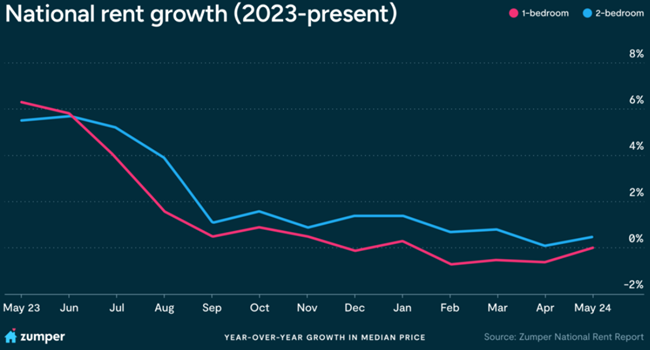
National monthly rent growth rates topped 1% in May, with the exception of large California cities that saw declines.

National monthly rent growth rates topped 1% in May, with the exception of large California cities that saw declines, Zumper says in its monthly report.

“May marks the first time we’ve seen national monthly growth rates of over 1% since October 2022,” said Zumper CEO Anthemos Georgiades in a release. “This notable rise in rent coupled with the current persisting inflation suggests that there will be even more pressure put on the CPI (Consumer Price Index) in the coming months, and rate cuts by the Fed may be pushed back further than previously anticipated.”


Highlights of the report:

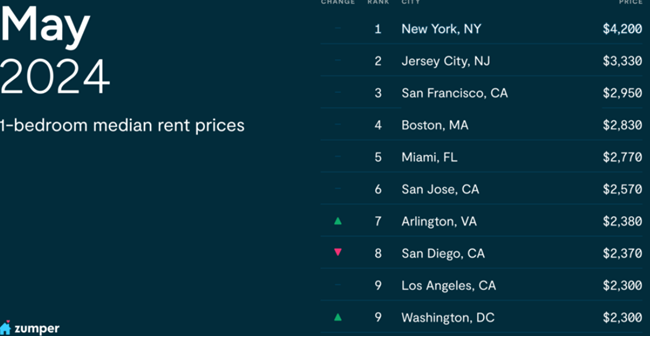
  • The national rent index saw both one- and two-bedroom apartments increase 1.2% this May to medians of $1,504 and $1,865, respectively.
  • The monthly uptick in the national rent index – coupled with the current persisting inflation – suggests that there will be even more pressure put on the CPI in the near future and rate cuts may be pushed back even further.
  • Demand has shrunk in some of the biggest California cities as the majority of this state’s markets in this report experienced declining annual rent rates.
  • Syracuse and Columbus rents were the fastest growing nationwide, both climbing over 20% since this time last year.

National monthly rent growth rates topped 1% in May, with the exception of large California cities that saw declines.

Rent declines in major California cities

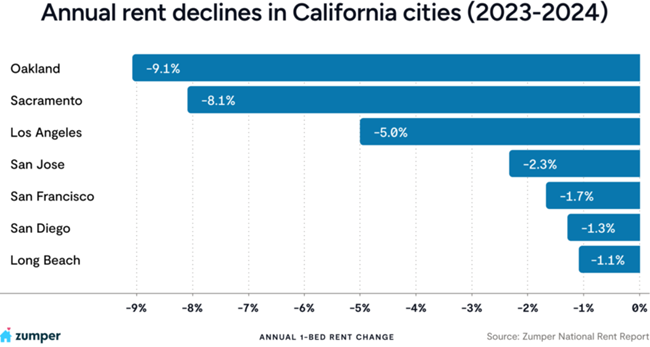
The report says seven of the 11 larger California cities had negative annual rent rates for one-bedroom units, and of those seven declining markets, nearly all are located in the top 20th percentile in terms of price and population. Oakland and Sacramento led the pack with rents down between 8% and 9% since this time last year. Los Angeles, San Jose, San Francisco, San Diego, and Long Beach followed suit.

“It seems that it is less of a supply factor that is driving rents down in California right now, which is what’s happening in many other U.S. markets and especially in the Sun Belt area, but more of a demand one,” Zumper said in the report.

National monthly rent growth rates topped 1% in May, with the exception of large California cities that saw declines.

Of the top 50 largest markets, the Bay Area and the Los Angeles metro area have seen some of the largest population losses in the last few years. These two areas have also not recovered from pandemic-related job losses, as Los Angeles had the most severe decline in nationwide employment, currently sitting at nearly 60,000 jobs below its pre-pandemic rate, while San Francisco had about 45,000 fewer jobs.

California actually posted the highest unemployment rate of all states in April, sitting at 5.3%. Meanwhile, San Diego experienced net move-outs in nearly every submarket and experienced the worst demand performance of the nation’s 150 largest cities, and Sacramento’s occupancy rate has continued to decline every quarter from 2021 through 2023.

See the full report and all data here.

Sign Up For Our Weekly Newsletter And Get Rental Property And Apartment News And Helpful, Useful Content Each Week.

* indicates required

Ins And Outs of Section 8 and Housing Choice Voucher Programs

The ins and outs of section 8 and other housing choice voucher programs. Landlords are encouraged to seek legal counsel and set policies .

The ins and outs of section 8 and other housing choice voucher programs. Landlords are encouraged to seek legal counsel and set appropriate policies for handling housing-choice voucher applicants.

By Denise Holliday


The Housing Choice Voucher Program is the federal government’s major program for assisting low-income tenants, the disabled and the elderly to afford safe and sanitary housing in the private market.

This program allows the participants to find their own housing, which may include single-family homes, townhomes, or apartment communities, but does not currently include other forms of housing options such as mobile home parks or RV parks.

Participants are free to choose any housing that meets the requirements of the program, are not limited to units located in subsidized housing projects, and may even include the residence where they currently live.  The housing provider must agree to participate in this program, abide by certain terms and conditions that are part of the HAP contract, accept the voucher that will verify the total amount of rent to be paid, and the housing must meet minimum health and safety standards by passing an inspection.

That being said, the cities of Tucson, Phoenix and Tempe have passed ordinances under which a landlord is NOT allowed to refuse an applicant solely because the applicant has a voucher.  Each city has provided some guidance on its interpretation of a landlord’s policy that an applicant must have verifiable income of at least a certain amount (typically two to three times the monthly rent).  That guidance is that the landlord should limit that requirement solely to the amount of the tenant’s portion of the monthly amount.  Some landlords require applicants to verify legal income of at least a minimum amount, and there is no current guidance on that issue.

Assuming that the applicant meets the screening requirements, the parties then notify the PHA of their joint interest in renting a dwelling, and Section 8 then schedules an inspection of the dwelling unit to ensure that it complies with Section 8’s housing quality standards (“HQS”).

The inspection department is also responsible for determining “rent reasonableness” for the unit. What rent is reasonable for a particular unit may depend upon the ZIP code in which the unit is located, the age of the property, the number of bedrooms and the unit location.  It will also hinge on the amount of rent that the property charges non-Section 8 residents for the same apartment type and style. Before Section 8 will approve a unit, properties must submit to Section 8 three actual leases that they have entered into with non-Section 8 tenants over the last twelve months and the rent for those units must average the same or higher rent than what is being sought for the specific unit being offered to the voucher holder. The property is NOT required to lower its rent in order to allow a voucher holder to live there. There is currently no clear guidance as to whether the landlord may redact the tenant identities on the copy of leases provided to that agency.

Section 8 must approve, in advance, the lease between the voucher holder/applicant and the property. That lease must have the same start and ending dates as the HAP i.e. Section 8 contract that the property and Section 8 will enter into at the same time. It is illegal for a landlord to require any special criteria or increased rent that applies only to voucher recipients.

The lease must not contain certain provisions that are prohibited by state or federal law. Those provisions are identified on the voucher and on the Section 8 administrative plan for each Section 8 agency.  The lease must include all charges, including any administrative fees, pet fees, storage/garage/parking fees, deposits, etc unless the HAP provider specifically authorizes in writing that the parties may enter into a separate addendum for special charges (note that current Quadel Phoenix appears to be permitting this type of addendum).  A landlord is prohibited from entering into any other arrangements with the voucher recipient that has not been fully disclosed and approved by the agency.  This means that all side deals, even if offered by the tenant, are illegal and not enforceable.

Landlords are encouraged to seek legal counsel and set appropriate policies for handling housing-choice voucher applicants as well as ensuring that their leases are compliant with both state and federal law. Additionally, all three of the cities that require mandatory participation in the voucher programs provide free educational information on their websites.

About the author:

Denise Holliday is the managing partner of Hull, Holliday & Holliday, PLC and has been engaged in landlord/tenant law practice since 1996. She is a certified instructor for the Arizona Department of Real Estate, Arizona Association of Realtors, Property Management Institute, and National Association of Real Property Managers.

Sign Up For Our Weekly Newsletter And Get Rental Property And Apartment News And Helpful, Useful Content Each Week.

* indicates required

Photo credit ArLawKa AungTun via istockimages

4 Key Points To Address When Tenants Bully Or Harass Each Other

Conflict is inevitable, but the turning point is when resident bullying and resident harassment turns into a Fair Housing Act issue
Situations of resident harassment and resident bullying will occur on any property. And they’re tough incidents to deal with.

Conflict is inevitable, but the key turning point is when resident bullying and resident harassment turns into a the Fair Housing Act issue and cannot be tolerated.

By The Fair Housing Institute

It’s simply a part of managing any property; your residents aren’t always going to agree. This makes conflict inevitable, but the key turning point is when it turns into bullying and harassment. To be clear, the Fair Housing Act states that resident bullying and harassment cannot be tolerated. Are you sure that your property, as a whole, has the best practices in place when it comes to resident bullying and harassment? Let’s go over four key points that occur during this situation and highlight best practices for each.

1.   Best Practice: Proper Training for Staff

Your staff members typically have the most contact with your residents. They’re the listening ear and first point of contact for many issues, including incidents of harassment and bullying. So what should happen if your staff member witnesses a case of resident bullying?

First and foremost, any member of your staff who is not involved with management should not get involved in the situation in any way. This is because not all staff members will have the training to discern a personality conflict from a conflict based on a protected category/class.

The training you should invest in for all staff members is twofold: incident reaction and documentation. Training all staff members to stay a witness to an incident involving resident bullying and harassment is your first step. The next steps are to ensure that everyone understands how to document the witnessed occurrence properly. Any little detail missed can affect management’s investigation of the incident.

2.   Best Practice: Incident Documentation

So, a staff member has witnessed and documented a conflict between two residents that they perceived to be bullying and/or harassment. What are management’s next steps? Along the same lines as staff-member training, ensure that every step you take is well-documented when following up on the reported incident.

Your first important step is to establish that there is bullying and/or harassment taking place between the residents. If there is enough evidence found to support this claim, you cannot hesitate to launch an investigation. Why is this?

3.   Best Practice: No Investigation Hesitation

The most important answer to the above question is quite simple: Investigation hesitation can lead to a violation of the Fair Housing Act. It is illegal for harassment to persist with no action on behalf of the housing provider.

As a follow-up answer, the housing provider will almost always be the focus of the legal case if a court investigation is launched. This is based on the fact that the housing provider is operating as an asset of a property management company, therefore, they have more money to pay in a settlement, as opposed to an individual who was the cause of the bullying. In summary, if you want to avoid a pricey settlement on top of a violation fine, it’s best that you launch an investigation as soon as it has been proven harassment is taking place.

4.   Best Practice: Zero-Tolerance Policy

Once you have your documentation in place, from the incident report to the investigation, it is up to management to issue consequential action. Bullying and harassment are not only against the Fair Housing Act, they also are violations of the resident’s lease.

Depending on the severity of the situation, a lease violation or termination can be issued. A zero-tolerance for bullying and harassment policy can also be installed as part of your property for further proof of a decision made by management.

Conclusion

Situations of resident harassment and resident bullying will occur on any property. And they’re tough incidents to deal with. In any case, remember the discussed best practices: ensure your staff is properly trained, incident documentation must be as thorough as possible, don’t give in to investigation hesitation, and consider a zero-tolerance policy.

Above all else, remember the Fair Housing Act is against bullying and harassment of any kind. So ensure you’re following through on your responsibility to uphold and abide by its laws.

About the author:

In 2005, The Fair Housing Institute was founded as a company with one goal: to provide educational and entertaining fair-housing compliance training at an affordable price at the click of a button.


Managing Conflicting Accommodation Needs In Fair Housing

Where Were Top 5 Cities for Rental Activity in April?

Where were the top five cities for rental activity in April as the rental season picks up and apartment hunters remain actively engaged

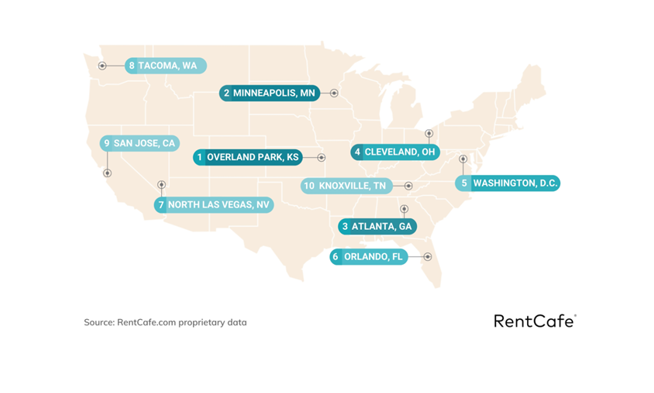
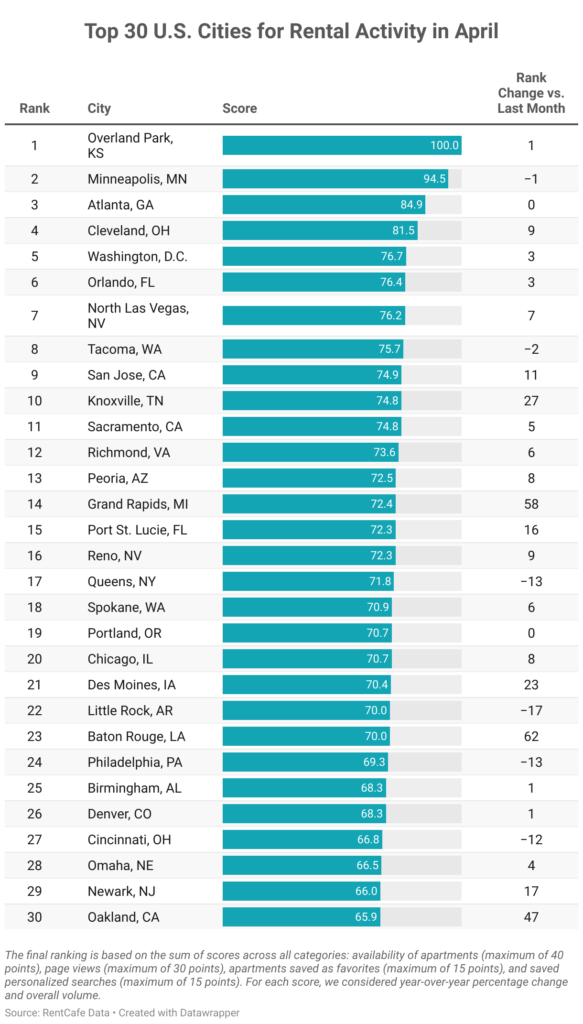
Where in the country were the top five cities for rental activity in April? As the rental season picks up and apartment hunters remain actively engaged in their search for suitable living spaces, RentCafe reports on exactly that question.

While the month’s data shows the South and West as still very popular with renters, the top spots in April go to the Midwest, RentCafe says, based on what the company sees on their platform.

“The Midwest is reclaiming its hold on the top five, with Overland Park, Kan., in the lead, followed by Minneapolis in second place and Cleveland securing the fourth spot.

“However, this resurgence of the Midwest does nothing to push out the South’s presence in the ranking, with Atlanta holding steady in third place and Washington, D.C. coming in fifth

Top 5 cities for rental activity in April

  1. Overland Park, Kan.

Securing the top position after a steady climb since the beginning of the year, Overland Park, Kan., is propelled by a 256% surge in page views and a 138% increase in favorited listings compared to the previous year. Notably, this surge in rental activity coincides with a strong 67% increase year-over-year in saved searches on RentCafe.com. Even with a 3% increase in available apartment listings, it’s evident that the demand for rental properties in this Kansas City suburb continues to be high.

  1. Minneapolis

Although Minneapolis has slipped to second place since last month, it continues to be a frontrunner for April. Here, renters’ interest in the City of Lakes was solidified by a 133% increase in page views and a 47% increase in saved searches compared to April 2023. Moreover, despite a 23% decrease in favorited listings, the city’s allure remains strong, as evidenced by a 19% year-over-year drop in available apartment listings on RentCafe.com, which indicates high demand and a competitive rental market.

  1. Atlanta

Atlanta retained its third spot in April, repeating its placement from the previous month. That said, the city has seen a slight 1% increase in the number of listings availability, but the interest among renters — particularly those hailing from New York, Miami and Chicago — remains robust. April also marks Atlanta’s seventh appearance in the top three most sought-after cities, highlighting this Southern gem’s enduring charm.

  1. Cleveland

Cleveland has made a significant leap to the fourth spot in April, climbing nine positions since last month. Clearly, apartments in Cleveland are captivating renters’ attention, as demonstrated by a 118% surge in page views and a 26% drop in available listings. Plus, despite experiencing a 10% decrease in saved searches and only an 8% rise in favorited listings, it’s clear that this Ohio haven still maintains its status as a sought-after market in rental activity.

  1. Washington, D.C.

Washington, D.C. claims the fifth spot in April rankings, due to a 35% increase in page views and a 9% decrease in apartment availability compared to the previous year. This highlight sustained interest from renters in spite of a slight drop in favorited listings (down 16%) and a 36% decrease in saved searches, which could be attributed to lack of immediate intent to rent given that the rental season has just started. Nevertheless, the capital continues to attract attention, particularly from renters hailing from Baltimore, New York and Atlanta.

Where were the top five cities for rental activity in April as the rental season picks up and apartment hunters remain actively engaged

Read the full report from RentCafe here.

Sign Up For Our Weekly Newsletter And Get Rental Property And Apartment News And Helpful, Useful Content Each Week.

* indicates required

NAA Announces 2024 Top Employers Award Winners

The National Apartment Association (NAA) has announced the winners of the 2024 NAA Top Employers Awards, which recognize member organizations

The National Apartment Association (NAA) has announced the winners of the 2024 NAA Top Employers Awards, which recognize member organizations that foster environments of collaboration, innovation and hard work.

NAA’s Top Employers Awards pay tribute to management companies and suppliers from across the rental-housing industry that have exceeded expectations in creating a culture that emphasizes growth and contribution. The awards are divided into four categories; one for suppliers and three for management companies. The management-company categories are designated for small businesses of up to 100 employees, medium businesses with 101-500 employees, and large businesses with more than 500 employees.

Employees and their satisfaction, measured through an anonymous survey, determine the award winners and finalists in each of the categories. The survey results are provided to all nominees to help organizations better understand and recognize employee sentiment.

“As we navigate the dynamic landscape of 2024, recruitment and retention remain top of mind throughout the rental housing industry,” said Bob Pinnegar, NAA president and CEO. “This year’s recipients of the 2024 NAA Top Employers Awards have gone above and beyond to cultivate exceptional workplace environments that value engagement and learning. I’d like to extend my congratulations and thanks to all of our winners and finalists for emphasizing the importance of investing in our most valuable asset –– our workforce.”

Property Management Companies

The top 10 Small Business Management Companies are:

  • MZ Capital Partners | Top Winner
  • American Communities
  • Axia by ARC
  • Becovic Management Group
  • Henssler Property Management
  • Luves Management LLC DBA City Heights Asset Management
  • Madison Communities, LLC
  • NorthPoint Management
  • RHO Residential LLC
  • Veritas Equity Management

The top 10 Medium Business Management Companies are:

  • Mills Properties | Top Winner
  • Ascentia
  • Fitzrovia
  • Marquette Management
  • Olympus Property
  • Quantum Leap Property Management
  • RealSource Properties
  • Summit Property Management
  • Stoa Group
  • Vidalta Property Management

The top 10 Large Business Management Companies are:

  • Van Metre Companies | Top Winner
  • Atlantic Pacific Companies
  • Berkshire Residential Investments
  • Bryten Real Estate Partners
  • Gables Residential
  • PeakMade Real Estate
  • Pegasus Residential
  • Picerne Real Estate Group
  • Redwood Apartment Neighborhoods
  • S.L. Nusbaum Realty Co.

Supplier Companies

The top 10 Supplier Companies are:

  • Realync | Top Winner
  • Affinity Waste Solutions
  • Apartments247.com
  • iRestify
  • J Turner Research
  • Leap
  • Legacy Apartment Staffing
  • Real Estate Business Analytics (REBA)
  • Red Elephant – Design + Architectural Signage
  • TheGuarantors

Thirty-five companies were also named “finalists” in the 2024 NAA Top Employers Awards. These organizations scored above the cumulative average of all surveys within each contest. Finalists include 4 Degrees Real Estate; Ally Waste; Artisent Floors; AVE, by Korman Communities; Belco Property Management; BetterBot; Brownlee Whitlow and Praet; Chadwell Supply; Decron Properties; DJE Properties LLC.; Emmer Management Corp.; Enfield Management; Fairlawn Real Estate; GCI Residential; Greystar Nashville Region; Horizon Management Services, Inc.; Indus Communities; Kingdom Roofing Systems; Leonardo247; NM Residential; Peak Management, LLC; Phillips Management Group; Preferred Apartment Communities; PRG Real Estate; Q10 Property Advisors; REEP Residential; Rentgrata; ResideBPG; Respage; RR Living; Tour24; Venture Communities; Wangard Partners, Inc.; WithMe, Inc.; and Zumper.

About NAA
The National Apartment Association (NAA) serves as the leading voice and preeminent resource through advocacy, education and collaboration on behalf of the rental housing industry. As a federation of 141 state, local and global affiliates, NAA encompasses more than 96,000 members representing more than 12 million apartment homes globally. NAA believes that rental housing is a valuable partner in every community that emphasizes integrity, accountability, collaboration, community responsibility, inclusivity and innovation. To learn more, visit www.naahq.org. NAA thanks its Strategic Partners: The Home Depot Pro, Lowe’s Pro Supply, Yardi and AppFolio.

Rent Growth Continues in Secondary Markets

Rent growth continues in secondary markets as new apartment construction supply continues to weigh down asking rents in pandemic boomtowns

Many midsize markets in the Midwest, Northeast and South are still experiencing strong rent growth even while new apartment construction supply continues to weigh down asking rents in pandemic boomtowns, according to Yardi Matrix’s Multifamily Research Bulletin.

“Markets that saw explosive growth over the pandemic and that are now experiencing a large influx of supply are generally seeing stagnant or falling rents. Nine of 20 markets that have had rents fall since the beginning of the year are in Florida or Texas, and other pandemic high-growth markets like Atlanta, Raleigh–Durham, Austin and Salt Lake City also have average asking rents that are lower today than they were at the beginning of the year,” writes Andrew Semmes, senior research analyst for Yardi Matrix.

Meanwhile, the secondary markets mentioned above are seeing solid growth in asking rents.

The top secondary markets, which all had over 2% rent growth so far this year, are Albany, N.Y., Milwaukee; Worcester–Springfield, Mass.; Louisville, Ky.; Cincinnati; Des Moines, Iowa.; Richmond, Va.; Madison, Wis.; Portland, Maine; Lafayette, Ohio; Youngstown, Ohio; Providence, R.I.; Northern Virginia; and Scranton–Wilkes–Barre, Pa.

Outlook for the year remains unchanged

“Our overall outlook for the year is little changed. We still expect markets with lots of supply to continue to struggle to realize gains this year, but that is only a supply issue, and once those new units get absorbed all of those markets will be back in good shape,” Semmes writes in the report.

The Federal Reserve is now expected to keep interest rates where they are for longer than originally thought. Also, the prospect for a small downturn later this year is still in the cards.

Conclusion

“Rental growth next year will be stronger than this year, and growth in 2026 will likely be a bit stronger still, as it will take some time both for the Fed’s eventual rate cuts to meaningfully impact consumer demand and for the current influx of supply to be fully absorbed,” Semmes writes in the report.

Read the full report here.

About Yardi Matrix

Yardi Matrix researches and reports on multifamily, office and self-storage properties across the United States, serving the needs of a variety of industry professionals. Yardi Matrix Multifamily provides accurate data on 18+ million units, covering more than 90 percent of the U.S. population. Contact the company at (480) 663-1149.

Sign Up For Our Weekly Newsletter And Get Rental Property And Apartment News And Helpful, Useful Content Each Week.

* indicates required

Live-in Aides and Fair-Housing Compliance

Disability is a protected under Fair Housing so if a resident asks about live-in aids be sure you know reasonable accommodation procedures

Disability is a protected class under Fair Housing so when a resident approaches you about live-in aids be sure your reasonable accommodation procedures are up to date.

By The Fair Housing Institute

A live-in aide request: For properties such as senior living communities, this is a regular request, and the procedure is memorized by many of the staff. But are your procedures up to date with the Fair Housing Act? For other properties, these requests aren’t all that common and can cause some stress due to lack of experience. What are some of the nuances you should be aware of? Let’s break it down.

Remember, Disability Is a Protected Category

When a resident approaches you asking questions about the process or even about the form to request live-in aides, you need to be aware of some pitfalls.

Remember, disability is a protected class under the Fair Housing Act. So, during conversations to assist your residents, avoiding certain questions will help you avoid a fair-housing complaint. Anything direct, such as the name of the disability or even asking if they have a disability (if they don’t have physical manifestations), should be strictly avoided.

Remember, your company’s reasonable accommodation form or an approved letter from a verifier will more than likely have answers to these questions. You should not ask such questions in your interactions with the resident. Your role in this process is to inform the resident of the proper procedure and help guide them in their request.

Check Your Forms

For management, the drafting of reasonable-accommodation forms can be tricky.

There are generic ones that you can definitely use, especially as forms aren’t required under fair-housing law. However, if your form has open-ended questions, it may be difficult to make the final decision on approving such a request. It is always recommended to employ the services of a fair-housing lawyer. Below is a list of possible questions that you may have on the form, specifically for live-in aide requests:

  • Does the resident require 24-hour care?
  • How many hours a day does the resident require care?
  • What services are needed to provide adequate care for the resident?
  • Will the live-in aide be a permanent or long-term solution?

The verifier provided by the resident should fill out your property’s provided form. If the resident has already met with a verifier—their doctor, as an example—and provided a letter answering the questions found on your form, then a form isn’t required.

Follow-Up Policy

Your resident has approached you about the need for a live-in aide, and a verified form or letter has been acquired.

How do you follow up?

Once the need for a live-in aide is confirmed and presented, your procedure must include a few things. First, remember that a live-in aide is not a resident, so while a criminal background check can be enforced, a credit check cannot. What if your resident wants a family member as their live-in aide? This can be permitted as long as it is verified that the family member is there to render necessary care to your resident. You may also need to address an additional reasonable accommodation for a larger unit depending on the current unit your resident is residing in.

As always in any procedure, ensure every interaction and all steps are thoroughly documented. This can help you prevent delays in following through with the accommodation and any miscommunication between different members of the staff. If there is a delay in the accommodation, having proper documentation will also help you give a clear answer to the resident in case of questions or confrontations.

Live-In Aide Accommodation Summary

In summary, no matter the type of property, you need to be prepared for any kind of reasonable-accommodation request, especially when it comes to live-in aides. Reviewing your procedures, whether they’re well-used or a little dusty, can help you prevent fair-housing complaints that could lead to pricey violations.

As touched on before, while generic forms are acceptable, they can make the reasonable-accommodation process longer for both parties. Employing a fair-housing lawyer to work on your own custom, in-depth accommodation forms can help you save time and avoid delays. In addition, focus heavily on proper documentation training. Especially when dealing with accommodations involving a protected category, keeping all staff informed of conversations and current steps can also aid in avoiding fair housing violations. So, the next time that a live-in aide request presents itself, you can confidently help your resident and stay fair-housing compliant.

In 2005, The Fair Housing Institute was founded as a company with one goal: to provide educational and entertaining fair-housing compliance training at an affordable price at the click of a button

Money on the Move: Accessing Incentives for Your Green Projects

ICAST is in partnership with state and regional stakeholders who have helped pave the way for Utah to capture green project funding

More funds from the Inflation Reduction Act (IRA) and Bipartisan Infrastructure Law (BIL) are working their way toward communities.

For example, Utah’s Office of Energy Development is currently preparing its applications for the U.S. Dept. of Energy’s funded Home Energy Rebate programs. The Environmental Protection Agency is considering applications under the Climate Pollution Reduction Grant Program, through which multifamily properties in Utah may be able to access incentives for electric vehicle (EV) chargers. Treasury and IRS recently announced that  applications will open at 9 a.m. ET May 28 for the 2024 program year of the low-income communities bonus program for the investment tax credit. To learn more about the funds coming to multifamily properties, follow this link.

ICAST is thrilled to be in partnership with state and regional stakeholders whose efforts have helped pave the way for Utah to capture these and other funding opportunities. Our partners include:

  • Utah Housing Coalition (UHC), which leverages education, advocacy, and partnerships to promote equitable and sustainable communities to ensure all Utahns have a safe and affordable place to call home. UHC’s Executive Director serves on ICAST’s Board of Directors.
  • Southwest Energy Efficiency Project (SWEEP), a public interest nonprofit organization advancing energy efficiency, beneficial electrification, and clean transportation in the Southwest. In 2023, SWEEP helped drive a significant expansion of incentives for energy efficiency and EVs in new affordable housing projects in Utah, and it has long been a key partner in ICAST’s efforts to deliver beneficial electrification solutions to existing multifamily properties.
  • Rocky Mountain Power (RMP), which manages Utah’s Custom Multifamily Demand-Side Management Program in collaboration with ICAST. In 2023, this program offered incentives for the installation of energy efficiency measures to 145 multifamily projects, increasing efficiency, safety, health, and comfort for 9,987 multifamily units. Overall, low-income customers received 57% of the program budget.
  • Utah Clean Air Partnership (UCAIR), a statewide clean air partnership created to make it easier for individuals, businesses, and communities to make small changes to improve Utah’s air. Partnership with UCAIR has enabled ICAST to maximize its impact in target areas to improve the efficiency, health, and quality of multifamily housing and reduce emissions of criteria pollutants that cause Utah’s poor air quality.

About ICAST
ICAST is a 501c3 nonprofit with a history of designing, launching, managing, and scaling programs to benefit underserved communities. Its focus is delivering clean energy upgrades to low- and moderate-income households living in multifamily affordable housing and disadvantaged communities.

Flexible Financing for Green Projects

Green Retrofits for Cost Savings and Resiliency

Attracting Federal Investment to Multifamily Housing