Home Blog Page 30

Rents Fell In October As Election Heralds Change

Multifamily and single-family rents fell in October as supply growth continues to delineate the direction of rents by metro

Multifamily and single-family rents fell in October as supply growth continues to delineate the direction of rents by metro, Yardi Matrix says In the Multifamily October Report.

“At the same time, the drop in starts presages another wave of rent growth in 2026 and beyond. Meanwhile, the market has begun to anticipate changes from the new administration in 2025,” the report says.

Highlights of the report

  • As the market prepares for a change of administration and policies, multifamily advertised rents fell $3 in October to $1,748. Year-over-year growth, 0.9% in October, has been range-bound between 0.7% and 0.9% since January.
  • The regional dividing line caused by supply growth continues. In the Matrix top 30 metros, the top 11 metros for rent growth are all in the Northeast, Mid-Atlantic and Midwest, while the bottom nine are all in the Southeast or Southwest, where deliveries are high.
  • Single-family rental rates had their worst performance in years in October, as advertised rents fell $8 nationally to $2,164, dropping the year-over-year growth rate 30 basis points to 0.3%. Like multifamily in general, high-supply markets are feeling a (likely temporary) pinch.

Demand strong as occupancy drops

Through September 2024, 329,000 apartment units have been absorbed, putting the market in line for one of its better recent years.

Supply has grown slightly more than absorption, prompting the U.S. occupancy rate for stabilized properties to drop 10 basis points to 94.7%.

“While it’s too soon to forecast specific policy changes, financial markets braced for higher inflation owing to Trump’s promise to increase tariffs on many imported goods. The 10-year Treasury rate rose 20 basis points to 4.45% during the day after the election. Higher Treasury rates are an impediment to transaction activity and make it more difficult to refinance underwater mortgages,” Yardi Matrix writes in the report.

Read the full report here.

About Yardi Matrix

Yardi Matrix researches and reports on multifamily, office and self-storage properties across the United States, serving the needs of a variety of industry professionals. Yardi Matrix Multifamily provides accurate data on 18+ million units, covering more than 90 percent of the U.S. population. Contact the company at (480) 663-1149.

Multifamily New Construction Supply To Remain Sizable In 2025

Sign Up For Our Weekly Newsletter And Get Rental Property And Apartment News And Helpful, Useful Content Each Week.

* indicates required

Rent Growth Continues in Secondary Markets

Seattle Hires Law Firm To Defend Against Landlord Lawsuit

A Seattle landlord sued the city alleging tenant protection laws passed in the last few years have financially strapped his housing units

The City of Seattle has hired a law firm to defend against a Seattle real estate investor suit alleging the city “destroyed” its ability to sustainably operate an affordable apartment property in the Chinatown International District, according to reports.

The company alleges the city passed ordinances between 2018 and 2022 that hurt its ability to successfully operate a low-income apartment building.

The city has retained the law firm Bryan Cave Leighton Paisner.

The city council has been active the past few years in passing tenant protections such as caps on move-in fees, first qualified applicant rules, eviction rules, lease renewals and tenant screening rules.

Goodman Real Estate, through a subsidiary that owns a 254-unit apartment building near Fourth Avenue South and South Jackson Street, filed the lawsuit, calling for unspecified financial damages and a change to city regulations.

“Our goal is to create the highest level of quality affordable and sustainable housing in downtown Seattle for our residents,” CEO George Petrie said in a statement, “but the city has placed so many restrictions on our ability to do that, it is placing our residents at risk.

The lawsuit alleges the tenant protection laws have forced the building to accept tenants who caused safety issues, added new maintenance and security costs, increased tenant and staff turnover, limited evictions and discouraged rent increases that might help cover the increased costs.

The suit claims this is a “taking” of the landlord’s property.

Sign Up For Our Weekly Newsletter And Get Rental Property And Apartment News And Helpful, Useful Content Each Week.

* indicates required

Salt Lake City Ranks As A Top Place For Landlords In 2025

Salt Lake City ranks as a top place for landlords and real estate investors as they are looking to identify the 2025 most promising markets

Looking ahead to the real estate landscape of early 2025, landlords and property investors are looking to identify the most promising markets and Salt Lake City and Phoenix rank high as great places for landlords.

Laure Beck with MSN writes, “ While our previous analysis of the best cities for landlords in 2024 provided valuable insights, the dynamic nature of real estate means new opportunities are always emerging.”

Seamus Nally, CEO of TurboTenant, puts Salt Lake City in the spotlight. “Salt Lake City is a pretty great city to be a landlord,” he said.

“There are minimal rent control regulations and pretty relaxed landlord laws, plus homeowners insurance costs are well below the average,” Nally added. “A lot of Salt Lake City landlords actually benefit from the demand, as it frequently leads to bidding wars.”

Along with Salt Lake City, other cities in the top list for landlords in 2025 are Columbus, Ohio, Phoenix, Nashville, Charlotte and Denver.

While these cities show promise, it’s important to remember successful real estate investing requires more than just picking the right location. Derrick Barker, CEO of Nectar, is all about making sure you have good people around to help out. “Surrounding yourself with the right team — real estate agents, mortgage brokers, property managers and contractors — makes all the difference,” he said.

Phoenix also a top place for landlords in 2025

Sebastian Jania, owner of Ontario Property Buyers, sees Phoenix as a hot spot for landlords. “Phoenix also offers a robust employment market and a cheap cost of living, which draw more and more individuals to the region.

For landlords, this means a constant flow of prospective tenants and a low vacancy rate,” he explained.

The article originally appeared on GOBankingRates.comBest US Cities To Be a Landlord in Early 2025.

Rents Fell In October As Election Heralds Change

Sign Up For Our Weekly Newsletter And Get Rental Property And Apartment News And Helpful, Useful Content Each Week.

* indicates required

photo credit f11photo via istockphoto

Navigating Unreasonable Accommodation Requests

Unreasonable accommodation requests require special navigation of the issues by property managers to stay compliant with fair housing laws

Unreasonable accommodation requests require special navigation of the issues by property managers who want to stay compliant with Fair Housing laws and find fair solutions.

By The Fair Housing Institute

The Fair Housing Act (FHA) requires property managers to provide reasonable accommodations for residents with disabilities to ensure equal access and enjoyment of their homes. However, not all requests are deemed reasonable.

Understanding how to navigate accommodation requests that may be considered unreasonable is essential for property managers who want to stay compliant with the law while also effectively managing their property.

What Makes an Accommodation Request Unreasonable?

An accommodation request is considered unreasonable if it places an undue financial or administrative burden on the property or fundamentally alters the nature of the property’s services. Determining whether a request is unreasonable requires property managers to assess several factors, including cost, available resources, and the impact on the property’s operations.

For example, a request for extensive structural modifications, such as installing an elevator in a small two-story building, may be deemed unreasonable due to the significant financial burden it would impose. Similarly, requests for personal services, such as requiring property staff to provide daily care for a resident, can be classified as unreasonable because they fundamentally alter the services typically provided by housing providers.

Examples of Unreasonable Accommodation Requests

  • Undue financial burden: A resident requests modifications that require extensive construction, such as widening all hallways in a property to accommodate a larger wheelchair. For smaller properties with limited budgets, this request could impose an undue financial burden.
  • Administrative strain: A resident asks for a 24/7 on-call maintenance service to accommodate their needs. This request could be considered unreasonable because it would require significant staffing adjustments that may not be feasible for the property-management team.
  • Fundamental alterations: A request that requires the property to provide services beyond its typical offerings—such as providing specialized transportation or personal caregiving—is often classified as unreasonable. Property managers are not required to alter the fundamental nature of their operations to accommodate a resident.

The Interactive Process: Finding Alternatives

Even when a request is deemed unreasonable, property managers should not simply deny it and move on. Instead, the Fair Housing Act encourages managers to engage in an interactive process with the resident. The goal of this process is to explore alternative accommodations that meet the resident’s needs without imposing an undue burden on the property.

For instance, if a resident requests a modification that is too costly, such as installing a ramp at every entrance of the property, a reasonable alternative might be to install a ramp at one entrance that is accessible to the resident. Engaging in this kind of dialogue not only shows a willingness to accommodate but also helps ensure compliance with fair-housing regulations.

The interactive process should be approached with empathy and a genuine desire to find a solution. Documenting every conversation and action taken is critical, as it demonstrates that the property manager made an effort to accommodate the resident in a fair and reasonable way.

Consistency is Key

Property managers should establish consistent criteria for evaluating accommodation requests to maintain fairness and compliance with fair-housing laws. Every request must be assessed individually, but having clear guidelines helps ensure that decisions are made fairly and objectively.

Consistency can be maintained by:

  • Creating written policies: Establishing clear, written policies regarding accommodation requests helps set expectations for residents and provides a consistent framework for property managers to follow.
  • Training staff: Regular training on fair-housing requirements and the process for evaluating accommodation requests helps ensure that all staff members understand how to handle such requests consistently.
  • Documenting decisions: Keeping detailed records of each request, the evaluation process, and any follow-up discussions or alternative accommodations offered is crucial. Documentation helps protect the property from liability if a resident claims their request was unfairly denied.

Best Practices for Navigating Unreasonable Requests

Engaging in dialogue with residents is crucial, even when a request seems unreasonable, as it helps to understand their needs and may lead to a minor modification or adjustment that resolves the issue without undue burden.

Being transparent is also important—communicating openly about why a particular request may be considered unreasonable helps set realistic expectations and prevents misunderstandings. If a request cannot be granted, offering alternative solutions demonstrates a willingness to work with the resident and can help avoid potential fair housing complaints.

Additionally, consulting legal counsel specializing in fair housing is advisable if there is any uncertainty about the reasonableness of a request or how to proceed.

Conclusion: Striving for Fair Solutions

Navigating unreasonable accommodation requests can be challenging, but by engaging in the interactive process, maintaining transparency, and striving for fair alternatives, property managers can create a more inclusive community while managing their responsibilities effectively. The key is to treat each request with care, document all actions, and remain committed to finding reasonable solutions wherever possible. By doing so, property managers not only uphold fair housing principles but also foster a community of trust and mutual respect.

About the author:

In 2005, The Fair Housing Institute was founded as a company with one goal: to provide educational and entertaining fair-housing compliance training at an affordable price at the click of a button.

What Is An Umbrella Policy & Why Is The Cost Skyrocketing?

Umbrella insurance policies extend over all of your assets your car, home, and rentals in your personal name or commercial for LLCs

Umbrella insurance policies extend over all of your assets your car, home, and rentals in your personal name.

By Lance Anderson

Umbrella Insurance policies are an affordable way to add a layer of liability protection on top of your current coverage that protects your assets in case of a large liability claim.

Here are a few things to know about umbrella coverage:

Umbrella policies extend over all of the assets within that entity.  In other words, your personal umbrella will extend coverage over your car, home, and rentals in your personal name.  If you have registered rental properties in LLCs, you will need a commercial umbrella policy, which will cost a little more than a personal lines umbrella.

Umbrella insurance provides an extra layer of protection beyond your underlying liability limits. It safeguards your assets from costly lawsuits such as accidents like slips and falls, property damage, defamation, and, most frequently, car accidents.

BUNDLE YOUR UMBRELLA COVERAGE

It’s important to recognize that umbrella insurance companies, especially on a home, auto, and rental property risk, will want to cover everything you have, i.e., all of those policies should be with the same carrier.

Sometimes, we have clients whose home and rental portfolios are with our agency, yet they want to insure their cars with a discount online auto carrier and have us write an umbrella.

Insurance carriers just don’t do that; they want to know what is going on with the auto risk, who the drivers are, how many cars, etc.  Your risk out on the road is far greater than an injury at your home or rental property, so pay the extra money to get the protection you anticipate from your umbrella insurance.

UNDERLYING LIMITS

An umbrella insurance policy will also require you to carry higher underlying limits on your auto, home, rental property and other policies.

Typically, the underlying limits required for your auto insurance are $250,000/$500,000 and $300,000 for property insurance.  If your current limits are the typical $100,000/$300,000, increasing your underlying auto and home limits will cause an increase of about $1000.00 per year including the cost of the $1,000,000 umbrella policy.  The underlying limits are “stacked” on top of the $1,000,000 umbrella, so your overall liability limit with an umbrella is the underlying limits + the umbrella limit.

WHAT DOES AN UMBRELLA POLICY COST?

At Anderson Insurance Group, we have seen the cost of a personal umbrella increase to about $400.00 per year in 2024.

If you have young drivers, multiple cars, and rental properties, the cost can be as high as $1000.00. We have seen the cost of commercial umbrellas triple in 2024.  There has been a 45% increase in $1,000,000 umbrella insurance claims opened in 2032 compared to 2021, according to insurance provider USAA.  Combined with inflation, this has caused the cost of umbrella policies to dramatically increase in recent years.

HOW MUCH COVERAGE DO YOU NEED?    

Financial planners often advise carrying liability limits equal to your net worth.

Dave Ramsay Solutions advises if your net worth exceeds $500,000, you need an umbrella policy.  Many online calculators can help you determine the umbrella coverage you need.   Balance your needs with the cost, and we think you will find an umbrella policy a good value.

 UMBRELLA vs EXCESS LIABILITY COVERAGE:

A true umbrella will provide coverage for a wide range of exposures, such as worldwide coverage or coverage for a rented boat or ATV.

Excess liability policies are what the industry terms “follow forms” and will only provide coverage above the limits of an existing policy. When given the option, choose an umbrella policy over an excess liability policy for the broader coverage it provides. You will want to reach each policy and consult your agent on the merits of each.

 UNINSURED MOTORIST UMBRELLA COVERAGE:

I am a big fan of UM & UIM coverage on the umbrella policy.

This is an inexpensive way to add an additional $1,000,000 of under and underinsured motorist coverage and will stack on top of your underlying limit.  As a cyclist, who occasionally ventures out on the road, if I am hit as a cyclist/pedestrian and seriously injured, I can claim under my umbrella UM/UIM coverage.

DO YOU NEED AN UMBRELLA POLICY?

Now more than ever, umbrella coverage is an important way to protect your assets.

We live in a very litigious world; attorneys are more aggressive than they have ever been, and did you know there are organizations that fund lawsuits?   That’s right, if they feel there is a good chance they will win, they will front the money and inevitably, its less expensive for the insurance companies to pay than to risk losing in court, seldom do the courts side with the insurance companies.  These factors and increasing inflation make an umbrella policy an important part of your asset and financial protection.

Reach out to Anderson Insurance Group today and let’s discuss how to best protect your rental properties.

About the author:

Lance Anderson has been a landlord for over 25 years and an insurance agent for over 30.  Give Lance or Andres a call.  As landlords and experienced insurance agents, they will make sure you have the best protection for your rental and investment properties.  

Call: 801-262-1551 Text: 801-758-9046
Call us for more information on renters insurance and any questions you have about land lording, we love helping our customers be successful Utah landlords. Call our office at 801-262-1551 or Click Here for a for a consultation with our experienced team. Find out more about umbrella insurance.

Avoid Costly Coinsurance Penalties with Proper Insurance Coverage for Your Investment Properties

For a full review of your apartment or rental property insurance, contact a knowledgeable Anderson Insurance Group agent today.

Complete Guide to Apartment Building Insurance

The Insurance Secret Every Property Owner Needs to Know

The Utah Landlord’s Playbook: Strategies for Full Bookings

3 Must-Have Coverages for Landlords


photo credit Pla2na via istockimages

Canine Contingent Liability

A canine contingent liability policy can cover legal fees and settlements If a dog on your property injures a person or another animal

By Deborah Turner

These days being a property manager or landlord come with many challenges, and one of the most common is managing properties where tenants have dogs. With 39% of renters owning a dog, managing pet policies has become increasing complex for property managers and landlords. Many tenants bypass pet restrictions by having their dogs approved as emotional support animals or as service animals, adding to the challenges of enforcing property guidelines.

If you require tenants with dogs to have a canine liability policy or pay additional pet-related charges, you risk potential discrimination complaints, which can result in penalties averaging between $15,000 and $20,000. Another challenge is that general liability policies often exclude canine liability, leaving landlords vulnerable to claims without proper coverage.

Several companies now offer screening services to verify the legitimacy of ESA and service dog letters, helping property managers and landlords ensure compliance with regulations. While these services may include additional offerings, they do not provide insurance coverage leaving landlords to find separate solutions for liability protections.

If a dog on your property injures a person or another animal you could be sued for allowing the dog on the premises-whether it’s an ESA, service dog, or pet. Without coverage under your general liability policy, you would pay out of pocket legal defense costs which average around $300 per hour nationwide, and any settlement and penalties.

To address this exposure, we developed the Canine Contingent Liability Policy, which covers both legal fees and settlements up to your chosen policy limit. The protection applies first dollar, regardless of any underlying coverage, providing you extra peace of mind if an incident occurs. Costs are based on your selected limit, the number of units, and responses to a brief three-page application. Quotes are provided quickly, and financing options are available.

Contact us for an application and take the next step in making an informed business decision.

About the author:

A canine contingent liability policy can cover legal fees and settlements If a dog on your property injures a person or another animal

Deborah J. Turner, CPCU, AAI

President of Dean Insurance Agency, Inc. in Central Florida since 1994. She designed Canine Contingent Liability as a result of her love for dogs, her research and intimate knowledge of the insurance industry, It protects Landlords and Property Managers should a law suit be filed as the result of a dog on a property.   It closes gaps in coverage and solves the Service Dog, ESA and PTSD issues since they cannot be made to purchase insurance.

Who’s Responsible For Smoke Detector Batteries In Rentals?

Who’s Responsible For Smoke Detector Batteries In Rentals Landlord Hank??

Replacing smoke detector batteries in rentals is a question that comes up often. So whose responsibility is it is the question this week for Ask Landlord Hank. Remember Hank is not an attorney and he is not offering legal advice. If you have a question for him please fill out the form below.

Dear Landlord Hank:

Whose responsibility is it to replace batteries in smoke detectors? The landlord or the tenant?

– Robert

Hi Robert,

That would depend on the lease.

In my lease I make it very clear that the tenants are responsible for the smoke detectors and the battery replacement in rentals, as well as batteries in the thermostat and any other remotes for the property.

If it’s not specifically spelled out in the lease I would think it is the tenant’s responsibility as part of the upkeep of the property.

Sincerely,

Hank Rossi

Who’s Responsible For Smoke Detector Batteries In Rentals?
Landlord Hank says, “In my lease I make it very clear that the tenants are responsible for the smoke detectors and the battery replacement in rentals.”

Ask Landlord Hank Your Question

Ask veteran landlord and property manager Hank Rossi your questions from tenant screening to leases to pets and more! He provides answers each week to landlords.

  • This field is for validation purposes and should be left unchanged.

Do I Have to Paint and Replace Flooring for a Long-Term Tenant?

Sign Up For Our Newsletter And Get Rental Housing And Apartment News And Helpful, Useful Content Each Week.

* indicates required

No Guns In My Apartments: Can A Landlord Say That And Put It In A Lease?

Can I Say “No Pot In My Apartments” When It’s Legal In My State?

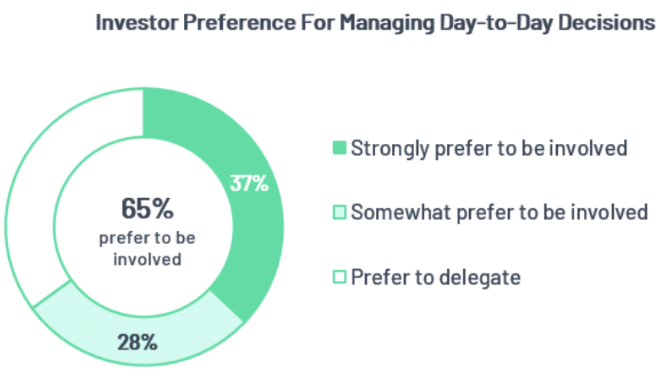
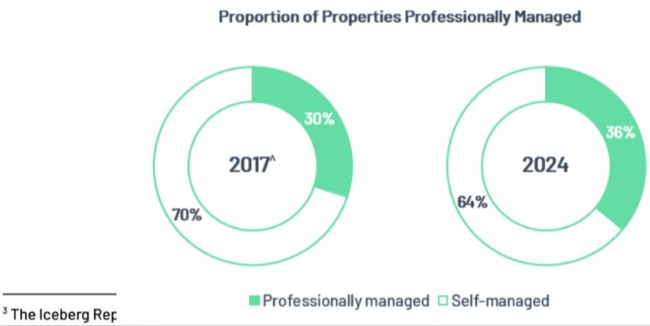
Report Shows Trend To More Professional Property Management

A new report shows a trend to more professional property management moving from 30% of rental properties in 2017 to 36% in 2024.

A new report shows a trend to more professional property management moving from 30% of rental properties in 2017 to 36% in 2024.

“This reflects not only an increase of 1.3 million properties under professional management but also a broader trend of investors turning to property management solutions to navigate a complex and evolving real estate landscape,” the report says.

The Property Management Trends Report show the shift toward professional management, details key insights into the residential property management industry, and reveals the  increase in the number of properties managed by professional third-party property managers across the United States.

A new report shows a trend to more professional property management moving from 30% of rental properties in 2017 to 36% in 2024.


The research was designed and fielded by The Harris Poll in 2017 to gain insight into the industry shifts that have occurred since the last known census of self-managing landlords. It was also fielded by The Harris Poll under the title “The Iceberg Report: An Analysis of the American Single-Family Residential Investment Industry,” sponsored by Real Trends and NEXZUS Publishing.

“The Property Management Trends Report: The shift toward professional management in Single-family rentals” was sponsored by LeadSimple and Peter Lohmann’s Newsletter and co-authored by Jordan Muela, CEO of LeadSimple, Peter Lohmann, CEO of RL Property Management, Jay Parsons, head of investment strategy and research at Madera Residential and Rob Hahn, managing partner at 7DS Associates.

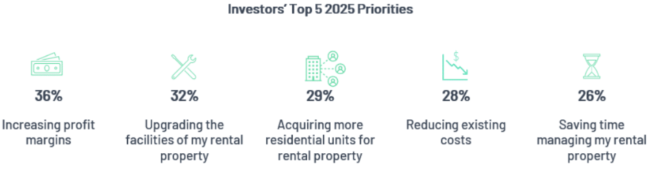
“Investors today face more than just property upkeep; they’re navigating a landscape where regulatory, economic and market dynamics are in constant flux. This report highlights the clear, data-backed advantage of investors working with property management partners who bring stability and efficiency,” Parsons said in a release.

A new report shows a trend to more professional property management moving from 30% of rental properties in 2017 to 36% in 2024.

Hahn added, “This study is an important contribution to the field of property management, which may be changing more rapidly in the years ahead. The data should help inform both investors and property managers about what is truly important and what is not. Our study shows that  the human elements – experience and reputation – are most important.”

According to the report, the value property managers bring goes beyond operational efficiency. “Property managers do more than simply collect rent; they’re partners in enhancing the performance of the assets they manage,” Muela said in the release.  “Our findings show that property management professionals are instrumental in driving property performance, especially as investor priorities shift toward increasing profit margins and mitigating risks.”

Learn more here https://www.profitablepropertymanagement.com/.

Sign Up For Our Weekly Newsletter And Get Rental Property And Apartment News And Helpful, Useful Content Each Week.

* indicates required

Multifamily New Construction Supply To Remain Sizable In 2025

Multifamily new construction starts have bottomed out however construction times have slowed down with many units still in the pipeline
Photo credit John Triplett, Rental Housing Journal

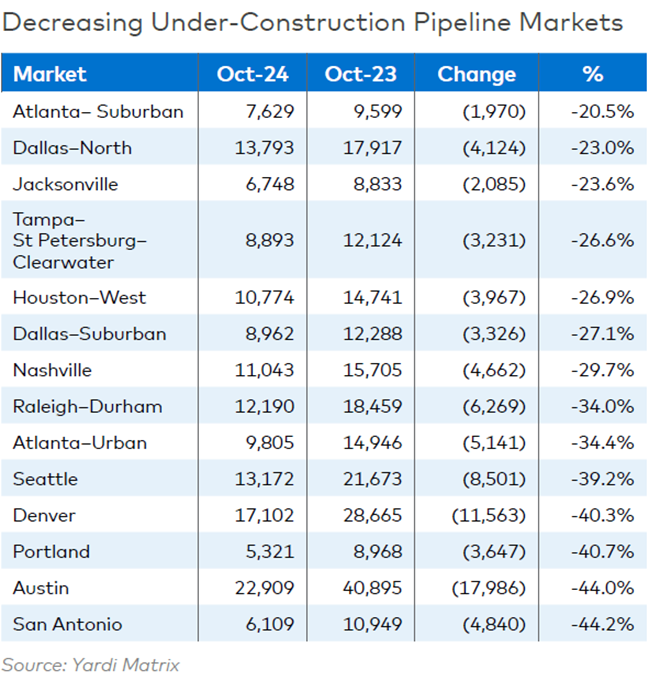
Multifamily new construction starts have bottomed out however construction times have slowed down meaning a sizeable number of units are still in the pipeline, Yardi Matrix reports in a Multifamily Research Bulletin.

“Multifamily completions will remain elevated in 2025 and early 2026, before significantly declining in the second half of 2026 and 2027. Compared to last quarter’s update, the Q4 forecast for 2025 has been increased by 8.1% to 508,089 units. For 2026, the forecast has been increased by 6.0% to 371,509 units,” Ben Bruckner, Senior Research Analyst for Yardi Matrix, writes in the report.

Also the Wall Street Journal reports that landlords will likely have more pricing power next year if current trends continue as things are starting to change as vacancy rates have stopped rising. “The worst of the pressures on pricing from new supply are behind us,” Eric Bolton, chief executive of Mid-America Apartment Communities told the Wall Street Journal.

Multifamily new construction starts have bottomed out however construction times have slowed down with many units still in the pipeline
Chart courtesy of Yardi Matrix

Like Yardi Matrix data, the Census Bureau showed a decline in multifamily construction starts taking hold in the second half of 2023 that bottomed in Q1 2024. Since April 2024, multifamily construction starts averaged an annualized pace of 332,000 units.

“Yardi Matrix continues to expect a gradual deceleration in labor markets and inflation with economic growth decelerating,” the report says. It adds that the deceleration “allows the Federal Reserve to continue to reduce policy rates at a gradual pace to close out 2024 and through 2025. Monetary policy should be materially less restrictive by mid-year 2025, which in turn should make capital conditions for new multifamily development considerably easier.”

Multifamily new construction starts have bottomed out however construction times have slowed down with many units still in the pipeline
Chart courtesy of Yardi Matrix

Forecast for 2025 and beyond

In summary, the forecast expects new-supply completions to remain relatively robust in 2025 at roughly 508,000 units, followed by a noticeable decline in 2026 to 372,000 units. New supply bottoms in 2027 at around 327,000 units, with a rebound in new supply in 2028 and 2029.

“As always, Yardi Matrix is extremely focused on accurately maintaining our development pipeline data and identifying any changes in its evolution that will have a meaningful impact on future new supply,” Bruckner writes.

Read all details in the full Yardi Matrix publications here.

About Yardi Matrix

Yardi Matrix researches and reports on multifamily, office and self-storage properties across the United States, serving the needs of a variety of industry professionals. Yardi Matrix Multifamily provides accurate data on 18+ million units, covering more than 90 percent of the U.S. population. Contact the company at (480) 663-1149.

Sign Up For Our Weekly Newsletter And Get Rental Property And Apartment News And Helpful, Useful Content Each Week.

* indicates required

5 Ways The Election’s Biggest Winner May Be Landlords

5 Ways The Election’s Biggest Winner May Be Landlords

Here is Scot Aubry’s take on 5 ways the election could impact landlords and rent control, tenant protections, affordable housing, taxes, interest rates and more.

By Scot Aubry

As the 2024 U.S. presidential election recently closed, landlords across the country are celebrating many of the positive outcomes they saw in regard to housing, tax, and economic policies that will affect their businesses.

Whether it’s rent control, tenant protection laws, or economic conditions, this often-contentious election outcome will have an impact on the investment real estate market for years to come.

Here’s what landlords should be on the lookout for:

1. Rent Control

Normally reserved for large population center cities, rent control has moved beyond big-city limits and is trying to make its way into our local communities.

The outcome of many propositions around the country promoting rent control policies were effectively shot down, mostly by landlord voters like you.

Even in California, Prop 33, which would have put rent control policies in place statewide, was defeated. These proposals could have limited a landlords’ ability to raise rents, which normally leads to an adverse effect on a property’s profitability.

With the defeat of the many rent control proposals around the country, regulations are either relaxed or blocked, thereby providing landlords more flexibility to increase rents in response to demand.

2. Affordable Housing and Market Competition

Affordable housing was a focal point for many areas n the country during the 2024 election.

Several types of government subsidies were approved to help with the shortage of affordable rental units in many areas. Building restrictions were also eased as well to open up more areas and communities to provide affordable housing alternatives.

With these projects comes increased competition, especially in high-demand urban areas. On the other hand, changes to policy that reduce some of the regulatory burdens can help promote accelerated construction, potentially bringing new, investment ready properties to the market.

3. Tax and Incentive Changes

Tax policies have and will continue to significantly impact landlords.

The current administration introduced several tax reforms that affected property owners, including limiting deductions for property depreciation and increasing corporate taxes.  Reduced profitability is on the near horizon for landlords in areas that have increased taxes on real estate investments or rental income.

If you are a landlord interested in investing in green upgrades or low-income housing projects, become familiar with the local changes in your area to see if there are any opportunities that will benefit you.

But move quickly as many experts are hinting that these may be eliminated with the new administration.

4. Interest Rates and Economic Conditions

Every investor has felt the sting that has resulted from higher interest rates.

Either you’re paying more for properties, or you are holding still with your current portfolio and not expanding your investments. Both of those hurt landlords and coupled with the impact of broader economic conditions, there are a lot of unanswered questions in the rental market.

For all but the institutional investor, these higher rates keep most landlords out of the market and reduce profitability. Policies that curb inflation or reduce interest rates will benefit landlords while a stable economy almost always leads to an increased tenant demand, reduced vacancy rates, and boosted rent prices.

5. Tenant Protection Regulations

The COVID-19 pandemic was the birthplace for many of the regulations that are impacting landlords today.

Check your local regulations to see if laws like extended eviction moratoriums, rent control measures, or limits on late fees and security deposits were put in place.  Although not designed with this in mind, these measures protect tenants but also make it harder for landlords to manage their properties effectively, particularly when dealing with non-paying tenants.

In the landlords favor there has been a push for reforms to make eviction processes faster or provide better protections for landlords facing financial strain.

Election Impact On Landlords Summary

While the long-term effects are speculative in nature, the 2024 U.S. election will significantly affect landlords, from rent control and taxes to tenant protection laws and economic policies.

Landlords need to closely review the election results and prepare for any changes that will impact their businesses. We always recommend interacting with a local real estate investors association as they are very familiar with local rules and regulations. Stay informed, stay active, and stay adaptable.

After taking a beating for a few years as a landlord, is this our time to come out on the winning side?

About the author:

Scot Aubrey is Vice-President of Rent Perfect, a private investigator, and fellow landlord who manages short-term rentals.  Subscribe to the weekly Rent Perfect Podcast (available on YouTube, Spotify, and Apple Podcasts) to stay up to date on the latest industry news and for expert tips on how to manage your properties.

Election impact on landlords

Sign Up For Our Weekly Newsletter And Get Rental Property And Apartment News And Helpful, Useful Content Each Week.

* indicates required

photo credit gguy44 via istockimages