
Home Blog Page 17

Landlords: What To Do When ICE Arrives At Your Rental

Landlords and ICE: 4 things landlords to do to protect property and tenants when Immigration and Customs Enforcement arrives at your property

Here are 4 things landlords should consider when ICE (Immigration and Customers Enforcement) comes to your rental property from an Arizona landlord-tenant attorney.

By Denise Holliday

What are landlords supposed to do if and when ICE (Immigrations and Customs Enforcement) arrives at your rental property?

According to ICE, their agents are tasked with “finding and deporting specific individuals based on existing deportation orders and criminal convictions.”  Contrary to the hyperbole in the news, ICE says it “does not conduct raids or sweeps and does not target noncitizens indiscriminately.”

Some of the targeted individuals will undoubtedly live in rental communities, and ICE will seek to find and remove them from those communities.  While landlords are not required to cooperate with ICE, they cannot block or prevent ICE from pursuing lawful action.

Landlords and ICE: 4 things landlords to consider if agents come to your rental property

No. 1 – First and foremost, maintain a professional demeanor.  Engaging with law enforcement can be scary and intimidating.  Keep in mind these agents are looking for a targeted individual they deem to be dangerous.  Harsh or abrasive behavior will only serve to escalate the matter.

No. 2 – ICE cannot enter private areas without consent, or a warrant.  If you are presented a warrant, make a copy and contact your legal counsel immediately.

No. 3 – If a housing provider is asked if a specific targeted individual lives on the property, there is no obligation to provide that information, but there is also no prohibition in providing that information.  If you are asked for rent rolls, resident logs or tenant files, you must be given a warrant allowing them to obtain that information.  The landlord’s records belong to the landlord.

No. 4 – Politely refusing to assist law enforcement is quite different than providing aid and comfort to a targeted individual.  Do not provide false or misleading information or make any attempt to hide an individual.  Obstructing a federal investigation carries harsh penalties.  Tipping off a targeted individual to avoid arrest puts the ICE agent’s life in danger, increases the likelihood of a violent confrontation on your property, and is a federal felony that carries substantial prison time.

What if ICE asks for list of all tenants?

Recently, one of our clients was approached by federal agents and requested a list of all current tenants, including vehicle information.

They did not present a warrant.

Following the guidelines above, the manager explained, in a professional manner, that she would provide that information for any targeted individual they were looking for, but a complete list of all tenants, with the details they asked for, was too broad and would require a warrant.

A few days later, they were given a warrant for specific information regarding a targeted individual.  Management complied with the warrant and the individual was removed from the property.

Protect your property and other tenants

In dealing with these situations, protecting the property and the other residents in the community is a serious consideration.

If ICE presents a warrant, they will complete their task with or without management’s cooperation.

That may include a hard takedown of an individual or individuals in your community.  ICE will give no regard to any damage to the property if they have to kick in doors, use tear gas or use other tactics.

Also you cannot recover from ICE for any damage they do. The landlord can charge the resident for property damages caused by law enforcement activities. Good luck collecting if they are in jail or fled the state.

This also increases the risk to other members of the community.  Dangerous targeted individuals often don’t go quietly. Not cooperating with the arresting agency will not prevent the arrest, but it may lead to serious property damage and put your other residents in harm’s way.

Landlords must recognize their duty to their tenants, their duty to obey the law, and their duty to protect the other residents in their community.  This can be a tightrope balancing act from a precarious height.

When things get serious, call your attorney.

About the author:

Denise Holliday is the managing partner of Hull, Holliday &  Holliday, PLC and has been engaged in landlord/tenant law practice since 1996. She is a certified instructor for the Arizona Department of Real Estate, Arizona Association of Realtors, Property Management Institute, and National Association of Real Property Managers.

Sign Up For Our Weekly Newsletter And Get Rental Property And Apartment News And Helpful, Useful Content Each Week.

* indicates required

Half Of Americans Want Short-Term Neighborhood Rentals Banned

A research study shows that 49% of Americans think short-term rentals such as Airbnb should be banned completely in residential areas.

A May 2025 research study shows that 49% of Americans think short-term rentals such as Airbnb and Vrbo should be banned completely in residential areas. The study surveyed 1,000 people and received 489 responses; some respondents live in neighborhoods where such rentals exist and some have stayed in them.

When Airbnb first went online more than 15 years ago, it represented a dramatic change in the way people traveled, not to mention the opportunities it presented to homeowners with extra space and real estate investors in tourist-friendly markets, writes  Nick Pisano for Anytime Estimate.

“The proliferation of Airbnbs in some communities has dramatically transformed the experience of those living there full time, who often face the negative impacts of short-term rentals with little direct benefit beyond the hope of added tourist dollars for local businesses.

“It’s a distinction that has many asking: Do Airbnbs really make good neighbors, and how should residential communities handle those who want to operate one there?”

Anytime Estimate surveyed 1,000 Americans, including 33% who have stayed in an Airbnb and 24% who have or had one in their community, about their views on Airbnbs and other short-term rentals such as Vrbo, their potential impact on their neighborhoods, and more.

A research study shows that 49% of Americans think short-term rentals such as Airbnb should be banned completely in residential areas.

Support for regulations on short-term rentals is strong: 

  • 83% say short-term rentals hould be held to hotel tax and safety standards.
  • 82% believe hosts should need a business license.
  • 78% want background checks for renters.
  • 71% think hosts should have to notify neighbors of every booking.

Highlights of the report

  • Roughly 40% of Americans believe a neighbor converting their home into a short-term rental would decrease the quality of life for local residents, more than four times the number who say it would improve it (9%).
  • About 60% consider the presence of a nearby short-term rental as a negative when buying a home; 28% would offer less on the home, and 32% wouldn’t make an offer at all.
  • About half (49%) think short-term rentals should be banned outright in residential areas.
  • Over half of Americans (52%) say they’d be less comfortable letting their children play outside with a short-term rental next door.

Some of the specific concerns were listed by the survey participants, in order from highest concern to least concern:
1. Loud parties/events
2. Increased crime or safety issues
3. Strangers staying in the neighborhood
4. More trash or litter
5. Loss of privacy
6. Decreased property values
7. Increased difficulty finding street parking
8. Decreased sense of community

However, when asked “In general, do you have positive or negative feelings about Airbnb and other short-term rental companies?”, 43% of respondents said they had “neutral” feelings, while 36% had positive feelings and 21% had negative feelings.

Summary

The survey shows clear evidence that, despite more than a decade of existence in many markets, most people still haven’t firmly made up their minds about whether short-term rentals  are a good or bad thing for their general area — even if they’re certain they don’t want one on their block.

Read the full research report here.

Sign Up For Our Weekly Newsletter And Get Rental Property And Apartment News And Helpful, Useful Content Each Week.

* indicates required

Would Your Portfolio Benefit From A Property Manager?

Like any other investment, properties need to be carefully managed and looked after so would your portfolio benefit from a property manager?

Like any other investment you make, properties need to be carefully managed and looked after so would your portfolio benefit from a property manager?

By Johana Williams
Utopia Management

If you own property for rent, then you will already be aware of the challenges involved.

Rental properties often need us to be very attentive; the idea that this is simply “passive income” that requires minimal input is an outdated concept. To get the most out of a real estate investment, you need to be willing to do one of two things:

  1.     Commit your time to managing the property as you would any other business, or
  2.     Hire a professional property-management company that can do this for you.

Like any other investment you make, properties need to be carefully managed and looked after.

They require constant supervision and analysis, as well as continual connections with the people renting from you. Think about how much goes into managing your property: You need to first invest in the building, maintain its condition and amenities, market the property, prepare the legal documentation for tenancy, and then find a tenant you can trust. Then, you need to maintain contact with maintenance vendors, such as trade professionals.

It’s a lot, right? You are not alone if you feel like your “passive” investment isn’t very passive at all!

With that in mind, many property owners – especially those in major real estate locations – benefit from hiring a property-management company. Would your property portfolio benefit from the same?

Time Versus Money: The Owner’s Dilemma

The first reason many people avoid hiring property managers  is the cost. Property-management companies take a percentage of the property’s income in return for managing the property. However, given the time-sensitive nature of modern life, many property owners are happy to give up that little bit of profit to reclaim personal time or more easily make time for future business endeavors!

When you hire a property manager, you no longer need to stay within the local area of your property, giving you more time to do other things. You could move to a new country or head off on holiday without worrying that your tenant(s) will run into issues. A property manager takes on so many of the mundane yet vital tasks involved in property management that you cannot help but feel the benefits of having your time back.

There is also the fact that, with a property manager being the first responder to any tenant troubles, you do not have to be on-call at all times. Worried about having to miss out on a fun evening with friends in case of a storm brewing? Leave it to your property manager.

Benefiting From Manager Expertise and Experience

However, while the cost mentioned above is a valid concern, there are always costs necessary for a successful business model, and they are often worth paying. A property-management company is involved, and they deal with everything. They market the property and manage its maintenance using quality contractors and even tenants. Property-management firms have specialists who handle just about everything involved, meaning you carry far less personal burden.

That can be a good thing because all you need to do is wait for your payments to arrive. When inspections need to be carried out, your property manager does them for you. The best property-management companies use licensed professionals, from real estate agents and marketers to licensed contractors and trade professionals with all the right connections and certifications. As such, they can often secure better rates for supplies and professionals.

You benefit from their experience of dealing with surprise situations, too. While you might be blindsided by an overnight flooding or a shock legal dispute with a tenant, property-management companies have seen it all.

Consistent Performance

Another nice benefit, is that tenants tend to stick around longer when a property manager is involved. This is simply because things get done on a more routine basis, mistakes are more easily avoided, and response times are better. The best property managers have staff on-call 24/7, so any issues receive near-immediate responses.

Performance comes down to tenant selection and retention, as well. The best property-management companies find quality tenants and keep them around longer. This means fewer gaps in rent payments, because quality tenants pay on time and stay in the building longer. Not only do you get better tenants, but they stick around, and you don’t have to get involved in messy evictions because your property manager will handle that for you. The efficacy and overall experience of the propert- renting process becomes much better when you have dedicated managers.

As you can see, a property-management company could be the time-saving solution you need. They can also boost property performance and provide the answers you want. If you are sick of having to solve every problem that pops up with your rental property portfolio, involve an expert. Hire a property manager, and see how much time you can claw back each year. After all, time is money.

Investing in property is supposed to give you a lease on life and personal freedom, right? Well, with a property manager, that becomes a realistic goal instead of a pipe dream. Suppose you want to make sure that your property investment pays off; like anything else in life, it pays to leave matters in the hands of experts you can trust. Learning on the job as a property owner can become very expensive.

About the author:

Johana Williams has lived in San Diego for more than 25 years and a property manager for 20. She has been an asset to the growth of Utopia Management (as well as client portfolios) due to her comprehensive knowledge of property management, maintenance, and the accounting associated with managed properties. As regional manager, Johana supervises 27 branches in California, Washington, Nevada, and Oregon.

Sign Up For Our Weekly Newsletter And Get Rental Property And Apartment News And Helpful, Useful Content Each Week.

* indicates required

Multifamily Investors Ask: Best Markets for Long-Term Investments?

Multifamily investors recently asked which challenged multifamily markets are best markets for long-term investments?

Multifamily investors recently asked John Burns Real Estate Consulting which challenged multifamily markets are best markets for long-term investments?

“To answer the question at hand, we tailored the model to spotlight multifamily markets facing short-term stress—characterized by modest or even negative rent growth, below-average occupancy levels, and cap-rate expansion since early 2022—but strong long-term fundamentals,” write John Burns consultants in their newsletter.

Markets to watch

Among the top 10 markets. there are some special ones to watch. John Burns consultants say the top markets “have been challenged lately with soft rents, falling occupancies, and rising cap rates.”

However, many show long-term demographic growth with new supply now declining.

No. 1 – Austin

“Despite current headwinds from elevated supply, the fundamentals—demographics, job growth rates more than twice the national average, and long-term appeal—make Austin a strong bet for future rent growth,” writes Michael Kenney, senior consultant.

No. 6 – Nashville

“Nashville has faced heavy supply pressure for longer than many other markets, but strong in-migration continues to support demand. We’re already seeing signs of improvement. Supply being absorbed and fewer new projects in the pipeline signal a strong long-term outlook,” writes James Penner, vice president.

No. 9- Charlotte

All top 10 “challenged” markets have seen rents fall in recent years, but Charlotte’s fell just 0.3% despite having the highest share of units under construction (8.5% of inventory). With a solid economic base and relative affordability, Charlotte should keep attracting new residents and remain a strong long-term opportunity.

About the author:

For more information, visit John Burns Real Estate Consulting. “We help clients address strategic decisions like this with our proprietary JBREC Market Ranking Model, a tool we customize for clients across all housing sectors to help strategize investment decisions.”

Sign Up For Our Weekly Newsletter And Get Rental Property And Apartment News And Helpful, Useful Content Each Week.

* indicates required

Rest of 2025: Balance of Risk Tilts to Lower Rents

There is a balance of risks for the multifamily rent forecast as the sector is heading into the leasing season amid a mix of economic signals

The multifamily rent forecast from Yardi Matrix says the multifamily sector is heading into the summer leasing season amid a complex mix of economic signals.

While payrolls and consumer spending remain generally healthy, “forward‑looking measures such as consumer sentiment and Institute for Supply Management new orders suggest momentum is moderating,” writes Andrew Semmes, Yardi Matrix senior research analyst, in the report.

“Overall, the balance of risk has tilted modestly toward slower growth, but a recession is not our base case,” Semmes says.

Rent growth in 2025 has underperformed historic norms.  While the softening is most pronounced in high‑supply Sun Belt metros, even many Midwest and Northeast markets are posting smaller gains than in 2024.

Highlights of the report:

  • Recent adjustments to U.S. trade policy have been broader than many market participants expected.
  • Higher tariffs could raise input costs for construction and consumer goods.
  • However, some domestic manufacturers may benefit from reduced import competition.
  • Changes to immigration rules appear to be slowing labor‑force growth.

“A smaller pool of available workers would temper household formation and apartment demand while also reducing the number of new jobs needed to keep unemployment steady.

“Proposed federal tax reductions and ongoing deregulatory initiatives could support business investment and disposable incomes. The magnitude and timing of any boost to multifamily demand, however, remain uncertain and subject to debate among economists,” Semmes writes.

Yardi Matrix predicts slower leasing activity once the current supply of new apartment construction is absorbed.

“Nevertheless, our national baseline forecast remains unchanged at 1.6 percent rent growth in 2025 and 1.2 percent in 2026, before trending toward a long‑run steady‑state range of 3-4 percent,” the report says.

A key takeaway from the report is that underlying fundamentals do not signal a severe downtown.

“Instead, we expect a muted growth environment in the near term, followed by a gradual return to long‑term-trend rent increases as supply‑demand conditions rebalance,” Semmes writes.

Read the full report here.

Sign Up For Our Weekly Newsletter And Get Rental Property And Apartment News And Helpful, Useful Content Each Week.

* indicates required

Washington State Rent Control: What Multifamily Property Owners and Investors Need to Know Now

Washington state rent control what multifamily property owners and investors need to know now about the new law

By Michael Coleman and Faris Babineaux
Associates, Haynes Boone

As of May 7, 2025, Washington state has a new rent control law under House Bill 1217. Washington is now the third state in the country with a statewide rent cap, joining California and Oregon.

For multifamily property owners and investors, this new law has significant implications. It affects the amount by which rents can increase each year, changes income and expense planning, and may influence property values.

Overview of Washington’s New Rent Control Law

Here’s what HB 1217 means for multifamily property owners and investors:

  • Annual rent increase limit: Landlords can increase rents each year by a maximum of either 7 percent plus inflation (measured by the Consumer Price Index for All Urban Consumers, or CPI-U), or 10 percent, whichever is lower.
  • Manufactured and mobile homes: In manufactured-housing communities, annual rent increases are limited to 5 percent.
  • New tenancies: Landlords cannot raise rents during the first 12 months of a new tenancy.
  • Not retroactive: The law does not apply to rent increases issued before May 7, 2025. It only applies to increases on or after that date.
  • Exemptions: Some properties are not covered by the new rules:
    • Residential buildings that are less than 12 years old.
    • Owner-occupied properties with four or fewer units.
    • Units that are already restricted by government affordable-housing programs.

The legislation implements new tenant protections as a response to rising housing costs. However, it creates additional considerations for property owners and investors who previously underwrote projects without rent restrictions.

Why This Matters for Multifamily Property Owners and Investors

The new limits on rent increases change how future income and expenses are calculated for multifamily properties. Property owners and investors should understand how these rules apply to their existing properties and financial models.

For owners of newer buildings, the law will not apply right away. However, after 12 years, those properties will also fall under the rent cap, which is likely to negatively affect property values and long-term business plans.

Impact on Property Values

When rent growth is capped, property buyers may view buildings as less valuable because they cannot count on unrestricted higher future income. This could push property values down or lead to higher cap rates for regulated properties.

Owners who plan to refinance or sell a building as it ages past the 12-year exemption period should factor these limits into their planning. Lenders and buyers are likely to examine how rent caps could affect future cash flows and returns.

Investor Takeaways for HB 1217

Washington’s new rent-control law creates several practical considerations for multifamily property owners and investors:

  • Lease planning: Review lease terms and renewal strategies, especially for properties serving student or senior populations, where annual cycles and tenant turnover differ from conventional multifamily operations.
  • Operating expenses: Understand that while rents are capped under HB 1217, expenses such as insurance, utilities, and property taxes are not regulated and can vary over time. Owners should track these costs closely when evaluating property performance.
  • Capital improvements: Evaluate renovation and value-add plans in light of HB 1217, as rent increases after improvements remain subject to the statutory caps.
  • Portfolio management: Track property ages to identify when exemptions expire, particularly for buildings approaching the 12-year threshold.
  • Compliance documentation: Maintain accurate records of any exemptions, such as affordable-housing agreements, to confirm applicability under the law.

Understanding these practical details can help property owners and investors comply with HB 1217 and manage their assets effectively.

Practical Scenarios

Here are three examples of how HB 1217 may affect different types of multifamily properties:

Scenario 1: Private Off-Campus Student Housing Nearing Year 13

An owner of a private, off-campus student housing property in Washington built in 2013 is nearing year 13, when it will become subject to HB 1217’s rent caps. Owners should review how these limits apply to academic-year leases and typical student-housing rent escalations.

Scenario 2: Market-Rate Age-Restricted Property Under Renovation

An investor acquires a 10-year-old, market-rate, age-restricted multifamily property in Tacoma and plans renovations. The property is exempt from HB 1217 now but will be subject to caps once it reaches 13 years. Owners should consider how this timing could affect rent adjustments after improvements.

Scenario 3: Affordable Housing Property

An owner operates an affordable-housing property in Washington that is already subject to government-imposed rent restrictions. These properties are exempt from HB 1217, but owners should confirm regulatory agreements and maintain proper documentation to ensure the exemption applies.

State-by-State Comparison

Here’s a quick comparison of rent-control laws in Washington, California, and Oregon:


State Annual Rent Increase Cap Key Exemptions First-Year Freeze Effective Year
 

Oregon

7% plus CPI-U, capped around 10% Properties under 15 years old, government-restricted units  

Yes


2019


California

5% plus CPI-U, capped at 10% Properties under 15 years old, certain affordable housing  

Yes


2020

Washington 7% plus CPI-U, capped at 10% Properties under 12 years old, owner-occupied 1–4 units, affordable housing  

Yes


2025

While each state’s rules differ in details, these laws illustrate how some states have adopted rent regulation as a policy tool in high-cost housing markets.

Conclusion

Washington’s new rent-control law is a significant change for multifamily owners and investors in the state. Staying informed and reviewing property financials and business plans can help navigate the evolving regulatory landscape.

About the authors:

Michael Coleman and Faris Babineaux are associates in the real estate practice group at Haynes Boone’s Dallas office. Coleman has extensive legal experience in both the United States and Canadian real estate markets and offers clients a strategic, cross-border perspective and a solutions-oriented approach to complex real estate projects. Babineaux focuses on assisting clients with a wide range of complex commercial real estate transactions, including acquisitions, dispositions, leasing, finance and development.

Sign Up For Our Weekly Newsletter And Get Rental Property And Apartment News And Helpful, Useful Content Each Week.

* indicates required

Pet-Friendly Rental Listings Lease Faster

Most renters now have a pet, and new Zillow data shows pet-friendly rental listings are typically leased more than a week sooner than others.

Most renters now have a pet, and new Zillow data shows pet-friendly rental listings and pet-inclusive housing listings are typically leased more than a week sooner than others.

Pet-friendly rentals draw more views, saves and shares, and they are typically snapped up eight days sooner, according to a new analysis of more than 11 million rental listings on Zillow last year.

Highlights of the pet-friendly rental listings report:

  • Rental listings on Zillow that allow pets are typically leased eight days faster.
  • 58% of renters have pets, up from 46% in 2019.
  • Austin, Dallas and San Antonio had the highest share of pet-friendly rental listings on Zillow last year

Zillow says in the article that “Renters have more leverage than in quite some time after last year’s multifamily construction boom, and the data show allowing pets can make a difference in leasing out a unit quickly. The median renter is getting older, and more renters now have a pet. Nearly six in 10 renters are pet owners, up from 46% before the pandemic. Almost half say they passed on a particular property because it was not pet-friendly.”

Last year, 57% of rental listings on Zillow allowed pets.

On average, those listings earned 9% more views, 12% more saves and 11% more shares than those that did not allow pets. They were also typically rented out eight days faster.

Texas rentals are most pet-friendly

Texas has the most pet-friendly rentals, with Austin (80%), Dallas (79%) and San Antonio (78%) leading all major metro areas in the share of pet-friendly rental listings on Zillow last year.

However, Houston had the smallest share of rental listings that allowed pets, at just 38%. Also near the bottom were Providence, R.I., (43%), Hartford, Conn. (43%) and San Jose (44%).

Pet-friendly rentals in the New York City metro area typically rented 26 days faster than units that did not accept pets, the biggest gap of any major market. Tampa (16 days), Columbus (12 days), Phoenix (11 days), Cincinnati (10 days) and Austin (10 days) also saw pet-friendly listings rented out at least 10 days faster.

Can Tenants Install a Security Camera On Your Rental?

Can tenants install a security camera on your rental or a camera that shows common areas in an apartment complex is the question this week.

Can tenants install a security camera on your rental or a camera that shows common areas in an apartment complex is the question this week for Ask Landlord Hank. Remember Hank is not an attorney and he is not offering legal advice. If you have a question for him please fill out the form below.

Dear Landlord Hank:

Can tenants install a doorbell camera on their rental? -Sam

Dear Sam:

I think a Ring doorbell camera is fine and good for safety and security for the tenants.

I think it is a very bad idea for tenants to set up cameras that would allow them to view other tenants’ properties, invading their privacy.

You’d have to check the laws in your jurisdiction but in most places, this would be in violation.

The idea is to increase your own safety, not be creepy, so make sure any camera is placed high enough so it is difficult to disturb the camera placement and angle. The height also widens the angle of coverage.

Make sure you have a weatherproof camera and that it is not hidden.

Criminals are less likely to visit you if they know they are being filmed in the act.

Also, before a tenant installs a camera, he or she should talk to the owner and make sure there are no lease restrictions.

Sincerely,
Hank Rossi

Editor’s note: Check your local and state regulations on issues such as this as it varies across the country.

As a child, Hank Rossi sometimes helped his father take care of the family rental-maintenance business.  In the mid-’90s he got into the rental business for himself. After he retired, he started a real-estate brokerage business with his sister that focuses on property management and leasing. Visit his website: https://rentsrq.com.

Ask Landlord Hank Your Question

Ask veteran landlord and property manager Hank Rossi your questions from tenant screening to leases to pets and more! He provides answers each week to landlords.

  • This field is for validation purposes and should be left unchanged.
Can tenants install a security camera on your rental or a camera that shows common areas in an apartment complex is the question this week.
Landlord Hank Rossi says, “I think it is a very bad idea for tenants to set up cameras that would allow them to view other tenants’ properties, invading their privacy.”

Can I Get Tenant’s Inoperable Car Towed Off My Rental Property?

How To Handle Ugly Feud Between Two Sets of Tenants?

Tenants Pouring Grease Down Sink And Flushing Paper Towels

Do You Know The 5 Questions Landlord Hank Asks Tenants When They Call?

Sign Up For Our Newsletter And Get Rental Property News And Helpful, Useful Content Each Week.

* indicates required

Photo credit Liudmila Chernetska via istockimages

Now Is The Best Time To Schedule Chimney Cleaning

Summer is the best time to schedule your chimney cleaning before The Chimney Specialists get busy in the fall and winter months.

Summer is the best time to schedule your chimney cleaning before the busy fall and winter months.

Scheduling the cleaning now with companies such as The Chimney Specialists before they get booked up ensures your fireplace is ready for your tenants to use when the colder weather arrives. Secure your appointment at your convenience now.

Cleaning in the spring or summer allows for early detection of any potential issues or damage that may have occurred during the winter, giving you ample time to make necessary repairs.

Also, milder weather in the summer and early fall makes it safer and more comfortable for chimney sweep technicians to perform inspections and cleanings, especially if roof access is required.

Clean when the air is dryer

Dryer air in the summer can make it easier to remove creosote buildup.

Cleaning your chimney before the colder months arrive ensures it’s free of creosote buildup, blockages, or any other issues that could pose a fire hazard or lead to ventilation problems.

You probably do not know how often your tenants may be using the fireplace so it is a good idea to clean your chimney annually.

Proactive maintenance by scheduling your chimney cleaning in the summer or early fall ensures your fireplace is safe and ready for your tenants to enjoy when the temperatures drop.

About The Chimney Specialists

Established in 1978, The Chimney Specialists, Inc. is a small family owned and operated company specializing in chimney sweeping and fireplace repair. Serving King and Pierce County communities, our team has the knowledge and ability to take care of anything, from simple chimney caps to full chimney rebuilds. Call us King County 206-782-0151 or Pierce County253-475-0399 Office hours Mon-Fri: 8-4 Field hours Mon-Sat: 8-4.

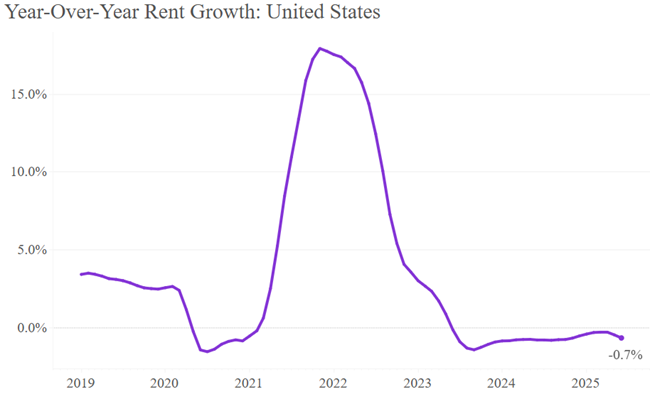
Rents Up 0.2% Month-Over-Month, Down 0.7% Year-Over-Year

The national median rent was up 0.2 percent in June, ticking up for the fifth consecutive month, and now sits at $1,401 vacancy index up

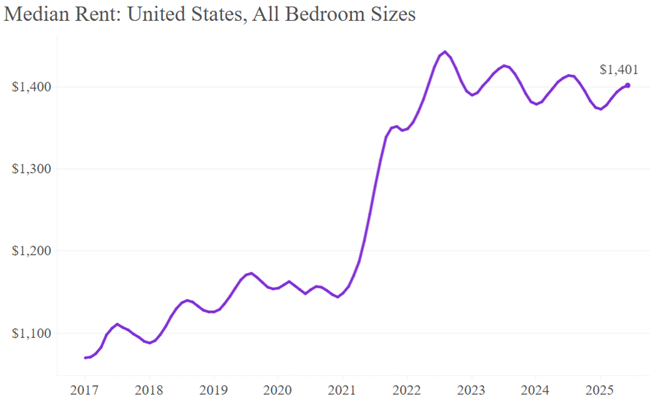
The national median rent was up 0.2 percent in June, ticking up for the fifth consecutive month, and now sits at $1,401, according to the July report from Apartment List.

“But after increasing by 0.6 in March, our national rent index has seen its growth rate trending down over the past three months, at odds with the typical seasonal trend,” writes the Apartment List Research Team.

The national median rent was up 0.2 percent in June, ticking up for the fifth consecutive month, and now sits at $1,401 vacancy index up

“The late spring and summer months are normally the peak season for moving activity, and rent growth tends to ramp up at this time of year in tandem with demand. The fact that we’ve instead seen rent growth get increasingly sluggish indicates softness in the market, possibly reflecting declining consumer confidence amid a more uncertain macroeconomic outlook,” the report says.

The national median rent was up 0.2 percent in June, ticking up for the fifth consecutive month, and now sits at $1,401 vacancy index up

Research team highlights of the report

  • Year-over-year rent growth had been close to flipping positive for the first time since 2023, but has now ticked further negative for the past two months.
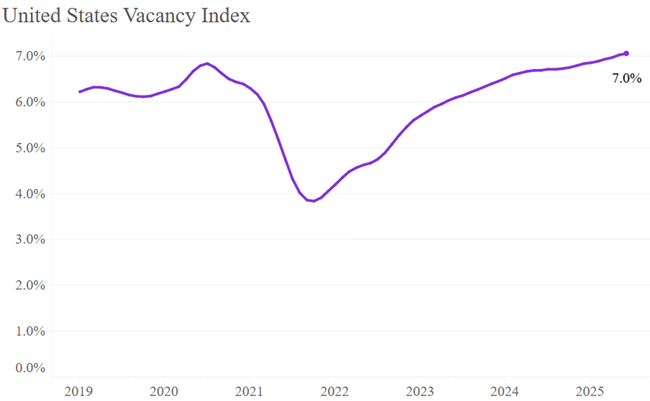
  • The national multifamily vacancy rate currently stands at 7%, “the highest reading we’ve recorded in our index. We’re past the peak of a multifamily construction surge, but the market is still absorbing all of the new units, and vacancies are still trending up.”
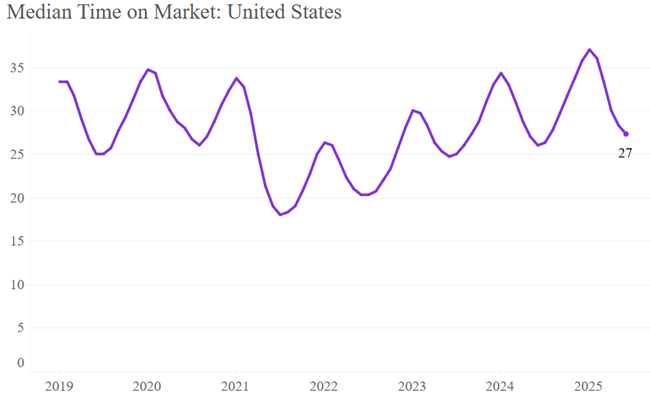
  • Units are taking an average of 27 days to get leased after being listed, down from a high of 37 days in January.
  • The Austin metro is currently the nation’s softest rental market, with the median rent there down by 6.4% over the past year; San Francisco has seen the fastest year-over-year rent growth (+4.9%).

With the overall trajectory of rents trending modestly downward in recent years, the national median rent has now fallen below its August 2022 peak by a total of 2.8 percent, or $41 per month. But that cooldown came following a period of record-setting rent growth, and the typical rent price remains 22 percent higher than its January 2021 level.

Multifamily vacancy rate hits 7%, a new peak

“We are now past the peak of the apartment construction wave, but even as the level of new supply hitting the market falls sharply compared to last year, it remains robust by historic standards,” the report says.

The vacancy rate will begin to tighten eventually, but for now it continues to rise as the market is still absorbing a swell of new units.

The national median rent was up 0.2 percent in June, ticking up for the fifth consecutive month, and now sits at $1,401 vacancy index up

List-to-Lease time comes down from all-time high

This “list-to-lease” time peaked at 37 days nationally in January, an all-time high going back to the start of the data series in 2019.

Since then, however, this time has been getting shorter, and among units that were leased in June, the median time on market was 27 days, down from 28 days in May.

The national median rent was up 0.2 percent in June, ticking up for the fifth consecutive month, and now sits at $1,401 vacancy index up

Conclusion

“All of our key indicators are pointing toward a sluggish summer moving season – rent growth is slipping and the multifamily vacancy rate is at an all-time high.

“A return to tighter market conditions should still be on the horizon as the supply wave continues to recede, but the outlook has been complicated by macroeconomic whiplash being caused by tariffs and other policies being pursued by the Trump administration. This uncertainty appears to be weighing on demand, but the magnitude of that impact is not yet clear,” the research team writes.

Read the full report from Apartment List here.

Sign Up For Our Weekly Newsletter And Get Rental Property And Apartment News And Helpful, Useful Content Each Week.

* indicates required