Home Blog Page 10

Rental Concessions Rise to New Level

A record number of landlords are giving more and more rental concessions, reaching a high of 37% in September Zillow says

A record number of landlords are giving more and more rental concessions, reaching a high of 37% in September, according to a release.

Subdued rent growth and record-breaking concessions from landlords are turning up now after a deluge of newly built apartments hit the market last year, according to the company’s latest rental market report.

Rental managers have turned to concessions – such as free months of rent or free parking – instead of lowering rents. The 37.3% of rentals on Zillow offering some sort of freebie in September is an increase from 14.4% in 2019.

“Those concessions likely will continue to rise; they typically peak in winter or early spring. As concessions become the norm, property managers may need to consider price cuts, particularly as the year winds down. Competition among prospective renters tends to fall off over the cooler winter months,” the release says.

Rent-concession highlights from the report

  • 37.3% of rentals on Zillow offered concessions in September, up from 36.7% in August and 35.8% in September 2024.
  • The share of rentals with concessions is lower, on a monthly basis, in 13 major metro areas. The largest monthly drops in the share of rentals with concessions are in Birmingham (-3ppts), Los Angeles (-1.9ppts), Minneapolis (-1ppts), Cleveland (-1ppts), and San Francisco (-0.8ppts).
  • The share of rentals with concessions is higher, on a monthly basis, in 37 major metro areas. The largest monthly increases in the share of rentals with concessions are in Pittsburgh (4.5ppts), Seattle (3.7ppts), Richmond (3.3ppts), Raleigh (3.2ppts), and Hartford (3.1ppts).
  • Rent concessions are up from year-ago levels in 33 of the 50 largest metro areas. The annual increase in share of rental listings with concessions is highest in Memphis (10.9ppts), Denver (10.6ppts), Houston (9.4ppts), Orlando (8.1ppts), and Las Vegas (8ppts).

Affordability rises nationwide as rents ease

Cooler growth and even declining rents in some rental markets are contributing to better nationwide affordability than renters have seen in four years.

A typical rental now requires 28.4% of the median household income nationally, down slightly from 28.8% a year ago and below the roughly one-third threshold where housing becomes a financial burden.

Read the full report here.

?️ Are the new tariffs hurting your business?

We’d like to know how the new tariffs are affecting property managers, owners, and suppliers in the rental housing industry.


Your feedback helps Rental Housing Journal track real-world impacts in our industry.

Sign Up For Our Weekly Newsletter And Get Rental Property And Apartment News And Helpful, Useful Content Each Week.

* indicates required

74% Of Renters Lose Trust If AI Not Disclosed During Leasing

Three out of four renters say they lose trust when AI is hidden in the leasing process, and they’re not shy about what they expect instead

Three out of four renters say they lose trust when AI is hidden in the leasing process, and they’re not shy about what they expect instead.

New research from the property-technology company Rently says that renters want AI to handle the hassle, from filtering out stale listings to securing after-hours tours, but demand transparency and human backup when the stakes get high.

The Rently 2025 Report on AI in Leasing polled 800 U.S. adults in September 2025 via the third-party platform Pollfish, examining attitudes across AI-assisted search, self-guided touring, leasing, and support.

Three out of four renters say they lose trust when AI is hidden in the leasing process, and they’re not shy about what they expect instead

The report findings illustrate a balancing act for property managers and operators. Renters are open to AI-powered tools when they make the experience faster and easier–such as delivering real-time pricing or suggesting credible alternatives–but they expect clear disclosure when automation is involved. They’ll pay a little more for peace of mind in areas like security and 24/7 maintenance, yet they draw the line when money, contracts, or disputes are on the table, insisting those moments stay human-led.

Key findings include:

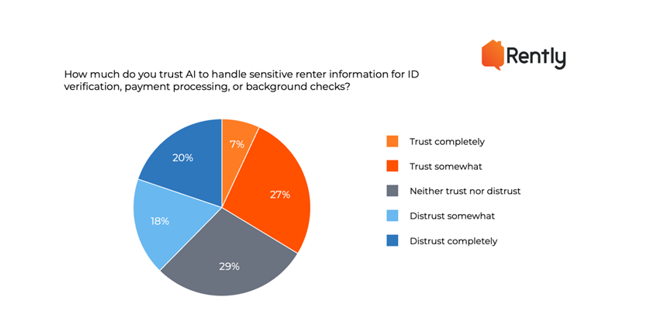
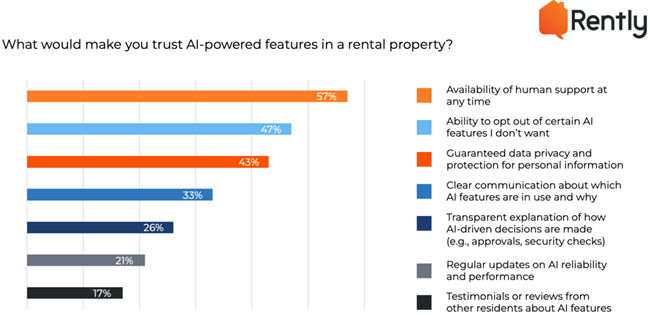
  • Transparency and control set comfort levels. 74% of respondents say they are less comfortable when AI use isn’t disclosed; 57% want human support available anytime; 47% want the ability to opt out of AI features.
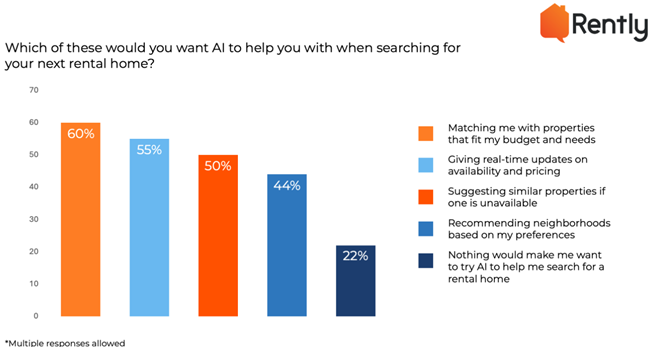
  • Renters want smarter search tools. 60% want home recommendations that match their budget and needs, 55% want availability and pricing updated in real time and 50% want to be suggested comparable units when a listing is no longer available.
  • Self-tours win on access and safety. 50% of renters value the ability to tour after hours, 49% want property details on their phone during the visit and 46% want secure entry with ID verification and one-time codes.
  • Renters will pay small premiums for assurance. 42% would pay more for security monitoring and 37% for 24/7 maintenance support; 64% would cap added tech costs at $20/month or less; 5% would exceed $60.
  • Humans are wanted for high-stakes moments. 71% want to contact a person first when a problem arises, especially for rent negotiations, payment concerns, and disputes.

Three out of four renters say they lose trust when AI is hidden in the leasing process, and they’re not shy about what they expect instead

Taken together, the findings point to a simple expectation for the rental journey: It should be fast, relevant and transparent, with safe access to properties and real people available when judgment is needed. Renters want tools that make decisions easier and teams that stand behind the experience, so the path from search to keys feels predictable and fair.

“The rental process isn’t just about square footage or price. It’s about how the experience feels,” said Merrick Lackner, CEO at Rently. “Renters want listings that are accurate, tours that are flexible and support that’s responsive. AI can make those interactions faster and easier, but only when it’s transparent. Leasing technology that reduces friction while keeping people in control is what will define the next era of rental technology.”

Lackner continued, “AI can deliver faster searches and real-time updates, and safer communities, but its real value is empowering renters to make better decisions. When paired with human support, technology doesn’t just streamline leasing, it elevates the entire renter experience.”

Visit the Rently 2025 Report on AI in Leasing at the company’s website for the complete survey results and additional insights.

Sign Up For Our Weekly Newsletter And Get Rental Property And Apartment News And Helpful, Useful Content Each Week.

* indicates required

Simple Fixes Help Rental Properties Cut Water Costs

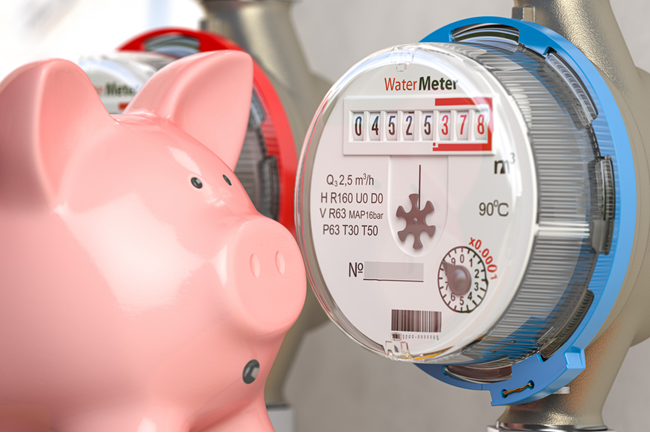
Simple fixes help rental properties cut water costs so here are three practical ways to cut water costs and save water.

Simple fixes help rental properties cut water costs so here are three practical ways to cut water costs and save water.

By Paula Paciorek

Rising utility costs are putting pressure on already-tight rental-property budgets. The good news? Many of the biggest savings can come from simple, low-cost fixes.

Assessments Can Reveal Hidden Waste

 The best starting point is a water-efficiency assessment. Nearly every rental property—regardless of age or size—has opportunities to reduce water waste. A conservation expert can quickly identify inefficiencies, estimate potential savings, and outline exactly what improvements will pay off and when.

A typical property assessment can uncover:

  • Leaks — from dripping faucets to broken or misaligned sprinklers.
  • Faulty or failed metering — which experts can detect by walking the site and reviewing past usage data.
  • Outdated equipment — such as older washing machines, appliances, and fixtures.

Addressing these common issues can significantly reduce operating costs and tenant utility bills, making properties more desirable and competitive. Owners and managers can also incorporate simple retrofits with high return on investment. In some cases, newer or upgraded buildings may also qualify for water-efficiency certifications that unlock additional savings and incentives.

Cities and Utilities Can Help with the Cost

 Many municipalities and utilities offer rebates and free assessments to encourage water conservation. Property owners can often have a city or utility cover part—or even all—of the costs for assessments and upgrades to fixtures, appliances, or equipment.

For example, since 2012, the City of Dallas has partnered with the Water Efficiency and Energy Services (WEES) team at Plummer to conduct more than 1,440 free assessments for local businesses. The program identified potential savings of over 740 million gallons of water per year and earned the Texas Chapter of the American Water Works Association’s Water Conservation and Reuse Award.

Even in areas without existing programs, conservation specialists can work with cities or utilities to create custom rebate or assessment initiatives—creating win-win solutions for both property owners and the community.

Unlocking Hidden Value in Multifamily Affordable Properties

Many affordable housing properties—especially those financed through the Low-Income Housing Tax Credit (LIHTC) program—can benefit from an often-overlooked strategy: Utility Allowance (UA) modeling.

Instead of relying on the standard utility allowance published by the local housing authority, property owners and managers can have their property’s actual water use analyzed. A custom UA model reflects the true consumption patterns of a specific property—and in most cases, that usage is lower than the public allowance. The result? Higher allowable rents, improved cash flow, and greater long-term sustainability.

A UA model not only supports increased rent potential, but it typically covers its own cost very quickly. Industry data shows that the expense of developing a model can often be recovered in just a few months. After that, the ongoing savings and increased revenue can be reinvested into property upgrades such as water-efficient improvements that reduce tenant utility bills and enhance overall property performance.

3 Practical Ways to Cut Rental Property Water Costs

Take advantage of these simple ways to cut costs and save water:

  1. Find hidden inefficiencies.
    Hire a conservation specialist to walk your property, identify “leaks” in water systems, and provide a clear action plan for cost savings.
  2. Leverage local resources.
    Many cities and utility companies offer rebates, free assessments, or incentive programs for water conservation. Don’t leave that money on the table.
  3. Explore UA modeling for LIHTC properties.
    A tailored utility allowance model can reveal how your property truly performs—and potentially open the door to higher rents and reinvestment opportunities.

Across the country, housing providers are using simple conservation assessments, programs and UA modeling as a smart financial and operational strategy to strengthen both their bottom line and their communities. For more information, visit https://www.plummer.com/wees-services

About the author:

 Paula Paciorek is team leader of the Water and Energy Efficiency Practice team at Plummer. Paula leads initiatives that promote water conservation, efficiency, and sustainability for cities, utilities, and businesses, with 14 years of experience in advancing sustainable water management solutions.

Photo credit Bet_Noire via istockimages

Why Treating Maintenance Requests Quickly And Fairly Matters

Why treating maintenance requests quickly and fairly matters for community culture and fair housing - it is more than a leaky faucet issue.

Why treating maintenance requests quickly and fairly matters for community culture and fair housing – it is more than just a leaky faucet issue for property management.

By The Fair Housing Institute

Maintenance requests are often the most frequent interactions residents have with property management. For many residents, the speed and fairness of these responses set the tone for their overall satisfaction.

A quick, consistent, and respectful response can build confidence in the community and reassure residents that their concerns are being addressed.

On the other hand, when delays occur without explanation or when residents perceive favoritism, frustration grows quickly.

This dissatisfaction can spill over into complaints, poor reviews, or even formal fair housing claims. Viewing maintenance not just as a repair function but as a form of customer service helps property managers approach every request as an opportunity to strengthen trust.

Why Fairness Matters Beyond Compliance

Fair housing laws make it clear: all residents must be treated equally.

This applies not only to leasing and advertising but also to day-to-day operations, such as maintenance. If one resident consistently receives faster service than another, especially if there is a pattern tied to protected characteristics, housing providers could face allegations of discrimination.

Yet compliance is only part of the picture.

Fair treatment has a direct impact on how residents feel about their community. When residents see that their requests are taken seriously and handled with fairness, they feel respected. That respect often translates into long-term loyalty, timely lease renewals, and even word-of-mouth recommendations that attract future residents.

Prioritization Done Right

Naturally, some maintenance issues require more immediate attention than others. A burst pipe or malfunctioning air conditioning system in the summer must be prioritized over cosmetic problems, such as a sticking cabinet door. The challenge for property managers is ensuring that the system for prioritization is consistent and clearly communicated.

Establishing objective criteria, such as health and safety concerns, habitability, and urgency, creates a framework that staff can rely on to make informed decisions. When residents understand why certain requests are addressed first, they are less likely to perceive unfairness. Transparency in how priorities are set turns potential frustrations into opportunities for reassurance and confidence.

Communication Builds Confidence

Even with clear priorities, delays are sometimes unavoidable. High demand seasons, staffing shortages, or parts on backorder can all impact response times. The difference between a satisfied resident and an upset one often comes down to communication. Residents who receive proactive updates feel that their concerns are acknowledged, even if the repair is delayed.

Good communication also prevents assumptions of favoritism. If a resident sees a neighbor’s request being completed sooner, they may assume bias unless they have been informed about the reason for the timing. By setting realistic expectations and keeping residents updated, property managers build confidence that all requests are handled fairly and thoughtfully.

Documentation as a Service Tool

Accurate documentation is a cornerstone of both compliance and customer service. By keeping detailed records of when requests are made, how they are prioritized, and when they are completed, property managers can demonstrate consistency in their process. This reduces liability and helps resolve disputes if a resident questions why a delay occurred.

But documentation does more than protect management. It also improves efficiency. Staff can quickly review outstanding requests, provide precise updates to residents, and ensure that no issues fall through the cracks. This level of organization signals professionalism and creates a smoother experience for residents, reinforcing the trust that property managers work hard to build.

Training Staff for Consistency

Frontline staff often handle maintenance requests directly, and their actions can significantly impact resident perceptions. Without clear policies and training, employees may make judgment calls based on convenience or familiarity, unintentionally creating unequal treatment. Training ensures that staff understand fair housing obligations and apply policies consistently.

Beyond compliance, training instills a customer service mindset. Staff learn that every interaction is a chance to either build or damage trust with residents. By equipping employees with both the legal knowledge and customer service skills they need, property managers create a team that represents fairness, professionalism, and respect at every step of the process.

Building Trust One Request at a Time

Balancing maintenance requests fairly is about more than fixing broken items. It is about creating an environment where every resident knows they can rely on management for fair and consistent service. When residents trust the process, they are less likely to feel overlooked, even when delays happen.

By combining consistent prioritization, transparent communication, strong documentation, and well-trained staff, property managers can leverage maintenance as one of the most powerful tools for enhancing resident satisfaction. Each request addressed fairly strengthens the community, reduces risks, and creates long-term value for both residents and housing providers.

Call to Action: Strengthen Your Maintenance Practices Today

Now is the time to review how your team handles maintenance requests.

Are your prioritization standards clear and consistent? Is communication timely and transparent? Do your staff members have the necessary training to handle requests fairly under the Fair Housing Act?

Taking the time to evaluate and improve these areas will pay off in more than just compliance; it will also yield benefits in other areas. It will lead to stronger relationships, greater resident satisfaction, and a healthier community culture. Start with small changes, reinforce them through training, and watch as fairness in maintenance becomes a foundation for trust and long-term success.

About the author:

In 2005, The Fair Housing Institute was founded as a company with one goal: to provide educational and entertaining fair-housing compliance training at an affordable price at the click of a button.

Sign Up For Our Weekly Newsletter And Get Rental Property And Apartment News And Helpful, Useful Content Each Week.

* indicates required

What Should I Ask A Previous Landlord About My Tenant Applicant?

Landlord references from ask landlord hank

This week the question for Ask Landlord Hank comes from a landlord asking about landlord references for his tenant applicant and questions for previous landlord. Remember Hank is not an attorney and he is not offering legal advice so check your local and state laws. If you have a question for him please fill out the form below.

Dear Landlord Hank,

What should I be asking a prospective tenant’s landlord, or previous landlord references, before renting to them?

-Richard

Dear Landlord Richard,

When checking an applicant’s rental history, you must make sure that you are speaking to a real landlord and not the applicant’s brother or friend.

This can be tricky if your applicant is not renting from an apartment complex or rental agency, so be very careful here.

Your rental application should have an information release at the bottom, signed by the applicant so you can legitimately seek landlord references and the information you need to decide if you would like this applicant as a tenant. So send this release to applicant’s prior landlords.

Also, try to get more than one rental history. I ask for the last five years of rental history and will check with all old landlords. I want to make sure the facts line up, such as dates that tenant occupied a certain address, the amount of rent paid, whether rent was paid in timely manner, or were there late payments or NSFs (not-sufficient-funds checks)?

Did this applicant take care of the property? Any damage on move-out? Did the tenant have unauthorized pets or guests, or any criminal activity? Did the tenant get along with neighbors, or was there friction – maybe noise late at night, etc.?

Did the tenant give prior landlord 30-day notice of vacating?

The most important landlord references question

And, the most important question, would the old landlord re-rent to this person?

The information you receive in this section of your application is to me the most vital in determining if I want this person to be my next tenant. Usually, if an applicant has a great and long rental history, that is a good sign that you will have a trouble free tenant.

Sincerely,

Hank Rossi

Ask Landlord Hank - a landlord asks this week about previous landlord references for tenant applicant
Landlord Hank says When checking an applicant’s rental history, and landlord references you must make sure that you are speaking to a real landlord and not the applicant’s brother or friend.

Ask Landlord Hank Your Question

Ask veteran landlord and property manager Hank Rossi your questions from tenant screening to leases to pets and more! He provides answers each week to landlords.

  • This field is for validation purposes and should be left unchanged.

Do I Have to Paint and Replace Flooring for a Long-Term Tenant?

Sign Up For Our Newsletter And Get Apartment News And Helpful, Useful Content Each Week.

* indicates required

Should I Turn On The Utilities and Power For New Tenant Moving In?


Ask Landlord Hank – A Tenant Has Questions About Landlord Obligations

10 Rental Property Maintenance Items To Check This Fall  

The maintenance checkup this week provided  focuses on 10 rental property maintenance items to check this fall in and around your property.

The maintenance checkup this week by Keepe focuses on 10 rental property maintenance items to check this fall in and around your property.

Maintaining your rental property on a seasonal basis allows you to charge the maximum rent from your tenants, maintain a safe property and ensure that your vacancy rates stay low.

Checking for inexpensive maintenance issues also allows you to identify any potential problems and damages before they lead to expensive repairs.

During your fall season maintenance check-in, prioritize these maintenance duties to ensure your property is in tip-top shape.

No. 1 – Inspect heating and ventilation

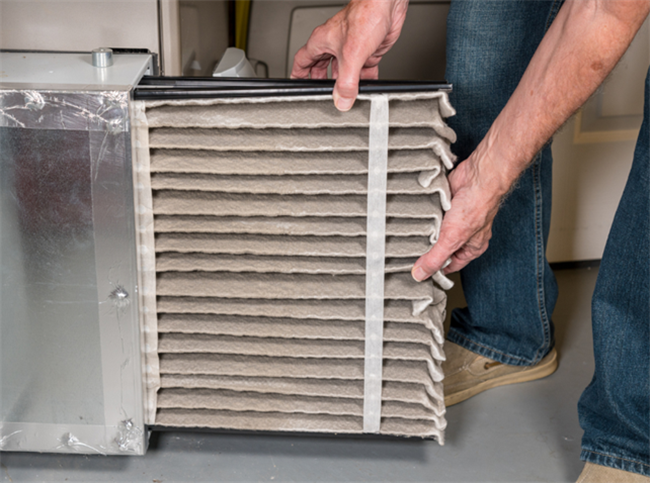
Avoid expensive repairs by inspecting your HVAC systems at least twice a year. Replace filters in ventilation systems, remove debris from airways and exam heating elements for leaks to ensure safe operation. Additionally, you should cover the exterior HVAC units to prevent snow and cold from coming in.

The maintenance checkup this week focuses on 10 rental property maintenance items to check this fall in and around your property.

No. 2 – Inspect the machines in your building

Ensure that your gym equipment, laundry machines, service elevators and other systems are running safely and efficiently within your building. Maintaining these systems also greatly improves your tenants experience at your property.

No. 3 – Maintain curb appeal

Clean the windows and clean and/or repaint the exteriors of your property. Invest in your landscape to ensure your property is looking its best by incorporating visually pleasing plants and vegetation around your property.

No. 4 – Clean and inspect water-related features

To avoid issues with your downspouts and gutters, clean debris to avoid backups during the fall and winter season. Treating water systems and drainage are always much easier take care of before issues occur.

No. 5 – Upgrade common areas

Every five to seven years, upgrade features such as the flooring, carpets and paint on the walls that are in the common areas and hallways of your building to maintain a clean and modern ambiance.

No. 6 – Chimney sweep

10 Rental Property Maintenance Items To Check This Fall  

If your property has a functional fireplace, now is the best time to conduct a chimney sweep and ensure that any obstructions are cleared. Make sure smoke can get out and cold air can’t flow in.

No. 7 – Landscape maintenance

Maintain the shrubs, trees and fertilization surrounding your property while also removing any plants or vegetation that may interfere with your curb appeal. Removing large objects and unnecessary tree vegetation will also reduce the likelihood of extreme wind related damage to your property.

No. 8 – Inspect for cracks and leaks

10 Rental Property Maintenance Items To Check This Fall  

Replace the stripping on windows, seal any cracks, and prevent drafts and leaks from entering at the bottom of the doors by correcting them with a door piece. This simple inspection can decrease your reoccurring electric bill – or your tenants’ complaints about their high bills.

No. 9 – Fire safety

Replace the batteries in all of the smoke detectors within your property. Home fires are more common during the winter than any other time of the year so ensure that you practice your fire evacuation plan for your tenants during the fall season as well.

No. 10 – Get residents involved

Let your tenants check for property maintenance services that they are responsible for – such as checking their own smoke detectors, windows, etc. If everyone helps out, your fall maintenance will go more efficiently.

Summary

Preserve your property with these preventative maintenance tips and find that your property will be in better shape in the short-term and long-term. Schedule routine proactive inspections and you will save much time and money down the road.

About Keepe:

Keepe is a nationwide network technician maintenance solution for property managers and independent landlords. Learn more about Keepe at https://www.keepe.com

4 Things To Check In A Chimney Inspection In Your Rentals

5 Fire Safety Tips for Property Managers in 2020

Sign Up For Our Newsletter And Get Rental Property And Apartment News And Helpful, Useful Content Each Week.

* indicates required


Oregon Agency Sets Rent-Control Cap for 2026 at 9.5%

The Oregon Department of Administrative Services has set the Oregon rent control cap for 2026, called rent stabilization, at 9.5%

The Oregon Department of Administrative Services has set the 2026 rent-control cap, called rent stabilization, at 9.5%, according to reports. It is the second-lowest allowed increase since Oregon began stabilizing rent.

A separate 6% cap applies to mobile-home facilities with more than 30 spaces because of a new state law.

Here is what the agency reported on its website.

  • “For tenancies subject to ORS 90.600 (1) in facilities with more than 30 spaces, as 6%.” For 2026, the maximum allowable rent-increase percentage is 6%.
  • “For tenancies subject to ORS 90.600 (1) in facilities with 30 or fewer spaces or for tenancy types subject to ORS 90.323, percentage is the lesser of:
    • Ten percent; or
    • Seven percent plus Consumer Price Index (CPI). For 2026, the maximum allowable rent increase percentage is 9.5%.

The allowable rent increase percentage for the previous year, 2025, was 10.0%.

OregonLive.com reported that the agency acknowledges that officials originally misinterpreted the new law when they published annual statewide rent-increase limits for 2026. The agency first reported landlords can raise rents by up to 9.5% in many residences next year, down from 10% this year.

Under Oregon’s rent-control law, the ceiling is the lesser of 7% plus inflation or 10%. It doesn’t apply to properties built in the past 15 years.

But the agency, citing the newly passed House Bill 3054, also reported that rentals with more than 30 spaces would only see a maximum rent increase of 6%. Then entered the correction.

“House Bill 3054, passed in 2025, changed how rent increases are calculated,” the agency stated. “Now, the size of the rental property affects the allowed increase.”

That bill only restricts annual yearly rent increases in manufactured home parks and marinas with more than 30 spaces to 6%. (Smaller parks and marinas are still subject to the 7% plus inflation or 10% rule.)

Sign Up For Our Weekly Newsletter And Get Rental Property And Apartment News And Helpful, Useful Content Each Week.

* indicates required

Who Is Buying Homes? It’s Not Who You Think

Who is buying homes? In the second quarter of 2025, real estate investors made up 33% of all home purchases—the highest in five years

In the second quarter of 2025, investors made up 33% of all home purchases—the highest in five years – and the real estate investors were primarily small landlords, according to a report in Realtor.com.

More than 90% of investor-owned homes in the United States belong to small landlords with fewer than 11 properties, according to the latest Investor Pulse report from CJ Patrick Co. and BatchData.

Even in states with the highest rates of investor ownership, it’s not institutional buyers driving the trend.

The increase is not caused by a sudden surge in small landlords buying homes, but rather the fact that traditional buyers have pulled back in the face of affordability constraints.

With mortgage rates at 6.3% for the week ending Oct. 9, homeownership has become out of reach for many middle-income households, leaving cash-ready investors to fill the gap and keep housing transactions moving.

Small investors and small landlords are also more likely to renovate older housing stock and provide long-term rentals, especially in areas where affordability or geography limits new construction.

“Small investors have long been the dominant form of investor in the housing market,” said Hannah Jones, senior economic research analyst at Realtor.com, in a release. “Large investor activity picked up during the [COVID-19] pandemic when rents and home prices were climbing rapidly, but even then, large investors were not the majority nationally.

“Traditional homebuyers are looking for the right house in the right place at the right price,” she says. “Investors have more flexibility. They are not constrained by their household’s needs, but are rather looking for a good investment opportunity, which could come in various forms. Investors often have more access to capital as well, which allows them to navigate today’s high-priced market more effectively.”

Even as investor activity rises in some of these states, the report makes clear that many investor-held homes don’t stay in investor hands forever.

In the second quarter, 60% of investor sales went to traditional homebuyers, helping to replenish the owner-occupied stock rather than shrinking it. And with large institutional players retreating from the single-family rental market—selling off more homes than they purchased—small investors are increasingly the ones keeping local markets stable.

Read the full story here.

Sign Up For Our Newsletter And Get Rental Property News And Helpful, Useful Content Each Week.

* indicates required


Tenant Did Not Give 30-Day Notice; Can I Charge for Part of Another Month?

Oregon Agency Sets Rent-Control Cap for 2026 at 9.5%

Where and How Often Do Renters Move?

Photo credit Worawee Meepian via istockimages

Multifamily Rents Slide Under Weight of Supply Glut

Multifamily rents slid in September, their weakest showing for the month in more than a decade as performance was hurt by new apartment supply

Multifamily rents faltered in September, posting their weakest showing for the month in more than a decade as performance was hurt by a flood of new apartment supply and a cooling economy, according to Yardi Matrix.

“The poor performance comes as demand shows signs of weakening while high-supply markets have a glut of properties in the lease-up phase. Rents remain close to all-time highs, so while it is too soon to say September is the start of a trend, the drop could signal emerging market softness,” Yardi Matrix writes in the September Multifamily National Report.

Highlights of the report:

  • With demand and economic growth starting to show signs of cooling, multifamily rents hit a snag in September. The average U.S. advertised rent fell $6 to $1,750 while year-over-year growth fell 30 basis points to 0.6%.
  • The $6 drop in advertised rents was the worst September showing in more than a decade. Properties in markets with an overhang of new supply are offering concessions and/or cutting advertised rents to attract tenants.
  • Single-family build-to-rent (BTR) advertised rates also took a hit in September. The average BTR advertised rent dropped by $15 in September to $2,194, while the year-over-year growth rate fell 60 basis points to 0.0%.

With 525,000 units in the lease-up phase, the report says competition among properties – especially in Sun Belt metros – is intense. Rents are likely to “remain under pressure” until the new apartment supply is absorbed.

Economy and employment concerns

There are concerns beginning to show up about a slowing economy. One sign is that unemployment rose to 4.3% in August. Only 22,000 jobs were added, which is below expectation of the average growth in recent years.

“These labor challenges are weighing on consumer sentiment, which has slipped after gains in June and July. More households now expect declining incomes, even as many already struggle to keep pace with inflation. This is concerning for multifamily, given the link between consumer confidence and household formation,” the report says.

Read the full report from Yardi Matrix here.

About Yardi Matrix

Yardi Matrix researches and reports on multifamily, office and self-storage properties across the United States, serving the needs of a variety of industry professionals. Yardi Matrix Multifamily provides accurate data on 18+ million units, covering more than 90 percent of the U.S. population. Contact the company at (480) 663-1149.

Sign Up For Our Weekly Newsletter And Get Rental Property And Apartment News And Helpful, Useful Content Each Week.

* indicates required

26 Property Management Companies to Pay $141 Million To Settle Lawsuit

26 Property Management Companies to Pay $141 Million To Settle Lawsuit

Greystar and 25 other property management companies have agreed to pay $141 million to settle a class-action lawsuit involving rent-setting algorithmic software coordination and other anticompetitive practices in rental markets across the country, according to reports.

The U.S. Department of Justice reached an agreement in August to settle with Greystar.

Greystar, the nation’s largest landlord, would pay $50 million under the proposed settlement agreement, which was filed Oct. 1  in a Tennessee federal court. The deal would still require a judge’s approval.

The companies have also agreed to no longer share nonpublic information with RealPage for its rent algorithm — a key stipulation, since plaintiffs say RealPage used that information to enable landlords to align their prices and push up rents.

“This represents a fundamental shift in the multifamily housing industry and will help reverse the type of anticompetitive coordination alleged in the complaint,” attorneys wrote in the settlement filing.

All companies involved in the settlement deny wrongdoing and have agreed to help plaintiffs in the ongoing case against RealPage and more than a dozen other property management firms that have not reached settlements. RealPage and others are also fighting an antitrust lawsuit filed last year by the Department of Justice and several state attorneys general.

The settlement funds from the rent-setting software class action lawsuit would be distributed among millions of tenants included in the settlement class.

RealPage has denied any wrongdoing and argues that the plaintiffs misunderstand how their product works. RealPage, which is based in Texas, has said its software is used on fewer than 10% of rental units in the United States, and that its price recommendations are used less than half the time.

“While the proposed settlements … do not include RealPage, we are encouraged to see this matter move toward closure,” said Jennifer Bowcock, RealPage’s senior vice president for communications, in a statement. “RealPage continues to believe that this litigation is without merit and that our revenue-management products, and our customers’ use of them, have always been legal.”

Among the other defendants, Iowa-based BH Management would pay $15 million, while Denver-based Simpson Property Group would pay $6.5 million. The other companies’ settlements range between $550,000 and $6 million.

Sign Up For Our Weekly Newsletter And Get Rental Property And Apartment News And Helpful, Useful Content Each Week.

* indicates required