Home Blog Page 22

Top 5 Cities For Rental Activity First Quarter 2025

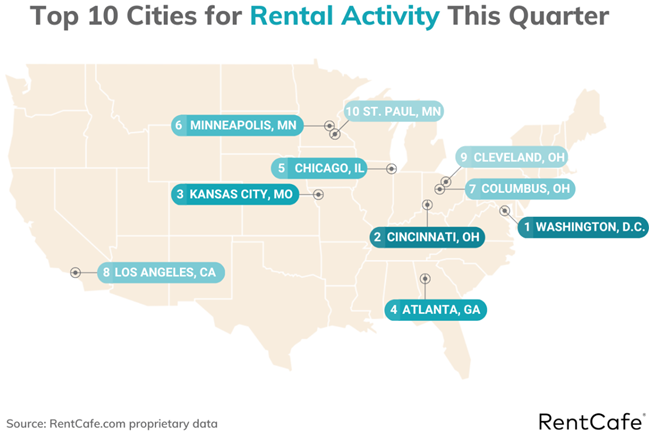
Here are the top 5 cities in the first quarter of 2025 that are getting the most  online engagement on RentCafe.com, according to data.

Here are the top 5 cities in the first quarter of 2025 that are getting the most  online engagement on RentCafe.com, according to available data for the full first quarter of 2025.

The report tracks renters’ engagement with listings on RentCafe.com in the top 150 U.S. cities, to provide fresh insights into renter preferences and market dynamics.

Here are the top 5 cities for rental activity

No. 1 – Washington, D.C.

This is the top spot for renter engagement. Even with a 7% drop in page views, the city’s popularity is fueled by an 18% increase in favorited listings. With saved searches down 13%, renters interested in apartments in The Nation’s Capital are clearly making quicker choices.

No. 2 – Cincinnati

The Queen City climbs to No. 2 this quarter, up nine spots from last year. With a 37% boost in favorited listings and a 36% increase in available rentalsrenters have more options to choose from, allowing them to take their time in finding the right place in the city.

No. 3 – Kansas City

Kansas City surged 12 spots to earn the third place in the rankings. This rise is mostly due to a 5% increase in online traffic, amid a 4% drop in availability and a 9% decrease in saved searches. This suggests that apartment seekers may be making faster decisions on apartments they like.

No. 4 – Atlanta

While apartment listings in Atlanta continue to have strong online engagement, renters are spending more time weighing their options before committing to a lease. This slower decision-making likely explains the drop in favorited listings and saved searches.

No. 5 – Chicago

In the Windy City, the combination of a 23% drop in saved searches and a 3% decrease in available listings points to a trend where renters are moving increasingly quickly to secure apartments in the city to avoid losing out.

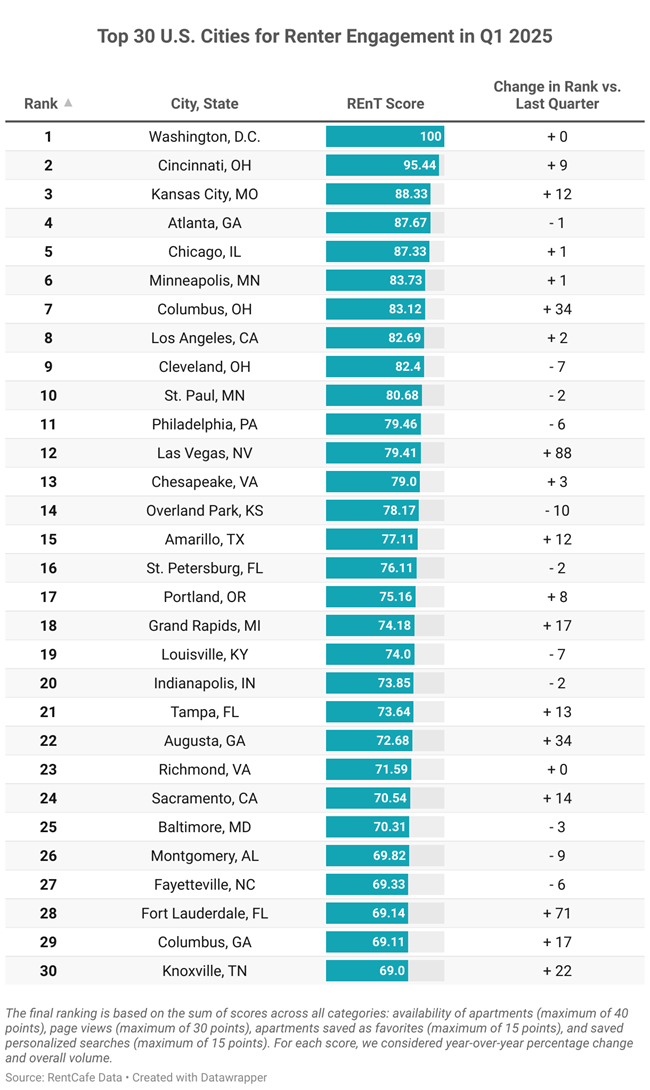
Looking farther down the list the South is most in-demand region, claiming half of the top 30.

Here are the top 5 cities in the first quarter of 2025 that are getting the most  online engagement on RentCafe.com, according to data.

The South dominates the rankings this quarter, boasting 15 entries in the elite top 30 most sought-after cities. The Midwest is next with 10 entries, followed by the West with four. The Northeast lags noticeably behind with only one city represented in the rankings.

Interestingly, though, the picture shifts within the top 10, where the Midwest leads with seven cities compared to three from the South.

Read the full report from RentCafe here.

Sign Up For Our Weekly Newsletter And Get Rental Property And Apartment News And Helpful, Useful Content Each Week.

* indicates required

Tenants Pouring Grease Down Sink And Flushing Paper Towels

Tenants pouring grease down the sink and flushing paper towels down the toilet and damage to the septic system is the question this week

Tenants pouring grease down the sink and flushing paper towels down the toilet into the septic system is the issue this week week for Ask Landlord Hank. Remember Hank is not an attorney and he is not offering legal advice. If you have a question for him please fill out the form below.

Dear Landlord Hank:

I am acting as power of attorney for my son and my daughter-in-law.

So, I have found out in the last four months or so that the tenants have been pouring grease down the sink. In an exorbitant amount.

And they also admitted to me that they have been putting paper towels and everything down the toilet. But the grease is the worst.

So, there are several large bills from the septic guy, you know one for $701 for $800 and one for $500 one for $300. It’s just crazy.

We asked him to stop doing it. And now it has ruined the plumbing and septic tank – and it needs a new pump and the whole thing has to be cleaned out by a specialist. Now he’s trying to tell me that the water is turning into grease. You got the picture. What are my options please? And, thank you very much.

-Fay

Dear Fay,

I would make sure the plumber indicates on his invoices that the cause of the problem is the grease, and paper towels, etc. that that tenants are flushing.

Check your lease-it may say something like, ” If any plumbing issues result from tenant and or guests flushing anything into the toilet other than human waste and toilet paper, the tenant will be responsible for any costs or charges incurred. You will have proof from your interview with tenants and plumber that tenants are damaging your property.

I would immediately put a 3-day notice on the tenant’s door and then file for eviction. Best of luck!

Sincerely,

Hank Rossi

www.rentsrq.com

Each week I answer questions from landlords and property managers across the country in my “Dear Landlord Hank” blog in the digital magazine Rental Housing Journal.    https://rentalhousingjournal.com/asklandlordhank/

Editor’s note: Check your local and state regulations on issues such as this as it varies across the country.

Ask Landlord Hank Your Question

Ask veteran landlord and property manager Hank Rossi your questions from tenant screening to leases to pets and more! He provides answers each week to landlords.

  • This field is for validation purposes and should be left unchanged.

Tenants pouring grease down the sink and flushing paper towels down the toilet and damage to the septic system is the question this week
Landlord Hank Rossi says, “I would make sure the plumber indicates on his invoices that the cause of the problem is the grease, and paper towels, etc. that that tenants are flushing.”

How Can I Monitor Tenant Smoking In My No-Smoking Rental?

Do Your “No Smoking” And Odor Policies Stink?

Can I Say “No Pot In My Apartments” When It’s Legal In My State?

Sign Up For Our Newsletter And Get Apartment News And Helpful, Useful Content Each Week.

* indicates required

National Rent Growth Continues to Inch Up in April

National rent growth continued to inch up in April by 0.5%, as 83 of the nation’s 100 largest cities saw rents rise in April.

National rent growth continued to inch up in April by 0.5%, according to the May report from Apartment List, as 83 of the nation’s 100 largest cities saw rents rise in April.

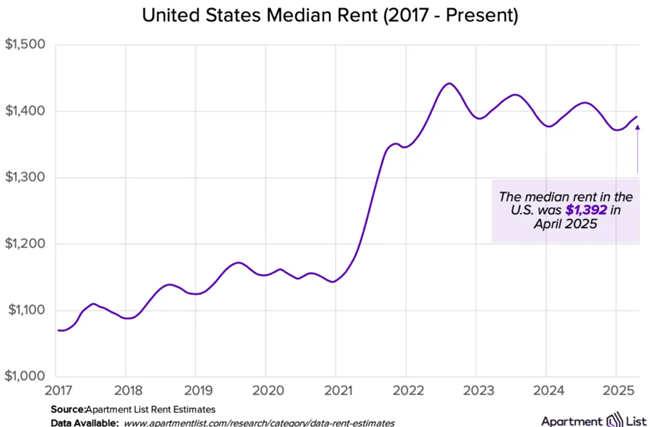
In dollar terms, the national median monthly rent now stands at $1,392, up $7 per month compared to last month, but down $4 compared to April 2024.

The national median rent has now fallen below its August 2022 peak by a total of 3.5%, or $50 per month. But despite the cooldown, the typical rent price remains 21 percent higher than its January 2021 level.

April’s small rent increase was less than the March increase, and the March decline in itself was concerning at the beginning of the usual seasonal pattern of rent increases.  Thus, “This month’s reading may be the first indication of demand slowing due to declining consumer confidence amid a more uncertain macroeconomic outlook,” writes the Apartment List Research Team writes.

National rent growth continued to inch up in April by 0.5%, as 83 of the nation’s 100 largest cities saw rents rise in April.

Multifamily vacancy rate hits 7%, a new peak

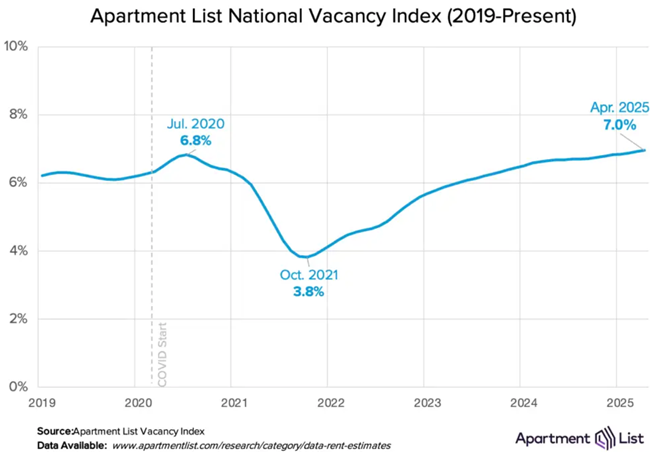
Apartment List says its measure of the national multifamily vacancy rate increased again and now sits at 7 percent, “representing a new all-time high for this data series, which goes back to the start of 2017.”

The rising vacancy rate has been largely tied to the increase in new apartment construction. As new apartment completions decline, the vacancy rate will likely begin to tighten again, but “for now, we’re still seeing vacancies rise, even as rent declines gradually moderate,” the report says.

Vacancy rate increases as national rent growth continued to inch up in April by 0.5%, as 83 of the nation’s 100 largest cities saw rents rise in April.

List-to-Lease time comes down from all-time high

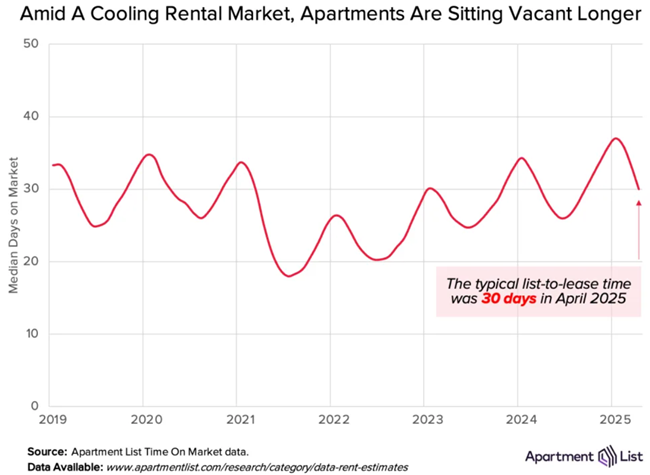
Among units that were leased in April, the median time on market was 30 days, down from 33 days in March.

Units are currently sitting vacant for 1 day longer than they were at this time in 2024, but are still sitting for 10 days longer than they were in mid-2022, when the market was at its tightest.

The influx of new supply has resulted not only in a growing number of vacant units, but also in an increase in the length of time those units remain unoccupied.

List to lease time increased as national rent growth continued to inch up in April by 0.5%, as 83 of the nation’s 100 largest cities saw rents rise in April.

Conclusion

April’s 0.5 percent increase shows rent prices continuing to trend up, but with some signs of potential demand weakness heading into peak moving season.

“As the level of new supply coming online continues to abate, we expect to see occupancy tighten and rent growth strengthen in the back half of this year, assuming that demand remains relatively stable. But amid a more uncertain macroeconomic outlook, stable demand is far from certain,” writes the Apartment List research team.

Read the full report here.

Join Us for the 2025 Pets and Housing Awards!

Join us for the 2025 pets and housing awards online and meet this year's winners by registering and joining us virtually on June 4, 2025.

Join us for the 2025 pets and housing awards online and you can meet this year’s winners by registering and joining us virtually on June 4, 2025.

Get ready to celebrate the best in pet-inclusive housing!

Michelson Found Animals’ Pet-Inclusive Housing Initiative invites you to join us virtually on June 4, 2025, for the fourth annual Pets and Housing Awards. We’ll be honoring the individuals, properties, and programs leading the way in pet-inclusive housing nationwide.

Join us for the 2025 pets and housing awards online and meet this year's winners by registering and joining us virtually on June 4, 2025.

Awards to be presented include:

Best Leap Forward
Most Impactful Adoption or Foster Event or Program
Most Innovative Pet Amenity or Amenity Group
Most Innovative Pet Marketing Campaign
Most Pet-Inclusive Property
Vanguard Award

NEW THIS YEAR!

Paws & Progress Nonprofit Award
Pets & Housing Policy Advancement Award

Join us in celebrating the champions who are creating a future where pets and their people thrive together.

Register now to join us virtually on June 4.

Click Here to Register for the Big Event


About the pet-inclusive housing initiative:

Dr. Gary Michelson started Found Animals in the aftermath of Hurricane Katrina. Found Animals established the first free microchip registry to help lost pets find their way home. With a commitment to continue keeping people and pets together, he turned to the next scalable solution: increasing the availability of truly pet-inclusive housing.

Teaming up with the Human Animal Bond Research Institute (HABRI), the Michelson Found Animals Foundation commissions research to better understand pet-related housing issues and find the right solutions to help keep people and pets together.

From this research, the Pet-Inclusive Housing Initiative develops resources, partnerships, and actionable tools to increase the availability of truly pet-inclusive housing. We are working hard to increase pet-inclusive housing because everyone should have access to the joy of pets. After all, pets help communities grow stronger.

Why Pet-Inclusive Housing is a Win-Win for Everyone

Sign Up For Our Weekly Newsletter And Get Rental Property And Apartment News And Helpful, Useful Content Each Week.

* indicates required

Tariff Uncertainty Affects Multifamily Construction Starts

Current tariff policy is causing multifamily uncertainty about future years as multifamily construction starts have plummeted from 2022 peak

Current tariff policy is causing multifamily uncertainty about future years as construction starts have plummeted from the 2022 peak, Yardi Matrix says in a supply forecast.

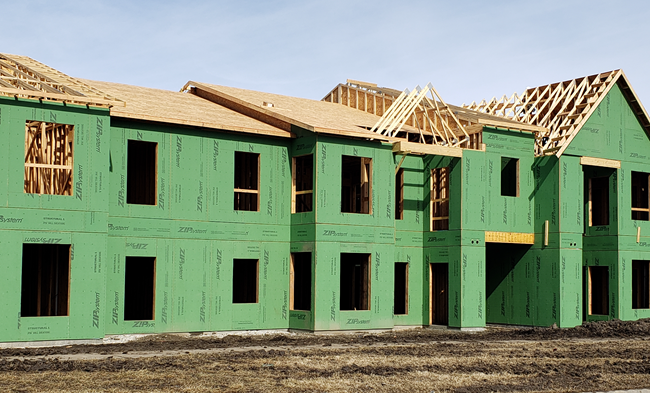
The current under-construction pipeline is set to deliver 536,000 units in 2025 and 422,000 in 2026.

The report says construction starts moderated significantly in 2024.

“The large decline will drive a slowdown in new supply in 2026. However, elevated completion times and a still-large under-construction inventory imply that supply will not completely bottom until 2027,” writes Ben Bruckner, senior research analyst for Yardi Matrix, in the report.

The report says tariff policy has added a great deal of uncertainty to how multifamily construction starts will unfold in the remainder of 2025. The forecast assumes starts will be at a similar-to-slightly-lower pace than what was recorded in 2024.

Yardi Matrix continues to forecast that new supply will bottom in 2027, with a gradual recovery taking hold in 2028 through 2030.

“As always, Yardi Matrix is extremely focused on accurately maintaining our development-pipeline data and identifying any changes in its evolution that will have a meaningful impact on future new supply,” Bruckner writes.

Read the full report here.

National Rent Growth Continues to Inch Up in April

Sign Up For Our Weekly Newsletter And Get Rental Property And Apartment News And Helpful, Useful Content Each Week.

* indicates required

Rent Control Passes in Washington Goes To Governor

A rent control bill limiting rent increases across Washington State has passed the Senate and House but with different amounts and conditions

A rent-control bill limiting rent increases throughout Washington State has now passed both the Senate and House and goes to the governor for signature, according to reports.

The final version was a compromise after moderate Democrats in the Senate wouldn’t go along with the initial 7% cap, without inflation, the House had approved.

Landlords also couldn’t raise rents in the first year of a tenancy under the proposed law. If a landlord violates the provisions, tenants or the state attorney general could bring litigation.

Buildings owned by nonprofits or public housing authorities would be exempt from the limits. The same goes for duplexes, triplexes or fourplexes if the owner lives in one of the units, as well as new construction for its first dozen years.

Supporters say the rent legislation would give predictability to tenants who could be forced out of their homes by steep hikes, while still giving room for landlords to impose increases.

“As everyone knows, housing is the single greatest cost in a household budget,” said Sen. Emily Alvarado, D-Seattle, to the  Washington State Standard. “This bill is a simple guardrail for the many, many people in this state who just want to make sure that they can have a little bit of control in that household budget and plan and save.”

Opponents say the bill would drive developers out of Washington, hurting the state’s push to increase housing supply. And current landlords wouldn’t be able to keep up with inflationary costs for maintenance, they believe.

Sen. Chris Gildon, R-Puyallup, pointed to another proposal from Senate Democrats to allow an increase in annual property tax from the current 1% cap. “I have a real fear for our housing market at large over time should both of those policies come to fruition,” Gildon told the Washington State Standard.

The bill contains an emergency clause. If enacted, the provisions will take effect immediately.

Sign Up For Our Weekly Newsletter And Get Rental Property And Apartment News And Helpful, Useful Content Each Week.

* indicates required

Multifamily Rents Up, But So Is Economic Uncertainty

Multifamily Rents Up, but so is Economic Uncertainty

Multifamily rents rose in the first quarter of 2025 and “early indicators suggest resilience for multifamily in 2025, but the looming impact of new policies and economic uncertainty casts a shadow,” Yardi Matrix says in its March report.

“While Northeast and Midwest metros post strong growth, oversupplied markets struggle, and the impact of new administration initiatives is yet to be seen,” Yardi Matrix writes in the report as U.S. advertised rents rose $5 in March, and rose by 0.4% for the first quarter of the year.

The rent increase was less than typically seen in the first quarter, likely due to the increased new apartment supply in some markets.

Highlights of the report

  • Multifamily performance maintained its strength at the start of the spring leasing season, as the average U.S. advertised asking rent increased $5 nationally in March to $1,755. Year-over-year advertised rent growth, which has held to a narrow range since last summer, fell 20 basis points to 1.0%.
  • Gateway-market performance is solid. New York and Chicago lead the top 30 matrix metros in advertised rent growth, and among gateway metros only San Francisco is below the national year-over-year 1.0% average growth rate.
  • Single-family build-to-rent advertised rates also had a strong increase in March, up $5 to $2,169. Gains were entirely concentrated in the renter-by-necessity segment, which is up 2.3% year-over-year. Nationally, advertised rents are the same as a year ago.

Reductions in immigration would affect demand to some degree and add to the economic uncertainty, the report says.

“Much about the rest of the year remains uncertain. Economic volatility is extremely high due to the imposition of tariffs, the rising number of layoffs and dwindling consumer confidence,” Yardi Matrix writes in the report.

Read the full report here.

About Yardi Matrix

Yardi Matrix researches and reports on multifamily, office and self-storage properties across the United States, serving the needs of a variety of industry professionals. Yardi Matrix Multifamily provides accurate data on 18+ million units, covering more than 90 percent of the U.S. population. Contact the company at (480) 663-1149.

Sign Up For Our Weekly Newsletter And Get Rental Property And Apartment News And Helpful, Useful Content Each Week.

* indicates required

Fair Housing Training: Your Financial Safety Net in a Tight Economy

Fair housing training is a core part of operational risk management and resolving fair housing complaints can exceed the cost of training.

Fair housing training is a core part of operational risk management and costs of resolving fair housing complaints can far exceed the cost of training.

By The Fair Housing Institute

When recession fears rise, budget cuts often follow—and education directors are being asked to make hard choices. Training programs frequently top the list of cuts, especially those perceived as non-essential or deferrable. At first glance, trimming fair-housing training may seem like a logical decision. But beneath the surface, that cut often becomes a costly shift, moving risk and liability into a company’s blind spot.

Fair-housing training isn’t just a compliance checkbox; it’s a core part of operational risk management. Skipping or delaying it may offer short-term budget relief but open the door to long-term financial exposure. Companies often realize too late that the cost of resolving a single fair-housing complaint can far exceed the initial cost of consistent training.

The Real Cost of Non-Compliance

Across the property-management industry, professionals who handle internal audits and compliance reviews regularly see the same cycle: Organizations forgo training, assuming they can circle back later. But when a complaint is filed—often months or years down the line—they find themselves facing expensive investigations, attorney fees, staff disruptions, and sometimes public scrutiny. By then, the damage is done.

Many still assume that fair-housing complaints are rare. The truth tells a different story. For example, in 2021 alone, more than 31,000 complaints were filed. And while HUD may be the most well-known agency tied to enforcement, investigations also come from the Department of Justice, state agencies, advocacy groups, and private law firms. If one entity doesn’t take action, another often will.

Beyond the Legal Fees: The Ripple Effect

It’s easy to focus on penalties and settlements when thinking about the consequences of a fair-housing violation, but those are only part of the picture. The internal ripple effect can be just as damaging. Investigations pull employees away from their roles for interviews, document collection, and legal prep, hurting productivity and morale. Even a single investigation can stretch resources to the breaking point for small- to mid-sized companies.

There are also reputational risks. Even if a company settles or wins a case, the process can erode trust with residents and staff. That’s a hard cost to quantify, but it’s one that smart companies take seriously—especially in competitive markets where word travels fast.

Can Insurance Carry the Load?

Some organizations believe they’re covered because they have business insurance, but policies vary widely. Not all include coverage for fair-housing claims; even when they do, the support provided might fall short. Insurance carriers often assign their own legal counsel—professionals who may not specialize in fair-housing law. The result is a technically “covered” claim that’s defended with minimal insight or strategy.

This is not to say insurance is irrelevant. It’s a key part of a broader risk-management plan. But it’s not a substitute for prevention; relying on it as the only line of defense can lead to more expensive outcomes in the long run.

A Smarter Strategy for Tight Budgets

So how can property-management companies protect themselves when money is tight? The answer is smarter—not necessarily more expensive—training. Many firms are adopting online, on-demand training programs that allow teams to stay current without pulling them away from day-to-day responsibilities.

Rather than sticking with the same course year after year, effective training plans now rotate topics, address real-world scenarios, and incorporate lessons learned from recent case law or enforcement trends. This approach reinforces fair-housing principles while keeping the material relevant and engaging for staff.

Make Compliance Part of the Culture

Training should begin during onboarding, but it shouldn’t stop there. Companies that consistently incorporate fair-housing education into their cultures tend to stay ahead of risk. This might include short refreshers, policy reminders, or targeted sessions on emerging issues. The goal is to create an environment where compliance is second nature, not an afterthought.

In a challenging economy, the temptation to cut training is understandable. But some corners, when cut, come back to cost more than they save. Fair-housing training is one of those corners. It’s not just about staying compliant—it’s about staying in business.

About the author:

In 2005, The Fair Housing Institute was founded as a company with one goal: to provide educational and entertaining fair-housing compliance training at an affordable price at the click of a button.

The Bottom-Line Impact of Tariffs on Residential Landlords

Bottom line impact of tariffs on residential landlords is inflation in the cost of repairs and renovations and disruption to the supply chain

The bottom line impact of tariffs on residential landlords is that it inflates costs of repairs and renovations and disrupts the supply chain we need for critical products. Here are 5 things landlords can do.

By Scot Aubrey

With all the talk about tariff–taxes imposed on imported goods–the general public tends to only imagine the impact they will have on manufacturing, trade, or retail.

But for residential landlords like us who own and manage rental properties, tariffs can have surprisingly significant consequences.  From rising maintenance costs to inflationary pressures that influence rent dynamics, tariffs affect more than just international commerce; they impact our bottom line.

Repairs and Renovations will Get More Expensive

One of the most direct ways tariffs hit residential landlords is through increased costs of materials.

Many of the everyday items we use to maintain and upgrade our properties are imported; everything from light fixtures and appliances to flooring, plumbing parts, and even drywall.  Prices rise with tariffs on these imported goods, which increases the cost of maintaining or renovating our rental units.

If you think about the items that we replace most often, they are likely made of steel and aluminum, which make replacement appliances, HVAC systems, and water heaters more expensive. Tariffs on lumber affect the price of framing, fencing, and decking.  Even seemingly minor upgrades like cabinet hardware or lighting fixtures will become pricier if tariffs are in play.

If you manage more than one property, tariffs have the potential to create a financial squeeze you hadn’t planned on when you purchased the property.

Routine repairs become more expensive, and larger renovations—like kitchen remodels or roof replacements—require more capital.  If you are operating on tight margins, these increased costs may delay necessary work or force you to make lower-quality choices that could affect property value or tenant satisfaction.

Tariffs Can Disrupt the Supply Chain

Key replacement parts and materials may become harder to source due to trade restrictions or backlogs.

With that, repair timelines stretch out, meaning you could be waiting on a critical component that without, your property is uninhabitable.  The inability to place a tenant in the property can also place undue financial pressure on a landlord.

Extended vacancy means lost rental income—and in competitive markets, not having a unit ready in time can mean missing the seasonal peak in tenant demand.  Landlords who rely on quick turnovers or who manage short-term rentals may be hit especially hard.  It may be advisable to stock up on those items that fail more often to ensure your property is in good repair and ready for the next tenant.

Can You Pass the Additional Costs On?

In theory, landlords could offset rising costs by increasing rent.

In practice, it’s not always that simple.

For many of us, local market conditions play a huge role in rent flexibility. In high-demand markets with limited housing supply, it might be possible to raise rent to match cost increases.  But in more balanced or competitive markets, raising rents could result in tenants leaving, leading to turnover costs and potential vacancies.

And if you happen to own rental properties in cities with rent control or rent-stabilization laws, they will cap how much a landlord can increase rent year-over-year.  If you are a landlord in one of these areas, rising expenses from tariffs may not be recoverable through rent at all.

Time to Be Strategic- 5 Things Landlords Can Do

What can you as a landlord do to help offset or protect your investments against the economic pressures that tariffs introduce?

  1. Source domestically where possible: While not always cheaper, buying American-made products can help avoid tariff-related costs and lead times. Local sourcing also supports domestic businesses and may improve quality control.
  2. Plan renovations carefully: Scheduling upgrades during off-peak seasons, or opting for materials with more stable supply chains, can help avoid costly delays and price spikes.
  3. Budget with more cushion: With costs possibly fluctuating more due to tariffs, landlords may need to increase reserve funds to cover surprise repairs or longer renovation timelines.
  4. Lock in long-term contracts: For services such as lawn care, pest control, or routine maintenance, longer-term agreements can help keep costs predictable even if broader inflation rises.
  5. Consider energy-efficiency upgrades: Tariffs may increase the upfront cost of certain appliances or systems, but energy-efficient investments can reduce long-term operating costs and appeal to tenants who care about sustainability.

The Bottom-Line Impact of Tariffs on Residential Landlords

The impact of tariffs won’t be felt just by big business; they will filter all the way down to everyday residential landlords.

Rising costs, delays, and broader economic shifts can make managing a rental property more expensive and complicated.

By staying informed and adjusting strategies accordingly, landlords can protect their investments, maintain healthy tenant relationships, and keep operations smooth—even as the trade winds change.

Being proactive, flexible, and budget-conscious has never been more important for rental property success.

About the author:

Scot Aubrey is vice-president of Rent Perfect, a private investigator, and a fellow landlord who manages short-term rentals.  Subscribe to his weekly Rent Perfect podcast to stay up to date on the latest industry news and for expert tips on how to manage your properties.

Sign Up For Our Newsletter And Get Apartment News And Helpful, Useful Content Each Week.

* indicates required

Do You Know What Is Excluded From Your Insurance Policy?

Do you know what is excluded from your insurance policy because investors must have a policy specifically designed for rental properties

By Jason Jones
SVP, Risk Management
The National Real Estate Insurance Group

Exclusions outline what your insurance policy does not cover. Carriers often exclude costly risks like earthquakes or those deemed the owner’s responsibility, such as wear-and-tear or mold. Insurance covers sudden, accidental damage, not gradual or preventable issues.

Knowing which losses are typically excluded helps clarify retained risks and prevent coverage assumptions. Some exclusions can be bought back by endorsement or separate policy.

Standard homeowners policies often exclude business-related losses, including those resulting from rental activities. Investors must have a policy designed specifically for investment properties to ensure proper protection.

 Wear-and-Tear

Normal wear and tear is expected from regular use. As an investor, you should be prepared to pay for carpet cleaning or a fresh coat of paint between renters. Wear-and-tear and deterioration are industry-wide exclusions. These small “repairs” can be covered by the security deposit or accepted as the cost of doing business.

Intentional Tenant Damage

Many investors assume that any damage done by a tenant will be covered by their property policy. Intentional tenant damage is usually a sudden, one-time event and may include damage such as broken doors, missing appliances, or spray-painted walls. Damage done by tenants is typically excluded and not considered vandalism or theft to most carriers as you have a lease entrusting the tenant with the care of your property. That contract should stipulate penalties for misuse of the property, whether that be withholding the security deposit or filing a civil lawsuit.

Mold & Fungus

Standing water from floods, backups, etc. can cause mold within 24-48 hours. Coverage for mold, mildew, and fungus is typically completely excluded or very limited. As insurers differ, policy language may mention “mold,” “organic pathogens,” “mycotoxins,” or “penicillium.” Policies may also exclude wet/dry rot and bacteria. Some courts of law treat mold as a pollutant. As such, mold may not be covered if the policy has an absolute pollution exclusion. Mold can damage building materials and affect tenant health.

Sewer & Drain Backup 

Tree-root blockages or clogs may cause sewage to back up through drains in the home. This water backup or overflow from a sewer, drain, or sump is typically excluded from standard property policies. For these losses to be covered, you’ll need to purchase a Sewer & Drain Backup endorsement.

Natural Disasters: Earthquake, Sinkholes & Flood

Standard property policies typically exclude damage from earthquakes, sinkholes, and floods due to their catastrophic and unpredictable nature. However, coverage is often available for all three through an endorsement or separate policy. Flood damage must come from an external source, such as overflowing rivers or heavy rain, not from internal plumbing or sewer systems. Most also exclude surface water, tides, waves, and overflow from any body of water.

Faulty Workmanship

Most policies exclude coverage for damage resulting from faulty structural work, like deck support failure or other construction defects. Even if a renovation property is properly insured under a Builders Risk policy, carriers typically exclude Faulty Workmanship to prevent overlapping coverage. Instead, any damage or negligence caused by a contractor’s workmanship should be covered under their own policy.

These exclusions reflect common limitations in standard investment property policies and do not represent the specific terms of any NREIG policy.

Have confidence in your coverage.

At National Real Estate Insurance Group, investment properties are all we insure. Our expert team can review your current policy, compare it with our offerings, and identify any gaps in coverage–all at no cost to you. Contact us today for your complimentary policy review.

About NREIG:

NREIG is a national, independent insurance agency, offering the most comprehensive, and flexible industry-leading insurance program for residential real estate investment properties. Our team of advisors and specialists delivers unmatched service and streamlined insurance solutions for investors with single-family and small multifamily rentals, renovation projects, and vacant homes. Seamlessly make coverage changes as your portfolio fluctuates and pay only for the coverage you need each month.

Request a Proposal

Mitigation For Common Property Losses

Photo credit Milaspage via istockimages