Most rental housing owners understand the general purpose of a will and its goal to carry out the deceased’s instructions after their death. However, too many hapless owners have overlooked the necessary requirements to ensure their will’s validity, thereby triggering a myriad of problems for their heirs.
Primary Requirements to Execute a Will
Even the most basic wills require one of the following events to occur in front of two or more witnesses: (1) the testator signs the will in front of the witnesses; (2) the testator directs one of the witnesses (or some other person) to sign the name of the testator and have that person actually signing for the testator also sign their name; or (3) the testator acknowledges that a signature previously made on the will without the witnesses present at that time, was in fact signed by the testator or signed at the testator’s direction. Further, those two witnesses must sign the will within a reasonable time before the testator’s death.
Modifying or Revoking a Will
Once a will is in place, the owner can revoke or modify it by (1) executing a subsequent will; or (2) burning, tearing, or otherwise completely destroying the current will for the intended purpose of revoking or altering the same.
The testator can even have another person carry out the latter acts at the direction, and in the presence, of the testator with at least two other people present to attest to the fact the testator did in fact direct that other person to take such action.
Witness as Beneficiary
The owner’s heirs and beneficiaries can serve as a witness during the execution of the will. However, it is not recommended that the owner’s heirs, or a beneficiary, also serve as a witness due to concerns of undue influence on the testator that could later create costly litigation.
Marriage and Divorce
Rental housing owners are not immune to the effects marriage and divorce can have on their estate.
If the testator’s will already includes instructions for a distribution of rental properties, marriage can trigger a revocation of that will, unless (1) the testator’s will shows a clear intent that it is not to be revoked by any subsequent marriage, or that the will was drafted in contemplation of the marriage; or (2) the testator and spouse entered into a written agreement before the marriage (e.g., a prenuptial agreement) specifying (a) what the spouse is to receive, or (b) that the spouse shall have no rights in the estate.
If the married testator divorces their spouse after execution of a will, the divorce triggers a revocation of (1) all provisions in favor of the former spouse, and (b) any appointment of the spouse as personal representative of the estate. (That’s why divorce judgments commonly describe the revocation of any previously executed wills.)
Who should be my Personal Representative?
Rental property owners should choose their personal representative carefully, as that person will be responsible for the testator’s estate.
An ideal personal representative would have property management experience, financial aptitude, and both the time and resources to maintain the properties with only limited direction from the testator’s will. Further, when there is conflict during distribution of the estate, it may become necessary for the court to exercise its authority and appoint a personal representative to resolve the issues.
There are a multitude of estate planning options available to rental property owners. Every owner is as unique as their estates and objectives. This short article offers only a handful of the different circumstances rental housing owners may experience when contemplating the proper execution of a will.
If you have more questions or would like to have Warren Allen LLP assist you in preparing and executing your will, please feel free to contact John Stromberg at 503-255-8795. You can also email John Stromberg, Attorney at Law, at[email protected].
About the author:
John Stromberg
John Stromberg assists clients in domestic relations, estate planning, and civil matters. He received his Doctor of Jurisprudence from Willamette University College of Law and attended the University of Oregon for his Bachelor of Arts degree. John Stromberg has experience litigating civil and divorce cases involving estates worth millions, as well as litigation for highly contentious custody, parenting time, and spousal support matters. He is a current member of the Multnomah Bar Association Service to the Public Committee and has appeared at events informing the local community of available domestic relations resources.
A Qualified Opportunity Zone (QOZ) Fund is an investment vehicle created under the Tax Cuts and Jobs Act of 2017 to encourage long-term investments in economically distressed communities. These funds provide investors with substantial tax incentives while promoting economic development in designated Opportunity Zones, which are typically low-income areas selected by state governments and certified by the U.S. Treasury Department.
How QOZ Fund Tax Benefits Work
Investors can defer capital gains taxes by reinvesting the gains from the sale of stocks, businesses, or real estate into a Qualified Opportunity Zone Fund (QOF) within 180 days. Unlike 1031 exchanges, QOZ funds only require that a taxpayer reinvest their gains, not the entire sales proceeds. Investors’ original capital gains taxes are deferred until their 2026 tax payment (typically Spring 2027). If the investment is held for 10 years or more, investors also pay zero capital gains tax on the gains derived from their QOZ investments.
Benefits and Risks
QOFs, which are development funds, may have greater potential for appreciation than other buy-and-hold real estate investments. However, QOFs require a long-term commitment and involve market risks tied to the economic performance of the designated zones. There may be little or no income generated by the fund for several years, and real estate development presents much higher risk of capital than more conservative buy-and-hold real estate strategies.
Investors should carefully evaluate fund structures, project feasibility, and regulatory compliance before investing in a QOF. Consulting a financial advisor like 1031 Capital Solutions—and a tax professional—is highly recommended.
QOZ Tax Law Updates
As of March 2025, the tax deferral provisions under the Qualified Opportunity Zone (QOZ) program are legislatively set to expire on December 31, 2026. This means that taxpayers who have invested in QOFs are required to recognize their deferred capital gains as taxable income by that date.
In recent years, bipartisan efforts have been made to extend these tax incentives. Notably, legislation was introduced in the 117th Congress to prolong the deferral period, but it did not advance. The proposal was reintroduced in the 118th Congress, which is currently in session, but as of now, it remains pending without enactment.
Given the current legislative landscape, the likelihood of Congress extending the QOZ tax deferral provisions beyond 2026 is uncertain. While there is ongoing discussion and some legislative proposals aiming to extend these benefits, no definitive action has been taken to date. Investors should stay informed about legislative developments and consult with tax professionals to navigate potential changes to the QOZ program.
In this webinar, Jimmy Atkinson details how Congress and President Trump will work together to both extend and renew the Opportunity Zone tax incentive in 2025… before it’s too late, including eight new ideas that are being considered to improve the OZ legislation.
1031-Qualified Fractional Mineral Rights Interests
Investing in fractional mineral rights interests allows individuals to own a portion of the subsurface resources of a property, such as oil, gas, coal, or precious metals. Unlike traditional real estate, mineral rights ownership provides income potential through royalty payments when resources are extracted by energy companies.
How Fractional Mineral Rights Work
Fractional ownership means multiple investors share rights to the minerals beneath a property. These rights are often leased to companies that extract resources, providing passive income in the form of royalties. Since these rights can be bought and sold separately from the land, investors can diversify portfolios without owning physical real estate.
Benefits and Risks
Passive Income: Earn royalties without active management
Inflation Hedge: Commodity prices often rise with inflation
Diversification: Non-correlated asset class for investors
Market Volatility: Prices depend on global demand for resources
Legal Complexity: Ownership verification and lease agreements require due diligence
Environmental Regulations: Policy changes may impact extraction
Getting Started
Investors can acquire 1031-qualified fractional mineral rights through qualified brokerage firms like 1031 Capital Solutions, that offer syndicated programs designed for 1031-exchange investors. Due diligence is critical to making informed decisions. Consulting a qualified tax professional or attorney can help ensure IRS compliance and mitigate risks.
“Pre-REIT” Exchange Investments: Combining IRC 1031 and IRC 721
IRC Sec. 1031 allows investors to defer the payment of capital gains taxes when selling investment property and exchanging into other qualified investment property. IRC Sec. 721allows investors to transfer their interests in a property to the operating partnership (“OP”) of a REIT. Some sponsors of 1031 DST programs have combined these two tax advantages into one strategy, creating an opportunity to exchange today into a “Pre-REIT” property, ultimately with the intention of owning OP units with enhanced redemption options.
How Pre-REIT Exchange Investments Work
Investor sells a rental property and exchanges it for interests in a 1031 DST property
The 1031 DST sponsor is affiliated with a public REIT; property often is already part of the REIT portfolio
The investment period in the 1031 DST is typically two to three years
Thereafter, the DST shares are exchanged for units in the OP of a non-traded REIT
OP distributions mirror REIT distributions; investor receives a Schedule k-1
Depending on the REIT, units may be redeemed by the REIT or sold on an exchange
Alternatively, investors may hold their OP units until death and benefit from a step-up in basis
Benefits and Risks
Most non-traded REITs with “pre-REIT” exchange options are large, institutional portfolios offering diversity across various sectors, lease durations and geographies. Net asset values(NAVs) are calculated daily but are based on the actual underlying real estate values, rather than a constantly fluctuating stock price. After a one-year hold, healthy non-traded REITs typically offer redemptions capped quarterly (usually 5% of NAV).
No secondary market exists for DSTs, there is no guarantee of principal or income, and the REIT redemption program may be suspended. There is no guarantee that a REIT will exercise its option to purchase its pre-REIT DST. All macroeconomic and financial market risks apply to real estate investments, regardless of the investment vehicle and structure.
Disclaimer: The inclusion of any links to third-party websites in this article is provided solely for informational purposes. Richard Gann and 1031 Capital Solutions are not responsible for the content, accuracy, or availability of these external sites, nor do they endorse or have any affiliation with those sites.
About the author:
Rick Gann
Richard (Rick) Gann is a graduate of UCLA and California Western School of Law. He has been a member of the State Bar since 1997. Before transitioning to financial services, Rick practiced law for nine years in the fields of real-estate taxation and estate planning. Rick proudly helped numerous clients manage taxes on their real-estate holdings and investments. Rick’s inspiration for helping property owners came from his grandfather, Paul Gann, author of California’s Proposition 13, which lowered property taxes and sparked a nationwide movement of fiscal conservatism.
The contents of this article are for informational purposes only and do not constitute an offer to sell nor a solicitation of an offer to buy any security. Such offers are only made through the sponsors Private Placement Memorandum (PPM) which is solely available to accredited investors and accredited entities.
There are material risks associated with investing in real estate securities and 1031replacement properties such as Delaware Statutory Trusts (“DSTs”) and Real Estate Investment Trusts (“REITs”), including liquidity, tenant vacancies, general market conditions and competition, lack of operating history, interest rate risks, the risk of newsupply coming to market and softening rental rates, general risks of owning/operatingcommercial and multifamily properties, short term leases associated with multi-familyproperties, financing risks, potential adverse tax consequences, general economic risks, development risks, long hold periods, and potential loss of the entire investment principal.
There are material risks associated with investing in Qualified Opportunity Zone Funds (“QOFs”), including changes in national and local economic conditions, changes in the investment climate for real estate investments, changes in the demand for or supply of competing properties, changes in local market conditions and neighborhood characteristics, the availability and cost of mortgage funds, the obligation to meet fixed and maturing obligations (if any), changes in real estate tax rates and other operating expenses, changes in governmental rules and fiscal policies, and changes in zoning and other land use regulations, environmental controls, among other factors.
There are material risks associated with investing in mineral rights interests, including the risk that wells will not provide enough revenue to return the amount of your investment. The
revenues are directly related to the productivity of the underlying wells, which is volatile and cannot be predicted. Further, if oil and/or gas prices decrease, then your investment return may decrease even if production increases. There is a very limited secondary market for fractional mineral rights interests.
Securities offered through Concorde Investment Services, LLC (CIS), member FINRA/SIPC. Advisory services offered through Concorde Asset Management, LLC (CAM), an SEC registered investment adviser. 1031 Capital Solutions is independent of CIS and CA
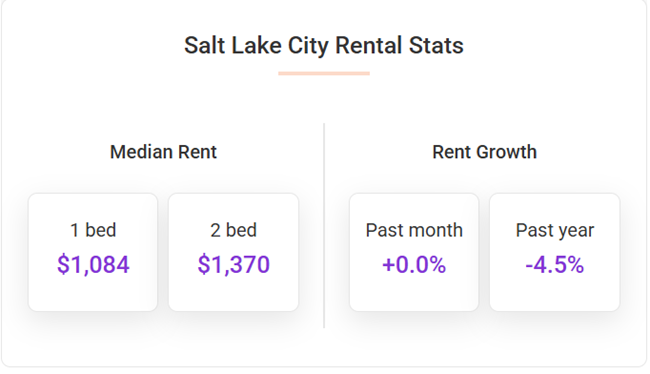
The median overall rent in Salt Lake City stands at $1,253, roughly the same as last month, according to the April report from Apartment List.
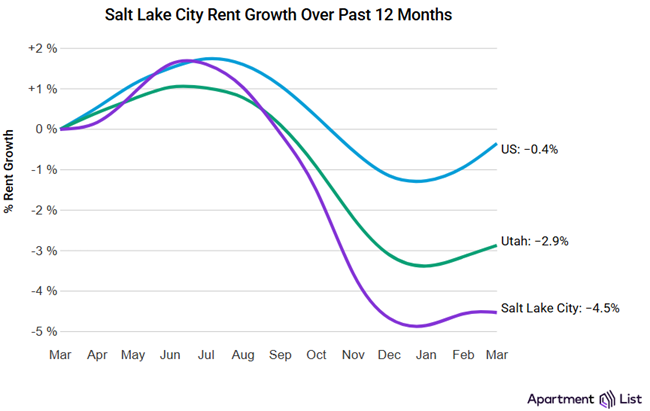
Rent prices remain down 4.5% year-over-year in the city as rent growth over the past year has fallen behind both the state (-2.9%) and national averages (-0.4%).
City rent growth in 2025 pacing similar last year
Three months into the year, rents in Salt Lake have risen 0.3%.
This is a similar rate of growth compared to what the city was experiencing at this point last year: from January to March 2024 rents had decreased 0.1%.
In city rents are 13.6% lower than the metro-wide median
Across the metro area, the median rent is $1,450 meaning that the median price in Salt Lake City proper ($1,253) is 13.6% lower than the price across the metro as a whole. Metro-wide annual rent growth stands at -2.8%, above the rate of rent growth within just the city.
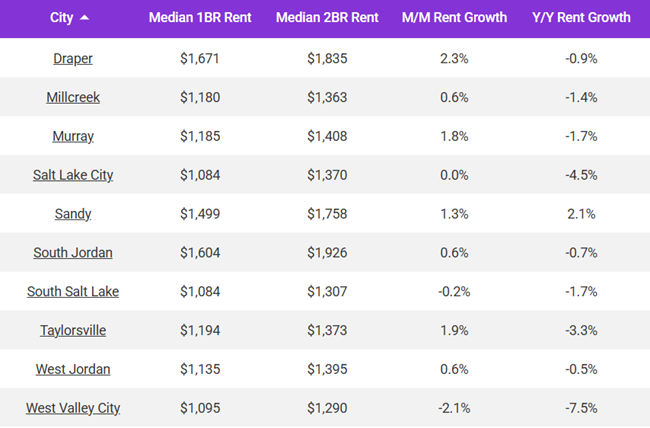
The table below shows the latest rent stats for 10 cities in the metro area that are included in the Apartment List database.
Among them, Draper is currently the most expensive, with a median rent of $1,890. South Salt Lake is the metro’s most affordable city, with a median rent of $1,241. The metro’s fastest annual rent growth is occurring in Sandy (2.1%) while the slowest is in West Valley City (-7.5%).
8 spring maintenance items to check inside and outside your rental property to keep tenants happy and protect your investment.
By Finnmark
As weather gets warmer, it becomes easier to begin projects that would have been difficult or even impossible to complete during the wet and cold of winter. Here are eight spring maintenance rental-property checklist items for both inside and outside your rentals this spring, provided by Finnmark Property Services.
Here are 8 key spring maintenance items to check
Inspect the exterior for damage or wear, especially the roof. It is best to hire a professional to climb on the roof and check for cracks that might cause interior leaks.
Test smoke and carbon monoxide detectors. Sometimes it is unclear whether the tenant or maintenance should check batteries, so be sure everyone knows who is responsible.
Check for leaks or water damage indoors. Windowsills and entryways can easily develop cracks. Those cracks make it possible for critters to enter the property while also contributing to straining the heating, ventilation and air-conditioning (HVAC) system. A professional can easily reseal cracked thresholds.
Maintain exterior surfaces. A cleaning and pressure-washing specialist can assess the conditions of a property’s exterior siding and recommend whether it should be thoroughly cleaned. Cleaning dirt and debris from siding keeps mold and fungi from growing and should be a part of spring rental-property maintenance.
Complete roofing, siding or concrete repairs. Check for any interior leaks. Additionally, natural debris – such as leaves and branches – can easily collect on the roof during the winter, which makes the spring a good time to schedule a roof-cleaning service. If your property has an exposed brick or concrete foundation, check for cracks and signs of deterioration.
Schedule your big capital construction projects for spring.
Resolve any outstanding water-damage issues. After a winter of snow or showers, it is necessary to check whether any water remains undrained around the property. Noticing whether puddles fail to disappear after 24 hours is one way of gauging this. If water fails to properly drain, moisture can easily increase around the property’s foundations and walls.
Assess for mold problems and address as needed. Often, heightened moisture levels within or around the property causing water damage to walls and floors can facilitate mold growth.
About the author:
Finnmark Property Services offers a range of maintenance and construction/capital-improvement services to apartment and HOA communities throughout Oregon and Washington. Our team of trained professionals helps maintain the beauty of your community and build the value of your investment.
Fair Housing Month this year comes when federal policies are in a more significant transitional moment than they have been in the past, so here is a checklist for success.
By Kendall Pretzer
April is Fair Housing Month, and it’s never too early to review the policies that keep properties compliant and without issue.
As fair-housing regulations continue to evolve, new challenges and opportunities for multifamily owners and operators are ever-present. Compliance with fair-housing laws is both a legal requirement and an ethical responsibility.
Fair-housing policies have become crucial, and property teams continue to adapt to new regulations and expectations to create more inclusive communities and avoid legal and financial consequences.
Fair Housing Policies in 2025
Fair Housing month this year comes when federal policies are in a more significant transitional moment than they have been in the past.
As changes begin to take effect, fair-housing education for multifamily is more imperative now than it has been in years. An aggressive approach to communication and training will ensure that onsite teams are current on regulations and following the most recent policies and procedures for their community.
What regulations will remain in place has yet to be seen as the federal government begins making sweeping changes to the U.S. Department of Housing and Urban Development (HUD), most recently bringing an end to Affirmatively Furthering Fair Housing (AFFH) policies.
Other policies that may or may not remain include:
“Ban the box” initiatives limit the consideration of criminal history in housing decisions
Language-access requirements that mandate essential information to appear in multiple languages
Oversight regarding algorithmic bias in resident-screening
Disclosure of environmental risks and offering incentives for improvements in disadvantaged areas
Reasonable accommodation policies that cover a broader spectrum of disabilities, including mental health and chronic conditions
Regulations surrounding pre-existing conditions and establishing enhanced health and safety standards
Economic-diversity initiatives covering zoning requirements and mixed-income development incentives
Changes on the federal level, however, do not necessarily affect fair housing on a local level.
Federal policies serve as a baseline, and states and metropolitan areas may expand protections to better serve their demographics. Traditional protected classes have expanded in some regions, which may require updates to policies and practices. In addition, property teams may encounter local regulations where systemic discrimination is in greater focus.
The role of technology in property management also brings new considerations. While it streamlines processes, owners and operators must ensure these tools do not perpetuate biases.
Leveraging Technology for Fair-Housing Compliance
There are several ways to make this easy on teams.
The right technological tools can streamline processes, reduce errors and provide valuable data for decision-making. AI-powered screening tools help eliminate unconscious bias in resident selection by focusing on relevant criteria, and regular audits ensure these systems remain unbiased and practical. In addition, these tools will be valuable for keeping track of critical regulatory and legislative changes.
While technology offers numerous benefits, it remains a tool that must be coupled with strong company policies and a genuine commitment to fair-housing principles. As we progress through 2025, technology integration in fair-housing practices continues to be essential in creating more equitable housing communities.
Building Inclusive Communities
Building inclusive communities is a cornerstone of fair-housing practices, emphasizing environments where diversity thrives beyond basic legal compliance.
Creating a sense of belonging is the sum of many parts. While inclusivity is traditionally thought to be achieved through cultural events that celebrate diverse traditions and promote understanding among residents, property development now incorporates inclusive design principles, such as flexible floor plans and multigenerational amenities that accommodate various abilities and ages.
Building truly inclusive communities requires sustained commitment and creativity. As we progress through 2025, the emphasis on creating spaces where every resident can thrive continues to grow, reflecting broader societal shifts toward equity and inclusion.
Navigating Challenges and Consequences of Non-Compliance
Property managers will always face evolving challenges in fair housing, requiring a strategic approach and adaptability.
Clear policies are required to balance fair housing with community standards. Navigating these challenges demands ongoing education and a proactive stance. By focusing on compliance and seeking expert advice, teams can manage the complex fair-housing environment.
The stakes for fair-housing violations are higher than ever, and pre-leasing season is the time to make sure your compliance is up to date. Legal consequences include an increased risk of lawsuits, as more accessible legal resources make litigation more common. Financial penalties have also increased, depending on the severity of the violation.
Fair-housing violations also pose a risk to reputation leading up to peak leasing season.
In today’s digital environment, discriminatory incidents can quickly spread via online platforms, damaging a company’s brand and making it difficult to attract prospects and retain residents. These consequences affect operations in a competitive market, making fair-housing compliance crucial for property teams.
Checklist for Fair Housing Success
Teams need a comprehensive checklist of fair-housing regulations and how they function at the community level to ensure compliance and foster inclusion.
Following this checklist helps create inclusive communities while maintaining compliance, and consistent implementation ensures that properties lead in promoting equitable housing. Implementing fair-housing practices in 2025 requires a proactive and comprehensive approach. Property managers must integrate these practices into daily operations and organizational culture.
The following is a policy and procedure checklist to help teams get started. You can also reference this free fair-housing tool kit here.
Policy Checklist
Policies should make it clear to employees that treating applicants or residents differently based on membership in a protected class is prohibited.
Ensure your sexual harassment policy lists prohibited behaviors and includes multiple avenues for reporting.
Assistance animals are not pets, so be sure to have policies specific to assistance animals that are separate from pet policies.
Evaluate company policies for any unintentional discriminatory effect they could have on groups protected by federal, state, and local Fair Housing law.
Create a policy that encourages employees to come forward if they witness or become aware of sexual harassment or other forms of illegal discrimination taking place.
Review your screening policies, particularly those regarding criminal-background checks, to ensure they comply with federal, state and local laws.
Assess policies and procedures for dealing with “nuisances” as defined by local nuisance ordinances and evaluate whether they are compliant with the Fair Housing Act (FHA).
Procedure Checklist
Apply policies equally to all residents; avoid any preferential treatment.
Train employees on how to avoid discriminating against a protected class (race, color, national origin, religion, sex, disability, and familial status), including ways they might discriminate unknowingly.
Advise employees against using any language, written or spoken, that could be construed as discouraging someone from leasing based on their protected class.
Apply rules about religious gatherings consistently, fairly, and equally.
Consult legal counsel before evicting a resident who has accused your company of discrimination or harassment, regardless of the reason for eviction or whether the accusation was made directly to you or the authorities.
Ensure that training clearly addresses the types of behaviors that could be sexual harassment.
Avoid language or imagery in marketing materials that suggest you are targeting people of a particular race, color, national origin, religion, disability status, familial status (including pregnancy) or sex.
Avoid comments, advertisements and postings that state “adults only” or “no children allowed.”
Be consistent and do not selectively apply local nuisance ordinances to residents in accordance with HUD guidelines.
Promptly investigate all complaints of harassment or discrimination.
About the author:
Kendall Pretzer
Kendall Pretzer brings more than 30 years of experience in property management and supplier solutions to her role as the chief executive officer at Grace Hill.
About Grace Hill
Grace Hill provides technology-enabled performance solutions designed to help owners and operators of real estate properties enhance property performance, mitigate operating risk and cultivate top talent. Get the free fair-housing tool kit here.
The Washington Attorney General has filed a new lawsuit against RealPage and nine local landlords claiming they “conspired to harm tenants” and violated the Consumer Protection Act, according to a release.
The new lawsuit was filed in King County Superior Court on April 3 alleging that RealPage and its software are “central to a conspiracy and unfair competition by certain landlords that resulted in rapidly rising rent prices for their tenants.”
“RealPage’s unfair practices are cheating renters and pricing families out of stable housing,” said Attorney General Nick Brown in the release. “Washington is facing a housing crisis and we must respond with every available tool.”
The lawsuit says “competition should moderate rent hikes when demand is high and drive rents down when supply is high, making housing more affordable. Prices should be the result of the natural forces of supply and demand, in this case the number of available apartment units and the number of renters seeking housing, not the highest prices that renters can pay.”
In Washington state, more than one million households—about 36% of the state’s population—are renters. In recent years, rental prices in Washington have skyrocketed, placing an unsustainable burden on renters, the lawsuit says.
“In 2024, 47% of renter households had their rent increased by over $100 per month, and 15% had their rent increased by over $250 per month. These dramatic increases often outpace wage growth, leaving many renters struggling to keep up with housing costs.
“Conspired to harm tenants”
“RealPage and its landlord-clients have been central actors in this climate of constant and staggering rent increases. RealPage has built a business out of undermining the natural forces of competition.”
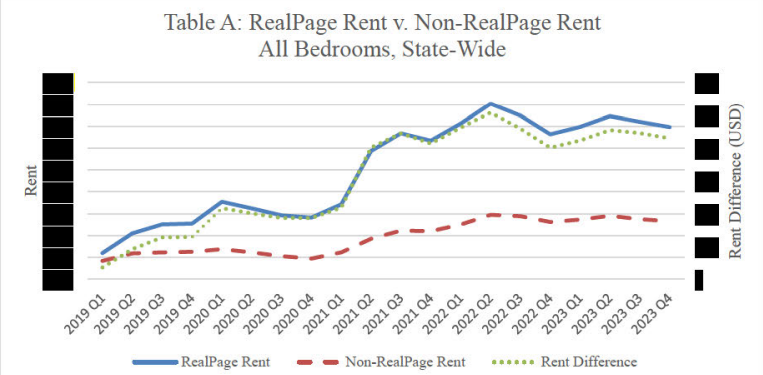
The lawsuit says the way it works is that RealPage provides software tools to landlords that push rental prices beyond what landlords could otherwise achieve while reducing the risk that other landlords will undercut them with more competitive rates. Analysis by the attorney general’s office shows that in numerous markets, pricing is higher and occupancy is lower for properties managed by landlords who use RealPage’s products than for similar properties managed by landlords who don’t use RealPage.
The lawsuit provided a chart showing the differences
The investigation found that RealPage’s pricing software provides landlords with a shared logic that tends to raise rents. Two types of RealPage’s pricing software collect nonpublic, competitively sensitive data from landlords to feed the algorithms. Landlords who use RealPage software agree to provide their data, knowing that the software combines their data with data from other landlords. The algorithm then recommends rents — in many cases increasing them. In feedback to RealPage about its software, one potential client said: “I always liked this product because your algorithm uses proprietary data from other subscribers to suggest rents and term. That’s classic price-fixing.”
Washington State was previously part of a multi-state antitrust lawsuit led by the U.S. Department of Justice in federal court, but withdrew to file this challenge in state court under statutes that would cover a greater number of Washingtonians affected by these actions.
This new lawsuit alleges six violations of the state Consumer Protection Act and seeks restitution for a large number of Washington renters. An estimated 800,000 leases in Washington were priced using RealPage software between 2017 and 2024.
The lawsuit lists RealPage and nine local landlords as the defendants, including Greystar; Cushman & Wakefield Inc./Pinnacle Property Management Services; LivCor, LLC; UDR, Inc., Prime Administration, LLC dba Prime Group; Quarterra Multifamily Communities, LLC; LaSalle Properties, LLC; MG Properties, LLC; and Sares Regis Management Company, L.P.
RealPage has said the data fed into its pricing tool is anonymized and aggregated. It said the company “uses aggregated market data from a variety of sources in a legally compliant manner.”
ProPublica is reporting that RealPage, a Texas-based real estate tech company, is facing a new barrage of questions about whether its software is helping landlords coordinate rental pricing in violation of antitrust laws.
ProPublica initially detailed how RealPage’s pricing algorithm uses competitor data to suggest new prices daily for available apartments. ProPublica raised concerns that the software, sold by RealPage, is potentially pushing rent prices above competitive levels, facilitating price fixing or both.
The Georgia legislature has passed a bill requiring out-of-state landlords to employ at least one in-state staffer to handle tenant complaints, according to reports.
The bill, House Bill 399, is headed to Governor Brian Kemp for signature.
The bill says, “Any landlord that is not a resident of this state that owns or operates single-family or duplex rental properties in this state” must employ at least one in-state agent, “who shall be responsible for receiving, coordinating, managing, and responding to” renters’ maintenance concerns.”
Reports say the bipartisan measure to require out-of-state landlords to hire in-state staff materialized in response to a surge of big institutional investors buying up residential housing in Georgia.
That has driven up rent prices, and investors’ habit of camouflaging themselves with shell companies has made it difficult for tenants to get maintenance concerns addressed.
Embracing pet inclusivity is more than just a kind gesture for rental housing providers—it’s a smart business move as pet-including housing increases retention and improves financial performance.
By Michelson Found Animals
For rental housing providers, embracing pet inclusivity is more than just a kind gesture—it’s a smart business move that fosters community, increases retention, and improves financial performance. Michelson Found Animals’Pet-Inclusive Housing Initiative (PIHI) offers compelling reasons why property owners should reconsider breed and weight restrictions and implement pet-inclusive policies that benefit both renters and operators alike.
Dispelling Common Myths About Pet Restrictions
Do breed restrictions prevent dangerous pets?
No. Research shows that a dog’s breed does not determine its personality or behavior. Diet, environment, training, and socialization are far more influential factors. In fact, restrictive policies often encourage residents to hide pets or falsely declare them as emotional support animals (ESAs), making it harder to enforce community guidelines.
How can we ensure safety without breed and weight restrictions?
By removing blanket restrictions, rental properties can establish transparency and evaluate each pet as an individual. Utilizing pet personality profiles and pet agreements ensures a clear understanding between property managers and pet-owning residents.
Will allowing all dog breeds affect our liability insurance?
Many property insurance policies do not impose breed restrictions. If your current provider does, there are alternative insurers without such limitations. Additionally, renters can obtain renters insurance policies with no breed restrictions, ensuring liability coverage for any breed.
What if other residents don’t support pet-inclusive policies?
According to the 2024 Grace Hill NMHC Renter Preferences Survey, only 6% of renters say that a property’s pet-friendliness would make them less likely to live there. The biggest concern among non-pet owners is pet waste, which can be easily addressed with proper waste stations and clear community rules.
The Many Benefits of Eliminating Breed and Weight Restrictions
Expand Market Reach
With nearly two-thirds of U.S. households owning a pet, restrictive pet policies severely limit the potential resident pool. Pet-inclusive housing provides a competitive edge, attracting more responsible renters.
Attract Key Demographics
Millennials, Gen Z, and Gen X renters—who make up the largest percentage of pet owners—seek out pet-inclusive housing. With the median renter age being 39, appealing to these pet-loving demographics ensures long-term demand.
Faster Leasing and Higher Occupancy Rates
Properties that welcome pets experience quicker lease signings. Surveys indicate that 83% of rental housing operators report faster lease-ups in pet-inclusive communities, and 79% find vacancies easier to fill.
Financial Benefits
Pet owners are highly motivated renters. Studies show they are willing to compromise on budget and location to find pet-friendly housing. Additionally, pet-owning residents stay 21% longer on average than non-pet owners. Longer resident retention and reduced turnover costs translate to increased net operating income (NOI). Pet-inclusive housing policies support a healthier financial outlook for property managers.
Minimize ESA Fraud and Hidden Pets
Renters sometimes resort to fraudulent ESA claims to bypass breed restrictions, and 11% of renters admit to hiding pets due to restrictive policies. Removing breed and weight restrictions reduces the likelihood of renters hiding or sneaking in unapproved pets. This allows property managers to maintain accurate pet records and enforce community guidelines more effectively.
Make Data-Driven Decisions
There is no scientific evidence linking breed to behavior. The CDC and the American Bar Association are among the organizations that reject breed-specific policies in favor of evaluating individual pet behavior.
Prevent Unnecessary Pet Surrenders
Housing-related issues are a leading cause of pet surrender to shelters. With 98% of pet owners considering their pets family, removing restrictions helps keep families together.
Foster a More Connected Community
Pets naturally foster social connections among residents, creating a more engaged and friendly community. Research shows that pet-inclusive housing operators report increased neighbor interactions and improved resident satisfaction.
Steps to Implement Pet-Inclusive Policies
Establish Clear Expectations – Define pet policies and agreements upfront to maintain community harmony.
Adopt the Pet Personality Profile (PPP) – Evaluate pets as individuals rather than imposing arbitrary breed and weight restrictions.
Improve Pet Amenities – Install dog parks, pet waste stations, and grooming areas to enhance the resident experience.
Partner with Pet-Friendly Businesses – Work with local vets, trainers, and pet stores to offer exclusive services to pet-owning residents.
Communicate Proactively – Keep both pet owners and non-pet owners informed about policy updates and expectations.
Pet-Inclusive Housing is the Future
Embracing pet-inclusive policies isn’t just about allowing pets—it’s about fostering stronger communities, increasing market lift, and meeting residents’ needs. Michelson Found Animals’ Pet-Inclusive Housing Initiative provides the resources and tools rental housing providers require to make this transition seamless and successful.
Ready to create a pet-inclusive property? Get started at petsandhousing.org for more pet-inclusive information and tools.
About the author:
Michelson Found Animals has continued to identify important problems facing pets and people, and develop real-world, scalable solutions to help them thrive.
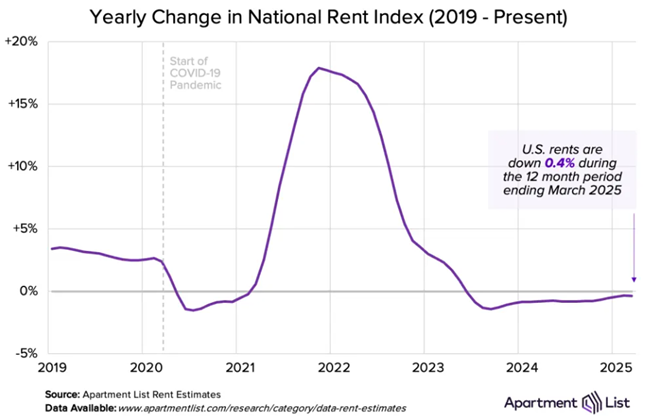
March saw national rents rise slightly for the second month in a row, according to Apartment List’s April report.
While the last two months have seen some rent increases, overall national year-over-year growth remains negative at -0.4 percent.
But it is slowly inching back toward positive territory the report says.
“Year-over-year rent growth has now been negative since June 2023, but in recent months, there are signs that a return to positive growth is on the horizon.
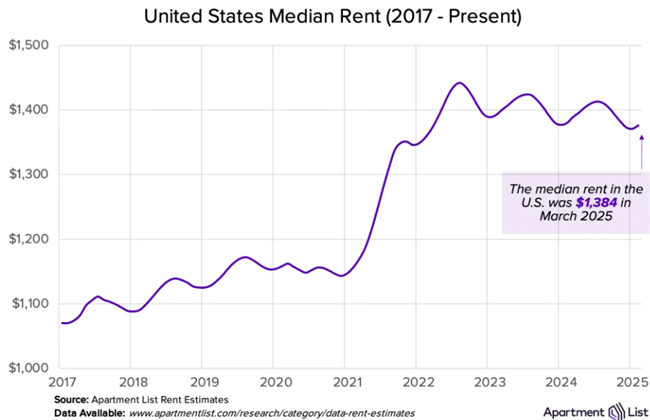
“In dollar terms, the national median monthly rent now stands at $1,384, up $8 per month compared to last month, but down $5 compared to March 2024,” according to the report from the Apartment List Research Team.
At the local level, 82 of the nation’s 100 largest cities saw rents rise in March. On a year-over-year basis, rent growth is now positive for a majority of large cities (59 of the top 100).
“Our national index remains negative largely due to steeper declines in a concentrated set of Sun Belt metros that are rapidly expanding their multifamily inventory; these include Austin (-6.3 percent year-over-year), Denver (-5 percent), and Raleigh (-2.9 percent),” Apartment List researchers write.
Multifamily vacancy rate hits 6.9%, a new peak
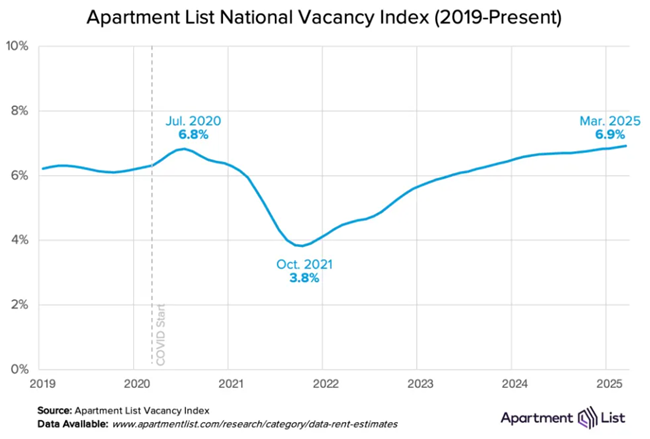
“Our national vacancy index now sits at 6.9 percent, the highest reading in the history of that monthly data series, which goes back to the start of 2017.
“After a historic tightening in 2021, multifamily occupancy has been slowly but consistently easing for over three years amid an influx of new inventory,” the report says.
As new apartment completions decline, the vacancy index could begin to tighten again, “but for now, we’re still seeing vacancies rise, even as rent declines gradually moderate,” the report says.
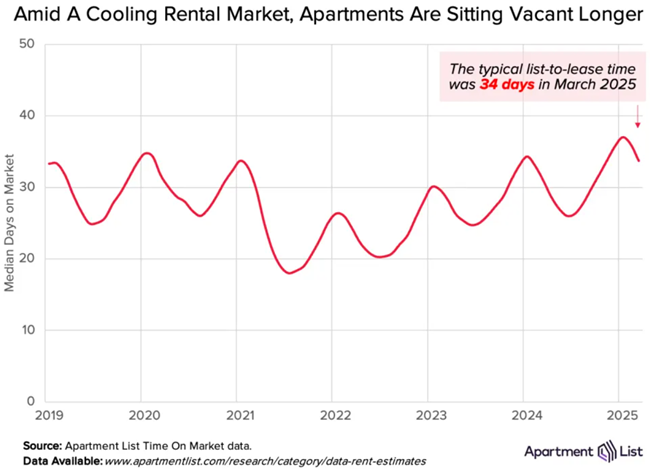
List-to-Lease time comes down from all-time new high
The shortening of list-to-lease time over the past two months is in line with the seasonal return to positive month-over-month rent growth “that we’ve observed in tandem.
“That said, this is still the highest time on market reading that we’ve seen in March of any year going back to the start of 2019, when the data series begins. Units are currently sitting vacant for 3 days longer than they were at this time last year, and for 10 days longer than they were in March 2022 when the market was just beginning to loosen. The influx of new supply is resulting not only in a growing number of vacant units, but also in an increase in the length of time those units remain unoccupied,” according to the report.
Rents rise in March conclusion
The report says demand for rentals going forward “remains a bit more uncertain, and will likely hinge on broader macroeconomic conditions. Currently, it appears likely that 2025 will see a return to positive year-over-year rent growth, but that positive growth is likely to be modest,” according to the Apartment List Research Team.
The Oregon Senate has passed a bill to make it illegal for landlords to inquire about a potential renter’s immigration status, according to the Oregon Capital Chronicle.
Calling it a “moral imperative,” the Oregon Senate voted Monday to ban landlords from asking about or disclosing tenants’ immigration status.
The bill now heads to the Oregon House for approval.
The bill would also prohibit landlords from denying to rent a home or apartment to a tenant based on the landlord’s perception of their immigration status. It would also make it illegal for a landlord to retaliate against a tenant, who might ask for repairs or complain about mold, by threatening to disclose their immigration status to federal immigration enforcement officials.
Under Senate Bill 599, Oregon would join at least four other states — Washington, California, Illinois and New York — that have said access to rental housing shouldn’t be contingent on whether a person was born or naturalized into the United States. The Portland City Council approved a similar law in 2019, backers note.
Oregon’s bill would allow alternative forms of identification in the rental application process — stating that in lieu of a birth certificate or Social Security number that immigrants might not have, alternative forms of identification such as an Individual Taxpayer Identification Number or a driver’s license would suffice.
An amendment to the bill, however, allows for landlords to inquire about a potential renter’s immigration status if required by a federal government program that offers low-income housing.
Rep. Ricki Ruiz, a Gresham Democrat and sponsor of the bill, told Oregonlive.com it is “deeply personal” to him because his parents immigrated to the United States in search of a better future but also worried about finding a safe and stable home.
The bill has drawn significant opposition from people concerned that it would infringe on landlord rights.
In written testimony, Ruppert Reinstadler of Tigard said further regulating of landlords drives up prices, among other problems.
“Since when do business people (landlords) not have the right to ask questions of their renters?” Reinstadler wrote. “It is a basic tenet of business that you know who your clients are, whether they are trustworthy and whether they are in this country legally.”