Home Blog Page 202

Landlord, property managers bullied and harassed over rent increases

Tensions are rising between landlords and property managers, and tenant activists. Landlords and managers have been bullied over rent increases. And they face unpleasant demonstrations from activists as Portland struggles with a shortage of housing and rapidly rising rents.

By John Triplett

Rental Housing Journal

A Portland landlord says he and his property managers have been bullied and intimidated over rent increases after he purchased a small apartment building and had to raise existing rents to afford his new mortgage payments.

He said demonstrators have picketed his personal residence. The have placed notices on the doors of neighbors, camped overnight on his lawn, defecated on his lawn and marched into his property managers’ offices scaring the staff, according to his spokesman, John McIsaac.

The landlord, Landon Marsh, raised rents “only to the lower end of current market rates in Portland,” said McIsaac in a recent interview. Marsh has also written an op-ed style editorial here detailing his opinions on what happened.

McIsaac said the rent increases came after Marsh purchased the small apartment complex, did substantial work to improve the condition of the building and raised rents to cover his costs and mortgage. Unfortunately the rent for one tenant went up by 40 percent and the tenant complained to the Portland Tenants United group.

Telling the landlords’ side of the story

McIsaac said he is speaking out because many in the landlord and property management industry do not feel their side of the story has been told, and that more attention has been focused on what the activists’ demonstrations, and what the tenants say.

“I represent the landlords and property managers who do not want to have exorbitantly high rents, we want more housing stock,” McIsaac said.

“In Portland, 85 percent of the landlords are small operators. They might have their retirement tied up in these properties, but they don’t make a ton of money off of them. So the stereotype is that all of the property owners are huge, out-of-state multimillion-dollar concerns. That is not the case. A lot of these property owners have day jobs,” McIsaac said.

The story of one small landlord


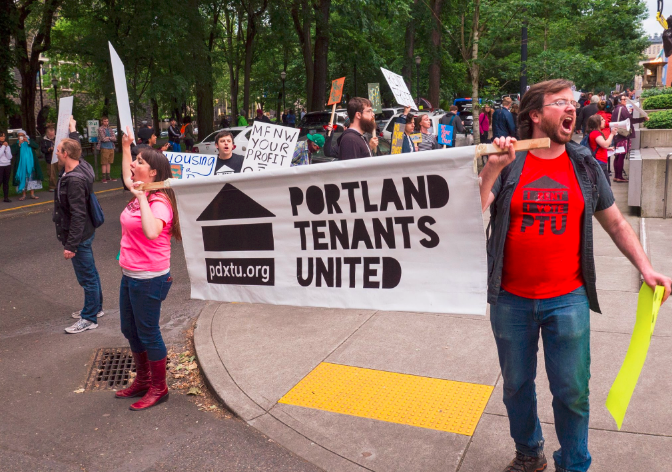
Landlord has been picketed by activists in Portland


Photo ©Multifamily NW

McIsaac said that with the hysteria over rent increases, “the activist group has targeted a couple of landlords in particular. They are not going after the big guys who own thousands of units. They are going after the little guys who own like 20 units.

“And this one guy, Landon Marsh, who is my client, is in the hospital interior-design business. He is a one-man consulting business.  He does not do property development for a living. He has investment properties. They are small ones. All three buildings he owns combined make up 20 units.”

Where this all started with apartment building purchase

“He bought one building around seven or eight months ago out in a semi-blighted part of East Portland, a working-class area,” McIsaac said. “It was built about seven years ago. And it needed some repairs just from wear and tear. The tenants asked him to make these repairs and he said, ‘Yes I will do that.’ “

“So he set to making the repairs. But he had bought the building at market value. And market value right now is a hell of a lot higher than it was seven years ago – it’s a lot higher.

“He said that he was going to have to raise the rent. But he said he would keep the rents – and he stuck to this – at the very low end of market rates. So he’s not a profiteer by any stretch of the imagination,” McIsaac said. He said in his opinion, “This guy is a liberal, progressive classic Portlander. He is a caring, altruistic, sensitive man.”

Group pushing rent control and end to no-cause evictions for Portland

Landlord and property managers face harassment from tenant activitsts

Photo ©Multifamily NW

Portland Tenants United is a growing tenants union dedicated to organizing tenants to take action to strengthen and enforce tenants’ rights and protections, according to their Facebook page.

At a recent press conference, Portland Tenants United and City Commissioner-elect Chloe Eudaly, promoting something called “Keep Portland Housed,” called for a freeze on rent and an end to  no-cause evictions in Portland until there is a policy in place to improve conditions for renters.

Leader says group wants municipal disobedience and rent control

“We’ve been in an officially declared housing emergency for over a year. Despite that, tenant protections – the most critical component to preventing homelessness – have not meaningfully improved, and conditions continue to worsen,” Eudaly said in a press release. “My election, and the passage of Portland’s housing bond, present a clear and obvious mandate to City Council to act.”

Eudaly admits state laws prohibit local rent control measures. But she wants city commissioners to commit “municipal disobedience,” do it anyway and fight the resulting lawsuits, she told the Portland Tribune.

Portland Tenants United is focused on lowering the eviction rates in Portland by organizing tenants to vocalize their concerns. Gabriel Erbs, organizer for the group, insists the fight is far from over, according to a report on Portland Patch.  “Tenants can be evicted, for whatever reason or no reason at all, at the landlord’s whim,” he said.

Landlord and tenant activists have clashed

Landlord and property managers face tenant activist protesters in Portland

Tenant activists demonstrate outside Portland Art Museum photo ©Multifamily NW

Tensions escalated late in 2016 at the Portland Art Museum during an awards ceremony. Multifamily NW, an association promoting quality rental housing, was holding its annual ACE awards ceremony for its members when protestors from Portland Tenants United showed up.

Dozens of protesters gathered across the street from the museum. It didn’t take long for tempers to flare, according to koin.com.

The television station reported that, “Tensions were high. Some choice words were exchanged as well as some apparent shoving as protesters came face to face with ceremony attendees. Shouts calling the multifamily association attendees ‘parasite’ and ‘bloodsucker’ rang out from protesters.”

Landlord and property managers have been bullied by tenant activist protesters in Portland

Protesters push past security guards photo ©Multifamily NW

A small group of protesters stormed past security into the museum to disrupt the event. They were soon removed by security, according to katu.com.

Deborah Imse, executive director of Multifamily NW, said in response to the protest, “Over the past few years, rents in Oregon have risen while incomes have lagged behind, creating an urgent housing crisis. In order to thrive, the region needs to work together to create more quality housing options for families of all incomes.

“With demand for housing continuing to increase, we must take action to reduce rental costs by increasing the variety of housing types available to people of all incomes and creating more subsidized affordable and market-rate units,” Imse said in the statement.

Property management groups say more apartment units needed

Any solutions to the Portland housing issue, property management organizations say, should be market-based. A spring 2016 apartment report released by Multifamily NW  says that “Portland’s current development pipeline includes an impressive 21,600 proposed units.”

“More housing is the solution, and our priorities are to help increase supply and educate politicians on the fact that simply adding fees and making business harder has the reverse effect on the problem they want to solve,” Multifamily NW’s  Imse wrote in an email to the Portland Mercury.

Landlord and property managers bullied by tenant activists in Portland

Imse’s image on protester’s poster photo ©Multifamily NW

“As the organization representing property owners and managers, Multifamily NW has adopted a solutions-oriented approach to address the housing shortage. The market data we collect, along with reviews of affordable housing policies across the country and the experience of our members, have shown us the best way to create affordability in the housing market: adopting proven strategies that add to the housing supply,” Imse wrote in an article on Oregonlive.com  in early 2016.

Barrier to constructing new apartments need to be removed

“To increase the overall housing supply, we need to remove barriers to building. This includes updating zoning codes to allow for a wider variety of housing types at a range of price levels.

“At the same time, we should streamline the process for development review and permitting new construction while retaining standards for high-quality buildings. Under the current process, approvals can take a year or more, adding to project costs and delaying the construction of much-needed market-rate and affordable units,” Imse wrote.

Landlords trying to do the right thing caught in the middle

Landlords and property managers bullied by tenant activists over rent increases

Photo ©Multifamily NW

McIsaac said Marsh tried to work with the existing tenants on payment plans and provide plenty of lead time and help moving if they decided not to pay the rent increases. Most tenants decided to stay, he said.

No lawsuits have been filed.

“But they have come up with some non-factual statements about how he has treated tenants and what he has said to them. And he has bent over backwards, and so has the rental company, to make it easier for tenants,” McIsaac said.

“So it is interesting here in Portland the media has not jumped on him, they have been extremely neutral on him. The head of the tenants union has taken it upon herself to negotiate with landlords on behalf of the tenants and she is not a lawyer, not a property owner, she’s just an activist,” McIsaac said.

Property managers bullied as activists marched into property management office

Activists were protesting at one event and then went over to the office of the property management company Marsh had been using to handle his rentals.

“They marched into the A&G Rental Management LLC office and intimidated the people working there. Drove some of them from the main area back into their offices. They had to lock themselves in their offices. And the principals were not in the office at the time, so they basically attacked the support staff – not physically – but screaming, bullhorns, stomping, just marching through this office. It’s not very big,  maybe a grand total of 1,000 square feet. So 30 of them came in there so it was pretty unpleasant,” McIsaac said.

Challenge of buying apartments at market rates

“The bottom line is, if somebody buys a new rental property at market rate from somebody else who owned it for 10 years, the owner is going to sell it at market value. The new owner is going to have to raise the rents to make the monthly mortgage. If you do away with no-cause evictions, then you also do away with the ability to evict bad actors who are drug dealers or domestic abusers, because that is what the law exists for,” McIsaac said.

“His (Marsh’s) other properties have long-term tenants – his other two properties – and so it’s just a crazy, uncomfortable situation. I think the property managers and the landlords are really willing to work with tenants because of the type of city we have here – but the tenants union has refused conversations and any negotiations that are not absolutely in their favor,” he said.

“And they have a couple of politicians on their side,” McIsaac said. “Some politicians support no-cause evictions and rent control. But they don’t know the facts. If they did, they would not do it. The Portland Tenants Union is funded by the national Service Employees International Union (SEIU). No-cause evictions are No. 1 and rental control is No. 2 but I think there are other things lurking underneath if they can get these laws passed.

“If you have rent control you cannot improve your buildings. You have to be an altruistic millionaire to improve a building with rent control because rent is where you derive your income.”

Resources:

Want to lower housing costs? Increase the supply

Portland Tenants United Picket Housing PAC

Multifamily NW The high cost of rent control

East Portland tenants plaster landlord’s neighborhood with flyers

National Multifamily Housing Council

Ash Street Tenants Association letter to landlord Landon Marsh

Portland tenants publicly shame their landlord

Portland Tenants United protest housing awards

John McIsaac Communications and Public Relations

Oregon’s housing crisis too big to ignore – opinion.

 

What Is The No.1 Challenge Faced By Property Managers?

6 Findings About Property Managers In New Study

Property managers face many challenges from growing their portfolio, to keeping their business profitable and many more.

This new survey from sheds some light on some specific problems and what property managers have to say.

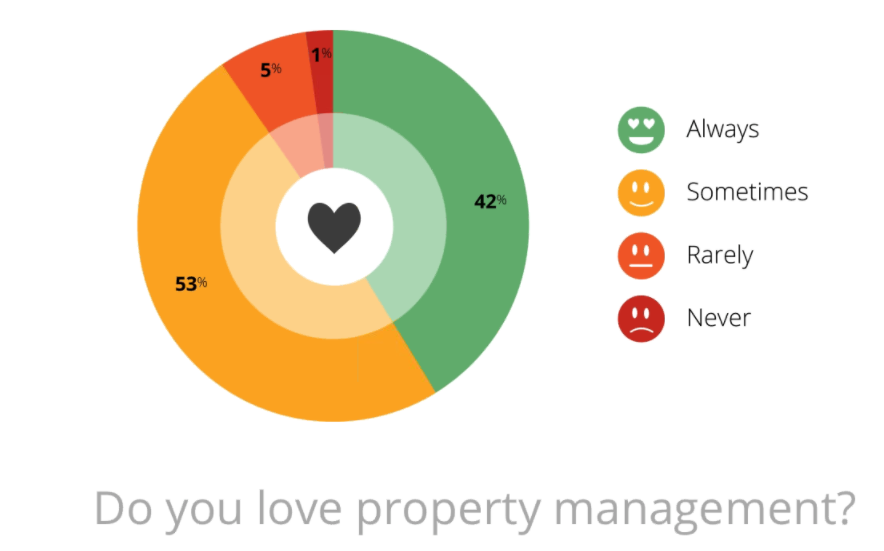
And by the way, 95% of them love their jobs as property managers.

By John Triplett

Rental Housing Journal

A new survey of property managers shows six major findings in the research from 1,500 property managers around the country.

The survey was done from June 6, 2016 to July 7, 2016 by Buildium.com and the National Association of Property Managers, with property managers across the country responding to the survey called the State of the Property Management Industry.

Among some of the interesting statistics were that 55% of survey takers were women. “In the property management industry our population tends to skew a little older and the older the population the more women we see,” said Gail Phillips, executive director of the National Association of Property Managers.

Half of the survey takers were over 50-years-old, and half said they were owners of the company, while 87 percent had been in business for more than three years.

Finding No. 1

80 percent of property managers manage the property of other investors, with 29 percent managing a mix of their own and other’s portfolios. And, 48% of property managers have portfolios which include property they own. Of those, 19 percent manage only their own real estate.

A focus has been on growth.
Portfolios have grown in the last two years – not necessarily revenue growth – but portfolio growth.
And growth is expected in the next two year. Mixed portfolios performed the best closely followed by third-party portfolios and followed by self-owned portfolios.

Finding No. 2

Property managers are in the middle of a high-growth cycle, with 94% reporting a profitable business, and 89 percent expecting to grow in the next two years.

“There is really good news based out of this survey” about profitability, Phillips, executive director of the National Association of Property Managers who participated in the survey with Buildium.com.

Why have we seen so much growth?

“Our leadership has seen different types of growth. Some of them are acquiring other companies,” Phillips said.  In California there has been a change as they have seen influx of both landlords and renters, especially Millennials. The more of them that have been added to the market, the busier it is becoming. There is no clear “yes” or “no.”  “We still have those investors out there,” she said. And some members are picking up work from investors who have bought.

While growth does not always go hand-in-hand with profitability, she said, 94 percent indicated they are seeing profitability, 50 percent are very profitable, only two percent reported losing money and four percent breaking even “which is incredible for any industry.”

Most are looking to grow their portfolio next year and looking at ways they can find other investors.

What is the most effective way to grow you business?

property managers most effective way to grow business
Chart courtesy of Buildium

What is the no. 1 challenge faced by property managers?

Finding No. 3 – Finding reliable vendors is the top challenge faced by property managers, and good communication is their most important skill set.

Most property managers, 82 percent, said they charge fees as a percentage of rent, and 57 percent say they charge between eight and 10 percent, while 24 percent said they charge between five percent and eight percent.

Those charging flat rates, 35 percent of them,  charge between $100 and $149.

This is just property management fees.

property managers survey on how much do you charge?
Chart courtesy of Buildium.

What is the key to success in your business?

    • Communication is the key to success – 60%
    • Organizational skills and staying in control – 35%
    • Hiring and technology – 30 percent

Finding No. 4

43 percent of property managers prefer working with intention investors and 41 percent find inexperience the top challenge in working with owners.

44 percent say they prefer working with owners who intentionally acquire larger portfolios.

What is your biggest owner challenge?

41 percent say inexperience and lack of understanding how the process works.

Finding No. 5

88 percent of property managers use dedicated, cloud-based property management software.

Buildium.com who did the survey is a technology company, and said there is a growing importance of technology in property management.

Tenant screening is the most popular service they use.

property managers love their jobs
Chart courtesy of Buildium

Finding No. 6

95 percent of property managers say they love property management, and nearly a third are motivated by being more efficient at work.

On the question of what motivates property managers:

    • Being more efficient – 31 percent
    • Make more money – 23 percent
    • Helping people – 21 percent
    • Having more free time – 13 percent
    • Pleasing the boss – 6 percent
    • Advancing career – 5 percent

Get the full report here from Buildium.com

Properties, Property Managers Must Adapt to Renter Needs, Changes

property managers survey in report

Sign Up For Our Newsletter And Get Apartment News And Helpful, Useful Content Each Week.

* indicates required

Not Renting To Felons Is Racist, Says Washington AG

Justice Department Sues Owner, Manager of Rental Properties for Sexual Harassment of Female Tenant

The State of Washington’s attorney general’s office has filed another consent decree against a landlord for illegally discriminating against potential tenants who are felons, according to news reports.

A recent court filing indicates that the Washington State Attorney General’s Office believes that denying a prospective tenant with a felony conviction is racially discriminatory, according to KIRO TV in Seattle.

A member of the Attorney General’s Civil Rights Unit served a Consent Decree on Dobler Management Company, a property management firm in Tacoma, after conducting a simulated test on whether the landlord was illegally discriminating against potential tenants, according to the report.

This is at least the third case in the past few months in Washington.

In August, the Washington attorney general’s office filed a consent decree against Pacific Crest Real Estate, LLC, a multifamily residential property business.

“Discrimination may occur when housing providers place criminal history restrictions on housing,” according to the decree. “In Washington, racial disparities exist in the criminal justice system. African-Americans are arrested, convicted and incarcerated at higher rates than non-African Americans. As a result, criminal history restrictions on housing may have a disparate impact on African-American renters.”

No blanket ban on felons

The consent decree says that  the apartment landlord or property management company must show a felony restriction is justified by a legitimate non-discriminatory interest and is tailored – such as considering  when the underlying conduct occurred, what the conduct entailed, or what the convicted person has done since. Otherwise, “a housing provider’s blanket policy prohibiting tenants based on a criminal history may discriminate on the basis of race or color and violate the Fair Housing Act, the Washington Law Against Discrimination, and the Washington Consumer Protection Act.

The attorney general said in the decree that Pacific Crest “failed to revise a policy at Windsor Court which rejected rental applicants without consideration of when the underlying conduct occurred or  what the underlying conduct entailed and what the convicted person has done since.”

A tester using a Craig’s list ad about the rental property called the property and said he had a felony conviction and asked if he could still apply for a rental.

A representative for Windsor Court wrote back in an email that Windsor Court prohibits any renter with a felony, according to the decree. That response violated the attorney general’s language about blanket felony rental policies.

The decree requires the company to use an independent third-party to train all principals, officers, directors, agents, managers and employees who are involved in showing, renting or managing units to undergo fair housing training with specific emphasis on the discriminatory impact of criminal history exclusions.

The decree also required the company to pay $6,000 to the attorney general, of which $2,000 was designated a civil penalty. Future violations could cause fines of up to $25,000 to be imposed.

A second consent decree in August was filed against Premier Residential, LLC in Tacoma, Washington, involving The Park at Auburn Apartments.

It involved a tester using Craig’s list as well and the property representative, similar to the case above, told the potential renter no felony convictions were allowed. The consent decree in this case involved similar training and posting of notices and a payment of $5,000 to the attorney general of which $4,000 was a civil penalty.

Resources:

Washington Attorney General Serves Consent Decree

Washington State Attorney General cases

State of Washington vs. Premier Residential

State of Washington vs. Pacific Crest

Not renting to felons is racist

Felons and fair housing in Washington State

Copyright by Alachua County fair housing via creative commons license.


ADA Compliance Tips In Fewer Than A Thousand Words

ADA Compliance Tips In Fewer Than A Thousand Words

By Paul A. Henderson, Esq. | Law Offices of Scott M. Clark, P.C. 

With the plethora of lawsuits being filed over alleged non-compliance with the Americans with Disabilities Act ("ADA") by a drive-by plaintiff, and our own Christopher Walker having his pithy correspondence to the attorney filing those lawsuits being included as an exhibit to the Attorney General's Office's efforts to intervene in those lawsuits, the ADA is a hot-button topic right now.

 Compliance with the ADA is no trivial matter, and thousands of pages can be devoted to describing the minute detail involved in construction, compliance, and litigation over the ADA.  Despite the ADA being a weighty topic, there are some brief points to address that should avoid some of the most common pitfalls facing owners and operators of residential rental properties.

Parking Spaces

The biggest issue right now is parking.  Parking spaces aren't simply a matter of slapping up a sign flagging a specific space for disabled parking only.  First, there are two different types of disabled parking spaces:  "car" accessible spaces and "van accessible" spaces.  Car-accessible spaces, otherwise known as "standard" spaces, must have a width of no less than 8 feet.  In Phoenix, however, spaces in multifamily communities' parking lots must be at least 8.5 feet wide for regular parking and 11 feet wide for disabled parking, so the ADA minimum is trumped here.  Each car-accessible disabled space must abut an access aisle that is no fewer than five feet wide, and this aisle must both extend the same length as the parking space (which for all parking spaces in Phoenix is at least 18 feet deep) and lead to an accessible route to the rest of the area.  Each space must also be flagged by a sign that indicates it is reserved/restricted for disabled parking only, and the base of this sign must be at least 60 inches above ground level.

Van-accessible spaces have additional requirements.  The ADA decrees that the van space abut an aisle that is 8 feet wide at the minimum, have additional signage that indicates the space is van-accessible, and must have vertical clearance of no less than 98 inches.

Disabled parking spaces also have minimum quotas for your parking areas.  There is a sliding scale for spaces.  For each multiple of 25 up to the first 100, you must have one (e.g., 3 disabled in a total of 51 to 75), one for each additional multiple of 50 up to 200, and then one for each multiple of 100 up to 500. For 500 to 1000 total spaces, no fewer than 2.0% must be disabled spaces, and for more than 1000, the minimum number is 20 plus one for each hundred spaces past that first 1000.  Keep in mind that as soon as you cross a threshold, you must have the full number of disabled spaces – so always round up.

Van spaces further complicate this.  For every eight disabled spaces, one must be van-accessible.  If you have 9 disabled spaces, for example, then you must have 2 van-accessible and 7 car-accessible spaces.

Parking spaces aren't the only area of ADA compliance that is important to owners and operators, but they're the topic that has received the most attention recently.  Accessible bathrooms for your public areas must have stall clearance of 60 inches from the side walls and 56-59 inches of rear wall clearance.  Grab bars on side walls must measure at least 42 inches long and be located at most 12 inches from the rear wall, and, if there is one on the rear wall, it must be at least 36 inches long and have at least 12 inches of reach on each side from the center-line of the toilet.

These requirements are important whether you are constructing new parking areas or are replacing and re-striping current ones.  However, when you are involved in any sort of re-striping (even something as simple as adjusting a small area), you cannot reduce the number of accessible spaces even if your plan for re-striping keeps you above the minimum.  If you are forced to remove a disabled-only parking space, you must recreate it elsewhere.  A 24-space lot currently with 2 disabled spaces must always have 2 disabled spaces, even though the ADA requires only a single space.

Other ADA Topics

In your units, are accessible apartments constructed so that there is sufficient clearance inside the unit for wheelchairs, that cabinets and sinks are designed to permit passage around and use by a mobility-impaired individual, and that there are no unnecessary steps or level changes?  Front doors on accessible units must be flush with the ground (i.e., no stairs) and not constructed on impermissible level grades.

These may seem only like design issues, but if your community was not designed with them in mind, or some evolution of the community has caused you to fall out of compliance, you will need to come back into compliance as quickly as feasible.

ADA Issues of the Future

The next big issue will be website compliance with the ADA.  This topic is too technical to discuss in this article, but key points that will be coming up will be text-to-speech functionality, magnification, and other visual-impairment accommodations.  We'll be addressing this topic, and many others on ADA compliance, in the future.

For now, keep one important thing in mind:  if you have any questions, never hesitate to ask your attorneys for advice.  The Law Offices of Scott M. Clark, P.C. stands ready to assist you on all legal matters you, as property managers and owners, may face.

4 Reasons Building New Homes For Rent Could Work

Building new homes for rent is going on in several selected locations around the county. In fact some communities of new homes for rent are starting to look more like an apartment complex based on a multifamily model but with single-family homes. How well this is going to work for the real estate investor depends on a number of factors, John Burns, CEO of Real Estate Consulting, writes. He cautions that build-to-rent could work in some areas but not everywhere.

By John Triplett

Rental Housing Journal

Building single-family rental home neighborhoods seems like a great idea, until you run the math, John Burns writes in a recent report.

“Almost 12% of all households in the country now rent a single-family home. Certainly, a portion of these renters will pay a rental premium for a new home,” Burns writes.

However, there is a snag.

“While the rental demand remains strong, our home building and rental clients who have run the analysis have concluded that build for-sale homes usually create the most profits. Thus, most new home neighborhoods will continue to be for sale rather than for rent,” according to Burns.

Burns says there are exceptions, however, particularly when generating cash quickly is the priority.  Burns says these include:

  • Weak for-sale demand. For-rent communities make sense in areas where for-sale demand is weak. When a for-sale community might take years to sell out, a for-rent community can return cash sooner.
  • Helping retail feasibility. A master developer may need to attract more residents quickly to help its new retail center thrive. Rental homes generally lease up very quickly and can bring needed customers to an area to help support a retail development.
  • Additional segmentation. The developer might also choose to increase cash flow by selling a for-rent parcel to someone who won’t build homes that compete with the for-sale homes in the community. This strategy generates cash and brings future homebuyers to the community.
  • Significant relocation area. Often, relocating households prefer to rent for a while before buying. They want to learn more about the area, and might even want to wait for more certainty in their job situation.

buld new homes to rent

“In summary, build for rent can make sense in some instances, but build for sale will continue to dominate the single-family home construction landscape.  Do you agree or disagree?  We would love to hear your thoughts. Please take our survey,” Burns writes.

New homes for rent

While Burns is pointing out what his consulting research shows, last year some homebuilders, such as Lennar, announced they are starting to build new home communities for rent.

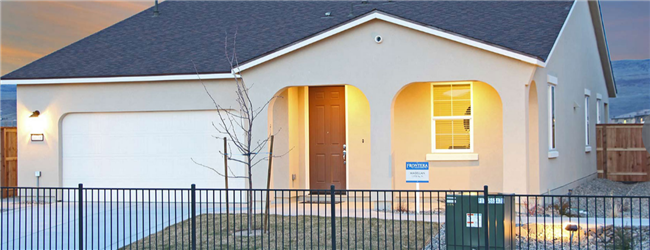
Lennar said in a release last year that it has started building new homes for lease in Sparks, Nevada at Frontera at Pioneer Meadows.

According to Lennar, Frontera offers 80 new single-family homes for lease offering six unique floorplans to choose from ranging from approximately 1,210 to 2,182 square feet of living space and two to four bedrooms plus private yards. Residents will benefit from brand new upgrades including front and backyard landscaping, gourmet stainless steel appliances with refrigerator and microwave, upgraded flooring, granite countertops, wood-style blinds, washer/dryer and attached two-bay garages.

“From the beginning, our company has always catered to our homebuyers and provided them with superior care and attention to detail that they deserve,”  Dustin Barker, Division President for Lennar, said in the release last year. “We feel honored that we have been able to serve the needs of homebuyers throughout the country for so many years and are thrilled to now enter the rental market and offer even more outlets for our customers than ever before.”

Homebuilders note that new rental house subdivisions have advantages over rental house portfolios amassed by investment funds such as Blackstone Group’s Invitation Homes, which reportedly has 48,000 single-family rentals, according to an article on new home rental communities in the Orange County Register.

“A lot of people want to buy a single-family home, but for whatever reason, they’re credit challenged,” Jeff Roos, Lennar’s Western regional president, told the Orange County Register.  “There’s a great deal of demand. There’s an underserved market.”

While those landlords have hundreds of homes spread throughout a metro area, the builders can cluster their rentals together, making them easier to rent out, maintain and repair.

Rental house starts represented 3 percent to 6 percent of all single-family starts in the nation since 2007, up from 2 percent to 3 percent in the prior 17 years, according to the National Association of Home Builders.

Building new homes for rent more like a multifamily model

Another builder has started new homes for rent in the Central Texas areas near Austin and San Antonio.

Building new, where homes would be in one community, also could eliminate logging miles back and forth to conduct repairs.

 “Where we differ from the single-family rental home platform is we are a contiguous, cohesive community,” Mark Wolf, who launched AVH Communities, told Builderonline.com says. “We build brand-new from the ground up. We’re amenitized like an apartment, operated like an apartment, and managed and maintained like an apartment.”

The renters are expected to pay for base utilities and take care of the inside of the house. “We fix anything that goes wrong like lights and toilets,” Wolf said. AHV plans to target a broad spectrum of renters, from young couples to baby boomers. “We want to provide workforce housing for nurses, policemen, and firemen.”

If you have any questions, please contact John Burns at (949) 870-1210 or you can reach him here on his website.

Resources:

John Burns featured research

Home builders move into the build-to-rent space

Lennar introduces new home community for lease

Homebuilders are becoming landlords

One company trying Texas for build-to-rent

Lennar homes

Frontera at Pioneer Meadows

Cash Flow Investing Today Or Bigger Bucks Later?

Cash flow today or bigger bucks later is really about how to choose the real estate investing style that fits you and your goals. You may have always wanted to get started in real estate investing, even while you have a full-time job today, but are not sure where to start. Or, you may be a veteran investor and thinking about a change in strategy. Here are some thoughts to help. 

By Larry Arth

With all the opportunities in real estate investing today there are many different styles.

From the seasoned investors like Warren Buffett, to the new Wall Street investors, the individual mom and pop investors and now even the new beginners. New first time investors make up about 50 percent of all real estate investors today.

With so many different investors there are obviously many different investing styles, so how do you choose?

Cash flow now or long-term hold for investors blog by Larry Arth

Strong cash flow or long-term hold

Working with investors every day and hearing of all their different goals and objectives, I see the two primary differences in what types of property people are looking for. They generally fall into two camps:

  • Strong cash flow properties
  • Long-term hold properties

To be an effective real estate investor, it is imperative to know what exactly you want to invest in and why. Knowing the attributes of each investment type may be beneficial to identifying your desired investment.

The main distinction between the two is long-term, buy-and-hold properties tend to be more expensive on the purchase end with a smaller monthly cash flow, but with a larger gain when you sell. The large cash flow properties tend to be cheaper on the purchase with larger cash flow. The sale on the other hand will generate smaller, and often much smaller, gain on the sale price.

Attributes of long-term properties

  • Sustainable Markets

With 380 statistical markets (MSA) in the U.S. You can rest assured there are markets which are better poised and positioned to give you better, longer lasting more sustainable returns than others. Investors looking for long term are always looking to invest in emerging markets.

  • Sustainable Properties

Once you identified the best market for sustainability, it is imperative to find the properties that will be the most sustainable. There are a number of things to look for that make up these properties.

  • Sustainable leases

I have found great success in the two- to three-year leases. To maintain long-term sustainability having long-term tenants is paramount. Having a two- or three-year lease on a house will help you find tenants who essentially are telling you they too want a rental property for a longer duration. You tend to find tenants who are not interested in moving every year, but instead want the security of knowing they have a place to live for the duration.

The multi-year lease removes the mystery to the landlord (Will my tenant renew their lease or will I be stuck with another vacancy to fill next year?) and the mystery to the tenant of course is (How much will rent be next year, or will I be asked to leave because the landlord wants to sell the house?) The transparency that comes with two- and three-year leases helps both landlord and tenant.

I believe long-term  hold properties represent the No. 1 investment objective today. The key to the long-term hold is finding the sustainability of all aspects of the investment from location to property to tenant and even property management for us passive investors. If you will be hiring property managers, you will want sustainability there as well and you want to hire the right property manager.

Cash flow or long-term hold which is the best strategy for real estate investing?

Attributes of cash flow properties

  • Age of properties

It is rare to nonexistent to find a new property that is strong on the cash flow arena. Typically your strong cash flow comes from homes in the older areas and these homes tend to be aged and more tired out. Things you want to watch for are deferred maintenance and outdated features and benefits. What I mean by that is today people want homes that are at least 3 bedrooms and 2 baths. When buying cash flow properties, always try to find structurally sound and well maintained (or updated) property with at least 3 bedrooms and 2 baths.

  • Pro-formas

Sellers tend to make a pro-forma appear to be stronger than the reality of them. Perhaps you are buying a property that is not turnkey and you must hypothesize a pro-forma. Either way you want to make all considerations for the age of the property and possible maintenance or deferred maintenance. These older properties can still be great investments and provide incredible cash flow. However, without proper due diligence, they are more susceptible to providing a much smaller cash flow than anticipated.

  • Exit strategies

You want to know your exit strategy going into the sale. Strong cash flow rental properties tend to be more of a tenant-style property as opposed to an end-user type property. When investing in strong cash flow properties you want to identify all opportunities for your exit strategy. If the property is in a strong tenant occupied area your only exit strategy may be to sell to another investor. Investors of course limit your buying audience and they will want a good deal on the purchase. They will not be the buyer looking to buy for full retail like the buy-and-hold property buyers are.

Don’t Buy a Sports Car if You Need a Pickup Truck

The metaphor of course suggests you want to buy the type of property that is best suited to accomplish your long term objectives. I always consult with my investors before introducing them to property, interestingly enough, what they say they want to purchase does not coincide with what their objectives for investing are.

Often I am told they want to provide a long-term retirement plan by purchasing real estate that will increase in value. They then say they are looking for cheap property. This is incongruent as the cheap property will not be a suitable investment for the sustainability of a long-term hold and the property value on cheaper property does not appreciate very fast, if at all. This is why knowing your long-term objective before shopping for property is so important.

Visit Larry's website here.

About the Author:

Larry Arth is a landlord and the founder and CEO of Equity Builders Group, a Florida based Real Estate investment Group. As a 36 year veteran to real estate investing, Larry understands that we are now in a global economy and as times have changed, investment strategies must change as well. Larry is an international recognized consultant and speaker and assists hundreds of investors per year, both foreign and domestic to realize their investment potential. He analyzes locations across the country for economic strength and the locations that yield the largest most sustainable return on investment. Within these locations he seeks out and gathers the best teams to deliver sound, high performing and most importantly sustainable turnkey investment. He works with investors to ride the wave of each area-specific market surge. Larry’s primary focus is offering (Non Listed) safe and sustainable turnkey investments to the passive investor.

5 keys that sway tenant decisions about your rentals

When a tenant decides whether or not your rental is right for their next home, what are some of the key things that will lead them to sign your lease and not the lease of one of your competitors?

Do you know the key factors?

This week blogger Larry Arth writes about some of the key factors he has seen in his 35 years of property management and investing.

By Larry Arth                                                                         

How great would it be if you knew what your tenants or future tenants are thinking about rental properties?

It has been my experience that landlords tend to put all their energy into what they as landlords want without getting in tune with what the tenant wants.

5 keys that sway tenant decisions about your rentals

The nice thing about owning my own investment properties, as well as working with hundreds of investors, is we collectively acquire the economies of scale knowledge.

Through this experience we have discovered the key to getting and keeping happy tenants is knowing what they think and the key factors in their decision-making process. Their thought patterns can change with the economy and their own personal financial situation, so you need to constantly keep on top of this.

Through a lot of interviews and surveys here is what we have found:

Top 3 reasons a tenant may move

  1. Current lease expiring:  As I mentioned above, most landlords do not try to understand what their tenants want and as a result they are not motivated to renew their lease. So a top reason given as to why they move was, “My lease was expiring.” Sad but true. Do not let this happen to you. I learned early on in the business world that success is all about building relationships. I knew I had to build a strong relationship with my tenants, and those long-term lasting relationships would translate into long-term loyal clients for my real estate investing.
  2. Job relocation or new job:  Relocation for jobs tends to be  more common place for the professional white collar workers. I have in the past addressed getting two- and three-year leases at the time of lease. Their response to this may give you clues as to whether they foresee job relocation in the future. People who wish to take on a two or three year lease typically feel pretty secure in their long term stability at the current location.
  3. Moving out of parents home: This, now more than ever, is common place. It is suggested that about a third of young adults age 18 to 30 have been living with their parents as a way to save money. Often referred to as the basement kids because they live in their parent’s basement.  These may be great tenants but finding payment history will be more challenging. As an apartment or single family rental home may be a new expense for them, you want to be sure they can afford to make your rent payments.

5 keys that sway tenant decisions about your rentals

5 keys that sway tenant decisions about your rental

Photo by Larry Arth showing one of his rental properties he has kept constantly leased using the 5 keys that sway tenant decisions about rental property.

  1. Price of unit:  One of their primary concerns is price. When probing deeper, we realized that this is better illustrated as value. It may be human nature to look at the price but it ultimately comes down to value. When they compare what your rental offers versus another rental they want the best value. You want to be sure to promote the benefits and attributes that your rental will offer them so they realize the value of your property.
  2. Location of the unit:  Convenient location is of utmost importance. Knowing real estate is all about location, you want to sell the location of your unit.  What is the reason you manage the property or why did you buy the property where you did?  Share this within your ads. For example:  near bus stops, near many businesses and places of work, near shopping or close to main roads and highway.
  3. Crime statistics: People of course want to feel safe. Assuming you purchased the property because it was in a desirable and safe neighborhood, share this with your tenants. It is what they want and telling them up front will keep them from having to guess or figure it out.
  4. School systems: First, remember that housing laws prohibit discrimination against children and  “familiar status”  is a protected class. You do not want to get into the conversation about having children. However mentioning the quality schools in the area is important to them.
  5. Community amenities: Tenants too want a home not just a place to live. Share with them what is in the community or the nearby area. The walkability score can be a big benefit to them.

These are things that your tenants are thinking about. When you can address these triggers up front, you will stay ahead of your competition and keep your phone ringing.

Any good business does research and a lot of surveys to find out what their customers want. As renting property is your business, you want to stay on top of what a tenant thinks, so you can stay ahead of your competition. It is the little things that are remembered.

A few little differences can mean a lot to a tenant

These little differences in how we manage our properties have people wanting to stay and rent with us. As families outgrew their homes they would ask us if we had any other properties that were bigger, as they wanted to maintain our relationships. Their friends were always inquiring about renting from us. We have great reputations as property owners who care about their tenants. As a result, the only time people moved is if they left the area or if they bought a house.

You all heard of, or personally live the “Pride of ownership.” When you can create this same type of pride for your tenants, you have created a great partnership that will have them renewing their lease. A person’s home is his castle. It is his independence. Even though they do not actually own the home, you want them calling it their home. When they feel great about where they live and are happy with it, they will call it their home and they will treat it like their home.

When you show you genuinely are interested in a happy partnership where you provide a nice home and maintain the home in turn for happy tenants who pay on time, you have a successful business that is scalable and your investment portfolio can flourish.

Visit Larry’s website here.

About the Author:

Larry Arth is a landlord and the founder and CEO of Equity Builders Group, a Florida based Real Estate investment Group. As a 36 year veteran to real estate investing, Larry understands that we are now in a global economy and as times have changed, investment strategies must change as well. Larry is an international recognized consultant and speaker and assists hundreds of investors per year, both foreign and domestic to realize their investment potential. He analyzes locations across the country for economic strength and the locations that yield the largest most sustainable return on investment. Within these locations he seeks out and gathers the best teams to deliver sound, high performing and most importantly sustainable turnkey investment. He works with investors to ride the wave of each area-specific market surge. Larry’s primary focus is offering (Non Listed) safe and sustainable turnkey investments to the passive investor.

5 keys that sway tenant decisions about your rentals

8 Ways To Invest Capital To Make Older Apartments Sparkle

This question to Dear Monty prompted him to list 8 ways that can mean happier tenants, lower turnover rates and higher rents for incoming tenants if you choose the right tips to make your apartments sparkle.


8 ways to make older apartments sparkle blog by Richard Montgomery

Richard 'Monty' Montgomery

By Richard Montgomery

Q: Monty, we inherited two 16-unit apartment buildings from my father. They have been in the family for over 30 years. I never took an interest in real estate until now, but as a kid I did mow the lawns. They are free and clear, and we intend to keep them. Dad was a good caretaker of structural components and mechanicals, but the buildings look “tired” appearance-wise. What are the most beneficial improvements or upgrades to invest capital? — Jim G.  Los Angeles, CA


A: The Internal Revenue Service allows certain property owners to depreciate their property because the IRS recognizes buildings and their component parts wear out and become obsolete. It sounds like some of the component parts or mechanicals have been replaced and others are original.

The preparer of the tax returns for the construction most likely has depreciation schedules that could be a factor in deciding which projects to tackle first. If your dad used component depreciation, the remaining life of existing component investments can help determine the order. If he did not use it, talk to your accountant about how to handle improvements in the

future. 

Create Your Laundry List for Apartments to Sparkle

Create a “laundry list.” What you would do to make the buildings look like-new if money were no object?

Whittle it down to what makes sense. Develop a plan with some driving philosophies. Some examples:


  • What can we do that will improve the quality of life for the occupants?
  •  What improvements can we make over what period to keep our rate of return from disappearing?
  • What improvements will make the building more eye-appealing and attractive? Which improvements give us the biggest bang for the buck?
  •  Which improvements most easily allow us to justify an increase in rent?

These are just examples, as there are other factors to consider as well.


Seek Tenant Opinions and Options

8 ways to invest capital to make older apartments sparkle blog by Richard Montgomery

Investing capital in older apartments such as these can make them sparkle and keep tenants happy and renewing leases.

If you have decided you are going to make improvements to your apartments, consider seeking tenant opinions on what they would like to see done.

Let them know up-front you may not be able to implement every suggestion, but you do not want to miss considering all ideas.

In some complexes, this will encourage a sense of community and cooperation. Let them know these changes will not affect their rent for some time, if at all. This one is delicate and may depend somewhat on the buildings' history of rental increases.

How Do Your Apartments Compare to Others in the Area?

Look around the neighborhood.

How do your buildings compare with other buildings in the neighborhood?

If your buildings are already the neighborhood “shining stars,” it may help you decide the philosophy of occupant quality-of-life is a more suitable goal than increasing the building’s “eye appeal.”

Often, some of the most-welcome improvements cost the least amount of money. Shutters are a great example.

8 Ways to Make Your Apartments Shine

  • Has the lawn been reduced to hardpan with constant traffic?
  •  Are the trees and shrubbery overgrowing?
  •  Are sidewalks heaved and cracking?
  •  If the trim requires paint, would a fresh coat with a new color sharpen the architectural lines?
  • If there is a basement, how is it being used?
  •  Might storage units be constructed in the basement and rented to occupants?
  • Is the parking lot full of potholes and broken curb stops?
  • Are the parking lots well-lighted and the poles fresh and straight-upright?

Consider Resurfacing the Apartments Parking Lot

8 ways to invest capital to make older apartments sparkle blog by Richard Montgomery

Pay special attention to common areas that occupants or guests frequent.

If there are interior hallways or concession areas such as laundry or vending, how can they be more professionally presented?

Some of the projects being considered can be completed by general contractors while others require specialists.

If you are considering resurfacing the blacktop parking lot, that contractor will not also paint the trim.

With three competing bids for each group of tasks, the lottery list is now complete with pricing estimates. Ask each contractor with multiple tasks to break down the bid into separate tasks so they can be considered individually.

Review your philosophies, your lottery list and your budget and look to see what you can eliminate. This exercise is easier to achieve when included as part of the plan right from the beginning. The final product is a “master plan” that could take months or years to complete.

It is amazing to see the difference that these types of changes can accomplish.

For many landlords, that means happier tenants, lower turnover rates, higher rents for new incoming tenants and increased demand, just to name a few benefits.

Click here to sign up for our weekly e-newsletter!

Got a question for Dear Monty? Ask him here and he will answer it.

Sign up for Rental Housing Journal's weekly email newsletter


First Quarter 2016 Multifamily Loan Originations Up Two Percent Year-Over-Year

First quarter 2016 multifamily and commercial loan originations were 38 percent lower than the fourth quarter of 2015 but in line with the seasonality of the market, according to the quarterly survey by the Mortgage Bankers Association (MBA).

Overall first quarter 2016 saw these types of loan originations essentially flat compared to the first quarter of 2015.

“In the aggregate, commercial real estate borrowing and lending started 2016 in a similarly strong fashion to 2015,” Jamie Woodwell, MBA’s Vice President of Commercial Real Estate Research, said in a press release. “Borrowing backed by retail, office, hotel and multifamily properties picked up, as did lending by banks. Disruptions in the broader capital markets pushed originations for commercial mortgage-backed securities (CMBS) down. Across property types and investor types, changes in regulation and broader market conditions could have an impact on originations during the remainder of the year.”

First quarter 2016 multifamily loan originations up two percent year-over-year

A rise in originations for retail and office properties led the overall increase in lending volumes when compared to the first quarter of 2015. The first quarter also saw:

    • 44 percent year-over-year increase in the dollar volume of loans for retail properties
    • 18 percent increase for office properties
    • 2 percent increase for multifamily properties
    • 3 percent increase for hotel properties
    • 56 percent decrease in industrial property loans
    • 57 percent decrease in health care property loans

Among investor types, the dollar volume of loans originated for commercial bank portfolio loans increased by 44 percent year-over-year. There was a one percent year-over-year decrease for life insurance company loans, a 19 percent decrease in the dollar volume of Commercial Mortgage Backed Securities (CMBS) loans, and a 22 percent decrease in Government Sponsored Enterprises (GSEs – Fannie Mae and Freddie Mac) loans.

Multifamily loan originations were up two percent in the first quarter of 2016 according to the Mortgage Bankers Assocation

First quarter 2016 loan originations down 38 percent from fourth quarter 2015

In line with the seasonality of the market, first quarter 2016 originations compared to fourth quarter 2015 showed:

    • 62 percent decrease for health care properties
    • 57 percent decrease for hotel properties
    • 57 percent decrease for industrial properties
    • 46 percent decrease for retail properties
    • 39 percent decrease for multifamily properties
    • 23 percent decrease for office properties

To view the fullt, please follow this link here.

Detailed statistics on the size and scope of this loan origination market are available from these MBA commercial/multifamily research reports. • Commercial Real Estate/Multifamily Finance: Annual Origination Volume Summation, 2015 • Commercial Real Estate/Multifamily Finance Firms: Annual Origination Volumes, 2015 • Commercial/Multifamily Database Subscription


HUD Seeks to End Discrimination Against Tenants with Criminal Records

The U.S. Department of Housing and Urban Development (HUD) published guidelines in April, 2016, for the proper consideration of applicants’ criminal records when considering them for housing.  HUD notes that because a disproportionate amount of people with criminal records are minorities, a blanket policy of refusing to rent to anyone with a criminal history may violate the Fair Housing Act.

Much like the 1991 HUD memorandum regarding occupancy standards (the “Keating Memo”) this new document provides general guidance for how to consider whether a housing policy violates federal law.  The memo is not law in itself, but it interprets how the law may apply to certain situations.  As with any new guideline, the legal ramifications will develop on a case-by-case basis as matters are heard in court and the guidance is considered.

According to the new guidelines, turning down tenants solely based on their criminal history may violate the Fair Housing Act.  While the Act does not list people with criminal records as a protected class, HUD notes that minorities have disproportionately high rate of arrests and convictions.  For this reason, while in some cases a landlord may refuse to rent to a party with a criminal record, the policy should not be applied automatically without further consideration.

Tenants with criminal records guidelines

The guidelines note that there is a difference between an arrest and a conviction.  An arrest may occur if a police officer forms the belief that someone needs to be detained for their own safety, for the safety of others, or for the investigation of a crime.  A conviction may occur only after a party has been formally charged with a crime and had an opportunity to defend himself or herself in a court of law.  A judge or a jury must determine that it is beyond a reasonable doubt that the individual committed the crime.  Both arrests and convictions may appear on a criminal history.

HUD takes the position that a policy of excluding individuals because of a prior arrest without a conviction is discriminatory.  Quoting the U.S. Supreme Court, HUD states, “[t]he mere fact that a man has been arrested has very little, if any, probative value in showing that he has engaged in any misconduct.”  In other words, an arrest is not, by itself, proof of a crime.  A housing provider who categorically denies housing to a person because of an arrest on their record violates the Fair Housing Act.

Convictions, on the other hand, are different.  HUD states in the memo, “In most instances, a record of conviction (as opposed to an arrest) will serve as sufficient evidence to prove that an individual engaged in criminal conduct.”  Even so, a blanket policy of excluding all people with a criminal conviction probably violates the Fair Housing Act.  The landlord with a policy of excluding applicants with a criminal history must be able to point to a “substantial, legitimate, nondiscriminatory interest” served by the policy.  The landlord must also be able to prove that the policy achieves those goals.  A housing policy must take into consideration the nature and severity of the crime, and the amount of time that has passed since the criminal conduct occurred

Whether the discrimination is accidental or intentional, during screening or just at the inquiry stage, the landlord or property manager is still at risk of a discrimination lawsuit. The best practices are:

    • Do not impose blanket bans on renting to those with criminal history or arrest records.
    • If there is evidence of a conviction, consider the nature and severity of the crime and how long ago the criminal conduct took place.
    • Ensure everyone who interacts with applicants is trained well on current Fair Housing policies.
    • Keep screening policies pertaining to arrest records and criminal history specifically related to safety of persons and property. The policy must distinguish between criminal conduct that indicates a demonstrable risk to resident safety and property and criminal conduct that does not.
    • Obtain and use a standard screening policy in compliance with Fair Housing and HUD regulations, and apply it equally to anyone who applies. You may want to consult an attorney or housing specialist to develop a rental criteria relating to criminal conduct.

Keep in mind that HUD has not stated that criminals are a protected class.  HUD recognizes that housing providers have an interest in providing safe housing to all their tenants.  These new guidelines do not require landlords to rent to convicted felons, but do require landlords to examine the criminal history (if any) of its applicants with more care than before.  Naturally, there will be applicants who refuse to provide details about their criminal history or provide inaccurate information revealed by a screening company.  An incomplete or inaccurate application may be denied.

Following best practices will save you thousands of dollars in litigation and court costs, so it is well worth the effort.  If in doubt about a policy, contact your legal resource for help dealing with tricky questions related to this new HUD guidance and the Fair Housing Act.

Evan L. Loeffler is the principal attorney at the Loeffler Law Group PLLC in Seattle, Washington.  His firm’s practice emphasizes landlord-tenant relations. 

www.loefflerlawgroup.com