Home Blog Page 189

Facebook Engaging In Housing Discrimination HUD Charges

The Grace Hill training tip of the week focuses on a Facebook housing discrimination charge by HUD and how Fair Housing Laws apply to social media posts and property management.

Facebook is violating the Fair Housing Act (FHA) by allowing landlords and home sellers to use its advertising platform to engage in housing discrimination, the U.S. Department of Housing and Urban Development (HUD) charges in a housing discrimination complaint.

“Facebook invites advertisers to express unlawful preferences by offering discriminatory options, allowing them to effectively limit housing options for these protected classes under the guise of ‘targeted advertising.’

“The alleged policies and practices of Facebook violate the Fair Housing Act based on race, color, religion, sex, familial status, national origin and disability,” the complaint states.

HUD is charging Facebook with housing discrimination for the following:


    • The company unlawfully discriminates by enabling advertisers to restrict which Facebook users receive housing-related ads based on race, color, religion, sex, familial status, natural origin and disability.
    • It mines extensive user data and classifies its users based on protected characteristics.
    • Facebook’s ad targeting tools then invite advertisers to express unlawful preferences by suggesting discriminatory options.
    • Facebook effectuates the delivery of housing-related ads to certain users and not to others based on those users’ actual or imputed protected traits.


Some of the ways the HUD complaint says Facebook discriminates using its ad targeting tools


    • Enables advertisers to discriminate based on sex by showing ads only to men or only to women.
    • Allows advertisers to discriminate based on disability by not showing ads to users whom Facebook characterizes as interested in assistance dog, mobility scooter, accessibility or deaf culture.
    • Showing ads to users with children only above a certain age.
    • Enables advertisers to discriminate based on race by drawing a red line around majority-minority zip codes and not showing ads to users who live in those zip codes.


You can read HUD’s complaint here: Housing Discrimination Complaint.

By Ellen Clark


The FHA prohibits discrimination in housing transactions, including print and online advertisement on the basis of race, color, national origin, religion, sex, disability, or familial status.

In past posts, we’ve covered some basic guidelines to ensure your advertisements and social media don’t violate fair housing law.

But what about some of the more subtle situations – ones where you may not even realize you could be doing something that might be viewed as discriminatory?

Housing discrimination does not have to be intentional to be illegal

Remember, discrimination doesn’t have to be intentional to be illegal.

If your words or images have the effect of discouraging prospective residents from applying to live in your community, that may be enough to violate the fair housing law.

Let’s look at an apartment community example

Imagine your community is 80% white.

You like to use real photographs from community events on social media.

Because your community is mostly white, the pictures you post generally only show people who are white. You might think there is no risk of a discrimination claim. After all, your intention is not to discriminate. You are only trying to show real images of your community.

Showing diversity on social media posts can prevent discrimination accusations

However, if the images you post have the effect of discouraging people with darker skin from applying to live in your community, you could be at risk.

This could be discrimination based on color under fair housing law.

Using images in social media posts is a great way to appeal to customers.

However, make sure the images you use across your social media communications show diversity.

Consider all federal, state, and locally protected classes

For example, show males and females, people of different races, people with disabilities, a variety of ages, and families with and without children.

Show diversity when using avatars, animated characters, and illustrations, too.

You must be just as mindful of fair housing laws when sharing information and interacting with customers online as you are when sharing information and interacting in print and in person.

You are responsible for not acting in a discriminatory way, no matter what form of communication you are using.

Resources:

Recent Grace Hill training tips you may have missed:

7 Ways To Stay Out Of Trouble When Checking Criminal History


5 Ways To Protect Applicants, Residents And Employees From Sexual Harassment


Do You Have A Smoke-Free Policy That Adequately Protects Residents?


How To Handle Suspicious Documentation For Assistance Animals


How A No Pet Policy Can Be Discriminatory


Property Management Cyberattack Risks Overlooked, Underestimated


Do You Know How To Respond To a Sexual Harassment Complaint?


Have You Reviewed Your Criminal Background Checks Policy Lately?


Multifamily Managers And Marijuana: Caught In A Pot Crossfire


Fair Housing Discrimination Against Someone You’ve Never Talked To?


4 Ways To Avoid Screening Pitfalls With Applicants


About the author:

Ellen Clark is the Director of Assessment at Grace Hill.  Her work has spanned the entire learner lifecycle, from elementary school through professional education. She spent over 10 years working with K12 Inc.’s network of online charter schools – measuring learning, developing learning improvement plans using evidence-based strategies, and conducting learning studies. Later, at Kaplan Inc., she worked in the vocational education and job training divisions, improving online, blended and face-to-face training programs, and working directly with business leadership and trainers to improve learner outcomes and job performance. Ellen lives and works in Maryland, where she was born and raised.

About Grace Hill

For nearly two decades, Grace Hill has been developing best-in-class online training courseware and administration solely for the Property Management Industry, designed to help people, teams and companies improve performance and reduce risk.


 

Portland May Propose Tenant Screening Rules On Criminal History, Credit

Credit Reporting and the CARES Act

The Portland City Council may be asked to make changes in current rules applying to tenant screening rules and criminal background checks, credit checks or financial stability, according to reports.

Willamette Week is reporting that City Commissioner Chloe Eudaly wants the council to look into creating new tenant screening rules involving criminal background checks and credit reports.

Under the proposed rules, landlords couldn’t set a policy requiring tenants to have an income that is more than twice their monthly rent when the current industry practice is usual 3 times or 2.5 times the rent, according to the newspaper.

Landlords have tenant screening rules already in place

Ron Garcia, President of the Rental Housing Alliance of Oregon, said on the Lars Lawson Show, that the whole proposal is by a group of activists at work and that current tenant screening is working and is fair to good tenants.

Garcia told Lars Larson that Oregon passed a law in 2013, Senate Bill 91, and that  put restrictions on landlords as to what type of criminal background they could screen against.

“If a conviction has passed over five years we still have to rent to them. If somebody has what was a conviction, but was dismissed because the people ended up paying the restitution, then they are exempt from any kind of criminal screening,” Garcia told the show.

“If the crimes are drug related, sex crimes, personal offenses – they can be used,” he said. It is the kinds of crimes that people who live next door are worried about – “having bad news guys living next door to you. We can screen for those types of people. But if the crime were drunk driving, unless it was property or personal violence or property related, those crimes cannot be used in the screening,” Garcia said.

Landlords think tenants should voice concerns over removing screening rules

“I think tenants really need to voice their concerns. They’re really the people that are going to be living next door and across the way from these people.

“If tenants voice their dissatisfaction with the fact that they are trying to eliminate and expunge criminal background from records, they’re the ones that are going be in jeopardy. They should let Mayor Wheeler and the City of Portland know,” Garcia told Lars Larson.

Landlords are not the bad guys

There are many groups. Community Alliance of Tenants, Portland Tenant United but unfortunately they are advocating on the opposite side, Garcia said.

“They are somehow saying that these are rent barriers that landlords have put in place that need to be eliminated. I believe that what they’re advocating for is in direct opposition of the safety and well-being for the people they ostensibly advocate for,” Garcia said.

Listen to the full conversation on this with Lars Larson here.


Similar issues in Seattle where landlords sued the city


The Pacific Legal Foundation and the Rental Housing Association of Washington (RHAWA) have filed suit against the City of Seattle over the ordinance which bans landlords from most criminal background checks when screening an applicant. The suit argues the ordinance violates due process and free speech.

Seattle’s Fair Chance Housing Ordinance, passed by city council in 2017, forbids landlords from considering applicants’ criminal histories when selecting tenants. In other words, landlords cannot base a rental decision on concerns over their own safety or the safety of other tenants and neighbors. Violators face fines and penalties of up to $55,000.

The Rental Housing Association of Washington said in a release, “The ordinance is based on the flawed reasoning that inequities of our criminal justice system can be solved by limiting the rights of property owners from making informed decisions about the person(s) with whom they enter into rental agreements.

“Rental property owners recognize the struggle for applicants with criminal convictions history and the industry supports measures like Certificates of Restoration of Opportunities and simple “ban the box” legislation to ensure that an individual’s full list of qualifications are considered. However, the ostensibly blanket restrictions imposed by the City put rental property owners at too high of a risk of exposure to the safety of other tenants and their property,” RHAWA Interim Executive Director, Sean Martin, said in the release.

Resources:

Listen to Ron Garcia on Lars Larson Show: Should The Government Help People Hide Their Criminal Records For Housing?


Portland Landlords Outraged by Commissioner Chloe Eudaly’s Proposal to Limit Screenings of Tenant Criminal History

Landlords Sue Seattle Over Criminal Background Check Restrictions


HUD Charges Apartment Owners With Discrimination Over Newborn Baby

A landlord who threatened a woman with eviction because she had an emotional support dog has settled claims of disability discrimination with the U.S. Department of Housing and Urban Development

The U.S. Department of Housing and Urban Development (HUD) has charged an apartment complex in South Dakota with discrimination after the complex refused to allow a couple living in a one-bedroom unit to remain in their home after they had a baby.

HUD charged both the owners and their property management company at The Village at Three Fountains in Sioux Falls, S.D. with housing discrimination for refusing to let a couple and their newborn baby stay in their one-bedroom apartment because of the owners’ occupancy policies, according to a release.

“Shortly after the new baby arrived, the mother asked representatives of the property management company how long two adults could live in a one-bedroom unit with an infant and was told that since there were three occupying the apartment, they would have to move to a two-bedroom unit,” HUD says in the release.

“Though the owners and property management company asserted that their two-person-per-bedroom occupancy policy was required by the Sioux Falls City occupancy code, HUD’s charge alleges that the City Code is in fact more flexible than owners’ policy, as it allows for the consideration of additional areas beyond bedrooms that may be considered for sleeping and occupancy purposes. After being denied the opportunity to remain in their unit, the couple and their baby moved to another complex,” the HUD report says.

Fair Housing Act discrimination and children

The Fair Housing Act makes it unlawful to refuse to rent or to impose different rental terms on the basis of familial status, including actions that unreasonably limit rental occupancy by families with children.

“Occupancy policies that exclude families with children or make it harder for them to obtain housing are unlawful and have no place in today’s often tight housing markets,” Anna María Farías, HUD’s Assistant Secretary for Fair Housing and Equal Opportunity, said in the release.

“We will continue to take action when housing providers employ practices that violate the nation’s housing laws,” she said.

“Housing discrimination because of familial status has long been prohibited in this country,” Paul Compton, HUD’s General Counsel, said in the release. “HUD will continue to vigorously enforce the Fair Housing Act to advocate for families with children, and other protected classes, who are treated unjustly in violation of the law.”

The Village at Three Fountains is a multifamily apartment complex comprised of seven, three-story buildings, containing a total of 182 apartment dwellings, all one- and two-bedroom units.

The complaint states that the apartment occupied by the couple contained a combined living room with approximately 312 square feet, which exceeds the city code requirement that it be at least 200 square feet to serve as an additional sleeping area under the city code. The couple could have therefore continued to reside at the apartment without violating city code, according to the complaint.

HUD’s charge will be heard by a United States Administrative Law Judge unless any party elects for the case to be heard in federal court. If the administrative law judge finds after a hearing that discrimination has occurred, he may award damages to the family for their losses as a result of the discrimination. The judge may also order injunctive relief and other equitable relief, as well as payment of attorney fees. In addition, the judge may impose civil penalties in order to vindicate the public interest.

Big Wall Street Landlord Sued By Tenants

Oregon Supreme Court Hears Landlords’ Appeal of Relocation Ordinance

The largest owner and landlord of single-family rental homes in the United States is fighting a class-action lawsuit filed in California that alleges illegal and overly punitive late fees in Arizona, Oregon, California, Washington, Colorado, Utah, Texas and five other states in which it operates.

Invitation Homes, which owns nearly 7,500 properties in Arizona and more than 82,500 properties nationwide, is one of a group of real-estate investment companies that went public and, plaintiffs say, have allowed stockholder demands to unfairly affect how the companies are run. The growth of Wall-Street-owned single-family landlords came after the 2008 financial crisis, when equity companies and institutional investors bought foreclosed homes in bulk.

The plaintiff in the class-action lawsuit is Jose Rivera, a tenant in a home owned by Invitation Homes in Sylmar, Calif., a community of about 100,000 in the San Fernando Valley area of Los Angeles County.  His lease said that a fee of $95 would be charged if rent was late by even a minute.

It was Rivera’s routine to pay his rent through the company’s online web portal. Occasionally, however, the portal would be down.

“For example, once, in February of 2017, Mr. Rivera tried to pay his rent online but the portal was not working,” the lawsuit states. “He called Defendant (Invitation Homes) and Defendant told him to not ‘worry about it’ and to just ‘keep trying.’ Mr. Rivera tried multiple times to pay online, but the online portal would not work. Eventually Mr. Rivera just mailed in his rent payment. It was technically ‘late,’ although through no fault of Mr. Rivera.

“To his surprise, Defendant returned Mr. Rivera’s rent check back to him in the mail. Defendant had refused to accept the check because Mr. Rivera had not also included additional fees and penalties for the rent being ‘late.’ ” Because Invitation Homes had a policy of not accepting partial rent payments, it had determined that because Rivera had not added the late fee, his payment was a partial payment.”

Landlord threatened eviction

Invitation Homes threatened to evict Rivera for not paying the added fees, saying it had already begun eviction proceedings. According to the lawsuit, Rivera, who thought he might lose the home he had lived in for years, paid the $95 late fee and an additional $895 in “legal fees,” which the company said were required.

The lawsuit alleges that the late fee and the “legal” fees function as “illegal penalties,” which are against the law in all 12 of the states in which Invitation Homes does business. In those states, landlords must show actual harm and must illustrate how fees for damages are calculated. In the case of Invitation Homes, the lawsuit states, rent that is only a few hours or days late causes no actual damage. And the fact that the late fee is uniformly $95 – regardless of whether the rent is $1,000 a month or $3,000 a month – shows that no attempt to determine actual harm is being made.

The lawsuit also singles out Invitation Homes’ practice of “stacking penalties upon penalties.

“Defendant imposes the $95 penalty. Defendant then systematically imposes a ‘legal’ fee. Then,

separately and month after month, Defendant stacks another $95 fee on top even when a tenant is carrying a minimal balance, and even if the tenant has paid the base rent for that month.”

Invitation Homes classifies past late fees as “rent,” which means a tenant’s record shows that they are late on rent, not late on a late fee. In subsequent months, any current rent the tenant pays is applied to the late fees first, which then makes that month’s rent late as well, incurring yet another late payment.

“Some people have been evicted purely as a result of this late rent penalty and, in particular, this penalty stacking practice,” the lawsuit says.

The lawsuit was filed at the end of May. Invitation Homes subsequently filed a motion to dismiss, saying that the lawsuit failed to specify how its business practices are “unfair,” failed to state specific claims upon which relief could be granted, failed to identify the state laws that allegedly were violated, and that Rivera does not have the standing necessary to represent out-of-state residents.

In August, Rivera’s lawyers filed an amended claim, clarifying the civil codes and laws violated, comparing the “pyramiding” of late fees to illegal banking schemes, and asserting why the case has correct legal standing in each of the 12 states (Arizona, California, Colorado, Florida, Georgia, Illinois, Minnesota, Nevada, North Carolina, Tennessee, Texas and Washington).

Wall Street landlords crowd out mom and pop landlords

In January 2018, a report researched by MIT graduate Maya Abood and co-sponsored by the Alliance of Californians for Community Empowerment Institute (ACCE), Americans for Financial Reform (AFR), and Public Advocates titled “Wall Street Landlords turn American Dream into a Nightmare” illustrates how the foreclosure crisis transformed large slices of American home-ownership into a home-rental industry dominated by a group of Wall Street corporations, the largest of which is Invitation Homes.

Some of the report’s conclusions:

    • Prospective homeowners and “mom and pop” landlords are crowded out of the home-buying market by cash-heavy investors who want to convert homes to rentals;


    • Wall Street landlords must steadily increase their profits and answer to their investors, which puts extra pressure on landlords to set higher rents, collect late fees and evict tenants quickly;


    • Low- and moderate-income families and people of color feel disproportionate impact;


    • The federal government ends up subsidizing these corporations, because many of them receive substantial tax breaks due to their status as Real Estate Investment Trusts (REITs).

This last point reflects the path of Invitation Homes. In 2014, Waypoint Homes joined with Starwood Property Trust, an international REIT. The new company, Starwood Waypoint Residential Trust, merged with Colony American Homes, becoming Colony Starwood Homes. In 2017, Colony Starwood merged with Invitation Homes, which was controlled by The Blackstone Group, a major player in private-equity.  The combined company, Starwood Waypoint, owns more than 82,000 homes across the country.

“Single-family home rental used to be a small-scale and local business, built around direct ties between landlords and tenants,” the report says. “In the new Wall Street rental empires, the relationships are impersonal, property managers come and go, and the executives who call the shots often have trouble hearing the voices of their tenants over the clamor of their investors.

Wall Street landlords evict at higher rate

“Wall Street landlords often evict tenants at astonishingly higher rates than other single-family landlords: in the Atlanta area, nearly one-third of all Starwood Waypoint tenants received eviction notices in 2015,” the report says. “Rent increases follow the same trend – with tenants facing as much as $1000/month increases.

“Across the nation, single-family homes are currently exempt from local rent-control laws, which is a big part of the market’s appeal to Wall Street. Investor pressure has also led to fee-gouging of a kind previously associated with credit cards and payday loans.

“These companies create extra revenue streams of excessive late charges and maintenance fees that shift the costs and responsibilities of traditional landlords onto tenants to an unprecedented extent,” the report concludes.

In addition, rental companies who value Wall Street needs over their tenants’ needs have less motivation to keep their tenants happy. The Better Business Bureau’s complaints log reports 604 complaints about Invitation Homes in the last three years, with 530 of those in the area of “Problems with Products and Services.”  The Arizona Republic recently did a story on tenants of Invitation Homes who could not get maintenance requests answered or needs met.

Kathy and Kim Suszczewicz’s family moved into one such home in 2016. Two years in, they say they regret leasing the home.

“If anybody is talking about finding a rental, I always say, ‘Stay away (from Invitation Homes). Don’t even bother with it,’ ” Suszczewicz told The Republic.

During the two years, the family has had problems with the electric front-door lock randomly locking and unlocking; with one inoperable toilet and another one leaking; and with a shower that was not able to run hot water. They also were unable to use their swimming pool for a year – even though they were paying $95 more per month for it – until the landlord approved the expense for a new pool filter.

The company admitted that there had been delays and issues with the property the Suszczewiczes were renting, and said it regretted any inconvenience the family experienced. Shortly after the story ran in the Republic, the family received a phone call from the vice president of operations in Nevada and Arizona and an $850 refund of the pool fees they’d paid while it was unusable.

Resources:

The lawsuit: https://www.scribd.com/document/382340052/Class-Action-v-Invitation-Homes

Report: Wall Street Landlords turn American Dream Into a Nightmare

Better Business Bureau: Invitation Homes Complaints

The Arizona Republic:

    • “Stay away”: Arizona families share horror stories of one of Arizona’s largest landlords


Multifamily Investors Face Shortage Of Quality Assets

Multifamily Investors Face Shortage Of Quality Assets

Multifamily investors are finding a shortage of quality assets, particularly in the value-add category, according to a new report.

Strong market fundamentals, an abundance of capital, and an influx of investors continue to propel the U.S. multifamily investment market, according to Real Capital Markets’ 2018 Multifamily Investor Sentiment Report.

Experts interviewed by Real Capital Markets in July 2018 noted that underlying fundamentals shaping rental demand continue to draw a wide range of investors into the multifamily sector, despite upward movement in interest rates, according to a release.

“Overall, the commercial real estate market—and particularly the multifamily sector—remains strong, with significant capital, both domestic and foreign, looking to be placed,” Tina Lichens, COO, Real Capital Markets, said in the release.

“The challenge for many investors is finding quality assets at reasonable prices,” she said.

Statistics on rents per square foot, cap rates, sales prices and unit completions, aggregated by the National Multifamily Housing Council demonstrate the continued strength of the multifamily sector. Moreover, mid-year sales statistics reported by Real Capital Analytics showing $69.8 billion in mid-year multifamily sales underscore the findings of the RCM Report.

RCM surveyed its U.S. database of multifamily investors and conducted follow up interviews to gauge investor sentiment on various topics.

Multifamily investors sentiment report

Highlights of the Multifamily Investor Sentiment Report include:

;

    • Market Thrives with Capital Chasing Deals—According to experts interviewed for the report, there is at least $250 billion in capital already committed to commercial real estate, with much of it likely focused on the multifamily sector. This capital is coming from a range of investors including institutions, private equity, REITS, as well as private and public funds. The product types they are chasing most include garden and suburban style apartments, followed by urban style apartments.
    • Interest Rates are a Looming Threat—Most industry experts interviewed, and 69.7 percent of survey participants, ranked interest rates as a looming concern, as the market has already absorbed 12 to 18 months of increases and spreads are very thin. The consensus is that further rate hikes will be difficult for lenders to absorb. This increased cost may cause investors to modify strategies.


    • Value-Add Remains Hot, but Elusive—Approximately 58 percent of Investors are looking for 1970s and 80s rental properties that need upgrades but are finding fierce competition and an upward tick in pricing.
    • Job Growth is Driving Multifamily Activity—In many core and secondary markets across the country, strong employment, often from the tech sector, is fueling growth in the multifamily sector.
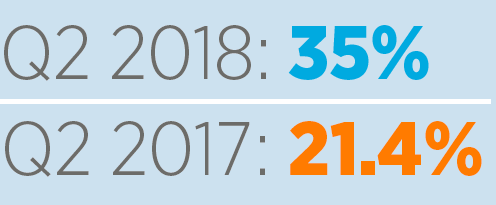
    • Fundamentals Look Strong—With national and individual market vacancy rates fluctuating as new supply is brought online, more than half the survey participants believe that further increases in vacancy rates are likely, but the level of increase will be only marginal. Nearly 65 percent believe that rents will increase at least marginally. Given these factors, while almost one third of investors see a slight slowing of the market, approximately 66 percent of investors believe the market will maintain at current levels and remain strong.

“Housing is one of the most fundamental needs, regardless of income level or socio-economic status,” Steve Shanahan, Executive Managing Director, Real Capital Markets, said in the release.

“Investors will continue to leverage those intrinsic needs, as well as strong market fundamentals, to create and take advantage of a steady stream of investment opportunities.”

Multifamily investor fundamentals remain strong

The report says the fundamentals of the market remain strong because fewer people  want or are able to afford home ownership. Thus the demand for apartments remains high and as such, competition to invest in the market is equally strong.

;

    • Rents per square foot: Rents have increased for the seventh consecutive year to $1.44 per square foot nationally. This represents more than a 16 percent increase since 2014 when the rate was $1.24 per square foot.


      • Cap Rates: For the last four years the multifamily market has continued to see cap rate compression. While the rate of compression has slowed—year over year it declined by 10 basis points to 5.6 percent in 2017— the overall compression since 2014 is 70 basis points.

</ul

        • Sale prices: In each of the last eight years, the average sale price per square foot has increased, reaching a peak of $196 per square foot at year end 2017. During the eight consecutive increases, prices have jumped 56.8 percent, from $125 per square foot in 2009.
        • New product completions: Year-end completions in 2017 totaled 347,000 units, the sixth consecutive year that annual completions increased. During that run, a total of approximately 1.6 million units were completed.
        • Vacancy rate: The only metric that is not altogether positive for the sector was the national vacancy rate. At year end of 2017 the national vacancy was 8.6 percent, a sizable increase from 2015’s rate of 7.4 percent, but still lower than the 2013 rate of 9.1 percent. The increase in vacancy can be attributed to the significant level of new construction that has taken place

To download a copy of the Real Capital Markets’ 2018 Multifamily Investor Sentiment Report, click here.

About Real Capital Markets:

Founded in 1999, Real Capital Markets (RCM) is the global marketplace for buying and selling CRE. RCM increases the speed, exposure, and security of CRE sales through its streamlined online platform. Solutions include integrated property marketing, transaction management, and business intelligence tools to unify broker-level and firm-level data and work flows. RCM has executed over 62,000 assignments with total consideration in excess of $2.1 trillion. Approximately 50% of all U.S. commercial assets sold, over $10 million, are brought to market using RCM’s online marketplace annually.

Only 41 Percent Of Renters Carry Renters Insurance

Only 41 percent of renters carry renters insurance, a substantial difference from 95 percent of homeowners who carry homeowner’s insurance policies, according to a new poll from the Insurance Information Institute.

The number of renters has reached a near all-time high of 43 million according to the current population survey/housing vacancy survey at the U.S. Census Bureau.

“Many renters underestimate both the value and affordability of renters insurance,”  Mendi Riddle, vice president of product and pricing for Nationwide’s personal lines, said in a release.

“Not only does renters insurance provide coverage for belongings inside the residence should those items be stolen, destroyed or damaged, but the coverage may also extend to personal items renters keep inside their vehicle. Additionally, renters insurance helps pay for covered damage or bodily injury to others caused by an accident that may occur at their residence,” she said in the release.

3 myths about renters insurance

    • Myth: A landlord’s insurance policy will cover a renter’s personal belongings in the event of fire or theft.Truth: While a landlord’s insurance policy will likely cover the dwelling and infrastructure of that dwelling, that coverage typically does not extend to the possessions owned by the renter.
    • Myth: Renters insurance is expensive.Truth: On average, renters insurance costs less than $20 per month.
    • Myth: Renters insurance coverage is limited.Truth: A renters insurance policy typically provides coverage for the loss or destruction of personal belongings in the event of a covered peril.

What a renters insurance policy typically covers

    • Theft
    • Fire
    • Lightning
    • Windstorm
    • Hail
    • Frozen plumbing system
    • Vandalism

Renters insurance may also provide coverage if:

    • A renter is forced to temporarily move out of their home due to a covered loss.
    • A person is injured in the renter’s apartment or home and requires medical attention.
    • Items a renter keeps inside their vehicle are damaged or lost.

Based on Nationwide claims data, the following were the most common renters insurance claims submitted by its members in 2017:

    • Theft (from dwelling or vehicle)
    • Water damage (non-weather related)
    • Fire and smoke damage
    • Liability
    • Wind related

“Having to replace possessions such as clothing, furniture and electronics can be very expensive should they be suddenly lost due to a fire or other tragic event,” Riddle said in the relase.

“Renters insurance provides peace of mind allowing renters to keep their lives on track should a major setback occur.”

Expenditures homeowners and renters insurance

The average homeowners insurance premium rose by 3.6 percent in 2015, following a 3.3 percent increase in 2014, according to a January 2018 study by the National Association of Insurance Commissioners. The average renters insurance premium fell by 1.1 percent in 2015 after rising 1.1 percent in 2014, according to the Insurance Information Institute which provided the comparison.

About Nationwide

Nationwide, a Fortune 100 company based in Columbus, Ohio, is one of the largest and strongest diversified insurance and financial services organizations in the U.S. and is rated A+ by both A.M. Best and Standard & Poor’s. The company provides a full range of insurance and financial services, including auto, commercial, homeowners, farm and life insurance; public and private sector retirement plans, annuities and mutual funds; banking and mortgages; excess & surplus, specialty and surety; pet, motorcycle and boat insurance. For more information, visit www.nationwide.com.


How to Protect Your Rental Property’s Fence From Wind Damage

3 tips to protect your rental property fence

Rental property fence maintenance and repair can be an issue when big Summer storms hit so the maintenance checkup this week from Keepe focuses on rental property fences.

If you own a rental in an area with high winds, you’ve probably experienced a few damaged fences and the dilemma that follows after – repair or replace?

To prevent your fence from being destroyed, take some preventative steps and ensure that you’ve got the right fence for your climate. Plus, learn the best fence types to withstand the wear and tear of the peak wind season.

3 tips to protect your rental property fence

    1. Trim the trees near the fence line: a large portion of wind-damaged fences are a result of trees or tree debris falling and colliding with fencing. Before the wind season returns, take some time to confirm that your landscape is free of yard debris and other vegetation. Furthermore, maintain the trees surrounding your property, a simple trimming or removal can prevent a costly fence repair.
    2. Remove yard objects: similar to tree debris, maintaining a clean, object-free landscape is key to avoiding damage from wind-blown objects. Many times, fencing damage doesn’t result from the wind itself, but from collisions with things such as outdoor chairs, garden tools, patio umbrellas, trash cans or sheets of wood.
    3. Regular inspection: property owners should regularly review the health of their property fences for signs of damage. Looking for visible signs of wear and tear can lead to cost-effective repairs.
  1. 3 tips to protect your rental property fence

If your fence is damaged should you repair or replace?

Depending on the size of the damage and what your long-term costs are for fencing, it might be best to fully replace your fence rather than conducting a repair.

Problems such as holes in the wood and staining on the wood are usually alerting to a deeper issue that involves issues involving microorganism activity as well as general rotting and molding from extreme weather. Un-repairable damage is important to address quickly and effectively to avoid further complications. Ensure your property manager is aware of the severity of any issues involving your fencing.

Damage such as broken or missing boards, leaning fences, and small splintering of wood are signs of a structural weakness. In these cases, the weak parts of the fence can be replaced or  repaired. Since these accidents can lead to further damage, it is ideal to address these issues immediately. Reinforce loose posts and partially replace broken, splintering and missing boards. If the damage is larger than one section or the issue is recurring, investing in a complete fence replacement solution will likely be more cost-effective for your property manager.

Finding the best fence type for your property and environment is crucial when addressing fence replacement and repair. The best wind-withstanding fences include those made from materials such as aluminum, iron and vinyl. If your in an area where it’s windy and rainy, a durable steel or iron fence would be ideal. For those in extreme climates, make sure your metal fencing has a thick, multi-layered finish or sealant to help avoid weather related damage. If privacy is a priority, a vinyl fence might be more fitting.

Wooden fences and gates are also other choices that prioritize style and design. To avoid durability issues with wooden fencing, be sure to use metal posts to regain further durability. Furthermore, to preserve the wood and avoid early decay, make sure your property manager to stains and re-stains your fence every 3-5 years to maintain its strength and beauty.

Evaluating the condition of your fence should be a part of you and your property managers’ regular maintenance routine. To accurately determine if it’s time to repair or replace your fence, be sure to contact a professional contractor.

Other recent rental property maintenance Keepe posts you may have missed:

4 Outdoor Flooring Options For Your Rentals

20 Easy, Affordable Maintenance Projects To Update Your Rentals

About Keepe:

Keepe is an on-demand maintenance solution for property managers and independent landlords. The company makes hundreds of independent contractors and handymen available for maintenance projects at rental properties. Keepe is available in the Greater Seattle area, Portland, Phoenix, San Francisco Bay and San Diego areas.


Portland Rental Property Owners Plan To Fight City Hall And State

Portland rental property owners, managers, builders and building suppliers feel they are under attack from Portland City Hall and the Oregon Legislature and have mounted a campaign against proposed regulations.

The group has launched a website called More Housing Now! in support of more housing for all income levels and to “provide a voice of reason” on the issues.

Multifamily NW, Rental Housing Alliance Oregon (RHAO) and the Oregon Rental Housing Association (ORHA) formed More Housing Now!  to “mobilize and provide the first unified voice for landlords and property managers throughout the state,” the group says on the website. They say their work consists of lobbying, media relations and social media. The group says they plan to raise $2 million to “defeat inequitable initiatives pushed by activists and ill-informed politicians.”

Active voice to make people aware of the issues

“We are long-term stakeholders in the Oregon apartment market,” said Tom Brenneke, board president of the non-profit lobbying organization, More Housing Now!. “We have a great interest in a range of issues. Our hot buttons at the moment are rent control. And those kinds of issues that involve government intervention in our market, which has been a real problem.

“What we are trying to do is be an active voice and put pressure on politicians and constituents to make them aware of issues people just miss in the day’s news. They are important issues, though. They impact businesses. We cannot hire people because they have to travel too far or they don’t have housing. Those are big issues.

“We are very focused at the moment on things like rent control. That is an easy one to understand,” Brenneke said.

Oregon’s housing market is one of the hottest in the country, with more than 100 people moving to Portland alone each day. While overall this is a net-positive, more people are moving there than there are places for them to live, the group says on the website.

Highlights of Portland rental property owners issues and what they say

    • Portland rental property owners, managers, builders and building suppliers are under attack.
    • City government has made it prohibitively complicated to build more rental housing in the midst of an affordable housing crisis.
    • Activists have manipulated Portland City Hall and the Oregon State Legislature to create threats to property owners and managers, developers and their vendors.

Portland rental property owners face barriers to construction

“To compound matters, our local government hasn’t modernized with the changing times, and instead continues to create layers of bureaucracy that slow down the development of more housing for citizens in all income brackets,” the group says.

A recent study of the private and public sector by the National Apartment Association showed barriers to affordable apartment housing mean developers cannot get new units off the ground in many cities often due to high construction costs, land availability and costs, development fees, impact fees and community opposition.

The NAA study also referred to Nimbyism (not in my backyard) groups showing up in 70 percent of the responses from public officials as being one of the top 3 problems. “Plenty of folks in city planning and city government know that the approval process is complex,” the NAA said in the report.

Some smart people at city hall, but pressure from aggressive tenant groups

“There are some smart people in the city,” Brenneke said. “Our mayor, look at the mayor and his credentials, Harvard, Stanford, Columbia.  He’s a smart guy. I know him well.

“But you’ve got a very aggressive, vocal group of tenant advocates in this town and state who don’t care about economics,” Brenneke said.

“I know darn well what the mayor and the smart people at the city really think. Deep down they understand rent control is not a solution. But they are buckling to these very, very loud, aggressive tenant advocates,” Brenneke said.

Six years to build new apartments makes it hard

“Fundamentally it’s a supply-and-demand issue. We have more people coming than we have housing for,” Brenneke said.

“Today’s luxury housing is tomorrow’s affordable housing. Half of my business is affordable housing. This is what I do. So I understand the mechanics, the regulations and the finance on affordable housing. It is incredibly expensive to build housing targeted toward a 50 percent AMI (area medium income) household. And you add on all the government bells and whistles they have to have – green this, green that, you know it’s expensive.”

He said the city can get its own way. And, much power has been handed over to neighborhood groups.

Brenneke said he is “the poster child” for the issue; one of his deals has been in the works for six years.

“I have been through two plans, multiple appeals, now at the court of appeals, etc. I should have had this deal delivered four years ago.

“I will be six years delivering apartments,” Brenneke said.

“Meantime, costs are going up and rents are actually coming down in the market. So my deal is getting tighter and tighter as we wait,” he said.

Resources:

The voice of reason providing More Housing Now! to Oregon

Oregon needs more housing now

Landlords pep for new fights with Portland City Hall, Oregon Legislature


No Fire Sprinklers:13 Dead, Nearly 500 Homeless From 4 Fires In 11 Days

A mother and her five children, ages 2 through 10, were killed in a fire at an extended-stay hotel in Benton Harbor, Michigan, on July 27, 2018

Several others were taken to the hospital with injuries from the fire at the Cosmo Extended Living Hotel, which was reported about 1:45 a.m. The hotel was built as a Howard Johnson in 1962.

    • Five more people died in an off-campus apartment fire in San Marcos, Texas on July 20; four were Texas State University students. At least 200 more residents were affected by the fire, which was reported about 4:30 a.m. at the Iconic Building Apartments. A student who survived is in the hospital with 3rd degree burns over 70 percent of his body. The apartments were built in the 1970s.
    • Two women died in an apartment fire in Westminister, Colo., on July 22. Fourteen more people were injured, some of whom had jumped from two- or three-story windows to escape the fire at the Westbury Apartments, which was reported at 2 a.m.
    • The apartments were built in the 1970s and fire sprinklers were not required.


Fire sprinklers buy time and save lives

Most people don’t realize how quickly fires spread in real life,” Shane Ray, President of the National Fire Sprinkler Association (NFSA), said in a release. “Smoke is so thick that you can’t see, and flames can engulf a room in seconds.  Fires on TV and in movies don’t show the real danger and they create myths about fire sprinklers; they don’t all go off, only the one closest to the fire. Fire sprinklers buy time and time buys life.”

None of the buildings had fire sprinklers, which are required in new construction but not in existing buildings unless they are being extensively renovated. Nor did the River Trails Condominium complex in Prospect Heights, Ill., that left dozens homeless on July 18. Authorities believe that fire would also have caused fatalities if it had occurred at night, like the others did. River Trails was built in the 1970s.

Because of the lack of sprinklers, all the buildings were fully engulfed by the time firefighters arrived.

After a 2017 fire that killed three people in a residential tower in Honolulu, the Associated Press took a look at fire-sprinkler policies in major cities across the United States.

The policies vary widely – New York City requires sprinklers to be installed in older buildings that are 100 feet tall or more; Los Angeles requires sprinklers in residential buildings built before 1943 that are three stories or higher. Some cities require requires sprinklers in high-rise commercial towers, but not in residential buildings; Chicago, Philadelphia and San Francisco are some of these. Dallas does not require sprinklers, though city officials count 89 high-rise residential buildings in the city; 23 have partial sprinkler coverage.

Houston, San Antonio and San Jose are some of the few cities that require retrofitting of all residential buildings. San Diego had such a law but it was later taken out of the municipal code.

As inconsistent as requirements are in major cities, buildings in smaller cities or suburbs are even more unpredictable as to their sprinkler requirements. The safest thing to do, according to the NFSA, is to make sure that any apartment, condominium or hotel room you or your family stays in has a fire sprinkler system.

If you are staying or living in a place without fire sprinklers, the NFSA recommends these precautions:

    • Interconnected smoke alarms in common areas, in all bedrooms and on every level;
    • An escape plan, with two ways out from each bedroom;
    • Portable escape ladders in every bedroom above ground level.

The National Fire Protection Association (NFPA) says that myths about automatic fire sprinklers including thinking that smoke alarms provide enough protection, that they leak or activate accidentally, that when one activates all will activate, ruining items even in rooms that are not burning, or that they aren’t practical in colder climates, where pipes can freeze. None are true.

Resources:

The Associated Press

Detroit Free Press

KXAN, Austin, Texas

9News, Denver

National Fire Protection Association

National Fire Sprinkler Association


Apartment Jobs Account For One Third Of All Real Estate Jobs

A new report from the National Apartment Association says apartment jobs across the country account for one-third of all the real estate jobs in the nation.

In Portland it is even higher.

Apartment jobs in Portland represent 54 percent of all the real estate jobs in the metro area according to the report which ended with the second quarter in June.

Apartments remained a favored asset class for investors and have regularly out-performed other real estate sectors during this cycle.

Continued strong demand for apartment jobs especially property managers

Over 71 percent of apartment industry jobs fell within the property management, leasing and maintenance categories.

Property managers, in particular, were in higher demand this year although all sectors witnessed increases thanks to continued strong demand for apartments.

The jobs report focuses on jobs that are being advertised in the apartment industry as being available, according to Paula Munger, Director, Industry Research and Analysis, for the National Apartment Association’s Education Institute.

“Our education institute is a credentialing body for the apartment industry. They hear often that one of the biggest problems keeping our industry leaders up at night is the difficulty in finding talent, attracting talent and retaining talent,” Munger said.  “Labor-market issues are happening in a lot of industries, certainly with the tight labor market we have.”

So NAA decided to partner with Burning Glass Technologies. “They have a labor-job posting database that is proprietary,” she said, and they can “layer on data from the Bureau of Labor Statistics (BLS). We looked at that and thought we could do something that is really going to help the industry and help benchmark job titles and trends as we go forward.”

Apartment Jobs Account For One Third Of All Real Estate Jobs

Customer services most desired apartment jobs after property management

Other job sectors often compete for candidates with similar skills sets to those apartments need.

Outside of the specialized skill of property management, customer service is the most desired skill in the apartment industry, as it is in retail trade and hospitality.

During the second quarter, mean salaries for apartment job postings surpassed both sectors, by 12.8 and 29.4 percent, respectively.

There was also a smaller concentration of lower-paying apartment jobs (under $35,000) which bodes well for the industry in this extremely competitive labor market.

Apartment Jobs Account For One Third Of All Real Estate Jobs

The turnover rate challenge

Ellis Management Solutions has statistics showing the national turnover rate for jobs is 19 percent but in the multifamily industry it is 39 percent.

“I think, I’ll state the obvious, with the high turnover, you are going to have to go out to the market more often to keep your positions filled,” Munger said. “I actually have another report from CEL and Associates a company out of LA, and theirs is more like 32 percent turnover rate for the multifamily industry. But the maintenance job, the on-site maintenance job, is almost consistently the highest turnover year after year.

“Like any other industry, with a lot of turnover, there is that time that has to be taken out to bring the person on board, to do other hiring activities like background checks. So it’s costly and that certainly does not help the bottom line