Home Blog Page 18

Rest of 2025: Balance of Risk Tilts to Lower Rents

There is a balance of risks for the multifamily rent forecast as the sector is heading into the leasing season amid a mix of economic signals

The multifamily rent forecast from Yardi Matrix says the multifamily sector is heading into the summer leasing season amid a complex mix of economic signals.

While payrolls and consumer spending remain generally healthy, “forward‑looking measures such as consumer sentiment and Institute for Supply Management new orders suggest momentum is moderating,” writes Andrew Semmes, Yardi Matrix senior research analyst, in the report.

“Overall, the balance of risk has tilted modestly toward slower growth, but a recession is not our base case,” Semmes says.

Rent growth in 2025 has underperformed historic norms.  While the softening is most pronounced in high‑supply Sun Belt metros, even many Midwest and Northeast markets are posting smaller gains than in 2024.

Highlights of the report:

  • Recent adjustments to U.S. trade policy have been broader than many market participants expected.
  • Higher tariffs could raise input costs for construction and consumer goods.
  • However, some domestic manufacturers may benefit from reduced import competition.
  • Changes to immigration rules appear to be slowing labor‑force growth.

“A smaller pool of available workers would temper household formation and apartment demand while also reducing the number of new jobs needed to keep unemployment steady.

“Proposed federal tax reductions and ongoing deregulatory initiatives could support business investment and disposable incomes. The magnitude and timing of any boost to multifamily demand, however, remain uncertain and subject to debate among economists,” Semmes writes.

Yardi Matrix predicts slower leasing activity once the current supply of new apartment construction is absorbed.

“Nevertheless, our national baseline forecast remains unchanged at 1.6 percent rent growth in 2025 and 1.2 percent in 2026, before trending toward a long‑run steady‑state range of 3-4 percent,” the report says.

A key takeaway from the report is that underlying fundamentals do not signal a severe downtown.

“Instead, we expect a muted growth environment in the near term, followed by a gradual return to long‑term-trend rent increases as supply‑demand conditions rebalance,” Semmes writes.

Read the full report here.

Sign Up For Our Weekly Newsletter And Get Rental Property And Apartment News And Helpful, Useful Content Each Week.

* indicates required

Washington State Rent Control: What Multifamily Property Owners and Investors Need to Know Now

Washington state rent control what multifamily property owners and investors need to know now about the new law

By Michael Coleman and Faris Babineaux
Associates, Haynes Boone

As of May 7, 2025, Washington state has a new rent control law under House Bill 1217. Washington is now the third state in the country with a statewide rent cap, joining California and Oregon.

For multifamily property owners and investors, this new law has significant implications. It affects the amount by which rents can increase each year, changes income and expense planning, and may influence property values.

Overview of Washington’s New Rent Control Law

Here’s what HB 1217 means for multifamily property owners and investors:

  • Annual rent increase limit: Landlords can increase rents each year by a maximum of either 7 percent plus inflation (measured by the Consumer Price Index for All Urban Consumers, or CPI-U), or 10 percent, whichever is lower.
  • Manufactured and mobile homes: In manufactured-housing communities, annual rent increases are limited to 5 percent.
  • New tenancies: Landlords cannot raise rents during the first 12 months of a new tenancy.
  • Not retroactive: The law does not apply to rent increases issued before May 7, 2025. It only applies to increases on or after that date.
  • Exemptions: Some properties are not covered by the new rules:
    • Residential buildings that are less than 12 years old.
    • Owner-occupied properties with four or fewer units.
    • Units that are already restricted by government affordable-housing programs.

The legislation implements new tenant protections as a response to rising housing costs. However, it creates additional considerations for property owners and investors who previously underwrote projects without rent restrictions.

Why This Matters for Multifamily Property Owners and Investors

The new limits on rent increases change how future income and expenses are calculated for multifamily properties. Property owners and investors should understand how these rules apply to their existing properties and financial models.

For owners of newer buildings, the law will not apply right away. However, after 12 years, those properties will also fall under the rent cap, which is likely to negatively affect property values and long-term business plans.

Impact on Property Values

When rent growth is capped, property buyers may view buildings as less valuable because they cannot count on unrestricted higher future income. This could push property values down or lead to higher cap rates for regulated properties.

Owners who plan to refinance or sell a building as it ages past the 12-year exemption period should factor these limits into their planning. Lenders and buyers are likely to examine how rent caps could affect future cash flows and returns.

Investor Takeaways for HB 1217

Washington’s new rent-control law creates several practical considerations for multifamily property owners and investors:

  • Lease planning: Review lease terms and renewal strategies, especially for properties serving student or senior populations, where annual cycles and tenant turnover differ from conventional multifamily operations.
  • Operating expenses: Understand that while rents are capped under HB 1217, expenses such as insurance, utilities, and property taxes are not regulated and can vary over time. Owners should track these costs closely when evaluating property performance.
  • Capital improvements: Evaluate renovation and value-add plans in light of HB 1217, as rent increases after improvements remain subject to the statutory caps.
  • Portfolio management: Track property ages to identify when exemptions expire, particularly for buildings approaching the 12-year threshold.
  • Compliance documentation: Maintain accurate records of any exemptions, such as affordable-housing agreements, to confirm applicability under the law.

Understanding these practical details can help property owners and investors comply with HB 1217 and manage their assets effectively.

Practical Scenarios

Here are three examples of how HB 1217 may affect different types of multifamily properties:

Scenario 1: Private Off-Campus Student Housing Nearing Year 13

An owner of a private, off-campus student housing property in Washington built in 2013 is nearing year 13, when it will become subject to HB 1217’s rent caps. Owners should review how these limits apply to academic-year leases and typical student-housing rent escalations.

Scenario 2: Market-Rate Age-Restricted Property Under Renovation

An investor acquires a 10-year-old, market-rate, age-restricted multifamily property in Tacoma and plans renovations. The property is exempt from HB 1217 now but will be subject to caps once it reaches 13 years. Owners should consider how this timing could affect rent adjustments after improvements.

Scenario 3: Affordable Housing Property

An owner operates an affordable-housing property in Washington that is already subject to government-imposed rent restrictions. These properties are exempt from HB 1217, but owners should confirm regulatory agreements and maintain proper documentation to ensure the exemption applies.

State-by-State Comparison

Here’s a quick comparison of rent-control laws in Washington, California, and Oregon:


State Annual Rent Increase Cap Key Exemptions First-Year Freeze Effective Year
 

Oregon

7% plus CPI-U, capped around 10% Properties under 15 years old, government-restricted units  

Yes


2019


California

5% plus CPI-U, capped at 10% Properties under 15 years old, certain affordable housing  

Yes


2020

Washington 7% plus CPI-U, capped at 10% Properties under 12 years old, owner-occupied 1–4 units, affordable housing  

Yes


2025

While each state’s rules differ in details, these laws illustrate how some states have adopted rent regulation as a policy tool in high-cost housing markets.

Conclusion

Washington’s new rent-control law is a significant change for multifamily owners and investors in the state. Staying informed and reviewing property financials and business plans can help navigate the evolving regulatory landscape.

About the authors:

Michael Coleman and Faris Babineaux are associates in the real estate practice group at Haynes Boone’s Dallas office. Coleman has extensive legal experience in both the United States and Canadian real estate markets and offers clients a strategic, cross-border perspective and a solutions-oriented approach to complex real estate projects. Babineaux focuses on assisting clients with a wide range of complex commercial real estate transactions, including acquisitions, dispositions, leasing, finance and development.

Sign Up For Our Weekly Newsletter And Get Rental Property And Apartment News And Helpful, Useful Content Each Week.

* indicates required

Pet-Friendly Rental Listings Lease Faster

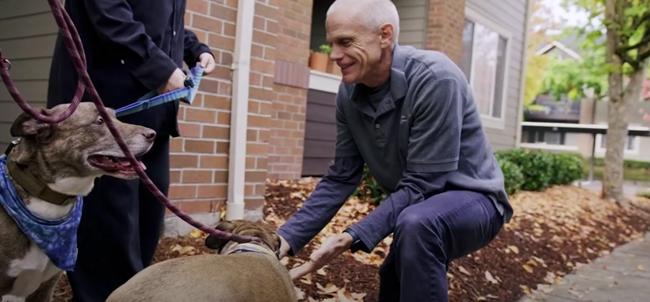
Most renters now have a pet, and new Zillow data shows pet-friendly rental listings are typically leased more than a week sooner than others.

Most renters now have a pet, and new Zillow data shows pet-friendly rental listings and pet-inclusive housing listings are typically leased more than a week sooner than others.

Pet-friendly rentals draw more views, saves and shares, and they are typically snapped up eight days sooner, according to a new analysis of more than 11 million rental listings on Zillow last year.

Highlights of the pet-friendly rental listings report:

  • Rental listings on Zillow that allow pets are typically leased eight days faster.
  • 58% of renters have pets, up from 46% in 2019.
  • Austin, Dallas and San Antonio had the highest share of pet-friendly rental listings on Zillow last year

Zillow says in the article that “Renters have more leverage than in quite some time after last year’s multifamily construction boom, and the data show allowing pets can make a difference in leasing out a unit quickly. The median renter is getting older, and more renters now have a pet. Nearly six in 10 renters are pet owners, up from 46% before the pandemic. Almost half say they passed on a particular property because it was not pet-friendly.”

Last year, 57% of rental listings on Zillow allowed pets.

On average, those listings earned 9% more views, 12% more saves and 11% more shares than those that did not allow pets. They were also typically rented out eight days faster.

Texas rentals are most pet-friendly

Texas has the most pet-friendly rentals, with Austin (80%), Dallas (79%) and San Antonio (78%) leading all major metro areas in the share of pet-friendly rental listings on Zillow last year.

However, Houston had the smallest share of rental listings that allowed pets, at just 38%. Also near the bottom were Providence, R.I., (43%), Hartford, Conn. (43%) and San Jose (44%).

Pet-friendly rentals in the New York City metro area typically rented 26 days faster than units that did not accept pets, the biggest gap of any major market. Tampa (16 days), Columbus (12 days), Phoenix (11 days), Cincinnati (10 days) and Austin (10 days) also saw pet-friendly listings rented out at least 10 days faster.

Can Tenants Install a Security Camera On Your Rental?

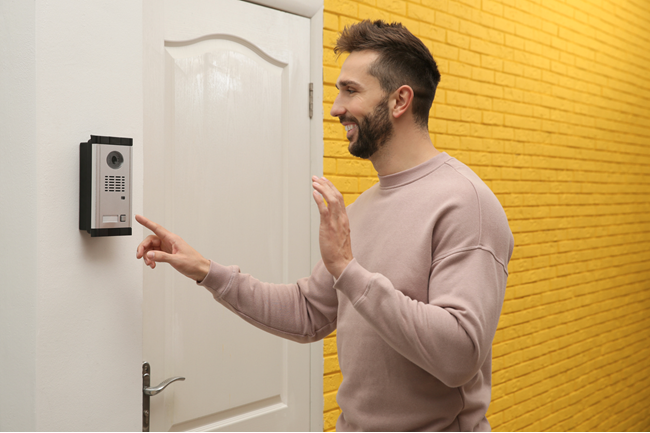
Can tenants install a security camera on your rental or a camera that shows common areas in an apartment complex is the question this week.

Can tenants install a security camera on your rental or a camera that shows common areas in an apartment complex is the question this week for Ask Landlord Hank. Remember Hank is not an attorney and he is not offering legal advice. If you have a question for him please fill out the form below.

Dear Landlord Hank:

Can tenants install a doorbell camera on their rental? -Sam

Dear Sam:

I think a Ring doorbell camera is fine and good for safety and security for the tenants.

I think it is a very bad idea for tenants to set up cameras that would allow them to view other tenants’ properties, invading their privacy.

You’d have to check the laws in your jurisdiction but in most places, this would be in violation.

The idea is to increase your own safety, not be creepy, so make sure any camera is placed high enough so it is difficult to disturb the camera placement and angle. The height also widens the angle of coverage.

Make sure you have a weatherproof camera and that it is not hidden.

Criminals are less likely to visit you if they know they are being filmed in the act.

Also, before a tenant installs a camera, he or she should talk to the owner and make sure there are no lease restrictions.

Sincerely,
Hank Rossi

Editor’s note: Check your local and state regulations on issues such as this as it varies across the country.

As a child, Hank Rossi sometimes helped his father take care of the family rental-maintenance business.  In the mid-’90s he got into the rental business for himself. After he retired, he started a real-estate brokerage business with his sister that focuses on property management and leasing. Visit his website: https://rentsrq.com.

Ask Landlord Hank Your Question

Ask veteran landlord and property manager Hank Rossi your questions from tenant screening to leases to pets and more! He provides answers each week to landlords.

  • This field is for validation purposes and should be left unchanged.
Can tenants install a security camera on your rental or a camera that shows common areas in an apartment complex is the question this week.
Landlord Hank Rossi says, “I think it is a very bad idea for tenants to set up cameras that would allow them to view other tenants’ properties, invading their privacy.”

Can I Get Tenant’s Inoperable Car Towed Off My Rental Property?

How To Handle Ugly Feud Between Two Sets of Tenants?

Tenants Pouring Grease Down Sink And Flushing Paper Towels

Do You Know The 5 Questions Landlord Hank Asks Tenants When They Call?

Sign Up For Our Newsletter And Get Rental Property News And Helpful, Useful Content Each Week.

* indicates required

Photo credit Liudmila Chernetska via istockimages

Now Is The Best Time To Schedule Chimney Cleaning

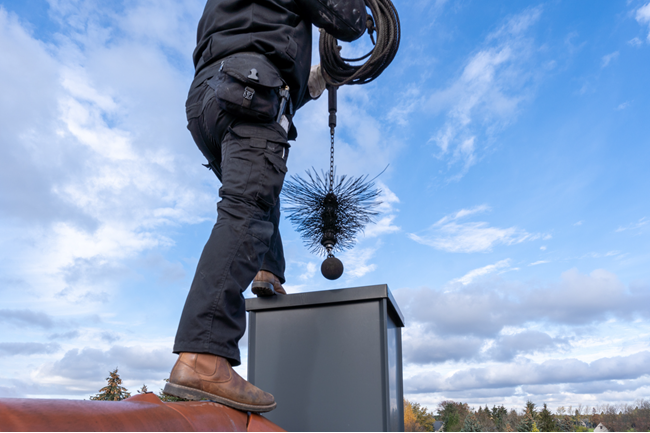
Summer is the best time to schedule your chimney cleaning before The Chimney Specialists get busy in the fall and winter months.

Summer is the best time to schedule your chimney cleaning before the busy fall and winter months.

Scheduling the cleaning now with companies such as The Chimney Specialists before they get booked up ensures your fireplace is ready for your tenants to use when the colder weather arrives. Secure your appointment at your convenience now.

Cleaning in the spring or summer allows for early detection of any potential issues or damage that may have occurred during the winter, giving you ample time to make necessary repairs.

Also, milder weather in the summer and early fall makes it safer and more comfortable for chimney sweep technicians to perform inspections and cleanings, especially if roof access is required.

Clean when the air is dryer

Dryer air in the summer can make it easier to remove creosote buildup.

Cleaning your chimney before the colder months arrive ensures it’s free of creosote buildup, blockages, or any other issues that could pose a fire hazard or lead to ventilation problems.

You probably do not know how often your tenants may be using the fireplace so it is a good idea to clean your chimney annually.

Proactive maintenance by scheduling your chimney cleaning in the summer or early fall ensures your fireplace is safe and ready for your tenants to enjoy when the temperatures drop.

About The Chimney Specialists

Established in 1978, The Chimney Specialists, Inc. is a small family owned and operated company specializing in chimney sweeping and fireplace repair. Serving King and Pierce County communities, our team has the knowledge and ability to take care of anything, from simple chimney caps to full chimney rebuilds. Call us King County 206-782-0151 or Pierce County253-475-0399 Office hours Mon-Fri: 8-4 Field hours Mon-Sat: 8-4.

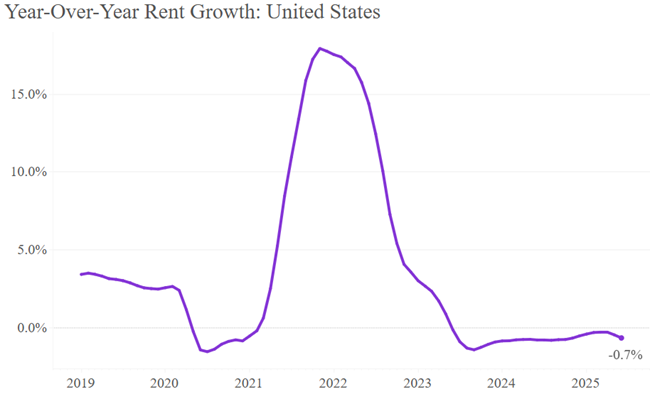
Rents Up 0.2% Month-Over-Month, Down 0.7% Year-Over-Year

The national median rent was up 0.2 percent in June, ticking up for the fifth consecutive month, and now sits at $1,401 vacancy index up

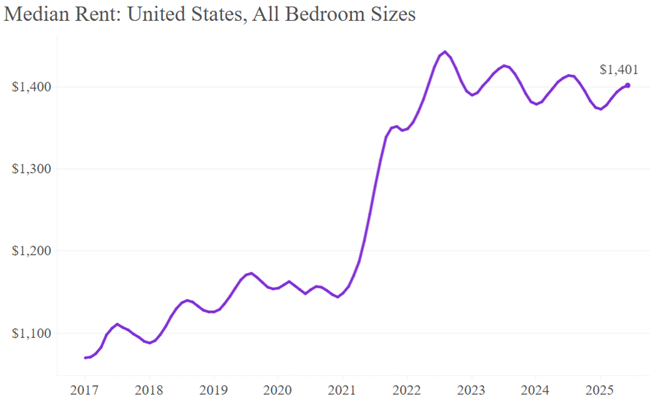
The national median rent was up 0.2 percent in June, ticking up for the fifth consecutive month, and now sits at $1,401, according to the July report from Apartment List.

“But after increasing by 0.6 in March, our national rent index has seen its growth rate trending down over the past three months, at odds with the typical seasonal trend,” writes the Apartment List Research Team.

The national median rent was up 0.2 percent in June, ticking up for the fifth consecutive month, and now sits at $1,401 vacancy index up

“The late spring and summer months are normally the peak season for moving activity, and rent growth tends to ramp up at this time of year in tandem with demand. The fact that we’ve instead seen rent growth get increasingly sluggish indicates softness in the market, possibly reflecting declining consumer confidence amid a more uncertain macroeconomic outlook,” the report says.

The national median rent was up 0.2 percent in June, ticking up for the fifth consecutive month, and now sits at $1,401 vacancy index up

Research team highlights of the report

  • Year-over-year rent growth had been close to flipping positive for the first time since 2023, but has now ticked further negative for the past two months.
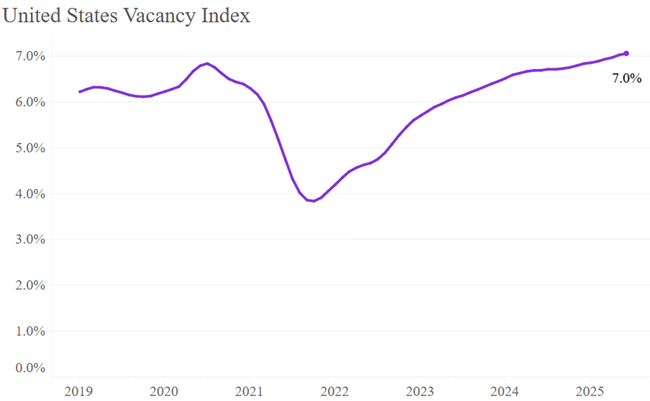
  • The national multifamily vacancy rate currently stands at 7%, “the highest reading we’ve recorded in our index. We’re past the peak of a multifamily construction surge, but the market is still absorbing all of the new units, and vacancies are still trending up.”
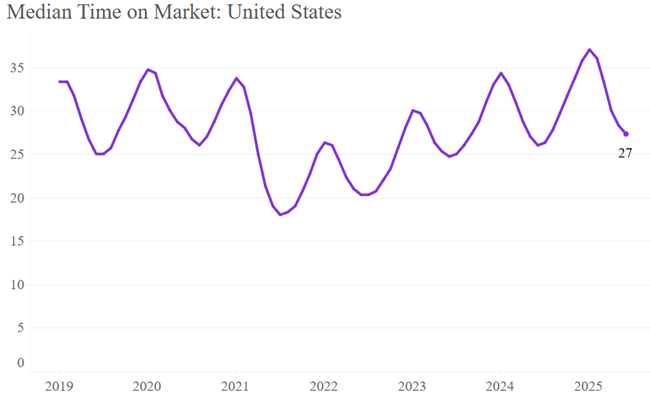
  • Units are taking an average of 27 days to get leased after being listed, down from a high of 37 days in January.
  • The Austin metro is currently the nation’s softest rental market, with the median rent there down by 6.4% over the past year; San Francisco has seen the fastest year-over-year rent growth (+4.9%).

With the overall trajectory of rents trending modestly downward in recent years, the national median rent has now fallen below its August 2022 peak by a total of 2.8 percent, or $41 per month. But that cooldown came following a period of record-setting rent growth, and the typical rent price remains 22 percent higher than its January 2021 level.

Multifamily vacancy rate hits 7%, a new peak

“We are now past the peak of the apartment construction wave, but even as the level of new supply hitting the market falls sharply compared to last year, it remains robust by historic standards,” the report says.

The vacancy rate will begin to tighten eventually, but for now it continues to rise as the market is still absorbing a swell of new units.

The national median rent was up 0.2 percent in June, ticking up for the fifth consecutive month, and now sits at $1,401 vacancy index up

List-to-Lease time comes down from all-time high

This “list-to-lease” time peaked at 37 days nationally in January, an all-time high going back to the start of the data series in 2019.

Since then, however, this time has been getting shorter, and among units that were leased in June, the median time on market was 27 days, down from 28 days in May.

The national median rent was up 0.2 percent in June, ticking up for the fifth consecutive month, and now sits at $1,401 vacancy index up

Conclusion

“All of our key indicators are pointing toward a sluggish summer moving season – rent growth is slipping and the multifamily vacancy rate is at an all-time high.

“A return to tighter market conditions should still be on the horizon as the supply wave continues to recede, but the outlook has been complicated by macroeconomic whiplash being caused by tariffs and other policies being pursued by the Trump administration. This uncertainty appears to be weighing on demand, but the magnitude of that impact is not yet clear,” the research team writes.

Read the full report from Apartment List here.

Sign Up For Our Weekly Newsletter And Get Rental Property And Apartment News And Helpful, Useful Content Each Week.

* indicates required

Keep Pets Safe July 4:Tips, Resources, Importance of Microchipping

Keep pets safe inside July 4 as more pets go missing around the 4th so here are tips, resources and why microchipping is important.

Keep pets safe this July 4 inside your rental housing as unfortunately more pets go missing around the Fourth of July than any other time of the year so here are tips, resources and why microchipping is important.

By Michelson Found Animals

Fireworks season is here, and unfortunately, more pets go missing around the Fourth of July than any other time of the year. That’s why Michelson Found Animals (MFA) is stepping up to help families prepare.

Microchipping is one of the most effective ways to bring lost pets home safely. July is Lost Pet Prevention Month, and we’re proud to have donated more than 2,000 microchips across Los Angeles in anticipation of the Fourth. Now’s the time to check your pet’s chip info, update your contact details, and take a few simple steps to keep them secure.

Let’s make this a safe and joyful Fourth for every family member. Click here to learn more about our efforts, read our full list of tips, and learn how to get involved.

Why So Many Pets Go Missing

The loud noises, flashing lights, and unfamiliar crowds associated with Fourth of July celebrations can cause pets to panic and flee, even those who’ve never shown signs of fear before. Doors are left open during parties, fences are scaled in fear, and pets without ID are quickly lost in the commotion.

That’s why now is the time to prepare, before the fireworks begin.

7 Easy Ways to Protect Your Pet This 4th of July

Here are some simple steps every pet owner can take to help ensure a safe and stress-free holiday:

  • Microchip Your Pet—Microchipping is one of the most effective ways to reunite lost pets with their families. If your pet is already chipped, doublecheck that your contact info is up to date. Make sure to register your microchip for free at https://www.24petwatch.com/.
  • Create a Safe Space Indoors – Set up a quiet room with your pet’s favorite blanket, toys, and a white noise machine or calming music to help drown out the sounds of fireworks.
  • Don’t Leave Pets Outside – Even a fenced yard can’t stop a scared pet from escaping. Always bring them indoors before the festivities begin.
  • Exercise Earlier in the Day – A tired pet is a calmer pet. Take your dog for a long walk or playtime early in the day to help them rest easier that night.
  • Secure ID Tags – Make sure your pet is wearing a collar with a tag that has your current contact information. Tags and microchips work best together.
  • Talk to Your Vet About Anxiety – If your pet has shown stress in the past, ask your vet about calming products or medication to help them through the night.
  • Keep Fireworks Away from Pets – Never light fireworks near your pet or bring them to firework displays. The noise, heat, and smells are distressing and dangerous.

For more details, revisit our guide: 7 Easy Ways to Protect Your Pet on the Fourth of July

About the author:

Dr. Gary Michelson started Found Animals in the aftermath of Hurricane Katrina. By establishing the first free microchip registry for pets, the goal was to allow every lost animal to find their way home. In the 15 years since, Found Animals has continued to identify important problems facing pets and people, and develop real-world, scalable solutions to help them thrive.

Keep pets safe inside July 4 as more pets go missing around the 4th so here are tips, resources and why microchipping is important.

Sign Up For Our Weekly Newsletter And Get Rental Property And Apartment News And Helpful, Useful Content Each Week.

* indicates required

Salt Lake City Rents Up 0.9% In June

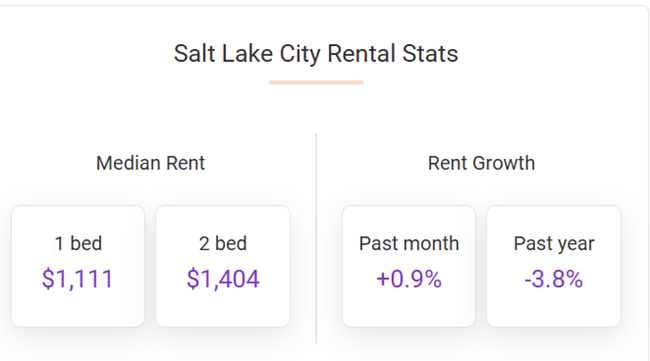
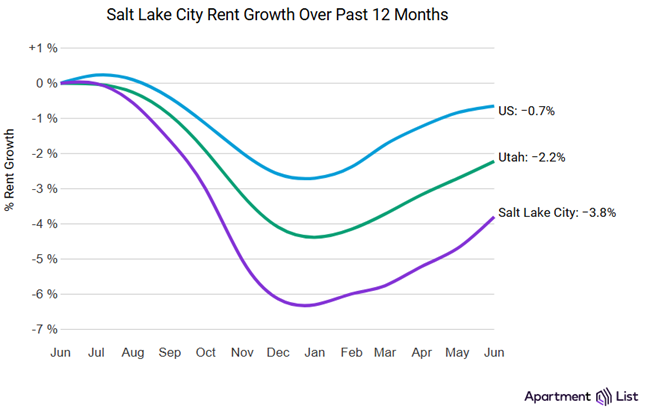
Salt Lake City Rents were up 0.9% in June, according to the July report from Apartment List while down 3.8% year-over-year.

Salt Lake City Rents were up 0.9% in June, according to the July report from Apartment List.

The overall median rent in the city stands at $1,284. Prices remain down 3.8% year-over-year.

Salt Lake City rent growth in 2025 pacing above last year

Six months into the year, rents in Salt Lake City have risen 2.7%.

This is a faster rate of growth compared to what the city was experiencing at this point last year. From January to June 2024 rents had increased 1.4%.

Salt Lake City Rents were up 0.9% in June, according to the July report from Apartment List while down 3.8% year-over-year.

Salt Lake City rents are 12.9% lower than the metro-wide median

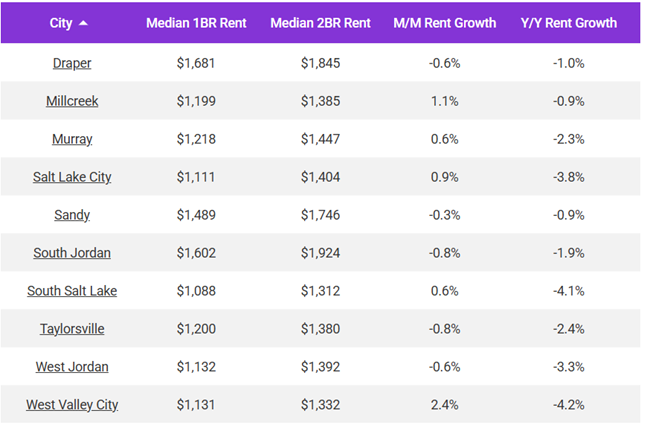
Across the metro area, the median rent is $1,474 meaning that the median price in the city proper ($1,284) is 12.9% lower than the price across the metro as a whole. Metro-wide annual rent growth stands at -2.6%, above the rate of rent growth within just the city.

The table below shows the latest rent stats for 10 cities in the Salt Lake City metro area that are included in the Apartment List database. Among them, Draper is currently the most expensive, with a median rent of $1,901. South Salt Lake is the metro’s most affordable city, with a median rent of $1,246. The metro’s fastest annual rent growth is occurring in Millcreek (-0.9%) while the slowest is in West Valley City (-4.2%).

Salt Lake City Rents were up 0.9% in June, according to the July report from Apartment List while down 3.8% year-over-year.

Read the full report here.

Sign Up For Our Weekly Newsletter And Get Rental Property And Apartment News And Helpful, Useful Content Each Week.

* indicates required

Will Robust Supply Be Met With Renter Demand For The Rest Of 2025?

Strong multifamily performance for the second half of 2025 depends on whether robust apartment supply will be met by renter demand,

Whether strong multifamily performance continues for the second half of 2025 depends on a number of competing factors, including whether robust apartment supply will be met by renter demand, says Yardi Matrix in a summer report.

“Questions going forward include whether robust supply will continue to be matched by strong renter demand, how quickly the delivery pipeline will slow in the face of waning starts, and whether interest-rate uncertainty will continue to keep deal flow weak in the face of strong investor demand,” the report says.

Tariffs and negotiation remain a question. However, “metrics such as job growth, inflation and consumer spending have remained steady. Interest rates have stabilized, albeit not falling as the commercial real estate industry hoped going into the year. However, there are signs that the strong growth of recent years is slowing, and uncertainty is creating heightened downside risks going forward.”

Highlights of the report

  • Multifamily performance remained strong in the first half of 2025, with demand nearly keeping pace with the heavy supply pipeline. Deliveries are waning as starts decline, feeding optimism about a new wave of rent growth on the other side of the supply peak.
  • The U.S. economy has held up under the weight of sharp changes in policy, but there are risks from the impact of higher tariffs, volatility in the financial markets and general uncertainty about policy. Interest rates, critical to the multifamily industry, are unlikely to drop given the tug-of-war between weaker economic growth and potentially higher inflation.
  • Multifamily-advertised rent growth remains restrained, about 1% nationally, with gains in most Northeast and Midwest metros and negative growth in many high-supply Sun Belt markets. The supply-demand dynamic is likely to keep growth moderate in the second half.
  • Following a record-setting year for multifamily deliveries in 2024, new supply is slowing, with starts dropping by nearly half. Over 500,000 units are still expected to come online in 2025, but the full impact of declining starts will become more apparent in 2026.
  • Despite investors sitting on plenty of dry powder, transactions continue to dribble at last year’s pace, as many sellers think they can get a better deal waiting for interest rates to drop. The 10-year Treasury remains in the mid-4% range, as the Federal Reserve has a wait-and-see posture toward inflation due to uncertainty over the administration’s tariffs and economic policy.
  • Delinquency is rising, though not to crisis levels, and the plethora of rescue capital is serving to restructure loans that were extended in recent years.

“While a recession is currently not the base forecast, there are heightened risks of both a slowdown and increased volatility,” the report says.

Read the full Yardi report here.

Sign Up For Our Weekly Newsletter And Get Rental Property And Apartment News And Helpful, Useful Content Each Week.

* indicates required

Landlords Must Return Deposit If Tenant Finds Rental Uninhabitable

Oregon Gov. Tina Kotek has signed a bill that requires landlords to return deposits if tenants who haven’t yet signed a lease find the home to be defective.

Oregon Gov. Tina Kotek has signed a bill that requires landlords to return deposits if rental applicants who haven’t yet signed a lease find the home they’ve applied to is defective.

House Bill 3521 would let Oregon renters get their deposits back if the home they’ve applied to has mold, unsafe electrical wiring or other defects making it uninhabitable. The bill passed the Oregon House in a 33-18 vote and passed the Oregon Senate in a 20-8 vote, according to the Oregon Capital Chronicle.

Under the bill, landlords would have five days to return deposits or face a fee equivalent to the deposit they charged or more. Landlords would not face penalties if natural disasters or emergencies keep them from complying, and they could still choose to return deposits at their place of business rather than through mail.

Rep. Annessa Hartman, D-Gladstone, spearheaded the bill after hearing from renters across Oregon who lost hundreds, sometimes thousands, of dollars to hold deposits for homes they couldn’t move into because of mold, broken plumbing or pest infestations.

Renters in Oregon represent 51% of all low-income households, according to Oregon Housing and Community Services. And nearly 37% of all Oregonians rent their homes, according to the U.S. Census. That’s higher than the national average, and renters are in the majority in cities including Eugene, Corvallis, Monmouth, Beaverton and Seaside.

“Landlords can still enter into whole-deposit agreements, collect deposits, and keep them when applicants back out without a good reason,” said Senate sponsor Deb Patterson, D-Salem, on the floor. “That doesn’t change. What does change is that applicants will have the right to walk away if the unit is substantially uninhabitable.”

Read the full bill here.

Sign Up For Our Weekly Newsletter And Get Rental Property And Apartment News And Helpful, Useful Content Each Week.

* indicates required