
Home Blog Page 16

How Video is Revolutionizing Resident Communication

Effective property management videos can revolutionize resident communication with video of actual team members engaging residents.

Effective property management videos can revolutionize resident communication with video of actual team members engaging residents.

By Stephanie Anderson

As artificial intelligence and automated responses continue to grow exponentially in multifamily, residents are seeking something that feels genuine.

They want to know there’s a real person behind the property management; someone who understands their needs, celebrates their milestones and truly cares about their living experience.

Video communication, paired with smart AI tools, provides multifamily operators with a perfect solution for authentic, scalable resident engagement that fosters trust. When done right, video doesn’t just communicate; it creates connections that truly transform how residents view and engage with their community.

The results speak for themselves. According to data from Realync by Grace Hill, properties using strategic video are seeing impressive results, including 50% pre-leased occupancy during construction, 75% closing rates on prospects and notable reductions in maintenance touchpoints. These aren’t just numbers; they represent real relationships built through genuine communication.

Feature Real Team Members to Foster Familiarity and Trust

People connect with people, not just logos or corporate messaging. Property managers, along with leasing and maintenance teams, are a multifamily company’s greatest assets in building resident relationships.

When team members appear on camera, they transform from faceless voices into trusted neighbors that residents recognize and feel comfortable approaching.

7SEVENTY7 in Milwaukee, Wisc., and managed by Bozzuto, discovered this power during their pre-leasing phase.

Rather than relying on generic marketing materials, they featured actual team members hosting personalized walkthroughs and live open houses. The approach was so effective that they achieved 50% pre-leased occupancy during construction, a remarkable feat that directly resulted from residents feeling connected to real people before even moving in.

Consider these authentic touchpoints, where real team members make the biggest impact:

  • New team member introductions that help residents put faces to names
  • Digital event invitations delivered by community managers
  • Maintenance tutorials by the onsite maintenance team members
  • Property updates shared by residents themselves

The key lies in consistency. When residents repeatedly see the same friendly faces in videos, familiarity breeds trust. They’re more likely to reach out with concerns, participate in community events and ultimately renew their leases.

Make It Conversational to Ensure Content Feels Natural and Relatable

Authenticity beats perfection every time.

The most effective property-management videos sound like conversations, not corporate presentations. This means embracing the natural pauses, occasional filler words and genuine enthusiasm that make human communication compelling.

CityWay Communities in Indianapolis exemplified this approach by prioritizing human-to-human interaction over polished presentations. Their team created nearly 150 videos in just two months, generating more than 4,200 views because the content was genuine and approachable. Residents and prospects could sense the authenticity, making them more likely to engage.

Professional doesn’t mean perfect. It’s perfectly acceptable to:

  • Pause to gather your thoughts
  • Keep natural filler words like “um” or “you know”
  • Start a sentence over if needed
  • Show genuine excitement about community features

This conversational approach works because it mirrors how people actually communicate.

Keep It Quick to Promote Engagement

In our attention-deficit world, brevity is your best friend. Every second counts in video communication.

Research consistently shows that engagement drops dramatically after the 60-second mark, making concise messaging preferable and essential for effectiveness.

Watermark at Jordan Creek exemplifies this principle by creating quick, focused DIY maintenance videos that empower residents to handle simple tasks independently. By keeping each video under a minute and focusing on one specific task, residents could quickly absorb the information and take action. The result was significantly reduced maintenance touchpoints and more empowered residents.

The 60-second rule applies across all video types, including:

  • Property Tours: Focus on 2-3 key features per video
  • Maintenance Tutorials: Cover one specific task completely
  • Event Announcements: Include essential details only
  • Welcome Messages: Highlight the most important information first

Quick videos also perform better across multiple viewings. Residents are more likely to re-watch a 45-second tutorial when they need a refresher than struggle through a lengthy explanation.

Personalize with Purpose: Using AI Tools

The magic happens when artificial intelligence amplifies authentic human communication rather than replacing it. Smart AI tools can help multifamily teams deliver personalized experiences at scale while maintaining a genuine touch.

Waterton Property Management in Chicago demonstrates this balance, achieving a 75% closing rate on prospects by combining real-time human interaction with AI-powered personalization. Their approach includes real-time tours, recorded walkthroughs, property data overlays and chat capabilities enhanced by AI insights while still maintaining authenticity.

Modern AI tools enable several powerful personalization strategies:

  • Template-Based Personalization: Create video templates that incorporate CRM data like unit preferences, move-in dates or previous interactions. Leasing professionals can record one welcome message template, then AI personalizes it with specific details for each new resident.
  • Behavioral Targeting: AI can analyze resident behavior and interests to automatically suggest relevant videos. So, if someone mentions having a pet, the system can automatically send a tour of pet-friendly amenities.
  • Content Optimization: AI-powered analytics help identify the video topics that generate the most engagement, allowing teams to focus on content that truly resonates.
  • Scheduling Intelligence: AI can determine optimal sending times based on individual resident behavior patterns, ensuring videos reach people when they’re most likely to engage.

Using genuine video communication that features real team members, along with keeping a natural, friendly tone and adding AI-driven personalization, are key strategies for building trust and creating a sense of community in the multifamily industry.

By embracing these fresh and modern methods, property teams can connect more personally with residents, boost engagement and see positive results such as higher pre-leasing rates and happier residents.

About the author:

Stephanie Anderson is the senior director of communications and social media at Grace Hill, with more than 18 years of experience in the rental housing industry. She was named 2024 Supplier Individual of the Year by the Virginia Apartment Management Association, a Top Voice by LinkedIn, and one of GlobeSt.’s Most Influential People in Multifamily Housing

Sign Up For Our Weekly Newsletter And Get Rental Property And Apartment News And Helpful, Useful Content Each Week.

* indicates required

Seattle Tacoma Bellevue Rental Housing Journal

See the article from the Washington Multi-Family Housing Association on what owners and investors say about new rent control in Washington.

See The Seattle-Tacoma-Bellevue Rental Housing Journal for July, especially see the article from the Washington Multi-Family Housing Association on what multifamily owners and investors are saying about the new rent control law in Washington.
RHJ-Onsite July2025 – FINALw

Landlord Sentiment Shifts in 2025: Fewer Acquisitions, More Spending on Existing Properties

Survey results from RentRedi show a shift in landlord sentiment for 2025 with fewer acquisitions and more spending on existing rentals

New survey results from RentRedi, including joint data from BiggerPockets, show a measurable shift in landlord priorities for 2025.

The survey shows a 14-point drop in landlords planning to buy, amid concerns over home prices and interest rates. At the same time, investments in existing rental properties are rising.

Compared to late 2024, fewer landlords plan to expand their portfolios, while more are investing in property improvements and optimizing operations. RentRedi’s rental-market survey examines notable shifts in trends relating to investment strategies, renovation spending, and business priorities over time.

The survey of 1,600+ U.S. landlords, conducted in June and compared to similar data from late 2024, found:

  • A 14-point drop in landlords planning to buy, down from 67% in November to 53% in June
  • A growing number—especially in the West—say they have no plans to expand or sell
  • High-dollar spending on upgrades is rising, with over one-third planning to invest $20K+
  • Large landlords are leading the spending surge, while small landlords are more cautious
  • Top reasons for pausing purchases include high prices, interest rates, and slow revenue growth

As a follow-up to a survey that was conducted in November 2024, the same questions were posed to U.S. landlords between June 3-26, 2025, and responses were analyzed by region and landlord size.

Survey results from RentRedi show a shift in landlord sentiment for 2025 with fewer acquisitions and more spending on existing rentals

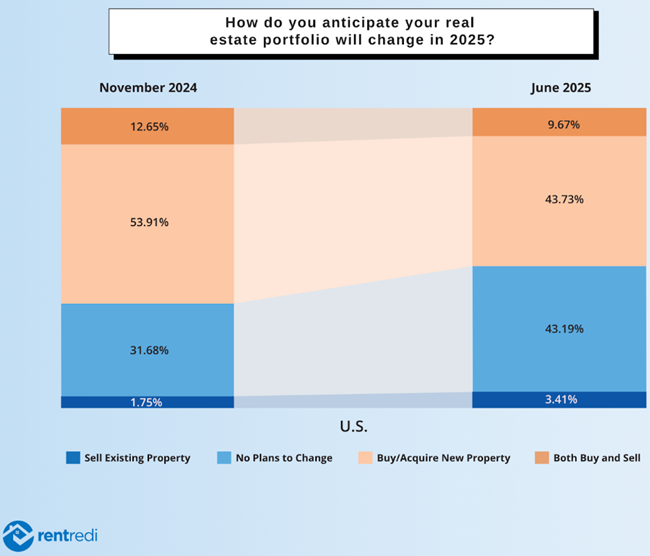
Over the past six months, the share of landlords planning to buy new properties dropped from 67% in November 2024 to 53% in June 2025—a 14-point decline. During the same period, the portion of landlords with no plans to change their portfolio rose by 11%, from 32% to over 43%. Fewer than 1 in 25 landlords say they plan to sell a rental property this year.

Regionally, the West experienced the biggest shift in sentiment, with the number of landlords saying they have no plans to make portfolio changes rising from 39% to 53%, a 14-point increase. In contrast, the Northeast was the most acquisition-oriented region, with 57% of investors still planning to buy property in 2025, outpacing the national average.

Differences by landlord size also emerged. While all portfolio sizes saw a decline in buying plans, landlords with 20 or more units remain more active than their smaller counterparts. A little over 1 in 5 large landlords plan to both buy and sell property this year, compared to just 5% of small landlords. Nearly half of small landlords say they have no plans to change their portfolio, compared to 38% of large landlords.

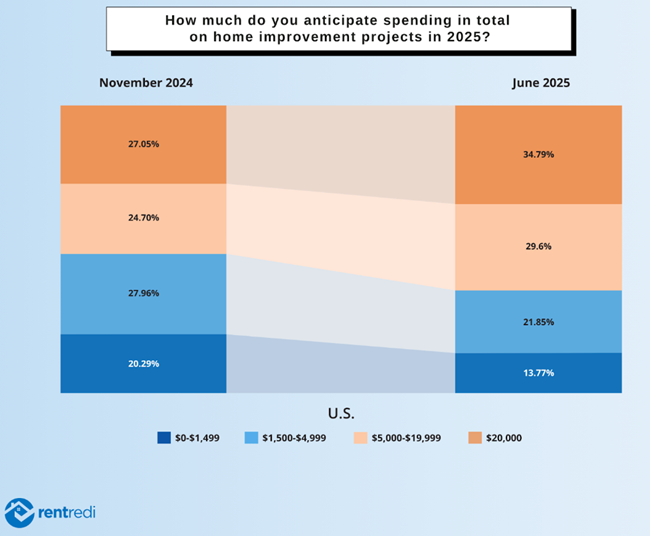
Another major shift is visible in home improvement plans. As of June, 35% of landlords expect to spend more than $20,000 on property upgrades this year, up from 27% in November. Nearly 2 in 3 respondents anticipate spending over $5,000 in total. Landlords with large portfolios are leading the charge: nearly two-thirds expect to spend more than $20,000, up from 36% in November. Small landlords remained more conservative, with nearly half still budgeting under $5,000.

Survey results from RentRedi show a shift in landlord sentiment for 2025 with fewer acquisitions and more spending on existing rentals

Regionally, the Midwest and West saw the most dramatic increases in high-dollar spending. In both regions, the share of landlords expecting to invest more than $20,000 rose by 10 points or more. At the same time, a June joint survey with BiggerPockets found that exactly half of landlords have paused some or all home improvement projects planned for 2025, suggesting a range of financial strategies and priorities depending on portfolio structure and resources.

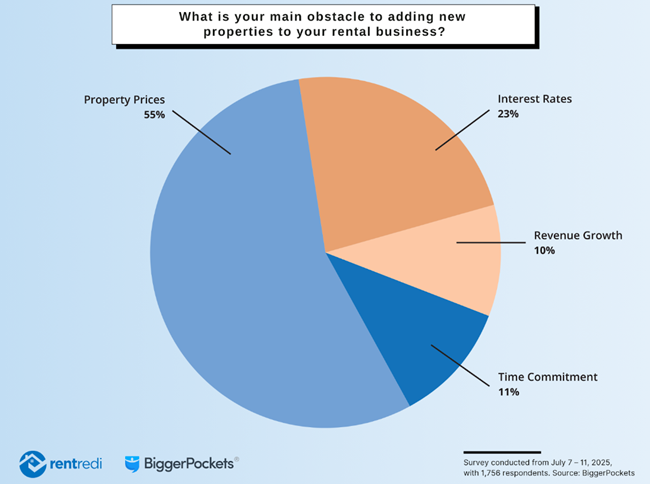
A separate July survey from RentRedi and BiggerPockets explored the reasons behind declining acquisition plans. More than half of landlords cited property prices as the biggest barrier to buying, while nearly a quarter pointed to interest rates. Others said slow revenue growth or time commitment were their main challenges.

When asked what they hoped to achieve by using tools or resources in their rental business, more than one-third said increasing revenue was most important. Another one-third prioritized saving time and effort, followed by reducing costs and increasing property value.

“With tools like RentRedi, landlords are managing their properties more efficiently, even as they face evolving challenges,” said RentRedi Co-founder and CEO Ryan Barone. “From automation to mobile access to financial reporting, we’re focused on giving landlords the control and visibility they need to make smarter decisions—whether they’re expanding, renovating, or holding steady.”

Landlord motivations remained consistent across the board. Income generation continues to be the top reason for managing rental properties, selected by over 40% of respondents, followed by long-term investment and financial freedom. Larger landlords are more focused on income—more than half selected it as their primary goal, compared to about one-third who emphasized long-term investment and 16% who cited financial freedom, which is slightly below the 18% national average.

Diversification appears to be a low priority in 2025. About 40% of landlords said they do not plan to diversify their portfolios by property type or location, and another quarter are unsure. Slightly more than 1 in 3 landlords say they plan to diversify in any way this year.

This report is part of RentRedi’s ongoing initiative to surface real-world insights from landlords and property managers through data, direct surveys, and collaborations with trusted communities like BiggerPockets. For more data insight and survey result reports, visit RentRedi’s Rental Market Insights.

About RentRedi

RentRedi offers a comprehensive rental property management platform that simplifies the renting process for landlords and renters by automating and streamlining processes. For more information visit RentRedi.com.

Sign Up For Our Weekly Newsletter And Get Rental Property And Apartment News And Helpful, Useful Content Each Week.

* indicates required

The Consumer Review Fairness Act and Its Marketplace Impact

Recent reports about non-disparagement lease clauses banning tenants from leaving negative reviews-what the consumer review fairness act says

Recent reporting shows issues with lease clauses banning tenants from leaving negative reviews, sometimes called non-disparagement clauses in leases, so see what the consumer review fairness act says about this.

By Denise Holliday, Esq.
Hull, Holliday & Holliday, PLC

Caveat emptor is a Latin phrase that translates to “let the buyer beware.”  It’s been used for hundreds of years and puts the burden of researching the quality of products and services on the buyer in a transaction.  Because of that assertion, P.T. Barnum is often credited with the phrase “There’s a sucker born every minute” which implies there is a continuous supply of gullible individuals just waiting to be fleeced. (By the way, there’s no actual proof P.T ever actually said that).

For centuries, the only way for a consumer to voice pleasure or disdain about their experience in the marketplace was by word-of-mouth. Over the past two decades, the rise of online shopping, subscription services, and digital products has caused an explosion in the marketplace.  It also gave the consumer the ability to publish or broadcast online reviews of nearly every business and product, both good and bad, around the world instantly.

No one likes a bad review, and some businesses sought to limit what their customers could post online.  Some companies put contract provisions in place, including in their online terms and conditions, that allowed them to sue or penalize consumers for posting negative reviews.  As a result, the Consumer Review Fairness Act (CRFA) was signed into law in 2016 to protect people’s ability to share their honest opinions about a business’s products, services, or conduct, in any forum, including social media.

What the Consumer Review Fairness Act Says

The CRFA makes it illegal for companies to include standardized provisions that threaten or penalize people for posting honest online reviews, including negative reviews.  It also covers social media posts, uploaded photos, videos, etc.  and consumer evaluations of a company’s customer service (the law doesn’t apply to employment contracts or agreements with independent contractors).

A company or business can prohibit or remove a post or review that contains confidential or private information – for example, a person’s financial, medical, or personal information or a company’s trade secrets.  A post or review that is libelous, harassing, abusive, obscene, vulgar, sexually explicit, or is inappropriate with respect to race, gender, sexuality, ethnicity, or another intrinsic characteristic can also be prohibited or removed.

If the post is unrelated to the company’s products or services or is clearly false or misleading, it may be prohibited or removed.  However, it’s unlikely that a consumer’s assessment or opinion with which the company or business disagree meets the “clearly false or misleading” standard. The CRFA does not affect a business’s right to pursue civil actions for defamation, libel, or slander.

The Federal Trade Commission and state attorneys general have the authority to enforce the CRFA.  A violation of the CRFA is considered as an unfair or deceptive act or practice. This means that your company could be subject to financial penalties and other sanctions, such as federal court orders.

Every company or business needs to evaluate its compliance with the CRFA and review all the forms or standardized contracts used in the business, including online terms and conditions.  Any provision that restricts people from sharing their honest reviews, penalizes those who do, or claims copyright over peoples’ reviews must be removed.

It’s always a good practice to monitor your company’s reviews.  If a post is clearly false or misleading, or violates the standards of your industry or community, take steps to have it removed.  Otherwise, let people speak honestly about your products and their experience with your company.  If you strive to make the best product, provide the best customer service and work hard to earn positive reviews, you’ll get the five-star rating every time.

About the author:

Denise Holliday is managing partner of Hull, Holliday & Holliday, PLC and has been engaged in landlord/tenant law practice since 1996. She is a certified instructor for the Arizona Department of Real EstateArizona Association of RealtorsProperty Management Institute, and National Association of Real Property Managers.

Vancouver Requires Landlords to Pay Annual Registration Fee

The city of Vancouver, Washington has approved a program that will enforce rental registration fees for landlords

The city of Vancouver, Wash., has approved a program that will enforce rental registration fees for landlords, according to reports.

The new municipal code will require landlords to pay a registration fee of $30 per unit by Feb. 15 of each calendar year, in addition to applying for or renewing a business license.

Councilmember Bart Hansen, one of three city leaders who voted against the program, said he believes tenants will be forced to pay the $30 registration fee in the form of a rent increase.

The registration will ask landlords for information such as the year their property was built, the number of units it holds and what type of rental it is — from multifamily housing to accessory dwelling units.

Vancouver is part of the Portland metro area, and the city has watched as Portland has put in place regulations for landlords such as registration, tenant protections and rental increases.

Housing Programs Manager Samantha Whitley said the city won’t enforce fees for the first 90 days of the program in an effort to encourage property owners and managers to comply.

Benjamin Moody, managing attorney for the Clark County Volunteer Lawyers Program’s Housing Programs, said the new rental registration policies could benefit low-income tenants.

“Our clients are vulnerable and, like so many renters, they don’t have resources,” Moody added. “They don’t know their rights and, even if they do know them, they also understand the reality that they are vulnerable to the retaliation and mismanagement of landlords.”

Law could present unintended consequences

The Washington Multi-family Housing Association argued it could prompt “unintended consequences” for residents and those who manage their properties.

“Combined with recent state legislative changes and an already complex regulatory landscape, the program would add significant costs and staffing burdens — factors that are often overlooked as these programs are rolled out,” WMFHA’s William Schneider told council members. “This structure penalizes the very developers and operators who are working to build and maintain the 38,000 multifamily housing units the city of Vancouver desperately needs.”

The city plans to open registration at the beginning of 2026.

Sign Up For Our Weekly Newsletter And Get Rental Property And Apartment News And Helpful, Useful Content Each Week.

* indicates required

See The Portland Metro Edition Of Rental Housing Journal Here

Portland Metro Rental Housing Journal

See the Portland Metro edition of Rental Housing Journal below with helpful, useful information and news about Portland rental properties for rental property owners, landlords, property managers and maintenance personnel.

RHJ Metro July2025 – FINALw
See the June edition here.

Ethics in Property Management: The Decisions No One Sees

Ethics in property management influence how fair, consistent, and transparent your housing practices look to residents, staff, and regulators

Ethics in property management influence how fair, consistent, and transparent your housing practices appear to residents, staff, and regulators.

By The Fair Housing Institute

In property management, some of the most important decisions are the ones made quietly, without fanfare, applause, or even acknowledgment. They’re the individual choices that take place in leasing offices, during maintenance calls, or while responding to a resident’s email. These moments might not make headlines, but they shape the culture of a community, influence team morale, and protect housing providers from costly legal risks.

The Small Choices That Matter Most

Ethical dilemmas in property management often show up in subtle, everyday interactions: A resident offers a thoughtful gift during the holidays. A prospective resident shares a personal hardship and asks for flexibility. An established resident wants a policy exception “just this once.” None of these are unusual. In fact, they’re common.

But the impact of how they’re handled is significant. Accepting a gift might seem harmless—until another resident notices and wonders about favoritism. Granting a one-time exception can lead to frustration when someone else is denied the same exception. And saying “yes” to one request might make it harder to justify a “no” later.

These aren’t just customer-service decisions. They’re ethical ones, and they influence how fair, consistent, and transparent your housing practices appear to residents, staff, and regulators.

Fairness Is More Than Following the Law

At its core, ethical property management is about doing the right thing, especially when it’s hard, inconvenient, or unpopular. It’s about recognizing that fairness isn’t just about avoiding discrimination; it’s about creating an environment where everyone feels respected and valued.

When housing professionals respond to resident concerns, make judgment calls, or interpret policies, they’re making micro-decisions that either reinforce or erode trust. That’s why consistency is key. It protects both the provider and the community by reducing misunderstandings, maintaining professionalism, and minimizing the risk of violating fair-housing laws.

Policies As Anchors, Not Barriers

Policies exist for a reason, but that doesn’t mean they’re inflexible. Rather than seeing them as limitations, think of them as anchors—frameworks designed to guide decision-making and promote equity. When applied thoughtfully and consistently, policies help remove personal bias and ensure every individual is treated fairly.

This is especially important when handling accommodation requests or other sensitive issues. A well-trained team understands not only the letter of the law but also the importance of empathy and professionalism. This balance is what turns policy into practice and compliance into care.

Creating a Culture of Integrity

Ethical decisions don’t happen in isolation. They’re influenced by leadership, reinforced through training, and modeled by example. Housing providers who foster a culture of integrity—where team members are encouraged to ask questions, seek guidance, and prioritize fairness—are better equipped to handle tough calls.

Investing in ethical leadership and ongoing education isn’t just good practice—it’s a strategic advantage. It reduces liability, increases resident satisfaction, and builds a stronger, more cohesive team.

Professionalism is a Daily Practice

Ultimately, ethical property management is a commitment. It’s showing up with integrity, even when no one is watching. It’s treating policies not as checklists, but as tools for fairness. And it’s understanding that while not every decision will be easy, every decision is an opportunity to lead with values.

By embracing the unseen moments with thoughtfulness and professionalism, housing providers can build communities that are not only compliant, but truly fair—and that’s a legacy worth protecting.

About the author:

In 2005, The Fair Housing Institute was founded as a company with one goal: to provide educational and entertaining fair-housing compliance training at an affordable price at the click of a button.

Sign Up For Our Weekly Newsletter And Get Rental Property And Apartment News And Helpful, Useful Content Each Week.

* indicates required

On-Time Rent Payments Continue to Decline

The national on-time rent payments rate continues to show signs of strain for independent landlords, according to Chandan Economics

The national on-time rent payments rate continues to show signs of strain for independent landlords, according to the June 2025 Chandan Economics & RentRedi report.

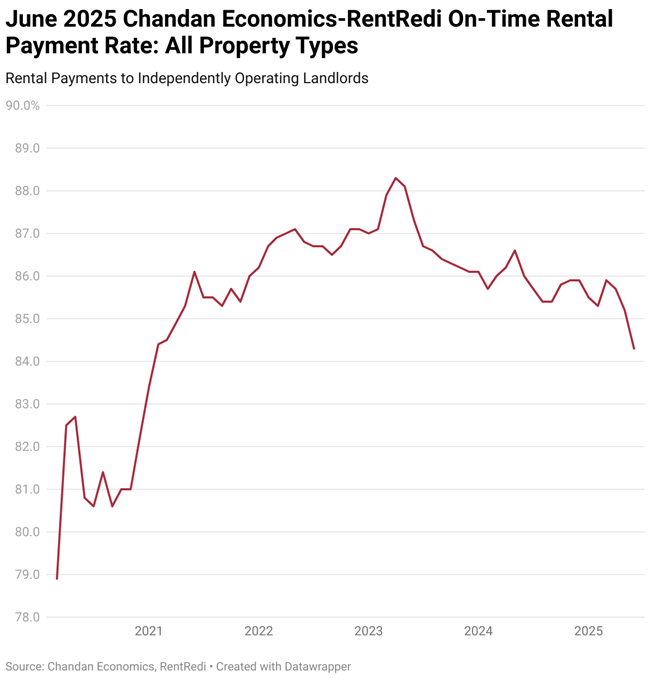
The report documented three consecutive months of decline, adding to a gradual but steady erosion in on-time payment performance.

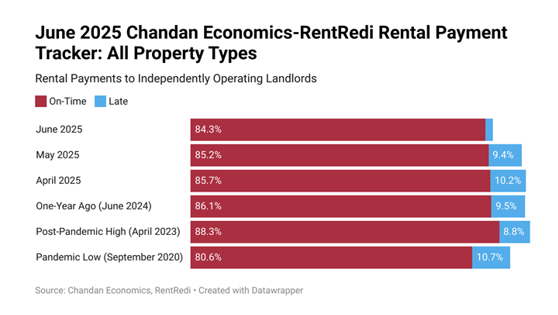
“On-time rent payments in independently operated units dropped meaningfully in June 2025 — offering a stark warning about the financial health of renter households in a high-uncertainty economic environment. According to this month’s first estimate, 84.3% of units paid their full rent on time — a decline of 85 basis points (bps) from May.

“Additionally, May’s on-time payment rate, initially reported at 85.5%, has been revised down to 85.2%. In total, the on-time rate has declined by 154 bps over the past three months.

https://rentalhousingjournal.com/report-u-s-rent-payments-climb-31-in-5-years/

Year-over-Year Decline Of On-Time Rent Payments

Compared to a year earlier, the rate is down a sizable 171 bps — the steepest annual drop since April 2024.

Most notably, year-over-year on-time rent payment rates have now declined for 23 consecutive months.

Key takeaways from the on-time rent payments report

  •  In June 2025, the on-time payment rate in independently operated rental units fell by 85 basis points (bps), dropping to 84.3%.
  • On-time payment rates have fallen year-over-year for 23 consecutive months.
  • The forecast full-payment rate fell to 94.0%, marking a new post-2021 low.
  • Western states continue to hold the highest on-time payment rates in the country, led by Montana, Utah, Hawaii, Alaska, and Idaho.
  • Two- to four-family rental properties held the highest on-time payment rates in June, coming in at 84.6%.

Why the report is important

The Independent Landlord Rental Performance report provides valuable insights into how well non-institutional landlords are managing rental payments. It uses data from property management software RentRedi, showcasing results from 73,502 units.

Information is collected and reported monthly by Chandan Economics. The trends highlighted here can serve as a benchmark for investors, brokers, and policymakers to understand the health of independent landlords in the rental market.

About the report:

Chandan Economics is a leading economic advisory firm that caters to the commercial real estate industry. Their services include economic research, data science, and litigation consulting.

RentRedi provides a comprehensive property management platform that enhances the renting experience for both landlords and tenants.

Read the full report here.

Sign Up For Our Weekly Newsletter And Get Rental Property And Apartment News And Helpful, Useful Content Each Week.

* indicates required

Secure Mailrooms Among Today’s Most Coveted Rental Amenities

Secure mailrooms are becoming a coveted rental property amenity as tenants receive multiple packages, sometimes daily

Secure mailrooms are becoming a coveted rental property amenity as tenants receive multiple packages, sometimes daily, and porch pirates are a major concern. Here is a question and answer on the issue.

By Austin Maddox

  • The mailroom has traditionally been a behind-the-scenes feature. What’s changed to elevate it into a coveted amenity for renters in today’s housing market?

Mailrooms have evolved out of necessity. We’re seeing tremendous growth in package volume, and residents are now receiving deliveries multiple times a day. With that, porch piracy has become a major concern, especially in multifamily communities. Lockers and centralized delivery systems not only provide 24/7 access but also help protect residents’ packages from theft.

Efficient package management and security are not the only drivers; the mailroom has become part of the amenity conversation. Communities want to offer residents convenience and peace of mind, and they’re also thinking about aesthetics. Some high-end communities have incorporated premium lockers that match the building’s design, making the mailroom feel like a thoughtful extension of the overall resident experience.

  • How are smart lockers or automated mailroom solutions helping property managers differentiate themselves in an increasingly competitive real-estate environment?

In a crowded rental market, property managers are constantly seeking ways to stand out, and smart lockers have emerged as a powerful differentiator. They check multiple boxes: security, convenience, and operational efficiency.

Our company has worked with a number of apartment communities and multifamily properties where lockers become a key selling point. When residents see a community prioritizing a convenient solution to a daily challenge, it makes an impression.

Communities are increasingly appreciating the expectations of Generation Z, which will reshape the multifamily housing landscape. This generation’s blend of digital fluency, budget consciousness, and commitment to authenticity and sustainability creates a powerful market force. Gen Z renters see  lockers as an amenity they will use regularly, unlike other big-ticket community investments such as gyms, swimming pools or clubhouses. Automated lockers also fit with this generation’s preference for on-demand, 24/7 access.

From an operational perspective, lockers free up staff time by automating package management. That means leasing agents and community managers can focus on higher-touch services and creating a great experience for current and prospective renters. It’s a win-win, since at the same time lockers provide tangible value to residents.

  • As mail and parcel locker rooms are evolving into multipurpose communal spaces, can you speak to some of the creative ways buildings are designing and using these spaces today?

In new builds, lockers are being integrated from the start, often in lobbies, amenity centers, or near coworking spaces. These placements increase convenience and visibility, which in turn boosts resident adoption.

For older buildings, where space is limited, we’re seeing a lot of creative repurposing. Some properties are transforming laundry rooms, especially in units where in-apartment laundry has become standard, into secure package hubs. Others are making use of space in garages or next to existing mailbox clusters. We’ve even seen clients repurpose other areas, such as shuffleboard courts that weren’t being used.

Part of this creative wave is the boost in the community identity. Communities are wrapping lockers with branded graphics, incorporating signage, and turning the locker area into a polished, welcoming extension of the lobby. With remote work still prevalent, some properties are placing lockers near business centers or waiting areas so residents can pick up packages during breaks. It’s all about increasing utility while creating spaces that fit how people live today.

  • Package theft and delivery failures remain top concerns for residents. What role do smart lockers play in improving security and trust in last-mile delivery?

Smart lockers are one of the most effective tools we have for securing last-mile delivery. They provide 24/7 self-service access, so residents can retrieve packages on their own schedule without worrying about someone snatching their deliveries. Each delivery to an automated locker is tracked and only accessible by the recipient using a unique code or barcode, which means a full chain of custody from the carrier to the recipient.

This system eliminates the all-too-common scenario of packages being left in a leasing office or unsecured hallway or storage room. This also benefits staff, who don’t need to oversee every delivery. In addition to this, residents get peace of mind, and carriers appreciate the streamlined drop-off experience.

  • There’s a growing emphasis on the “experience economy.” How do you see delivery and locker automation enhancing the overall resident experience in multifamily living?

Today’s residents expect the same kind of instant gratification from their homes that they get from the rest of their lives. We know convenience is king, and lockers help bring that level of service to multifamily living.

For residents, it’s about more than just getting a package. It’s about getting it securely, quickly, and without any hassle. Lockers provide that seamless experience. They also open the door to new interactions—community managers are using them to distribute welcome kits, keys, documents, and even items like pool towels or promotional giveaways.

It’s a seemingly small detail with a big impact. Locker systems are one of the ways communities are turning routine interactions into elevated experiences that enhance resident satisfaction and retention.

  • How have building codes, city regulations, or insurance policies influenced the rise in demand for locker systems in recent years?

We’ve seen these factors play a growing role in locker adoption. As package theft becomes more frequent and reimbursement from vendors and carriers becomes more limited, residents are increasingly looking for ways to safeguard their deliveries. Lockers have become a form of “package insurance.”

Sustainability initiatives are also coming into play. City codes are evolving to prioritize eco-friendly practices, and smart lockers can help properties reduce the environmental impact of multiple delivery trips. By consolidating deliveries into one drop-off, lockers cut down on emissions and vehicle traffic. For younger renters, those sustainability credentials matter.

While lockers weren’t originally designed to solve regulatory challenges, they’ve become a smart, proactive solution that helps communities meet some resident expectations on multiple fronts.

  • What changes or improvements can residents expect to see moving forward in how mail and parcel rooms are integrated into their living spaces?

Looking ahead, we expect to see lockers integrated even more deeply in the daily lives of residents, not just as a delivery solution, but as part of the broader amenity ecosystem. We’re already seeing properties use lockers for more than packages. They’re storing documents, managing key handoffs, distributing welcome letters, information on building events and more.

Locker systems can reflect the unique needs and personality of each community. Some buildings are using modular locker designs to retrofit tight urban spaces, while new developments are designing locker areas as high-traffic touchpoints that enhance the resident experience.

These systems are also being connected with mobile apps and community platforms, enabling residents to receive notifications, access features, and even schedule services all from one place. Automated lockers have become more than a mailroom add-on.

About the author:

Austin Maddox is executive vice president of sales and operations for North America, Lockers Automation, Quadient.

Photo credit zhudifengvia istockimages

Sign Up For Our Weekly Newsletter And Get Rental Property And Apartment News And Helpful, Useful Content Each Week.

* indicates required

Portland Rents Up 0.9% In June

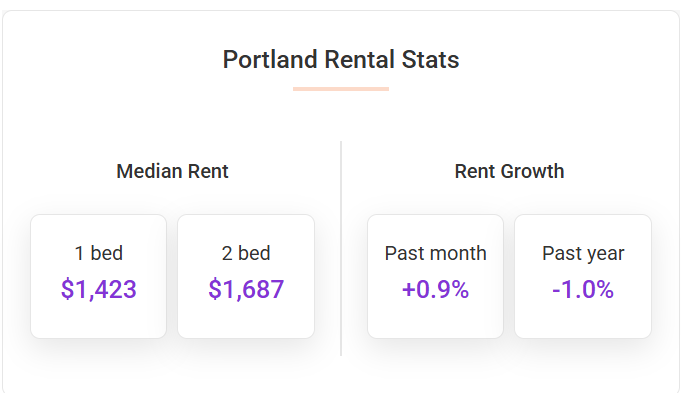
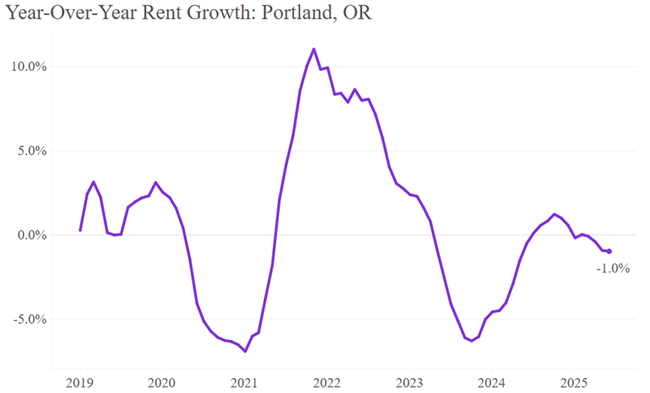
Portland rents were up 0.9% in June however, prices remain down 1.0% year-over-year and now the median rent in the city stands at $1,566.

Portland rents were up 0.9% in June according to the July report from Apartment List.

However, prices remain down 1.0% year-over-year.

Currently, the overall median rent in the city stands at $1,566.

Portland rent growth in 2025 pacing below last year

Six months into the year, rents in Portland have risen 3.0%. This is a slower rate of growth compared to what the city was experiencing at this point last year. From January to June 2024 rents had increased 3.9%.

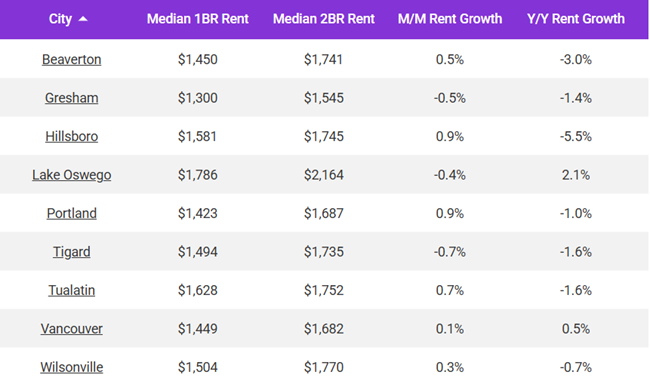
Citywide, the median rent currently stands at $1,423 for a 1-bedroom apartment and $1,687 for a 2-bedroom. Across all bedroom sizes in the entire rental market, the median rent is $1,566. That ranks #40 in the nation, among the country’s 100 largest cities.

Portland rents were up 0.9% in June however, prices remain down 1.0% year-over-year and now the median rent in the city stands at $1,566.

Portland rents are 6.6% lower than the metro-wide median

Across the Portland metro area, the median rent is $1,678 meaning that the median price in Portland proper ($1,566) is 6.6% lower than the price across the metro as a whole. Metro-wide annual rent growth stands at -0.7%, above the rate of rent growth within just the city.

The table below shows the latest rent stats for 9 cities in the Portland metro area that are included in the Apartment List database.

Among them, Lake Oswego is currently the most expensive, with a median rent of $2,040. Gresham is the metro’s most affordable city, with a median rent of $1,524. The metro’s fastest annual rent growth is occurring in Lake Oswego (2.1%) while the slowest is in Hillsboro (-5.5%).

Portland rents were up 0.9% in June however, prices remain down 1.0% year-over-year and now the median rent in the city stands at $1,566.

Sign Up For Our Weekly Newsletter And Get Rental Property And Apartment News And Helpful, Useful Content Each Week.

* indicates required