
Home Blog Page 11

How Focusing on Client Satisfaction Pays Off

Why a focus on client satisfaction - keeping clients happy- in multifamily can be a key to successful and profitable management.

Why a focus on client satisfaction – keeping clients happy – especially when it comes to maintenance in multifamily can be a key to successful and profitable management.

By Paul Bergeron

The wake-up call came when his property-management company lost two big clients, comprising about 20% of its revenue.

It was an unsteady time at Howzer Property Management. The company, which manages about 1,000 doors, was transitioning its property-management software, and its CEO, Casey Howe, said it lost a sense of purpose.

“Our staff didn’t look forward to coming to work,” Howe told an audience during a session at the MXSummit by Property Meld this month in Rapid City, S.D.

The session, “Customer-Obsessed: The Key to Thriving Property-Maintenance Operations,” spoke to why keeping clients happy is a key to successful and profitable management.

“As an industry, we are good at process, but our focus on making clients happy can be lacking,” Howe said.

Howzer received complaints, including poor communication on maintenance, clients’ inability to understand the financial statements, excessively long draws, clients’ prior notice of issues that the management company did not address, and insufficient explanation of pricing.

The company refocused, and the results were astounding. It improved its 33% CSAT (Customer Satisfaction) rating to 72% in about six months.

“We started talking directly with our clients and that immediately helped us to identify and begin resolving issues,” Howe said.

Having that open line helped to put both parties at ease.

“There aren’t many ways we can differentiate our businesses in this industry, other than price and service,” Howe said.

His company’s priorities shifted away from innovation and being an early adopter.

“For that, you can let other people fail for you, so you don’t have to,” Howe said. “We needed to have an outward focus: What are our clients asking for, and can we deliver it?”

The key to client satisfaction is to hire a client-success manager, Howe said, a position he was familiar with having previously worked in SaaS (software as a service) technology.

“There aren’t many in our industry who have them because the responsibilities are often wrapped in the property-manager position,” he said.

Another step that led to revenue-per-door increases was conducting customer success surveys. They focused on client onboarding, legal issues, client strategy and financial acumen, and tenant problem resolutions.

He also advised taking a hard look at an existing process. Howzer chose maintenance coordination.

“Look at your processes and ask yourself, ‘If I were a client, what would I do differently?’ ” Howe said, which leads to new approaches.

He shared maintenance timelines with clients, made them aware of costs up front, offered proactive updates, clarified notations on the financial statements, and involved the lead technician and supervisor when needed.

Howzer’s clients varied in the number of units they owned, which influenced some of the efforts.

“An owner who has 50 units probably doesn’t want to hear about every maintenance work-order that is conducted,” Howe said. “But one who has just three units probably does.”

Management companies have their processes, and they tend to stick to them. However, by making his clients more aware through information sharing, Howe and Howzer achieved success.

About the author:

Paul Bergeron is a freelance writer.

Sign Up For Our Weekly Newsletter And Get Rental Property And Apartment News And Helpful, Useful Content Each Week.

* indicates required

Driving Performance Through Multifamily Technology

With multifamily technology (proptech) increasingly integrating into the sector, owners, and property managers have training challenges.

With new multifamily technology (proptech) increasingly integrating into the sector, owners, operators and property managers are encountering a variety of challenges.

By Julia Crawford

In multifamily training and development, there is an unprecedented and widening gap between the possibilities new property technology (proptech), brings and the actual implementation or adoption happening on the ground.

While traditional training techniques and methodologies sufficed in simpler, less complex times, the current landscape demands a new approach to training and professional development. These new methods need to be more flexible, accessible and tailored to diverse learning needs, ensuring that teams can stay up-to-date and effectively harness the latest innovations regardless of the situation in their individual communities.

It’s no longer good enough to have training “complete” as a measure of success. Modern training requires a new mindset to achieve optimal success, placing an emphasis on performance-based enablement rather than compliance-only training. This approach focuses on driving specific key performance indicators (KPIs), competence and confidence through training.

8 Workforce Development Challenges

With new technology increasingly integrating into the multifamily sector, owners, operators and property managers are encountering a variety of challenges that can complicate effective training:

  • High Turnover Rates: The turnover rate for the multifamily sector is consistently higher than average and still higher at the property level. This requires communities to implement an onboarding and training program that brings new employees up to speed quickly so service levels don’t suffer.
  • App Fatigue: Tech stacks are rapidly becoming more difficult as property teams are faced with switching between apps and keeping track of dozens of passwords.
  • Shifting Training Needs: As digital tools have become routine, technical training alone is no longer enough. Communities now face the challenge of balancing efficiency and empathy.  Training priorities are shifting toward interpersonal skills such as communication, conflict resolution, and customer services, while also ensuring teams can use technology in ways that strengthen, not weaken, human connection.
  • Generational Differences: As the workforce becomes more multi-generational, a one-size-fits-all approach to training is no longer optimal. Training needs to become more personalized to meet the varying levels of technical knowledge among employees.
  • Technology-Adoption Gaps: Some employees excel with new technology while others struggle due to role-specific skill gaps. These differences lead to inconsistent operations and can ultimately affect resident satisfaction and retention.
  • Compliance Blind Spots and Regulatory Fatigue: Constantly changing requirements and the burden of manual regulatory monitoring create compliance risks and lead to fatigue for those responsible for keeping up.
  • Low Engagement: Generic, one-size-fits-all training formats often fail to capture interest or motivate employees. This leads to reduced participation, fewer opportunities for employees to build new skills, and slower career growth.
  • Language Barriers: In a diverse workforce, language barriers can hinder productivity, especially for deskless employees like maintenance staff who rely on real-time support and clear communication to do their jobs effectively. When language prevents learning, everyone suffers.

Transforming Multifamily Training

Training today needs to bring overall workflow and performance-based methods to the forefront, providing adaptive, accessible and measurable multifamily training.

Owners and operators should strive for a system that is on-demand and available with shorter, more accessible content to meet the diverse needs of those participating in training. Easy-to-use chatbots enhance training by allowing users to ask questions in real-time during a session or while on the property.

Multifamily employees are looking for training that meets their community’s needs quickly, while helping them tackle the daily tasks they face with property management, as well as resident interaction and retention. It’s equally critical to ensure that teams have a system that keeps them up-to-date on frequently changing policies and regulations.

The AI and Mobile Revolution: A Competitive Edge for Every Employee

Artificial intelligence has transformed training from reactive to predictive.

AI-powered systems can assess training needs before gaps become problems, recommend personalized content based on individual performance patterns, and identify potential issues through advanced analytics.

Mobile accessibility has become essential in training. Cross-device functionality generates seamless experiences, whether your team uses smartphones, tablets or desktop computers. Providing offline capabilities keeps learning continuous even if there’s limited connectivity, while push notifications are helpful for delivering timely reminders and updates to teams.

In the past, teams were faced with making decisions based on outdated information. AI, paired with real-time dashboard analytics, provides more current performance metrics, individual progress tracking, and compliance status visualization, turning data into actionable insights for more immediate improvement.

ROI That Clearly Communicates

KPIs today go far beyond simply verifying that training modules are completed.

Monitoring how performance improves over time is more critical with a shift in training approach. Additionally, compliance metrics ensure employees are meeting regulatory standards, which helps reduce risks for owners and operators. Regulatory standards are changing quickly and ensuring an onsite team has a clear understanding is crucial for compliance.

Adoption metrics also play a crucial role. These include platform-utilization rates, which indicate how frequently employees access training materials; engagement statistics, showing how well training is integrated into daily routines; and user-satisfaction scores, reflecting participants’ views on the training experience.

Collectively, these metrics provide a richer, more detailed picture of training success and demonstrate clear ROI by showing actual effects on employee performance and organizational goals. Additionally, companies can use this to evaluate training modules or programs to make needed adjustments to more effectively engage their workforce.

Future-Proofing Training Strategy

Future-proofing isn’t about chasing every new gadget or trend — it’s about building a training strategy that adapts as quickly as the business changes.

That means creating systems that scale with growth, evolve with regulatory demands, and adjust to workforce shifts. Operators who connect training directly to property performance will ensure their teams are not only compliant, but also confident, capable, and competitive.

The multifamily industry is at an inflection point. Multifamily technology is everywhere, but real performance gains only come when people are equipped to use it well. Training must move from “checked boxes” to “changed behaviors,” embedding knowledge into daily workflows and tying learning directly to the KPIs that matter most.

Operators who embrace this shift will not just adapt to tighter margins and rising expectations — they’ll set the standard. By aligning multifamily technology, people, and performance, they can build stronger teams, deliver better resident experiences, and position their portfolios to thrive in a more competitive market.

About the author:

With multifamily technology (proptech) increasingly integrating into the sector, owners, and property managers have a variety of challenges.

Julia Crawford serves is senior vice president of product management at Grace Hill. With over two decades of experience, she is known for transforming complex product portfolios into innovative, market-leading solutions. Julia is passionate about execution that delivers value, with a focus on helping customers achieve stronger business outcomes.

Sign Up For Our Weekly Newsletter And Get Rental Property And Apartment News And Helpful, Useful Content Each Week.

* indicates required

The Hidden Risk of Renter Defaults And Industry Perception

A new survey reveals persistent multifamily renter defaults driven by economic instability placing increasing pressure on operations.

A new survey reveals persistent multifamily renter defaults driven largely by economic instability that are placing increasing pressure on operations.

A national survey of over 400 multifamily professionals, conducted by TheGuarantors in partnership with J Turner Research, highlights differing views on renter default, recovery, and risk mitigation.

Executives and onsite staff are experiencing different realities, and that gap could be preventing operators from implementing effective risk mitigation strategies or tools.

“While nearly half of operators surveyed perceive default trends as stable, this perception obscures a concerning reality: more than a third report increases. Pessimism around renters’ financial recovery is also notable, and perceptions differ significantly between leadership and frontline staff,” the report says.

4 Key findings in the report

No. 1 – Economic backdrop driving default

Economic pressures remain the primary perceived driver of renter default, with little optimism that these conditions will improve in the short term.

Top concerns were cash flow, employment, and rent affordability.

The top three cited causes of delinquency were:

  • Cash constraints (29%)
  • Job loss (24%)
  • Rent affordability (23%)

Executives prioritized cash flow issues (35%), while onsite staff—closer to resident interactions—pointed more often to job loss (28%).

No. 2 – Outlook: No relief in sight

A strong majority (80%) of respondents believe these cores issues will persist over the next year. Among the 20% who do anticipate change, most still expect the next wave of defaults to be driven by job loss, affordability, or cash-related stress, further reinforcing expectations of prolonged financial strain.

No. 3 – Secondary factors differ by role

When asked about additional contributing factors:

  • Executives cited government policy fallout (e.g., CARES Act)
  • Corporate and onsite teams emphasized resident money management and broader economic pressures

These role-specific insights suggest both structural (macro policy) and behavioral (spending habits) lenses are influencing the way different teams interpret default risk.

No. 4 – Fraud: Underestimated and overlooked

Only 8% of respondents named fraud as a primary cause. However, this perception diverges sharply from broader industry data. According to a recent NMHC report:

  • 3% of operators experienced fraud in the past year
  • 7% saw a rise in fraudulent applications or documents

This mismatch indicates that while economic hardship dominates daily discussions, the financial toll of fraud—especially sophisticated, undetected types—may be under-recognized in current decision-making and strategy.

Report conclusion and summary

“This research paints a picture of an industry facing sustained pressure from renter default. While perceptions of stability persist at the surface, one in three operators is seeing increases. Executives are increasingly wary of recovery rates.

“And frontline staff report worsening conditions. Operationally, the cost is real: bad debt, eviction expenses, strained cash flow, and overextended property teams.

“Yet, traditional tools—while widely used—are delivering only moderate results, especially in the eyes of leadership. A significant gap remains between the complexity of today’s risks and the tools being deployed to manage them.

“And with fewer than one in four operators exploring new solutions, most teams may be unprepared for continued disruption,” the report says.

Read the full report here.

Sign Up For Our Weekly Newsletter And Get Rental Property And Apartment News And Helpful, Useful Content Each Week.

* indicates required

HUD Moves to Gut Fair Housing Act Enforcement

HUD and the Trump administration are making efforts to limit Fair Housing Act enforcement, the law that prohibits discrimination in housing

The U.S. Department of Housing and Urban Development (HUD) and the Trump administration are making efforts to limit Fair Housing Act enforcement, the landmark civil rights law that prohibits discrimination in housing, according to reporting in the New York Times.

Sen. Elizabeth Warren, the ranking Democrat on the Senate committee responsible for HUD,, sent a letter to the HUD inspector general saying, “The documents obtained by my office allege that HUD leadership informed (the) existing office of fair-housing staff that “fair housing was ‘not a priority’ of the administration, that less civil rights work would be performed under this administration.”

According to the Times, half a dozen current and former employees of HUD’s fair housing office said that Trump political appointees had made it nearly impossible for them to do their jobs, which involve investigating and prosecuting landlords, real estate agents, lenders and others who discriminate based on race, religion, gender, family status or disability.

“Several lawyers said they had been blocked from communicating with clients without approval from a Trump appointee, and had been barred from citing some past housing civil rights cases when researching legal precedent for possible new prosecutions,” the article says.

HUD staff members said much of the office’s fair-housing work is being characterized as an offshoot of D.E.I.

Documents reviewed by The Times show that the work was repeatedly referred to as “not a priority of the administration.”

Trump administration officials have drastically reduced Fair Housing Act enforcement at HUD. Settlements dropped from $4-8 million annually to less than $200,000, while discrimination charges fell from 35 per year to just 4 since Donald Trump took office. Staff cuts of 65% have reportedly left the fair housing office with only 11 employees, according to the Times reporting.

Kasey Lovett, a spokeswoman for HUD, said in a statement that it was “patently false” to suggest the department was looking to blunt enforcement of the Fair Housing Act. The Office of Fair Housing and Equal Opportunity, she said, “is using its authority to uphold the law, protect the vulnerable, and ensure meaningful access to housing.”

Fair housing cases have historically covered a broad range of civil rights violations.

They have involved landlords refusing to rent to single mothers with children, or people of a certain religion. They have combated discrimination against disabled veterans who needed to live with a service animal. They have targeted real estate agents who did not want to show Black buyers homes in white neighborhoods. And in recent years, they have protected survivors of domestic violence from being denied housing assistance when attempting to escape a stalker or abuser.

Five lawyers have filed a federal lawsuit alleging that they had been “unlawfully targeted by HUD leadership and forced to leave” their roles in the fair-housing office “against their will.” They asked for an injunction ordering HUD to cancel their reassignments.

A spokesman for Senator Elizabeth Warren said the senator sent a request to Brian Harrison, HUD’s acting inspector general, to open an investigation into the office. The allegations, she wrote, “suggest that HUD is no longer enforcing Fair Housing and Civil Rights Laws — with dire consequences.”

Read the full New York Times article here.

Read Senator Elizabeth Warren’s letter here.

Sign Up For Our Weekly Newsletter And Get Rental Property And Apartment News And Helpful, Useful Content Each Week.

* indicates required

4 Tenant-Screening Mistakes that Could Cost You Thousands

4 Tenant-Screening Mistakes that Could Cost You Thousands

Tenant screening is one of the most important steps you can take to protect your investment so here are four tenant screening mistakes that could cost you.

By Nancy Abrams

Many landlords still fall into common traps that leave them vulnerable, so let’s look at four tenant-screening mistakes you want to avoid.

Mistake #1: Skipping Screening Because “It Takes Too Long”

Some landlords believe they can judge a tenant’s reliability just by looking at their application.

But modern online screening tools make it easy to get a full picture within minutes. With only basic applicant details, such as date of birth and Social Security number, you can instantly access reports covering credit history, eviction records, criminal background checks, and identity verification. Bypassing this step might feel like a time-saver now, but it can create major headaches later if your tenant turns out to be unreliable.

Mistake #2: Relying Only on Credit Score and Income

A high credit score and a solid job may suggest financial stability, but they don’t tell the full story.

A tenant who pays bills on time could still neglect your property, clash with neighbors, or break lease terms. On the flip side, someone with a modest credit score may be a responsible and respectful renter. Screening should look beyond income and credit to include rental history, landlord references, and eviction records to truly gauge tenant reliability.

Mistake #3: Skipping Background Checks to Save Money

Some landlords hesitate to pay for tenant background checks, assuming they’re too expensive.

But the truth is, the cost is minimal compared to the potential losses. Evictions alone can cost an average of $3,500, not to mention property damage or months of unpaid rent. Many landlords charge applicants an application fee, eliminating the need to pay for the screening themselves. Whether you cover the cost or not, skipping a background check can leave you exposed to significant financial risk.

Mistake #4: Believing Credit Checks Will Hurt an Applicant’s Score

It’s a common misconception that running a credit check will damage a tenant’s credit score.

In reality, AAOA landlord credit checks are considered “soft pulls,” which don’t affect scores at all. Only “hard pulls,” such as applying for a mortgage or credit card, temporarily lower credit scores by a few points. Reassuring tenants about this distinction can help ease concerns and streamline your application process.

The Bottom Line

Approving a tenant based on gut feeling or incomplete information is a gamble that can quickly turn costly. By avoiding these common mistakes and running thorough background and credit checks, you’ll protect your property, minimize turnover risks, and improve your chances of finding tenants who pay on time and respect your investment.

About the author:

Nancy Abrams currently serves as content editor for the American Apartment Owners Association (AAOA). AAOA assists landlords, property managers, real estate owners and brokers across the country with managing their properties, including tenant credit checks and tenant background screening as well as state-specific landlord forms, such as a rental application or rental agreement.

The association also offers resources from educational webinars and landlord tenant law to approved providers for insurance, rent collection and financing. Contact the organization today to learn more.

Sign Up For Our Weekly Newsletter And Get Rental Property And Apartment News And Helpful, Useful Content Each Week.

* indicates required

Proper Processes for Vendor Relationships Strengthen Business

Setting up a process for vendor relationships in multifamily such as a preferred vendor program can strengthen business relationships.

Setting up a process for vendor relationships in multifamily, such as a preferred vendor program ,can strengthen business relationships.

By Paul Bergeron

When entering the world of real estate investment and property management, having a ton of motivation is not enough. There must be processes in place, especially when it comes to working with vendors.

Samuel Beutler, co-owner of Apex Property Management, explained why during his session, “Collaborative Partnerships: Elevating Your Property Maintenance Operations Through Vendor Relationships,” at the MX Summit by Property Meld in September in Rapid City, S.D.

“Stop keeping the vendors who are just ‘good enough’,” he said. “It’s OK to let them go.”

On the other hand, “Vendors will sense early on if you are not dialed in (regarding) the way you manage your business,” Beutler said.

Beutler said it’s important to choose vendors that match the property-management company’s portfolio size.

“A company that manages 600 units doesn’t want to use the biggest firm in town,” he said. “You don’t want companies that are too big or too small, you want your visions to align, otherwise it won’t work.”

He suggested either hiring a vendor relations coordinator or assigning those duties to one of your employees to improve vendor coordination.

Beutler said he insists that every vendor he chooses is certified by Property Meld, a maintenance-management software. He said, once on board, to give the vendors precise directions on everything that needs to be done, from work orders to priorities to invoicing.

He avoids any vendors that require deposits, such as “putting half down” on the payment before they begin the work, or advancing them the costs of materials.

Beutler uses a “preferred vendor” program and gives himself a 10% discount on their invoices, capped at a $500 discount.

“We do this, and the vendors like it, because we can guarantee that we’re going to give them a lot of work,” he said. “If they don’t understand why we do this, we show them our QuickBooks account and let them see how much work these preferred vendors receive.”

Preferred vendors also realize that, due to their status, they don’t have to pay nearly as much to advertise their services to generate more business.

The vetting process is key. Beutler insists that any vendor interested in doing business with Apex must apply through the Apex website. This creates consistency in the process.

“Management companies can learn a lot about these interested vendors, including what it’s going to be like to work with them, based on how they fill out their applications,” he said.

“It’s a chance for them to demonstrate their professionalism and ability to communicate clearly by providing details.”

Once they have applied, it’s essential to respond to them and let them know that they are now in the candidate system.

“When selected with care, vendors can be an extension of your brand,” Beutler said. “And always use the praise and feedback loop between residents, the management company, and vendors to maintain strong communication.”

About the author:

Paul Bergeron is a freelance writer.

Sign Up For Our Weekly Newsletter And Get Rental Property And Apartment News And Helpful, Useful Content Each Week.

* indicates required

Multifamily Pet Management Technology Solution

Multifamily Pet Management Technology Solution

As property operators confront rising costs and mounting pressure to increase revenue, addressing the gaps in pet management and pet policies has become critical, according to a release from Foxen.

With pet ownership among renters climbing to 58% and pet-friendly properties in high demand, property managers are strained by fragmented systems that disrupt the rental application process and increase liability risks.

Foxen’s multifamily pet-management tool centralizes pet and animal data, giving staff an frictionless way to process pet applications and animal-related reasonable-accommodation requests while maximizing profit recovery, the company’s release says.

Foxen has launched PetClear, a technology-based solution to streamline pet management for property owners and operators.

Industry data reveals that renters with pets generate 10–15% more property damage on average than do tenants without pets, while inconsistent pet-policy enforcement costs operators millions in unreported pet fees and increased liability exposure. However, other research disputes the statement that pets cause more property damage.

“Our recent industry research shows that more than 70% of property-management professionals struggle to enforce pet policies. At the same time, 90% of property-management professionals report an increase in the frequency of emotional-support animals, with misrepresentation issues in some cases,” said Kevin Jacobson, CEO of Foxen, in the release. The company hopes to be the go-to platform for today’s competitive rental market.

The platform collects and organizes all documents for accommodation requests, making the process simple for residents and efficient for staff. It also helps properties recapture lost pet rent and fees; for example, 100 reported pets in a portfolio charging $25/month adds $30,000 in annual revenue, showing how better compliance delivers real financial gains.

Developed through extensive collaboration with property-management teams, PetClear addresses both sides of the pet management equation.

Key platform benefits include:

  • Improved leasing performance: Automated applicant reminders and property-management software integration means complete pet data is centralized in one place, eliminating time spent on manual follow-ups while consistently enforcing policies through required resident acknowledgments.
  • Strengthened NOI and reduced risk: Recover missed income from unreported pets, create new verification fee streams, and prevent property damage through systematic verification.
  • Superior user experience: Provide residents a pet-friendly and safe community with a convenient resident-management portal that protects private data while reducing vendor bloat.

“Customers asked for a solution that integrates seamlessly with existing operations and removes the guesswork from pet management,” Jacobsen said in the release. He said the product “helps properties increase revenue while also improving resident experience for owners of pets and assistance animals alike.”

About the author:
Foxen is a provider of solutions that mitigate risk and build financial wellness for multifamily property owners, operators and their residents.

Sign Up For Our Weekly Newsletter And Get Rental Property And Apartment News And Helpful, Useful Content Each Week.

* indicates required

Pets and Housing: Pet Owning Renters Face Barriers Despite “Pet-Friendly” Ads

Late Rent Payments Climb as Finances Weigh on Renters

On-time rent payments have declined and late rent payments have climbed as finances weigh on renters and U.S. economic growth slows

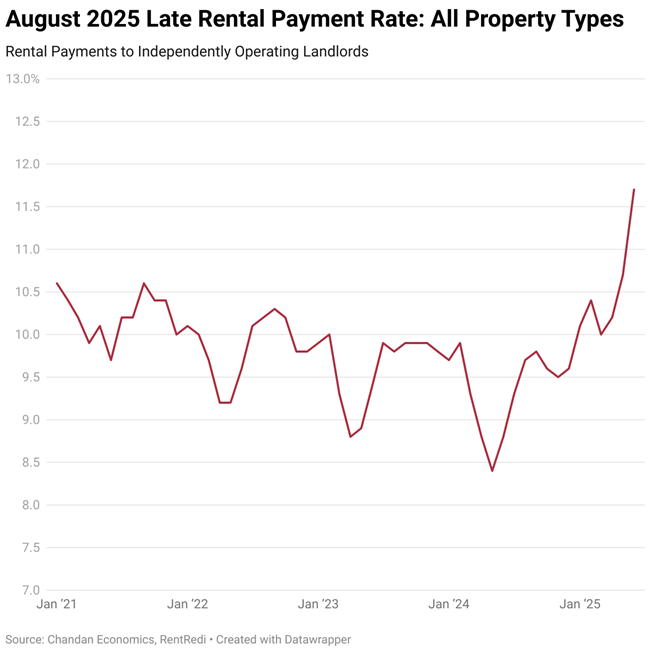
On-time rent payments by apartment renters have been on the decline since April 2023, illustrating the financial strains facing many renter households as late rent payments climb and U.S. economic growth slows, according to a new report from  Chandan Economics powered by RentRedi data.

While August 2025 payments showed some improvement, on-time rent payments are down substantially from a year ago.

Highlights of the late-rent-payments report:

  • On-time rent payments have declined steadily since April 2023, reflecting mounting financial stress on renters.
  • Full rent collections remain steadier, but more renters are paying late—late payments in independently owned rentals rose from 8.8% in mid-2024 to 11.7% in June 2025.
  • Seasonal patterns are shifting: Typically, late payments ease in spring tax-refund season, but not this year—suggesting deeper cash flow misalignment.
  • Slower wage growth and rising debt burdens are pressuring renters, though stable employment has helped many eventually catch up.
  • Looking ahead, household debt and interest payments pose the biggest risks to renters’ ability to stay current.

“The growing share of apartment renters playing catch-up on their monthly bills may speak to a broader undercurrent of distress,” the report says.

“The seasonality of late rent payments in recent years suggests that renters in mom-and-pop properties are sensitive to modest changes in monthly cashflow.

“Late-rent-payments have tended to drop off in the spring, lining up with when most households receive their tax refunds. However, a sustained recent surge in late rent payments this year without the normal springtime improvement may indicate a structural misalignment of household cash flows, with a growing share of tenants relying on mid-month income to pay off overdue rent,” the report says.

Compared to the early pandemic years, the income constraints felt by renters today are not as acute — nor are they as destabilizing to landlord incomes. Although wages have slowed, layoffs are not accelerating significantly, helping explain why many renters are eventually meeting their rent obligations even if it’s taking longer to get there.

“Looking ahead, rising household debt and interest payments pose the most obvious risk to renters’ ability to keep up,” the report says.

Read the full report here.

Sign Up For Our Weekly Newsletter And Get Rental Property And Apartment News And Helpful, Useful Content Each Week.

* indicates required

Weather Tracker Mobile Maintenance App Helps Property Management

How a weather tracker mobile maintenance app can help property management present greater details when responding to residents

How a weather tracker mobile maintenance app can help property management present greater details when responding to residents, filing insurance claims, or any other risk management situations.

By Paul Bergeron

Apartment residents often blame a management company for damage or injuries caused by inclement weather, which can lead to lawsuits and accusatory conflict.

American Landmark, which manages 35,000 apartment homes, is better prepared for such incidents, including complaints about HVAC issues or flooding, because it is now tracking precise weather conditions through its mobile maintenance app.

This enables the maintenance technician, property management, and the corporate office to present greater details when responding to residents, filing insurance claims, or any other risk management situations.

Rachel Palmer, chief administrative officer of American Landmark, noted that the field for capturing weather conditions using the AppWork maintenance platform represents a breakthrough in capabilities.

“Having precise weather data tied to a specific location and time provides tremendous value in risk management,” Palmer said. “For example, when evaluating property damage, it allows us to clearly distinguish between losses caused by natural events—such as heavy rain or high winds—and those resulting from maintenance issues.

“This level of detail is also important to insurers, as it creates an objective record. Without it, residents may assume damage stems from negligence, when in fact it can often be traced back to documented weather conditions.”

The app records the weather conditions and temperature as the maintenance technicians move through the work-order and incident-reporting process.

“It’s not the weather in a city or a neighborhood, but the exact location that is recorded with latitude and longitude coordinates,” Palmer said.

“Detailed weather records also provide important context in liability cases. For instance, if a resident were to slip on stairs, accurate data showing that it was raining at the time helps clarify the role of environmental conditions. This allows us to present an objective picture, rather than relying solely on assumptions about property conditions or footwear.”

The app also allows her on-site team to send alerts about the current conditions or when bad weather is on the way.

“It’s important to encourage personal accountability while also providing residents with clear, timely information. Tools like this allow us to document notifications and demonstrate that we’ve communicated relevant conditions. If a dispute arises, we can show that residents were informed, creating transparency and fairness for everyone involved.”

Paul Rhodes, founder of Directional Maintenance, told GlobeSt.com that a correlation between providing maintenance service and the environmental conditions outside could have an impact of varying sizes.

“On the smaller size, impacting one resident, it could standardize emergency response to the ‘my HVAC system is broken,’ during comfortable outdoor temperatures,” Rhodes said.

“A larger impact could trigger roof or outdoor inspections after a hurricane, and parking area drain and gutter inspections after a certain quantity of rain,” he said. “Automations could be set to create service requests based on forecasting.”

He gave the example of being able to remove pool furniture, adjust irrigation timers, and make other appropriate preparations before a storm. More precisely, a system can automatically alert the team to perform coil-cleaning service requests after sandstorms and foundation inspections after earthquakes.

“Additionally, documenting the outside humidity would be helpful during the remediation process in aiding the proper response to liability concerns.”

American Landmark’s 48-hour guarantee

Landmark offers a Landmark 360 promise to its residents that states it will respond to their work orders within 48 hours – guaranteed.

Last year, it did 242,000 work orders across 110 properties, among the 35,000 apartment homes it manages. Work orders, on average, were completed in 1.4 days.

The property=management company also uses these performance metrics as part of its maintenance teams’ incentive program. By linking measurable outcomes—such as timely repairs and effective issue resolution—to bonuses, the system encourages accountability and helps ensure residents receive a higher standard of service.

The AppWork maintenance system includes a unique feature that can automatically “stop the clock” on work orders when outside vendors or additional parts are needed. This ensures that response times are measured fairly and that maintenance teams’ key performance indicators reflect only the work within their direct control.

For example, if a technician begins a repair but needs to pause to request a part, the system stops the timer. This provides a more accurate picture of the actual labor time required, promoting both fairness and accountability.

“The tool’s advanced search function also makes it easy to track specific issues—such as rain-related incidents, stairway concerns, or other types of damage. This allows us to quickly monitor work-order progress and confirm when repairs have been completed, improving both efficiency and accountability,” Palmer said.

About the author:

Paul Bergeron is a freelance writer and reporter.

Sign Up For Our Weekly Newsletter And Get Rental Property And Apartment News And Helpful, Useful Content Each Week.

* indicates required

Two Years of Declining Rents Have Renters Ready to Move

Two years of declining rents have renters ready to move for many renters to gain space, save money or explore a new area,

More than two years of declining rents are sparking moving plans for many renters to gain space, save money or explore a new area, according to a new report from Realtor.com.

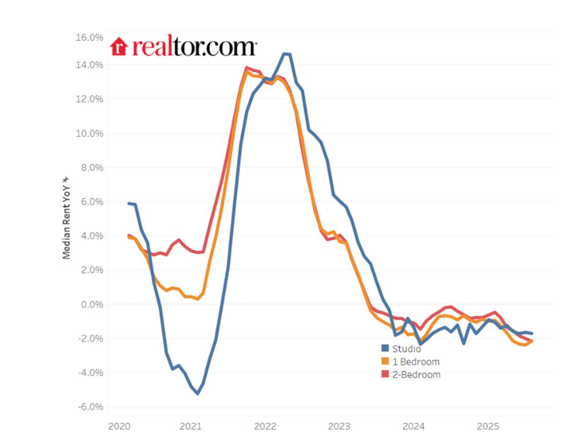
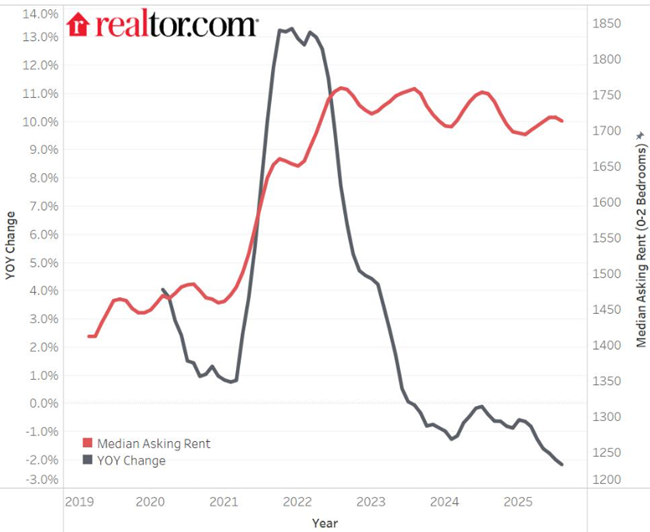
Rent prices fell year over year for the 25th consecutive month in August, while also registering the first month-over-month drop since March 2025, signaling the expected seasonal slowdown heading into the fall.

“Rental declines across the majority of markets in various-sized homes are providing new options for renters, who have been squeezed by significant increases since the pandemic,” said Danielle Hale, chief economist at realtor.com, in a release.

“As rents remain significantly higher than pre-pandemic levels, our Site Visitor Survey shows that the search for a more affordable home remains one of the top reasons to move across all age groups. This is likely a reason why we’re starting to see a modest uptick in renter mobility.”

Rents Decline Again, but Nationwide Rent Is 2.6% Below 2022 Peak

Rents Decline Again, but Nationwide Rent Is 2.6% Below 2022 Peak

Rent Prices Dropping Across All Unit Sizes

Median rent declined across units in all size categories examined by realtor.com. Studio rents dropped to $1,430 per month, down $25 (-1.7%) year over year; 1-bedrooms fell to $1,593, down $35 (-2.1%) year over year; and 2-bedrooms, which experienced the highest growth rate over the past six years, registered the largest declines, landing at $1,897, down $42 (-2.2%) year over year.

Why Renters Are Ready to Move

With rents easing, more renters are exploring a move.

When rents rose in 2021–2022, nearly 80% of renters stayed put, with mobility around 20.8%. Census data shows renter mobility edged up in 2023 (21.5%) and continued to rise in 2024 (21.6%).

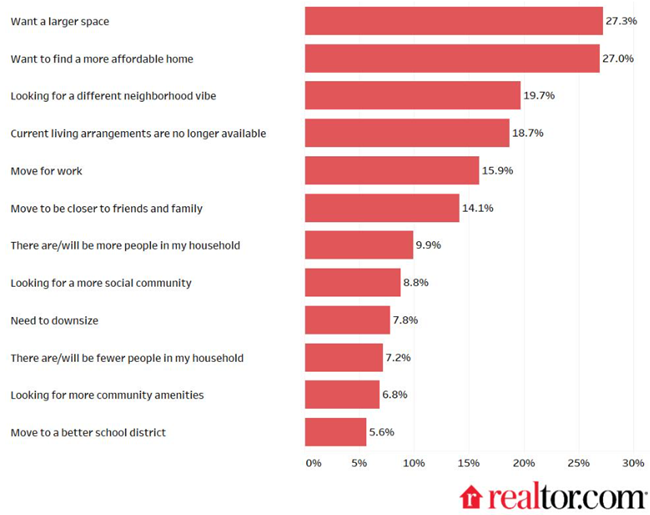
Data from the realtor.com Site Visitor Survey reveals renters are most often considering a move to gain more space, find a more affordable home, or try out a new neighborhood.

Markets with the largest rental price declines from their peaks, including Las Vegas (-13.6%), Atlanta (-13.6%), and Austin, Texas (-13.4%) in particular, are creating pockets of opportunity for renters looking to make a move.

Reasons for mobility vary by age, with younger and older renters more likely to move for affordability reasons, while middle-aged renters may be looking for more space to accommodate a growing family.

“Renters focused on affordability are often willing to make compromises, like choosing a longer commute, fewer amenities or fewer on-site services,” said Jiayi Xu, economist at realtor.com, in the release.

“It shows that many households are carefully weighing costs against lifestyle, making tradeoffs to find a home that better fits their budget.”

Why are you moving into a new rental home? 

Why are you moving into a new rental home?

Renters Remain Hopeful About Ownership, But Barriers Persist


Even as the average age of home buyers reached an all-time high of 38 in 2024 and many renters remain priced out of buying, optimism about ownership is strong.

Nearly 60% of renters surveyed said they plan to buy a home, and of those, more than half expect to do so within the next one to two years. At the same time, barriers such as saving for a down payment, limited affordable inventory, and credit constraints remain the top reasons people continue to rent.

Read the full report here.

Sign Up For Our Weekly Newsletter And Get Rental Property And Apartment News And Helpful, Useful Content Each Week.

* indicates required