
Home Blog Page 10

Oregon Agency Sets Rent-Control Cap for 2026 at 9.5%

The Oregon Department of Administrative Services has set the Oregon rent control cap for 2026, called rent stabilization, at 9.5%

The Oregon Department of Administrative Services has set the 2026 rent-control cap, called rent stabilization, at 9.5%, according to reports. It is the second-lowest allowed increase since Oregon began stabilizing rent.

A separate 6% cap applies to mobile-home facilities with more than 30 spaces because of a new state law.

Here is what the agency reported on its website.

  • “For tenancies subject to ORS 90.600 (1) in facilities with more than 30 spaces, as 6%.” For 2026, the maximum allowable rent-increase percentage is 6%.
  • “For tenancies subject to ORS 90.600 (1) in facilities with 30 or fewer spaces or for tenancy types subject to ORS 90.323, percentage is the lesser of:
    • Ten percent; or
    • Seven percent plus Consumer Price Index (CPI). For 2026, the maximum allowable rent increase percentage is 9.5%.

The allowable rent increase percentage for the previous year, 2025, was 10.0%.

OregonLive.com reported that the agency acknowledges that officials originally misinterpreted the new law when they published annual statewide rent-increase limits for 2026. The agency first reported landlords can raise rents by up to 9.5% in many residences next year, down from 10% this year.

Under Oregon’s rent-control law, the ceiling is the lesser of 7% plus inflation or 10%. It doesn’t apply to properties built in the past 15 years.

But the agency, citing the newly passed House Bill 3054, also reported that rentals with more than 30 spaces would only see a maximum rent increase of 6%. Then entered the correction.

“House Bill 3054, passed in 2025, changed how rent increases are calculated,” the agency stated. “Now, the size of the rental property affects the allowed increase.”

That bill only restricts annual yearly rent increases in manufactured home parks and marinas with more than 30 spaces to 6%. (Smaller parks and marinas are still subject to the 7% plus inflation or 10% rule.)

Sign Up For Our Weekly Newsletter And Get Rental Property And Apartment News And Helpful, Useful Content Each Week.

* indicates required

Who Is Buying Homes? It’s Not Who You Think

Who is buying homes? In the second quarter of 2025, real estate investors made up 33% of all home purchases—the highest in five years

In the second quarter of 2025, investors made up 33% of all home purchases—the highest in five years – and the real estate investors were primarily small landlords, according to a report in Realtor.com.

More than 90% of investor-owned homes in the United States belong to small landlords with fewer than 11 properties, according to the latest Investor Pulse report from CJ Patrick Co. and BatchData.

Even in states with the highest rates of investor ownership, it’s not institutional buyers driving the trend.

The increase is not caused by a sudden surge in small landlords buying homes, but rather the fact that traditional buyers have pulled back in the face of affordability constraints.

With mortgage rates at 6.3% for the week ending Oct. 9, homeownership has become out of reach for many middle-income households, leaving cash-ready investors to fill the gap and keep housing transactions moving.

Small investors and small landlords are also more likely to renovate older housing stock and provide long-term rentals, especially in areas where affordability or geography limits new construction.

“Small investors have long been the dominant form of investor in the housing market,” said Hannah Jones, senior economic research analyst at Realtor.com, in a release. “Large investor activity picked up during the [COVID-19] pandemic when rents and home prices were climbing rapidly, but even then, large investors were not the majority nationally.

“Traditional homebuyers are looking for the right house in the right place at the right price,” she says. “Investors have more flexibility. They are not constrained by their household’s needs, but are rather looking for a good investment opportunity, which could come in various forms. Investors often have more access to capital as well, which allows them to navigate today’s high-priced market more effectively.”

Even as investor activity rises in some of these states, the report makes clear that many investor-held homes don’t stay in investor hands forever.

In the second quarter, 60% of investor sales went to traditional homebuyers, helping to replenish the owner-occupied stock rather than shrinking it. And with large institutional players retreating from the single-family rental market—selling off more homes than they purchased—small investors are increasingly the ones keeping local markets stable.

Read the full story here.

Sign Up For Our Newsletter And Get Rental Property News And Helpful, Useful Content Each Week.

* indicates required


Tenant Did Not Give 30-Day Notice; Can I Charge for Part of Another Month?

Oregon Agency Sets Rent-Control Cap for 2026 at 9.5%

Where and How Often Do Renters Move?

Photo credit Worawee Meepian via istockimages

Multifamily Rents Slide Under Weight of Supply Glut

Multifamily rents slid in September, their weakest showing for the month in more than a decade as performance was hurt by new apartment supply

Multifamily rents faltered in September, posting their weakest showing for the month in more than a decade as performance was hurt by a flood of new apartment supply and a cooling economy, according to Yardi Matrix.

“The poor performance comes as demand shows signs of weakening while high-supply markets have a glut of properties in the lease-up phase. Rents remain close to all-time highs, so while it is too soon to say September is the start of a trend, the drop could signal emerging market softness,” Yardi Matrix writes in the September Multifamily National Report.

Highlights of the report:

  • With demand and economic growth starting to show signs of cooling, multifamily rents hit a snag in September. The average U.S. advertised rent fell $6 to $1,750 while year-over-year growth fell 30 basis points to 0.6%.
  • The $6 drop in advertised rents was the worst September showing in more than a decade. Properties in markets with an overhang of new supply are offering concessions and/or cutting advertised rents to attract tenants.
  • Single-family build-to-rent (BTR) advertised rates also took a hit in September. The average BTR advertised rent dropped by $15 in September to $2,194, while the year-over-year growth rate fell 60 basis points to 0.0%.

With 525,000 units in the lease-up phase, the report says competition among properties – especially in Sun Belt metros – is intense. Rents are likely to “remain under pressure” until the new apartment supply is absorbed.

Economy and employment concerns

There are concerns beginning to show up about a slowing economy. One sign is that unemployment rose to 4.3% in August. Only 22,000 jobs were added, which is below expectation of the average growth in recent years.

“These labor challenges are weighing on consumer sentiment, which has slipped after gains in June and July. More households now expect declining incomes, even as many already struggle to keep pace with inflation. This is concerning for multifamily, given the link between consumer confidence and household formation,” the report says.

Read the full report from Yardi Matrix here.

About Yardi Matrix

Yardi Matrix researches and reports on multifamily, office and self-storage properties across the United States, serving the needs of a variety of industry professionals. Yardi Matrix Multifamily provides accurate data on 18+ million units, covering more than 90 percent of the U.S. population. Contact the company at (480) 663-1149.

Sign Up For Our Weekly Newsletter And Get Rental Property And Apartment News And Helpful, Useful Content Each Week.

* indicates required

26 Property Management Companies to Pay $141 Million To Settle Lawsuit

26 Property Management Companies to Pay $141 Million To Settle Lawsuit

Greystar and 25 other property management companies have agreed to pay $141 million to settle a class-action lawsuit involving rent-setting algorithmic software coordination and other anticompetitive practices in rental markets across the country, according to reports.

The U.S. Department of Justice reached an agreement in August to settle with Greystar.

Greystar, the nation’s largest landlord, would pay $50 million under the proposed settlement agreement, which was filed Oct. 1  in a Tennessee federal court. The deal would still require a judge’s approval.

The companies have also agreed to no longer share nonpublic information with RealPage for its rent algorithm — a key stipulation, since plaintiffs say RealPage used that information to enable landlords to align their prices and push up rents.

“This represents a fundamental shift in the multifamily housing industry and will help reverse the type of anticompetitive coordination alleged in the complaint,” attorneys wrote in the settlement filing.

All companies involved in the settlement deny wrongdoing and have agreed to help plaintiffs in the ongoing case against RealPage and more than a dozen other property management firms that have not reached settlements. RealPage and others are also fighting an antitrust lawsuit filed last year by the Department of Justice and several state attorneys general.

The settlement funds from the rent-setting software class action lawsuit would be distributed among millions of tenants included in the settlement class.

RealPage has denied any wrongdoing and argues that the plaintiffs misunderstand how their product works. RealPage, which is based in Texas, has said its software is used on fewer than 10% of rental units in the United States, and that its price recommendations are used less than half the time.

“While the proposed settlements … do not include RealPage, we are encouraged to see this matter move toward closure,” said Jennifer Bowcock, RealPage’s senior vice president for communications, in a statement. “RealPage continues to believe that this litigation is without merit and that our revenue-management products, and our customers’ use of them, have always been legal.”

Among the other defendants, Iowa-based BH Management would pay $15 million, while Denver-based Simpson Property Group would pay $6.5 million. The other companies’ settlements range between $550,000 and $6 million.

Sign Up For Our Weekly Newsletter And Get Rental Property And Apartment News And Helpful, Useful Content Each Week.

* indicates required

Where and How Often Do Renters Move?

Nationwide, renters who move to a different apartment within their area in under  two years represent 38% of all apartment renters on the move

Nationwide, renters who move to a different apartment within their area in under  two years represent 38% of all apartment renters on the move, according to new data from RentCafe.

The reasons for moving are often related to finding jobs and better housing — trends that still hold firm even with the rise of remote work.

Highlights of the report:

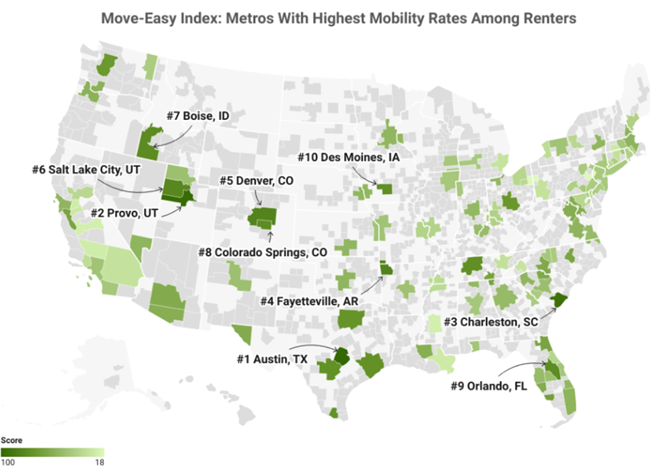
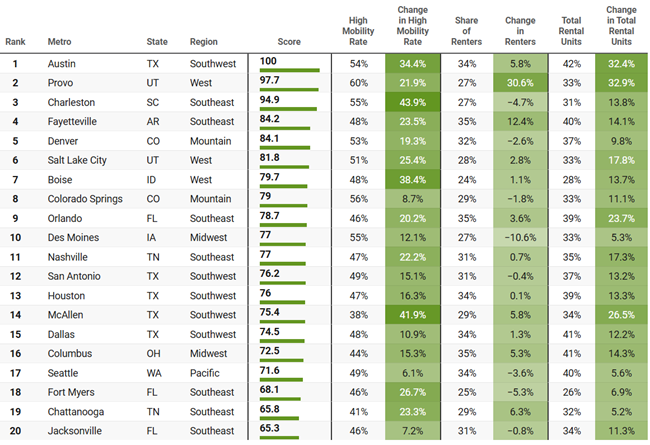
  • Austin renters are the most mobile in the nation; 54% relocated within the metro in just two years. The share of Austin renters moving this frequently surged by 34% between 2018 and 2023.
  • In Provo, Utah (No. 2), 60% of renters switched homes within just two years, which is the highest share of any metro area. This metro’s moving pace is also accelerating as the share of frequent movers increased by nearly 22% in just five years.
  •  Charleston, NC (No. 3) recorded the biggest jump in highly mobile renters nationwide: The share of those moving within two years grew 44% in just five years. Today, more than half (55%) of renters are changing apartments that quickly.
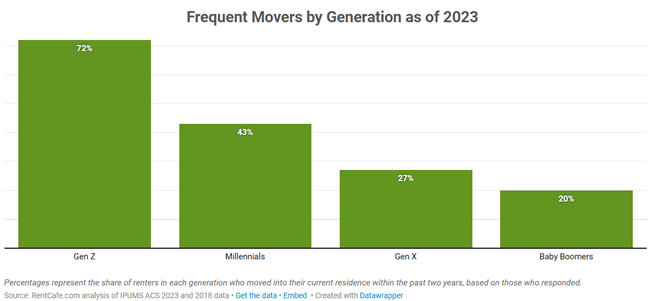
  • Gen Z renters moving very frequently in their areas make up 72% of movers in this age group.

“This high frequency of moving largely stems from Gen Z’s typical life stage during these years: navigating college, early careers, relationship changes, and establishing independence — all common triggers for moving into a new place.

“By comparison, millennials moved less often in 2023, with 43% of them doing so within two years. This highlights how millennials — who are generally further along in careers and personal lives — have different priorities, likely influenced by stability needs and market pressures that are distinct from the typical Gen Z renter experience.

“Gen X and Baby Boomers showcase even less frequent moves during those five years. For both groups, the dominant trend is staying put, reflecting the greater stability that’s common during these life stages,” the report says.

Nationwide, renters who move to a different apartment within their area in under  two years represent 38% of all apartment renters on the move

Why do so many renters move?

A recent RentCafe.com survey on renter preferences offers some answers on that — directly from renters themselves. Specifically, it highlights that:

  • In terms of lifestyle, renters prefer suburban living, with 41% drawn to greener, amenity-rich neighborhoods.
  • When it comes to the neighborhood itself, safety tops the list (54% call it their top  priority), followed by walkability (39%).
  • Perks also influence moving decisions, with 41% of renters favoring lower rent for signing a longer lease.

Nationwide, renters who move to a different apartment within their area in under  two years represent 38% of all apartment renters on the move

Read the full report from RentCafe here.


Sign Up For Our Weekly Newsletter And Get Rental Property And Apartment News And Helpful, Useful Content Each Week.

* indicates required

Tenant Did Not Give 30-Day Notice; Can I Charge for Part of Another Month?

Tenant Did Not Give 30-Day Notice; Can I Charge for Part of Another Month?

If a tenant did not give 30-day notice prior to move out can the landlord charge for part of another month is the question this week for Ask Landlord Hank. Remember Hank is not an attorney and he is not offering legal advice so check your local and state laws. If you have a question for him please fill out the form below.

Dear Landlord Hank:

My tenant’s one-year lease was up on Sept 30. They paid September rent. Then on Sept. 20, they gave me a notice to move.

Do I get to charge them for Oct 1-19, which would be 30 days?

What is my recourse? Don’t they have to give 30 days’ notice no matter what the lease is? – Diana

Dear Diana,

Your lease with your tenant is the controlling document for your relationship.

Most leases will have a RENEWAL clause that indicates something like: Landlord or tenant must notify each other in writing prior to lease expiration date of an intent not to renew the lease. If the required notice is not given by landlord or tenant, and the tenant vacates as of the lease expiration date, tenant shall owe an additional month’s rent.

BUT in your case the tenant did give notice, just not 30 days’ notice. I would not require the tenant to pay additional rent for Oct 1-19 as I don’t think you’d win in court if this were to come to trial.

You could have inquired with the tenant if they were going to renew or not 30 days prior to termination of lease, and you didn’t. I would consider this lease to be closed. Be fair with the tenant’s deposit and return as required by law in your state.

I’d also make sure you have a more detailed lease with your next tenant. Best of luck.

Sincerely,

Hank Rossi

Each week I answer questions from landlords and property managers across the country in my “Dear Landlord Hank” blog in the digital magazine Rental Housing Journal. www.rentsrq.com   https://rentalhousingjournal.com/asklandlordhank/

Ask Landlord Hank Your Question

Ask veteran landlord and property manager Hank Rossi your questions from tenant screening to leases to pets and more! He provides answers each week to landlords.

  • This field is for validation purposes and should be left unchanged.

If a tenant did not give 30-day notice prior to move out can the landlord charge for part of another month is the question
Landlord Hank Rossi says, “Be fair with the tenant’s deposit and return as required by law in your state.”

Editor’s note: Be sure to check the laws and regulations in your city or state on this issue as rules vary across the United States.

Salt Lake City Rents Up In September

September Rents in Salt Lake City

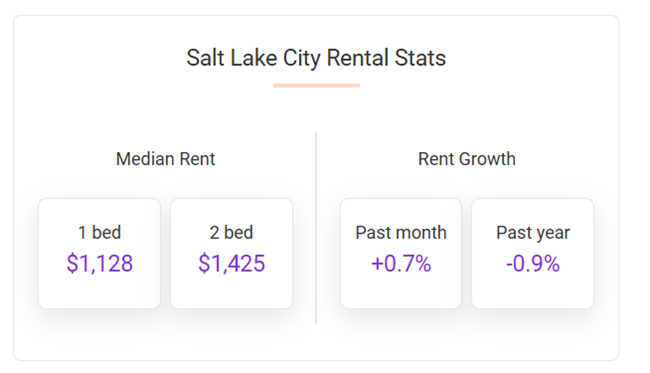
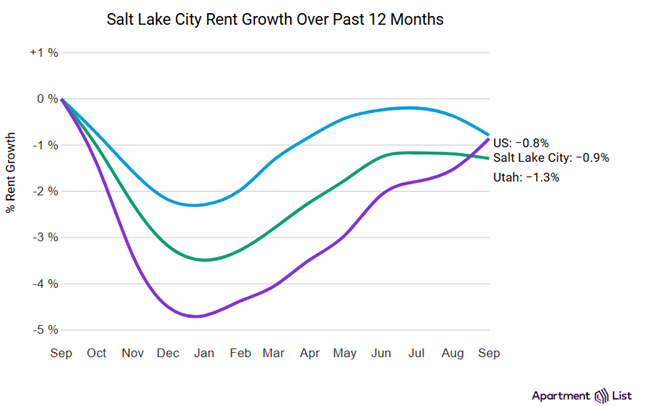
Salt Lake City rents rose 0.7% in September according to the October report from Apartment List.

However, prices remain down 0.9% year-over-year. Salt Lake City’s rent growth over the past year has is similar to both the state (-1.3%) and national averages (-0.8%).

Currently the overall median rent in the city stands at $1,303.

Salt Lake City rent growth in 2025 pacing above last year

Nine months into the year, rents in Salt Lake City have risen 4.0%.

This is a faster rate of growth compared to what the city was experiencing at this point last year: from January to September 2024 rents had decreased 0.1%.

Utah rents over past 12 months

Salt Lake City rents are 11.8% lower than the metro-wide median

Across the Salt Lake City metro area, the median rent is $1,477 meaning that the median price in Salt Lake City proper ($1,303) is 11.8% lower than the price across the metro as a whole. Metro-wide annual rent growth stands at -1.2%, below the rate of rent growth within just the city.

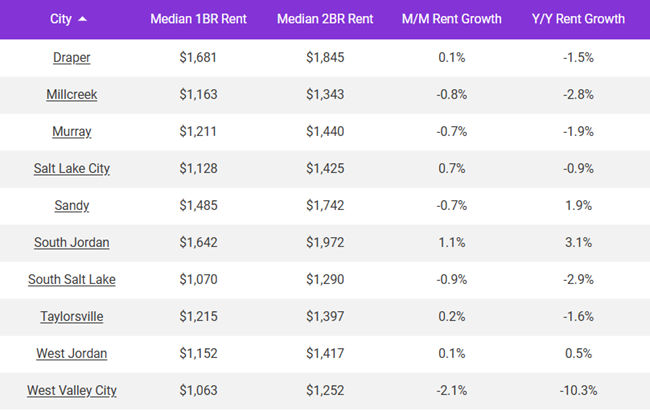
The table below shows the latest rent stats for 10 cities in the Salt Lake City metro area that are included in the Apartment List database.

Among them, Draper is currently the most expensive, with a median rent of $1,901. South Salt Lake is the metro’s most affordable city, with a median rent of $1,225. The metro’s fastest annual rent growth is occurring in South Jordan (3.1%) while the slowest is in West Valley City (-10.3%).

September rents in the suburbs

New Salt Lake City Renters Coming From Provo

Rethinking Pet Fees: Finding Fairness for Renters And Housing Providers

Landlords Not Enforcing Renters’ Insurance Requirements

National Rent Dip Continues In September

The national median rent dipped by 0.4 percent in September, marking the second straight monthly decline as rental market enters slow season

The national median rent dipped by 0.4 percent in September, marking the second straight monthly decline, according to the October report from Apartment List.

In addition to the September drop, the rental market has now entered the slow season and rent prices are expected to continue to drop through the end of the year.

Fewer renters looking to move as temperatures turn cooler and the holiday season approaches the Apartment List Research Team says.

The national median rent dipped by 0.4 percent in September, marking the second straight monthly decline as rental market enters slow season

Highlights of the October report:

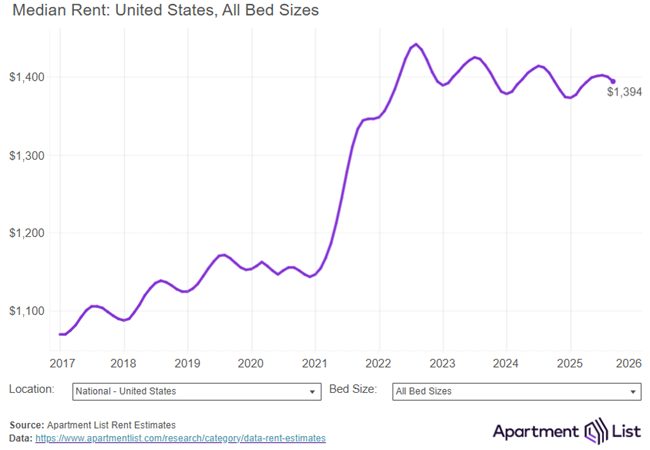
  • The national median rent now stands at $1,394.
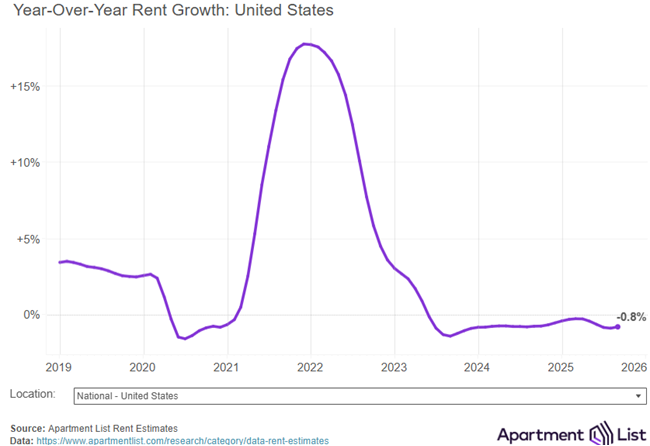
  • Rent prices nationally are down 0.8% compared to one year ago.
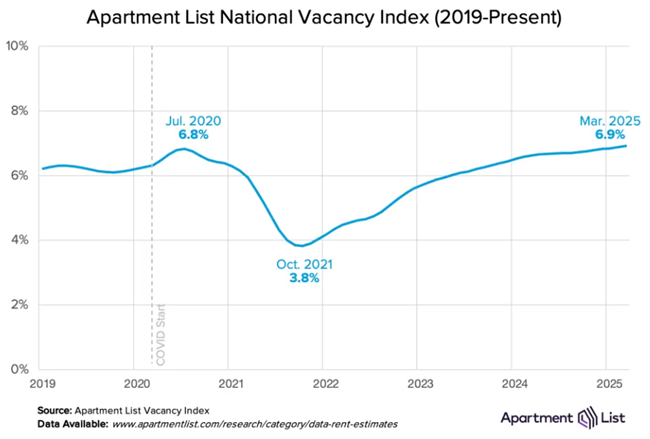
  • The national multifamily vacancy rate now sits at 7.1%, a record high.
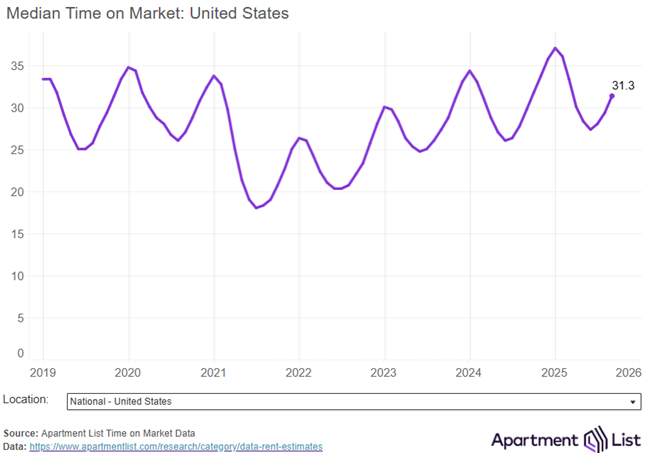
  • Units are taking an average of 31 days to get leased after being listed.

“Monthly rent growth peaked at +0.6 percent in March this year, but it then began to gradually trend down during the peak moving months, when rent growth is normally fastest.

“The flip to negative month-over-month growth also came a bit earlier than what we saw in pre-pandemic years, although this is now the third straight year that prices have begun to dip in August,” the research team writes.

The national median rent dipped by 0.4 percent in September, marking the second straight monthly decline as rental market enters slow season

Multifamily vacancy rate hits 7.1%, a new peak

As more new construction apartment continue to hit the market, more vacant units are sitting on the market, meaning that property owners face more competition for renters and have less pricing leverage.

The Austin metro currently has the softest conditions among the nation’s large rental markets, with the median rent there down by 6.5% over the past year.

The national median rent dipped by 0.4 percent in September, marking the second straight monthly decline as rental market enters slow season

List-to-Lease time ticks up for third straight month

“The increasing list-to-lease time that we’ve seen recently is in line with the transition to negative rent growth as we enter the market’s off-season.

“But in addition to that seasonal trend, units are also sitting a bit longer than they typically do at this time of year, a signal of market softness in line with our rent growth and vacancy estimates,” the Apartment List Research Team writes.

The national median rent dipped by 0.4 percent in September, marking the second straight monthly decline as rental market enters slow season

Conclusion

“All of our key indicators are pointing toward ongoing sluggishness in the multifamily rental market – rent prices are down and the vacancy rate is at an all-time high.

“The outlook has been complicated by a continued influx of new units to the market and a weakening macroeconomic outlook, which could lengthen the time that it takes for the market to metabolize the recent growth in the rental stock,” the research team writes.

Read the full monthly report here.

Sign Up For Our Weekly Newsletter And Get Rental Property And Apartment News And Helpful, Useful Content Each Week.

* indicates required

Where Are Homeowners Who Cannot Sell Becoming Accidental Landlords?

Many homeowners who cannot sell are becoming accidental landlords in areas dominated by institutional investors,

Many homeowners who cannot sell are becoming accidental landlords in areas dominated by institutional investors, according to Parcl Labs, a real estate research company.

The New York Times reports the accidental- landlord trend is accelerating, the researchers found, particularly in markets where large institutional investors — businesses that own more than 1,000 single-family homes — hold a substantial chunk of available properties.

“Since the end of the pandemic, those large investors have flocked to the states lining the bottom of the United States from coast to coast, chasing job and population growth,” the Times writes. “But surging inventory and a declining number of buyers have given rise to a competitive crop of former sellers who are now ‘accidental landlords’.”

Most are individual owners competing with those large institutional investors in the rental market. Six Sun Belt markets — Houston, Dallas, Phoenix, Tampa, Atlanta and Charlotte, N.C. — contain 37 percent of large institutional real estate nationwide, according to Parcl Labs.

Highlights of the Parcl Labs report:

  • Parcl Labs’ data reveals increasing numbers of failed home-sellers shifting into rentals and becoming accidental landlords is up year-over-year in five of six institutional markets, led by Houston (+41.4%) and Dallas (+32.3%).
  • Institutional markets face weakening fundamentals. Surging inventory and declining buyer activity have intensified supply-demand imbalances, led by Charlotte (38.2% YoY inventory growth), Dallas (37.7%), and Atlanta (34.1%).
  • Institutions are responding by reducing exposure and capitalizing on home appreciation gains. Over the past year, large institutions became net sellers nationwide, with 76.7% of their net selling concentrated in those six core markets, led by Atlanta, Dallas, and Houston.

The trend of accidental landlords is one of several signs that the real estate market is becoming increasingly unfriendly to sellers. De-listings increased by 57 percent in July compared with last year, according to an August Realtor.com report, which called 2025 “the least seller-friendly summer since Realtor.com began tracking data in 2016.”

Sign Up For Our Weekly Newsletter And Get Rental Property And Apartment News And Helpful, Useful Content Each Week.

* indicates required

Renter Has Sent Notice of Lease Termination – Now What?

What happens when a renter sends a notice of lease termination is the question this week from a landlord who is wondering what to do now

What happens when a renter sends a notice of lease termination is the question this week for Ask Landlord Hank. Remember Hank is not an attorney and he is not offering legal advice. If you have a question for him please fill out the form below.

Dear Landlord Hank,

My tenants have sent email to formally terminate their lease. As part of the email, they told us that they want reimbursement in an amount of $7,000 for their refrigerator, washer, dryer and televisions, which they said were damaged by the electricity in the house.

They have never notified us of these problems; they replaced the appliances without our knowledge or permission.

Are we legally supposed to reimburse them when they never notified us of these problems? There also deep scratches on the hardwood floor that were not there before. The tenants said  the scratches were normal wear and tear. How do we prove it is not normal wear and tear?

-Cora

Dear Cora,

I hope you have a good lease and an adequate security deposit with these tenants, and that you did a detailed walk-through  inspection of the property before the tenants took occupancy, with lots of photos.

The lease will normally spell out the law in your state for security-deposit refunds and timing.

The deposit is not meant to cover normal wear and tear, which is a normal deterioration of the property over time. It’s the difference between leaving small nail holes in the wall where they hung pictures, but not a big hole from a doorknob hitting a wall or someone hanging a TV from the wall.

Normal wear patterns in a carpet are from walking a path, not from rips, snags, burns or non-cleanable stains. Cabinet doors can be squeaking or loose but not damaged or missing, drains can be slow but not completely plugged up with hair, appliances can be dirty but not damaged due to misuse.

In the case of wood flooring, fading or a worn finish – especially in high-traffic areas – is acceptable, but not scratches, gouges, warping or water-damage from tenant abuse or negligence.

The walk-through inspections at the beginning and end of a lease will document in writing and photos the initial and final condition of the property and is a critical step in this business so you have proof of the condition of the property and the contents.

Per most leases there is a maintenance/inspection clause detailing that tenant shall maintain the premises in good, clean and tenantable condition throughout the tenancy AND shall notify the landlord immediately of any maintenance need or repair in writing.

I would find a good attorney in your area that specializes in landlord/tenant law and have a consultation.

These are the kinds of tenants that make this business challenging at times, but possibly could have been avoided with careful and deep screening up front, before leasing to them.

In the future, try to obtain at least five years of residential history so you know your applicants have taken care of prior properties, paid their rents on time, gave notice, didn’t cause any property damage, and that other owners would re-rent to them. Good luck!

Sincerely,

Hank Rossi

Each week I answer questions from landlords and property managers across the country in my “Dear Landlord Hank” blog in the digital magazine Rental Housing Journal. www.rentsrq.com   https://rentalhousingjournal.com/asklandlordhank/

Ask Landlord Hank Your Question

Ask veteran landlord and property manager Hank Rossi your questions from tenant screening to leases to pets and more! He provides answers each week to landlords.

  • This field is for validation purposes and should be left unchanged.

What happens when a renter sends a notice of lease termination is the question this week from a landlord who is wondering what to do now
Landlord Hank Rossi says, “try to obtain at least five years of residential history so you know your applicants have taken care of prior properties, paid their rents on time, gave notice, didn’t cause any property damage, and that other owners would re-rent to them.”

Editor’s note: Be sure to check the laws and regulations in your city or state on this issue as rules vary across the United States.

Can I Get Tenant’s Inoperable Car Towed Off My Rental Property?

How To Handle Ugly Feud Between Two Sets of Tenants?

Tenants Pouring Grease Down Sink And Flushing Paper Towels

Do You Know The 5 Questions Landlord Hank Asks Tenants When They Call?

Sign Up For Our Newsletter And Get Rental Property News And Helpful, Useful Content Each Week.

* indicates required

Photo credit Andrii Dodonov via istockimages