
National rents returned to positive rent growth and inched up in February after falling for six straight months, according to the March report from Apartment List.
The national median rent ticked up by 0.2 percent in February, flipping positive after six straight monthly rent declines.
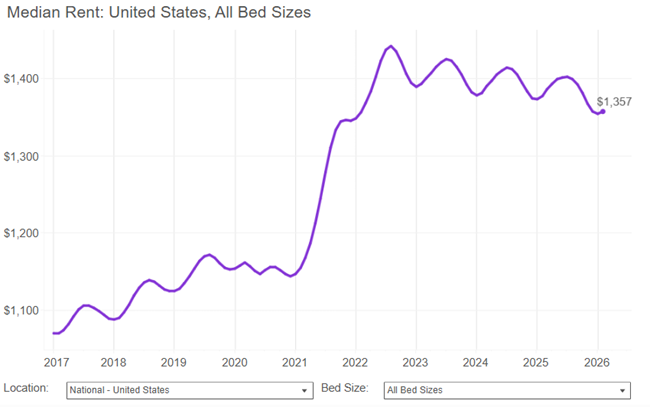
This officially marks the start of the market creeping out of the off-season, and we’ll likely see continued increases in the months ahead as moving activity ramps up, Apartment List researchers say.
The timing of this month’s return to positive rent growth is in line with typical seasonal patterns – prices soften as fewer renters move during the fall and winter, and then gradually begin to increase as we get closer to the peak moving summer season. February has marked the return to positive rent growth in each of the last four years.
Highlights of the return to positive rent growth report:
- The national median rent increased by 0.2% in February, and now stands at $1,357. This marks the first monthly increase since last July, as the market begins to pull out of its off-season pricing dip.
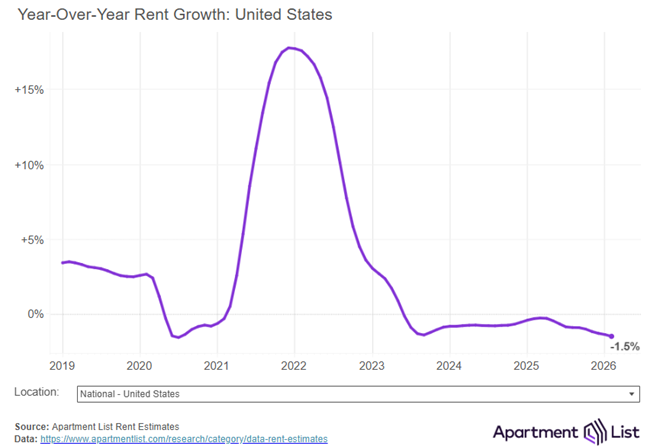
- Rent prices nationally are down 1.5% compared to one year ago. Year-over-year rent growth has been slightly negative for well over two years, and the national median rent has now fallen from its 2022 peak by a total of 5.9%.
- The national multifamily vacancy rate ticked up to 7.4% this month. We’re past the peak of a multifamily construction surge, but a healthy supply of new units is still hitting the market and colliding with sluggish demand, causing vacancies to continue trending up.
- Units are taking an average of 40 days to get leased after being listed, which is four days longer than one year ago, and more than twice as long as it took units to turn over when the market was at its hottest in mid-2021.
Vacancy index continues to climb
The Apartment List national vacancy index – which measures the average vacancy rate of stabilized properties in our marketplace – increased to 7.4 percent in February. This represents the highest level since at least 2017, which is when we started tracking occupancy.
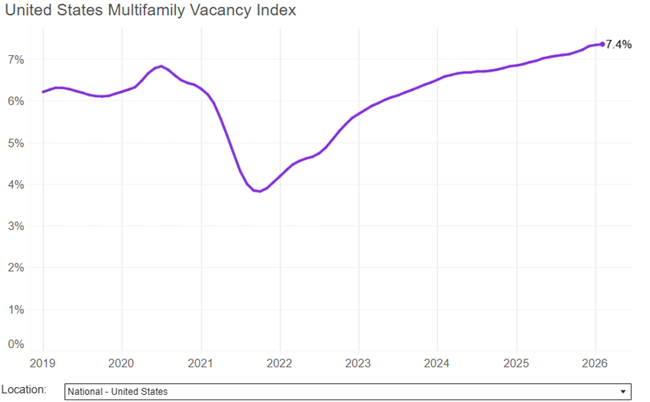
Eventually, the market will absorb the swell of new units, and occupancy and pricing trends should begin to gradually tighten. But for now, conditions remain soft, and the runway for these sluggish conditions seems to have lengthened as a shaky labor market has put a damper on housing demand.
List-to-Lease time remains elevated at 40 days
As more vacant units have come onto the market, those units have also been sitting vacant for somewhat longer. The Apartment List “time on market” index tells us how long it takes for units to get leased after they are first listed on our platform.
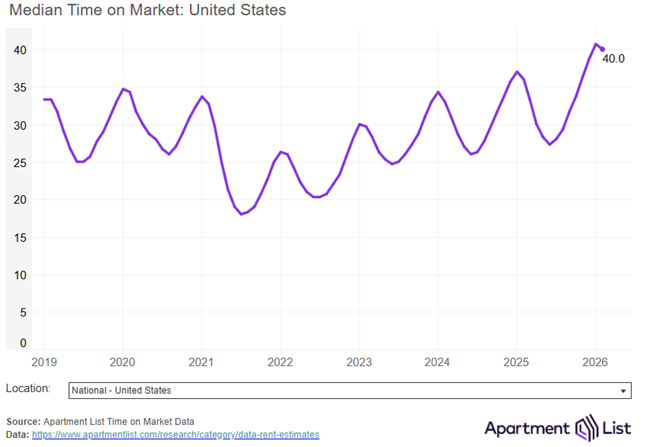
This “list-to-lease” time is a highly-seasonal measure, and ticked down slightly this month, in line with month-over-month rent growth flipping positive. Units leased in February had been sitting on the market for an average of 40 days, down from 41 days last month.