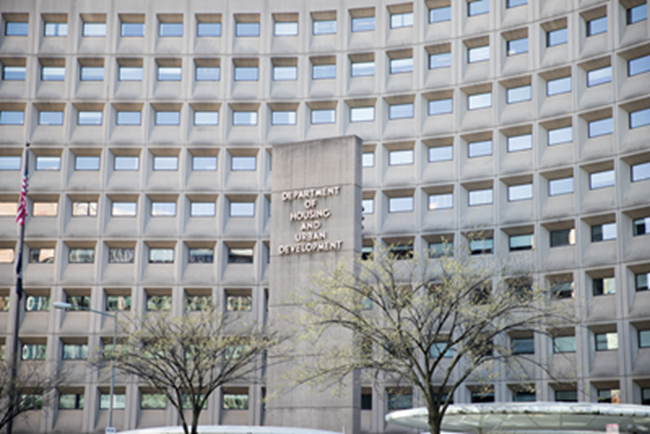
The rule, published in the Federal Register, calls for limiting funding for those in public housing and other HUD-related housing to citizens and eligible noncitizens. The rule would require every resident in HUD-funded housing to show proof of citizenship or eligible status, including those 62 years and older who previously only had to show proof of age.
The measure would effectively bar mixed status families —- where some household members are eligible for help — from housing and is part of the government’s immigration crackdown. A similar rule was proposed but never finalized during the first Trump administration and is mentioned as a policy priority in the conservative blueprint Project 2025.
“Our country can ensure that every one of us, no matter where we come from or what language we speak, has a safe home,” Shamus Roller, the executive director of the National Housing Law Project said in a statement. “Instead, Trump is trying to evict immigrant families, citizen and non-citizen, from HUD housing.”
According to a HUD analysis in 2019, more than 108,000 people receiving housing benefits were in a household with at least one undocumented immigrant. Because many of those immigrants have children who are U.S. citizens or legal residents, HUD estimated at the time that as many as 55,000 children who were in the country legally would have been displaced from public housing under the policy.
An Oregon Senate Bill would require landlords to accommodate renters by offering the option to use a paper application, pay by check or other non-digital methods and have non-digital keys to access rental spaces.
Sponsors of the bill Senate Bill 1523 say it’s a way to stop technological advancements from limiting housing access for older adults, low-income renters, renters with disabilities and those who are otherwise technology-averse.
The Oregon Capital Chronicle reported how mistyping one piece of personal information on her apartment’s online portal meant Beth Walker didn’t realize her rent payment hadn’t gone through until after her landlord applied a late fee and prepared to start an eviction filing.
“It ultimately took hours of frantic communication and a forced day off work just to ensure the process wasn’t initiated the following morning,” Walker wrote in legislative testimony. “The digital divide isn’t just about internet access — it’s about making sure that people who lack access to or familiarity with technology like smartphones and electronic portals can still meet their fundamental needs, including housing.”
Sybil Hebb, director of legislative advocacy at the Oregon Law Center, told lawmakers that some of her clients have nearly lost their housing because of technological mishaps from tenant portals that made rent payments appear late or even missing.
These concerns are exacerbated among low-income seniors, especially those at risk of homelessness, according to advocates at the Northwest Pilot Project. Often rental applications require multiple devices, like a computer and a phone, which some low-income residents cannot afford.
“The client is basically stuck with moving forward with an application, and these are not minor inconveniences. They directly prevent people from applying for housing, and some of these clients simply give up and they don’t apply at all,” said Jason Colthurst, housing access manager at Northwest Pilot Project, in an interview with the Oregon Capital Chronicle. “Access to housing should not depend on a person’s ability to afford or use technology.”
Most opposition to the bill came from landlords and housing providers, who noted that the lack of standardization of where applications come from could make the process less efficient, delaying housing approvals. Others mentioned that they felt many accommodation requests for renters were already covered through the Oregon Fair Housing Act.
“We are concerned about risk in not having equal opportunity for those needing housing due to delays in delivering paper applications and having too many paper applications that need to be processed,” wrote Jonathan Clay, government and public affairs manager with Multifamily NW.
The Portland City Council has again delayed a vote and continued a months-long debate on how to spend unspent housing funds.
City officials first disclosed that the Portland Housing Bureau was sitting on $21 million of unbudgeted dollars in November.
That money was generated by a fee that landlords must pay to register new rentals, and is meant to be spent on programs that support renters. Shortly after that discovery, the three council members pitched a plan to spend that new cache of money on rent assistance, legal defense for people faced with an eviction, and other tenant-support programs.
The plan was delayed by the winter break and further complicated by news in early February that the city administrator’s office had found an additional $85 million in unallocated dollars in the housing bureau.
This money came from different housing revenue streams that had accumulated over the years, and were intended to grow until the money was needed to pay for large projects. But the housing bureau had never noted these accruing dollars in its annual budget.
Unlike the $21 million first identified, the $85 million is made up of a number of funds that all have different rules on how they can be spent. The most recent vote centered on how to spend the initial $21 million in housing dollars; but with the new information on the $85 million, the council was not ready to vote.
“Every time we have met so far, the number of dollars being identified has grown,” said Council President Jamie Dunphy, one of three District 1 councilors who introduced the initial funding package in December, according to Oregon Public Broadcasting. “While finding money is a better problem than the alternative, this is certainly still a problem. I do not feel like this body is ready to make a decision of this magnitude.”
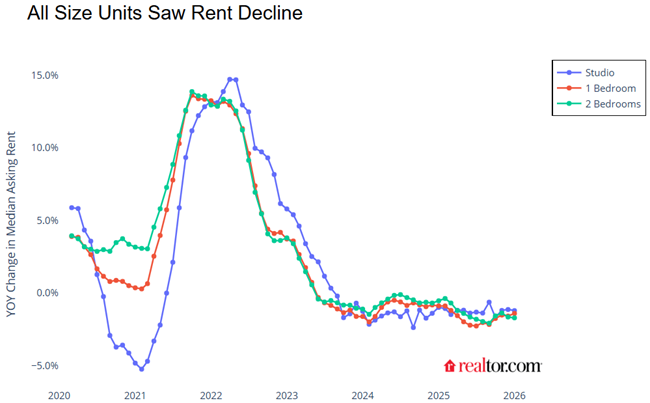
The U.S. rental market has officially tipped in favor of tenants and turned renter-friendly as the vacancy rate has climbed to 7.6% across the 50 largest metros.
As vacancy rates rise, costs are adjusting downward. January marked the 29th consecutive month of year-over-year rent declines, with the national median asking rent dipping 1.5% year-over-year to $1,672.
“After years of being squeezed by limited inventory, renters are finally seeing the supply wave work in their favor,” said Danielle Hale, chief economist at Realtor.com. “This shift doesn’t just mean lower prices; it means that renters today have more options and more bargaining power. While the market isn’t uniform everywhere, the broader trend is a move toward a much-needed equilibrium that allows for more flexibility and choice in the housing search.”
Key findings in the renter-friendly study:
Renter advantage: The surge in availability has pushed the national vacancy rate to a high, up from 7.2% in 2024.
The Milwaukee flip: Milwaukee recorded the most dramatic shift in the country, with vacancy more than doubling (from 4.9% to 10.8%) in just one year.
Regional exceptions: While the supply wave is helping renters nationally, coastal hubs such as New York and Boston remain supply-constrained with vacancy rates stuck below 5%.
Price softening: National asking rents fell for the 29th consecutive month, dipping 1.5% year-over-year to $1,672.
“We are seeing a fascinating tug-of-war,” said Jiayi Xu, economist at Realtor.com. “In the Sun Belt and parts of the Midwest, new construction is helping to create negotiating room for renters. But in traditionally more affordable areas like Richmond and Pittsburgh, the secret is out, rising demand from out-of-towners is starting to soak up that excess vacancy, proving that renter-friendliness can be fleeting if supply doesn’t keep pace with demand.”
Most legal complaints don’t start because a property manager missed something involving reasonable accommodations, they start because a resident felt ignored or disrespected.
By The Fair Housing Institute
The natural instinct for any good property manager is to doublecheck everything. You have a duty to protect the property and follow the rules fairly for everyone on the rent roll. However, in the world of fair housing, that “trust-but-verify” mindset can actually become a major legal headache. The real challenge is mastering the “calibration of inquiry”—knowing exactly when to stick to the standard playbook and when the law requires you to be flexible.
Professionalism today is about realizing that strict policy and great customer service are actually on the same team. Your policy keeps things consistent, while a service-first approach ensures those rules don’t inadvertently lead to a discrimination claim. When you find that sweet spot, you keep your property high-performing and your legal risks low.
Knowing When to Stop Asking
One of the easiest ways to get into trouble is asking for proof when the answer is already right in front of you. If a resident’s disability and their request clearly go hand-in-hand—like someone in a wheelchair asking for a ramp—it’s best that you stop the questions right there. In these cases, the need is obvious, and demanding a doctor’s note is seen as an unnecessary hurdle.
A smart management team knows such moments require setting the paperwork aside. When a need is self-evident, your best move is to say yes and move forward. Forcing a resident to jump through hoops for a visible disability isn’t just bad service; it’s a policy failure that invites a lawsuit. By recognizing these off-ramps in your procedure, you show you’re a pro who knows how to handle sensitive situations with common sense.
The Trap of the Official Form
We love our standardized forms because they make filing and auditing a breeze. But here’s the catch: A resident isn’t legally required to use your specific company document. If they walk in with a signed letter from their doctor that explains what they need and why, you generally have to accept it. Insisting that they go back to their doctor just to get it on your letterhead creates what the law calls “unreasonable friction.”
Under HUD guidelines, if the information is there, you should process it. Forcing someone through a bureaucratic maze just for the sake of your internal filing system can lead to delays—and in the fair housing world, a slow response is often viewed as a no. Focus on the substance of the info, not the stationery it’s printed on. This keeps your records straight without creating a timeline that invites litigation.
Keeping the Playbook Sharp and the Team Ready
Having a written policy is only half the battle; the real value comes from treating those procedures as a living document. Professional housing providers should regularly review their reasonable-accommodation policies to ensure they align with the latest regulatory updates and industry best practices. Because the housing industry sees high turnover, a policy sitting in a dusty binder does no one any good. It is essential to treat fair-housing training as an ongoing conversation rather than a one-time orientation task.
Consistency in the field only happens when every staff member—from the leasing office to the maintenance crew—is on the same page. Effective training moves beyond “what to do” and teaches staff “how to be,” helping them recognize requests that might be hidden in casual conversation. By investing in up-to-date training and designated authority roles, you ensure that decisions are made by people who truly understand the stakes. This proactive approach turns policy into a daily habit, making your team’s response to residents both uniform and legally sound.
Service is Just as Important as Compliance
At the end of the day, most legal complaints don’t start because a manager missed a tiny sub-clause in a manual; they start because a resident felt ignored or disrespected. By practicing active listening, your team can catch a request even if the resident doesn’t use the official legal terms. They might just mention they’re struggling with the stairs, and it’s your job to hear that as a potential request for help.
Building a culture where your team is proactive changes the entire energy of the community. When you respond quickly—ideally within that 14- to 30-day window—you show residents that you take them seriously. This builds a foundation of trust that acts as one of many shields for the property. When people feel like you’re on their side, they’re much more likely to work with you than to file a complaint against you. Don’t let reasonable accommodations in your community become a Mission: Impossible.
About the author:
In 2005, The Fair Housing Institute was founded as a company with one goal: to provide educational and entertaining fair-housing compliance training at an affordable price at the click of a button.
Top dog-friendly apartments nationwide understand they’re competing with single-family homes, not just other apartments, and communities that embrace pets see stronger financial performance and help the pet housing crisis.
By Christin Tenpenny
With National Walk the Dog Day arriving on February 22, the pet housing crisis has reached a tipping point that’s reshaping how we think about multifamily living. As the proud parent of two little dogs who has witnessed significant changes in property management over three decades, I’ve seen the market shift dramatically to roll out the red carpet for our four-legged family members with dog-friendly apartments.
The numbers tell a compelling story. Pet ownership among renters jumped from 46% in 2019 to 59% in 2023, while 72% of renters struggle to find truly pet-friendly housing. Dog ownership specifically rose from 31% to 40% during the same period; the ASPCA estimates that about 23 million households adopted a cat or dog during the COVID-19 pandemic, when more people worked from home. Even more telling: 92% of renters view pets as family members when making housing decisions. Twice as many renters now filter searches for pet-friendly apartments than any other amenity, proving that Fido’s needs often trump granite countertops. Trust me, my own two pups have made it clear that a good dog run beats a fancy kitchen island every time.
Why Breed Restrictions Are Going to the Doghouse
While 80% of properties claim to be “pet-friendly,” renters should ask questions because some may have limitations on weight, size and breeds. The same percentage still enforces breed restrictions that create significant barriers for some pet owners. A growing pack of communities welcomes pets of every size and shape, and they’re reaping the rewards.
Less-restrictive pet policies are becoming powerful competitive advantages. Properties that welcome all pets attract larger pools of qualified applicants and command higher rents. Pet-owning households demonstrate stronger income stability and sign longer lease terms, reducing turnover costs that average $3,872 per unit. As a pet owner myself, I know firsthand how willing we are to pay more for communities that truly welcome our furry family members.
Communities That Fetch Premium Rents
Properties like Via and Citizen in Kansas City feature daily free treats for pet residents, and pet stations throughout the properties. These communities recognize that pet owners will pay premium rents for true inclusivity, especially when walk scores hit the 80s for easy neighborhood strolls to coffee shops and parks.
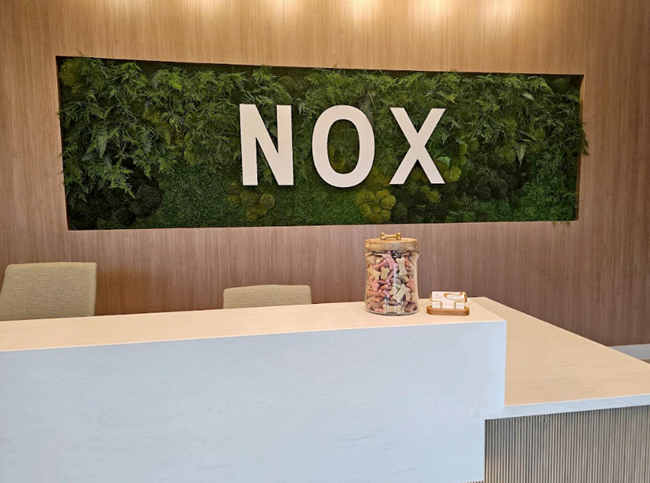
Regional differences in pet-amenity demand become apparent when comparing markets. Florida properties focus on outdoor spaces perfect for fetch sessions, while Pittsburgh’s NOX offers pet wash stations and dedicated dog areas that address urban-living challenges. Oxlley in Edmond, Okla., pampers pooches with bark parks and full-service pet spas while maintaining that coveted 80 walk score.
The magic happens when communities provide walkable neighborhoods that score above 80, giving easy access to veterinary services, pet stores, and grooming facilities. These aren’t just conveniences; they’re lifestyle necessities that keep lease renewals flowing. When my dogs need unexpected vet visits or grooming appointments, having these services within walking distance makes all the difference.
Apartment Amenities That Compete with the Suburban Dream
The most successful pet-friendly communities understand they’re competing with single-family homes, not just other apartments. Apartment amenities are evolving quickly, creating experiences that rival homeownership.
Some communities even provide private backyards attached to units, giving pet residents their own kingdom. Integra Avalon in Wintergarden, Fla., demonstrates this approach with personal outdoor spaces that mimic the suburban experience. Florida properties typically emphasize year-round outdoor living spaces and climate-controlled amenities that address the Sunshine State’s unique demands.
On-site pet-wash stations and grooming facilities eliminate external costs while providing convenience that busy pet parents crave. These spaces accommodate mastiffs to toy poodles through thoughtful design featuring multiple washing heights, and specialized equipment that would make any professional groomer jealous. Having battled muddy paws after rainy walks myself, I can vouch for how valuable these amenities become in daily life.
Full-service pet spas and specialized care amenities elevate the experience beyond basic accommodation. These spaces generate additional revenue streams while positioning properties as lifestyle communities where pets live like royalty.
The Economics Behind Pet-Friendly Apartment Policies Across Markets
The economics behind pet-friendly apartment housing vary significantly across different markets, but the trend is clear: communities that embrace pets see stronger financial performance. Huntsville, Ala. leads the pack with 100% pet-friendly rentals, followed by Tulsa, Okla. at 97.56% and Overland Park, Kan. at 97.26%. Oklahoma leads nationally at the state level with 92.77% of all apartments allowing pets.
These numbers reflect regional economic realities that smart property managers are capitalizing on. Pet deposits and monthly fees vary by market and property type, with most communities charging deposits of several hundred dollars plus a small monthly pet rent.
Property managers in high-growth markets understand that pet restrictions limit their pools of qualified applicants. When 72% of renters struggle to find pet-friendly housing, properties that welcome all breeds with open arms capture competitive advantages that translate directly to the bottom line.
Looking Forward: A Future Where Every Dog Has Its Day
The multifamily landscape continues evolving at breakneck speed, and properties positioned at the forefront of this transformation will capture the most value. Pet-friendly apartment policies aren’t just about allowing animals; they’re about creating communities where families truly want to live.
By focusing on operational efficiency and resident satisfaction through comprehensive pet amenities, property managers can create environments that maximize both resident retention and investor returns. The communities that succeed will be those that view pets not as problems to manage, but as beloved family members.
The pet housing crisis isn’t going away, but smart property managers are turning this challenge into their secret weapon. Those who adapt their policies and amenities to serve this growing market segment will find themselves with sustainable competitive advantages in an increasingly crowded marketplace. From one pet parent to another, I can say with confidence that residents notice when properties truly get what it means to be a pet-friendly community.
About the author:
Christin Tenpenny
Christin Tenpenny is the vice President of operations for property management overseeing the Milhaus portfolio. With more than 30 years of industry experience, Christin is a seasoned leader known for her expertise in managing both stabilized properties and new lease-up communities. Her background includes working with large institutions and individual investors, and she holds CAM and CAPS accreditations from the National Apartment Association Education Institute. When not at work, Christin enjoys spending time with her two beloved Frenchies: Bella and Biggie Smalls.
Portland, mass timber and what the next generation of developers entering the real estate industry is learning and why it matters for multifamily
By Aaron Kirk Douglas
Director of Market Intelligence at HFO Investment Real Estate
In HFO’s recent interview with Noel Johnson, a real estate developer and college professor, I was struck less by technical details and more by mindsets.
Johnson brings decades of experience as a developer, investor, and educator. He not only works with assets and capital, but also helps prepare the next generation who will allocate that capital and shape our cities.
If mass timber was the topic on the table, leadership and long-term thinking were the real themes beneath it. “A real estate developer at the best level is trying to solve dual mandates—what society needs, and what produces good financial returns,” he told us. “That’s the obligation.” It’s a remarkably simple definition. It is also one that many in the industry forget.
The Generational Shift: Students Who Already Understand the Stakeholders
Johnson, who teaches behavioral finance and is the Pierce Faculty Fellow at Lewis & Clark College’s Bates Entrepreneurship Center, sees the shift up close.
Today’s students are not confused about who ultimately owns institutional real estate. They’re not demonizing “the capital stack.” In fact, they grasp it intuitively. As he put it, “Everyone talks about evil ‘institutional investors,’ but when you actually boil it down, the owners are your next-door neighbor, your parents.” It’s a subtle but meaningful shift in the old narrative. The students Johnson teaches—some of whom will become analysts, associates, principals, and founders—are deeply aware of both the social value of housing and the fiduciary duty embedded in every development project. He sees in them what he calls a “dual mindset”—one that no longer treats social impact and financial performance as mutually exclusive. And so when he talks about mass timber, you can see why this generation finds it compelling.
Why Mass Timber Resonates with Future Developers
At its simplest, mass timber is “just using wood instead of steel or concrete.” Mass timber is a category of engineered wood products—such as Cross-Laminated Timber (CLT) and Glulam—created by binding layers of wood together to form large, structurally solid panels and beams.
But as Johnson explained, it’s also an investment theme intertwined with environmental, health, and national security goals, as well as long-term asset differentiation performance. For the students he teaches, these concerns matter. They’re coming of age in a world where climate legislation, carbon accounting, and ESG-aligned capital are increasingly normal. They’re also inheriting a real estate environment where consumer preferences—especially among young renters—are shifting toward healthier, more natural, more human-scaled environments. And growing instead of importing basics to build our homes makes sense. That’s one reason mass timber feels less like a niche interest and more like a generational inflection point.
From Shanghai to Portland: A Material With History and Future
One of the most surprising moments in our conversation came when Johnson mentioned that “old colonial buildings in Shanghai are literally sitting on Oregon Doug fir piles driven into river mud” centuries ago.
Oregon forests have been part of global development far longer than most people realize. Today’s mass timber, of course, uses no old-growth logs. It relies on sustainably managed smaller-diameter lumber, engineered into cross-laminated panels and glue-laminated beams. Modern manufacturing—from Austria to Arkansas to Oregon—has transformed wood into one of the most precise building materials available. Reflecting its modern means of production, one challenge of using mass timber is that it is much more precise than steel and concrete.
Portland Didn’t Adopt Mass Timber Because of Policy—It Was Because of People
Johnson is blunt about this: the growth of mass timber in the Pacific Northwest has little to do with state mandates or activism.
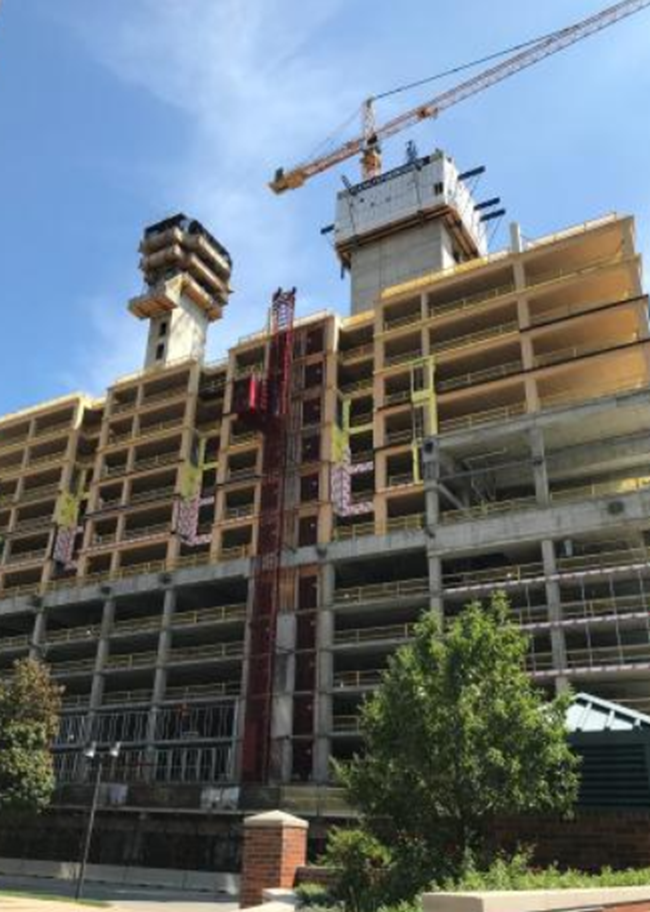
He credits “the mindset of the architects, engineers, and developers” who were willing to innovate long before the rest of the country did. That’s also why Milwaukee—not Portland—built the tallest mass timber tower in the U.S. It simply had a developer willing to try. As Johnson notes, “New Land’s Boris and Tim Gokhman had the right combination of mindset and means to make it manifest.”
And Yes, the Cost Premium Is Shrinking
For a long time, developers assumed mass timber carried an insurmountable cost premium. Johnson’s data says otherwise.
In the only multi-building mass timber case study series published by WoodWorks, he and his coauthors found that costs were typically just 5% higher than those of traditional construction. Not zero. But not a deal-killer either. And Johnson emphasized something most people forget: Investors don’t ask whether something costs more. They ask whether the return is higher. According to Johnson, “It’s not about the cost—it’s about the risk-adjusted return.” He compared the distinction to choosing between a Toyota Corolla and a Tesla Model S Plaid. Both cars get you where you’re going. Only one creates a differentiated experience which consumers value. Buildings work the same way, both for their occupants as well as for their investors.
Differentiation Isn’t a Luxury. It’s an Insurance Policy
Developers often try to measure mass timber’s market impact solely through rents. Johnson cautions against this. The value proposition is broader. He argues real opportunity also lies in reduced long-term risk mitigation:
Less volatile, more sustained net operating incomes
Protection from regulatory penalties on carbon-intensive assets
Broader political appeal (“If you love Trump or Biden, it’s for you”)
Tenant preferences that endure through economic cycles
Assets that remain liquid and attractive to sophisticated buyers
Mass timber sequesters carbon; concrete emits it. In a world where New York, Washington, DC, St. Louis – let alone the entire European Union – are imposing carbon penalties on asset owners, that differential will matter. “What’s that worth?” he asked. The truth is, our industry hasn’t quantified it yet.
Insurance: Less Dramatic Than People Fear
When asked about insurance, Johnson almost laughed. He hears the question constantly, but the numbers don’t justify the anxiety. His experience? A slight premium—”maybe one-tenth of one percent of the total capitalization”—and only when the carrier is unfamiliar with the construction type. Mass timber shouldn’t make or break the underwriting. Today’s higher insurance premiums are catching many developers by surprise. “Attribution is hard; it’s often blamed on the mass timber when in reality it’s that the deal’s pro forma had pre-COVID informed assumptions,” notes Johnson.
What Developers Still Haven’t Done
Everything on the supply side—engineering, fire testing, code updates—has accelerated. The remaining bottleneck is the pro forma. Johnson believes the next phase requires:
Revealed preference studies – longitudinal studies of consumer behaviors and their impacts on occupancy and rent performance
Comparative analysis across building types to distill risk-adjusted valuation ratios
Clear modeling of risk reductions and value creation means a taxonomic baseline.
Academic involvement from finance departments and business schools
Right now, most mass timber case studies involve non-market projects like libraries or affordable housing, which are invaluable, but not true indicators of market behavior. We need market-rate data. And we need it soon.
Why This Matters for Multifamily Owners and Investors
If Johnson’s students are any indication, the next generation entering the real estate industry will bring two qualities our market desperately needs:
A broader definition of value
A deeper sense of long-term responsibility
Mass timber is simply the case study that reveals this shift most clearly. Yes, it’s an elegant material. Yes, it smells like a forest when you walk inside. But it also stands for something larger: a willingness to innovate, to take calculated risks, and to build assets with life cycles that extend beyond our own. As Johnson said, “I’m excited for how mass timber can revitalize our rural valleys and connect them to the urban economies we see here.” Students understand this intuitively. The question now is whether the industry will catch up to them.
Noel Johnson is a real estate developer and Pierce Faculty Fellow at the Bates Center for Entrepreneurship and Leadership at Lewis and Clark College. He can be reached at [email protected].
About the author:
Aaron Kirk Douglas
Aaron Kirk Douglas is a multifaceted storyteller and market analyst. His career spans journalism, creative nonfiction, filmmaking, and real estate research. He serves as Director of Market Intelligence at HFO Investment Real Estate/GREA, the Pacific Northwest’s leading multifamily brokerage.
A proposed Utah bill would require rental fee disclosure well before a prospective tenant sees an agreement, and the information must happen in the rental advertising.
The bill’s sponsor is state Rep. Tyler Clancy, R-Provo. “We’re making sure that they (consumers) have an expectation that the marketplace is being honest and transparent,” Clancy said.
HB29 bans hidden rental fees by requiring a listing or an advertisement for a rental to disclose the total price.
“When you’re not being upfront about your price, that could be anti-competitive in nature because you’re not really advertising your product,” Clancy told KSLTV.com. “Setting an expectation that families can know if something fits into their budget or not, I think that’s a reasonable thing.”
“The extra fees then should be baked into the price,” said Katie Hass, who leads Utah’s Division of Consumer Protection — which will enforce HB29 if it passes. She says the listed rental price must reflect the real price a tenant will have to pay to live there, excluding personal utilities. And that price, she said, cannot be a range that depends on variable or seasonal fees.
Federal scrutiny and Greystar’s response
At least eleven other states have similar laws about disclosing hidden rental fees in listings or ads. And in December, the Federal Trade Commission and the state of Colorado reached a $24 million settlement with rental housing giant Greystar over allegations it deceived renters with hidden fees.
“These little fees, at the end, they create a bitterness to our economy that we don’t want here in Utah,” Hass said.
Derek Seal said the Utah Rental Housing Association maintains a fund that reimburses application fees for renters who did not receive full disclosure when they applied. You can apply at its webpage.
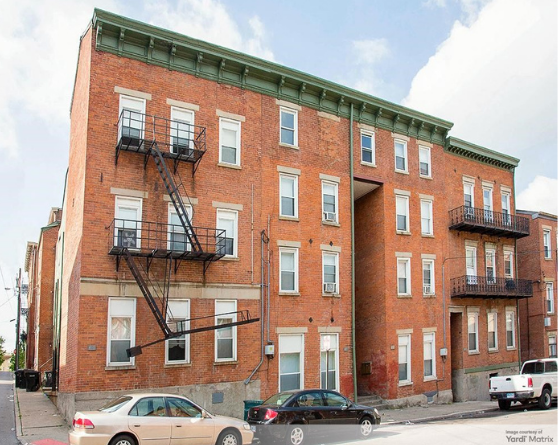
U.S. multifamily rents posted a modest increase in January, snapping a five-month decline, but heavy supply, slowing absorption and economic uncertainty point to a fragile recovery as the spring leasing season approaches, Yardi Matrix says in a Rent Forecast report.
Pipeline supply, along with affordability concerns, weigh on advertised rent growth going into 2026. Heading into another year of higher-than-average deliveries in large Sun Belt markets will continue the downward pressure on national advertised rents.
Affordability concerns will limit growth in the renter-by-necessity segment while bright spots remain across the Midwest and Northeast.
Ending 2025, there was a wide distribution of market performance across geographies and city sizes. For every big Sun Belt market like Austin that ended the year with negative growth there were two medium-size markets in the Midwest or Northeast that saw significantly better growth than historical averages.
“We anticipate the story this year will be largely similar. The pipeline of properties expected to deliver in those same big Sun Belt markets is still historically large, and those markets are still struggling to absorb the massive influx of apartments that was turbocharged in the wake of demographic shifts from the pandemic.
Not a doom-and-gloom forecast
“This isn’t a forecast of doom and gloom for those Sun Belt markets, though—economically, they are generally doing well, and new apartments are getting absorbed.
“There just was—and continues to be—such a glut of new supply that it is taking a few years to work through.”
Concern over economy with workforce tenants struggling
The workforce group of tenants – or renters-by-necessity – are affected when economic gains are concentrated at the top while lower income consumers are financially struggling.
“This will make it harder to attain average increases in advertised rents, as given a long enough timeframe, the bulk of growth across almost every single market we track comes from the renter-by-necessity, workforce housing segment. Lifestyle apartments generally follow a boom-and-bust pattern, but workforce housing historically has seen steady, consistent growth in asking rents that outperforms lifestyle in the long run,” writes Andrew Semmes, senior research analyst for Yardi Matrix.
“It will be more difficult to achieve gains in overall advertised rents if the people renting workforce apartments don’t have steadily increasing incomes on average,” Semmes writes.
“Nationally, we have lowered our near-term national forecast to 0.5% growth in advertised asking rents for 2026, 1.0% in 2027, and 2.3% in 2028 before returning to the long-run average of 3-4%.”
Lawmakers in the House and Senate are resisting codifying into law President Donald Trump’s plan to ban on big investors buying single-family homes, according to a media report on Monday.
Trump has said he wants to ban institutional investors in housing, but experts are skeptical it would lower costs and believe it instead may raise housing costs.
The Trump proposal is meant to improve housing affordability, but large institutional investors represent only a small share of the market. Firms that own 100 or more single-family homes control roughly 2% of the nation’s single-family housing stock, according to John Burns Research and Consulting — raising questions about how much impact such a ban would have.
The Trump administration has been pressuring both chambers to include amendments to add the investor ban to major housing bills already working their way through Congress. The resistance aligns with traditional free-market proponents, Wall Street executives, and the home-builder industry.
The legislators have been working for months on housing packages in both the House and Senate. Adding investor-ban amendments threatens to upset the bipartisan momentum they’ve gained, the Wall Street Journal reported.
The House is working on some amendments, but the Senate is a different story, as Trump would have to convince Republicans to add an investor ban to the ROAD to Housing Act, a bipartisan package meant to increase affordable housing and reduce rental costs. Some Republicans do support the idea, but a significant number remain opposed, according to the Wall Street Journal.