Home Blog Page 28

2025 Promises Change as Supply Growth Declines

The year 2024 ended on a down note for rents, but the new year promises change as the supply growth declines, Yardi Matrix says

The year 2024 ended on a down note for rents, but 2025 promises change as the supply growth declines, Yardi Matrix says in its yearend report.

The report says the rental market has been stuck on a treadmill because:

“Metro-level performance has been mixed—high-supply growth metros have seen advertised rents turn negative, while metros with low supply have recorded moderate growth—but national year-over-year growth has been stuck between 0% and 1.0% for 16 straight months,” the report says.

Why 2025 promises change

Change is coming in 2025 for several reasons.

  • Starts have dropped
  • Completions will wane soon
  • Job growth will help absorb completed new apartments
  • Demographics will also help

But there are concerns in 2025 as well

Donald Trump’s plan to reduce immigration could slow demand.

“Multifamily also is bracing for less favorable interest rate conditions than expected,” the report says. The Fed forecast has indicated there may not be the expected rate cuts in 2025. The threat of tariffs also looms.

“The upshot is that investors’ higher inflation expectations have pushed the 10-year Treasury rate up to 4.6%, creating ongoing pricing uncertainty that could keep deal flow muted,” the report says.

 Highlights of the report:

  • Multifamily finished 2024 on the downswing, with the average U.S. advertised rent falling $4 nationally in December to $1,742. Year-over-year rent growth, which remains positive albeit weak, was down 10 basis points to 0.6%.
  • The trends that shaped 2024 remained in place to the end. Demand stayed robust throughout the year in most regions, so regional and market-level rent change was determined by the amount of local supply growth.
  • After outperforming multifamily through most of the year, single-family rental rates also ended the year poorly. Advertised rents dropped $7 month-over-month in December to $2,141, with year-over-year growth dropping 40 basis points to -0.8%.

Read the full Yardi Matrix report here.

About Yardi Matrix

Yardi Matrix researches and reports on multifamily, office and self-storage properties across the United States, serving the needs of a variety of industry professionals. Yardi Matrix Multifamily provides accurate data on 18+ million units, covering more than 90 percent of the U.S. population. Contact the company at (480) 663-1149.

Sign Up For Our Weekly Newsletter And Get Rental Property And Apartment News And Helpful, Useful Content Each Week.

* indicates required

The Insurance Secret Every Property Owner Needs to Know

The insurance secret every rental property owners needs to know and what Zillow cannot tell you is the replacement cost for your investment

By Andres Dominguez III

When determining the true value of your rental property, Zillow’s Zestimate might come to mind. However, in insurance, the most crucial valuation is the Replacement Cost.

This article will explore the significance of Replacement Cost and its implications for insurance. Before delving into Replacement Cost, we will first clarify two commonly used valuation methods.

 1- Market Value:

 Market value is a valuation method that varies because it is determined by larger market forces.

Macroeconomic influences such as local market conditions, supply and demand, interest rates, and inflation impact market value. Ultimately, market value is determined by what the market is willing to bear. Buyers decide how much the property is really worth based on what they are willing to pay to purchase the property. As a general rule, the more competitive the market, you might expect to see a higher market value of a property.

2- Appraised Value:

The appraised value is an estimated value of a property at a specific point in time, determined by a licensed real estate appraiser.

A formal appraisal is usually required when obtaining financing from a traditional lender. Appraisals are objective assessments that focus on factors that are difficult to change, such as the property’s location, total square footage, architectural style, basement condition, and number of bedrooms and bathrooms. The appraised value also takes into consideration the land on which the property sits. For example, a 2000-square-foot home in one neighborhood may appraise for more than a similar 2000-square-foot home on the other side of town. The appraised value is important because it can impact how much financing a lender will offer you and is a requirement for most lending institutions.

3- Replacement Cost:

Replacement Cost is the estimated amount it will cost an insurance company to rebuild your property from scratch, excluding the cost or value of the land.

This valuation method focuses on factors such as square footage, materials, bathrooms, kitchens, and finishes of the property. Most insurance carriers use company-specific software that takes these inputs to estimate the Replacement Cost.

It’s important to note that you should insure your home for at least 80%-90% of the Replacement Cost to avoid penalties. If you insure the property for less than the Replacement Cost, the insurance company can and will penalize you at the time of a claim. This is known as the Coinsurance Penalty. Different insurance companies have various ways of assessing this penalty, so it’s essential to consult with your agent to ensure that your current building limit satisfies the Coinsurance Requirement on your policy. You can also read our article HERE that goes in-depth on the topic of Coinsurance | How Does Coinsurance Work?

Conclusion

 The three valuation methods each have their own significance based on the situation.

As far as insurance is concerned, the Replacement Cost is of utmost importance. Ultimately, insurance companies will cover the expenses for materials, labor, and construction needed to reconstruct your property. Therefore, it is crucial to insure your property for the correct amount to prevent any penalties for underinsuring.

If all this insurance and valuation terminology is making you dizzy, please contact our team HERE. We would be happy to explain Replacement Cost in more detail and we can even provide you with a free Replacement Cost Report of your property for your reading pleasure.

www.anderson.insure 

Call: 801-262-1551 Text: 801-758-9046
Call us for more information on renters insurance and any questions you have about land lording, we love helping our customers be successful Utah landlords. Call our office at 801-262-1551 or Click Here for a for a consultation with our experienced team. Find out more about renter’s insurance.

Avoid Costly Coinsurance Penalties with Proper Insurance Coverage for Your Investment Properties

For a full review of your apartment or rental property insurance, contact a knowledgeable Anderson Insurance Group agent today.

Complete Guide to Apartment Building Insurance

A guide to the most important things to know about finding and buying apartment building insurance to protect your investment?

What are the most important things to know about finding and buying apartment building insurance to protect your investment?

By Andres Dominguez III

As an owner of a multi-family apartment complex, you are exposed to different risks than a traditional single-family homeowner.

Events such as loss of rents and bodily injury lawsuits are more likely to impact your bottom line. Finding insurance to protect you from these risks is easy with an insurance agent you can trust. Whether your building is a triplex, fourplex, or hundreds of units, our team at Anderson Insurance Group has the knowledge, skills, and carriers to ensure you have the right coverage.

Here’s the most important things you should know about finding and buying insurance for your apartment.

What Type of Insurance Do Apartment Buildings Need?

 A standard “Landlord” policy will not suffice for an apartment building.

You will need a true Commercial Property Policy because your apartment building is also a business. Due to the nature of this business, you have more liability and will want to ensure your policy has these essential coverages:

  • General Liability
  • Commercial Property
  • Business Income (Loss of Rents)
  • Ordinance & Law

General Liability Insurance

 General Liability Insurance is a must-have for any business, especially an apartment complex.

It covers a wide range of incidents, such as negligence, and customer slip-and-fall accidents, and it can also cover you if a tenant or prospective tenant sues you for discrimination. This coverage will help cover your legal defense costs and any damages awarded. Failure to obtain adequate coverage could leave you with hundreds of thousands of dollars in lawsuits and medical bills.

Commercial Property

 Property insurance covers the cost of repairing or replacing your building’s physical property if it is damaged or destroyed due to a covered event.

This can include fires, wind, hail, vandalism, and theft. As an apartment building owner, you may have several structures on your property such as garages, storage buildings, swimming pools, clubhouses, etc. These are also covered in addition to the main apartment building(s).

Business Income (Loss of Rents)

 This coverage provides reimbursement for lost income and expenses for some or all of the time it takes to repair unit damages.

If your apartments are unrentable due to a covered event (such as smoke, fire, or burst pipes) that makes your unit(s) unrentable.  This coverage can help you stay afloat during the recovery period and cover ongoing expenses such as debt service, utilities, tax payments, and payroll.

Ordinance & Law

 The best way to describe an Ordinance & Law loss is that it’s a consequence of a covered loss.

A few years ago an apartment owner insured with our agency had a fire in his apartment building that was built in 1911 in a historic area of Salt Lake. The fire was started by a candle and caused damage to three units. The Salt Lake City building inspector would not give a permit to the building owner to repair the apartments directly damaged by the fire without bringing an undamaged part of the building to current electrical codes. This part of the building had been added to the original structure many years ago but the quality of construction was not to current codes and represented a fire hazard.

The insurance company paid $150,000 for direct damage to the three apartments and an additional $100,000 in Ordinance & Law coverage to bring the building to current electrical and building codes. Our customer even had to pay a small amount over the $100,000 to bring the building 100% up to code but regardless called to thank us for this coverage, his prior policy did not have any coverage for Ordinance and Law.

**Not all policies offer or include Ordinance & law and not all properties are eligible. Call our agency to have an experienced and knowledgeable agent review your current coverage to check for gaps in coverage such as these.

For more information on Ordinance & Law coverage, check out our article HERE.

If all this insurance and coverage terminology is making you dizzy, please contact our team HERE. We would be happy to explain Apartment Insurance in more detail and we would be happy to review your current coverage and offer you a new quote.

About the Author:

Andres has been consulting Utah Rental Owners and Entrepreneurs for over 8 years. He is a graduate of Salt Lake Community College and the University of Utah, where he studied Marketing. He is driven by his mission to render the highest level of service, provide the best coverage available, and build meaningful relationships. When not serving his clients, Andres enjoys running marathons, practicing martial arts, and snowboarding.

Call: 801-262-1551 Text: 801-758-9046
Call us for more information on renters insurance and any questions you have about land lording, we love helping our customers be successful Utah landlords. Call our office at 801-262-1551 or Click Here for a for a consultation with our experienced team. Find out more about renter’s insurance.

Avoid Costly Coinsurance Penalties with Proper Insurance Coverage for Your Investment Properties

For a full review of your apartment or rental property insurance, contact a knowledgeable Anderson Insurance Group agent today.
The Insurance Secret Every Property Owner Needs to Know

The Utah Landlord’s Playbook: Strategies for Full Bookings

3 Must-Have Coverages for Landlords

National Median Monthly Rent Ended Year Lower Than It Started

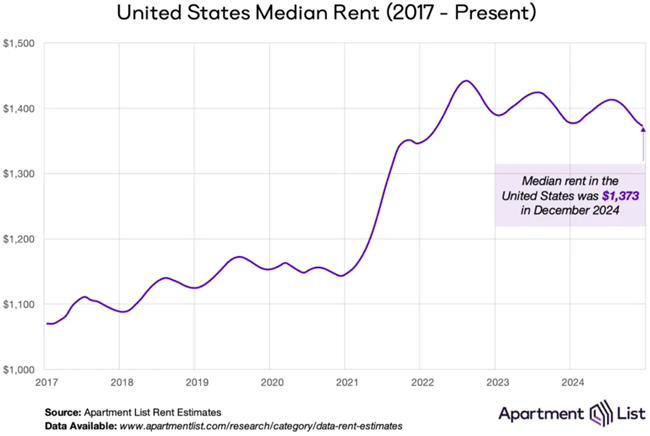
The national median monthly rent closed out 2024 at $1,373 in December, after declining by 0.6 percent, or $8, from the prior month.

The national median monthly rent closed out 2024 at $1,373 in December, after declining by 0.6 percent, or $8, from the prior month, Apartment List says in their January report, ending the year lower than it started.

Year-over-year rent growth nationally also currently stands at -0.6 percent, meaning that the typical apartment is currently renting for slightly less than it was one year ago.

In dollar terms, the national median rent today is $8 per month cheaper than it was one year ago and $50 per month less than in August 2022, but still remains $225 per month higher than the January 2021 level.

“The end of the year, in particular, generally sees the slowest rental market activity, as few households move during the holiday season. That lack of demand tends to result in modest discounts from property owners with vacancies to fill. In keeping with that pattern, 2024 ended with a fifth consecutive monthly dip in December.

“As moving activity picks back up in the new year, we are likely to see these monthly declines moderate and then flip back to positive growth in the coming months,” Apartment List economists write in the report.

The national median monthly rent closed out 2024 at $1,373 in December, after declining by 0.6 percent, or $8, from the prior month

Apartment vacancies remain elevated

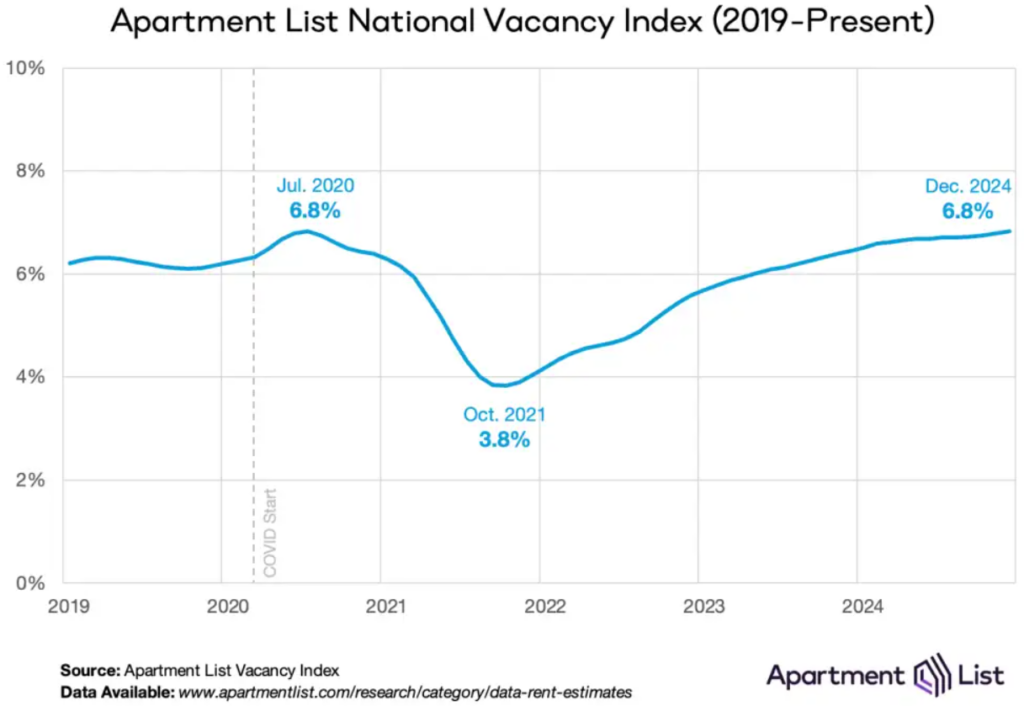
On the supply side of the rental market, “our national vacancy index continues trending up slowly and currently sits at 6.8 percent, the highest reading since the onset of the pandemic. After a historic tightening in 2021, multifamily occupancy has been slowly but consistently easing for over two years amid an influx of new inventory. 2024 saw the most new apartment completions since the mid-1980s, and with nearly 800 thousand units still in the construction pipeline, the supply boom has runway to continue into 2025.”

However, vacancy trends can be highly localized, Apartment List points out.

The national median monthly rent closed out 2024 at $1,373 in December, after declining by 0.6 percent, or $8, from the prior month

List-to-Lease time hits a new high

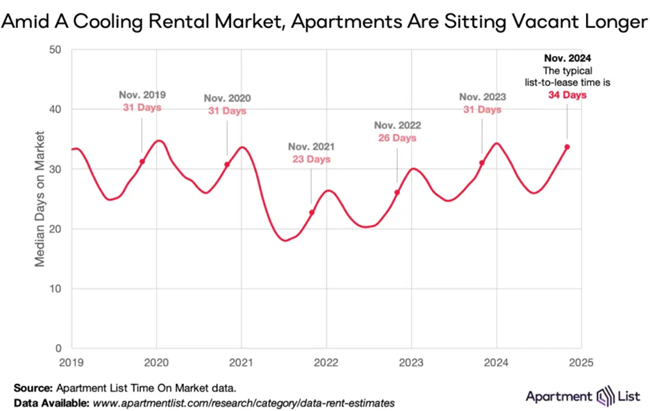
The median time on market of 36 days in December “is the highest reading that we’ve seen for this metric in any month going back to the start of 2019, when the data series begins.

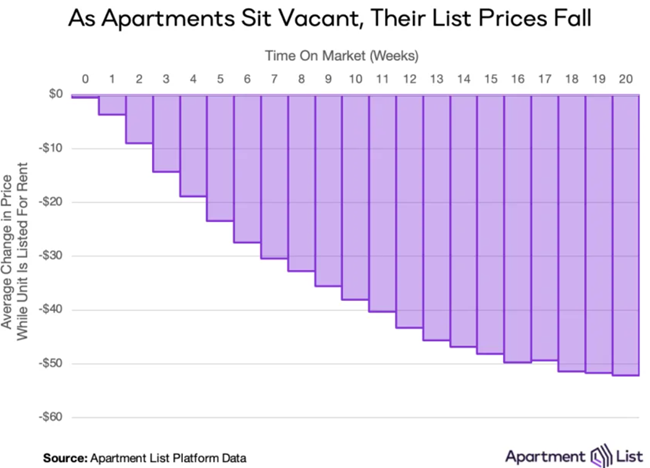
“It seems that the influx of new supply is resulting not only in a growing number of vacant units, but also in an increase in the length of time those units remain unoccupied,” the report says.

The national median monthly rent closed out 2024 at $1,373 in December, after declining by 0.6 percent, or $8, from the prior month

The national median monthly rent closed out 2024 at $1,373 in December, after declining by 0.6 percent, or $8, from the prior month

Conclusion

Rent increases are currently being moderated by a robust construction pipeline that delivered a decades-high number of new apartment units in 2024.

“While rental demand has bounced back a bit this year, recent signs of labor market softness could dampen demand going forward. With this in mind, we expect that new supply will continue to outstrip demand into 2025,” Apartment List says in the report.

Read the full report here.

Sign Up For Our Weekly Newsletter And Get Rental Property And Apartment News And Helpful, Useful Content Each Week.

* indicates required

Will Multifamily Have a Strong Year in 2025?

As the economy grows and the job market remains strong, what will 2025 look like for the multifamily industry?

As the economy grows and the job market remains strong, what will 2025 look like for the multifamily industry?

“We expect multifamily advertised rents to increase moderately in 2025, by 1.5% nationally,” writes Yardi Matrix writes in its winter report. “Many of the underlying conditions that drove strong demand should persist in 2025. Most notably, weak buying power and the high costs of homeownership continue to keep potential buyers in apartments longer.”

While 2025 looks good, the market faces some questions, “including the impact of potential economic policy changes, how long it will take to absorb deliveries in high-growth Sun Belt markets, and whether interest rates will fall enough to revive transactions and avoid distress,” the company says in the Multifamily Outlook for 2025.

Changes Are Coming In 2025

Yardi Matrix says the incoming Donald Trump administration will implement a new policy course.

“Some campaign policies such as relaxing regulations, eschewing rent control and reducing taxes should have a positive impact on multifamily. However, tariff threats and promises of large-scale deportations could raise prices and lower apartment demand,” the report says.

Highlights of the report

  • In terms of advertised rents, metros in the Northeast and Midwest will continue to lead, boosted by positive demand and weak supply growth.
  • The large number of properties under construction will support robust supply growth again in 2025, but the dwindling number of starts will stifle deliveries in 2026 and 2027.
  • Supply growth is distributed unevenly, as 12 to 15 high-growth markets account for a large percentage of deliveries.
  • At the same time, a national housing shortage has built up over decades, making development necessary to address affordability.
  • Activity in capital markets will be heavily dependent on the direction of interest rates. Increased trading activity is expected in 2024, but rate cuts likely won’t be fast or deep enough for a strong rebound in 2025.
  • At the same time, rate cuts won’t be enough to significantly alter the loan-default issue. Some loans that have been extended in the hope of imminent lower rates will default, though that cohort is not expected to be large enough to create a systemic crisis.

The Elephant in the Room?

Yardi Matrix says, “The elephant in the room for the forecast: a new administration that promises to bring about numerous policy changes. Growth should benefit from some new policies” such as extension of tax cuts and relaxing of some regulations.

  • The government is likely to drop regulation of multifamily-fee management, while policies that stymie development will be loosened or not strictly enforced, and funding of affordable housing programs such as opportunity zones and the Low-Income Housing Tax Credit should remain intact or be expanded.
  • The President-elect has also expressed his willingness to open some federal land to housing construction, which will reduce costs, as land prices alone can be significant barriers for developers.

“But some proposed policies could be detrimental to multifamily housing. Trump’s tariffs could not only elevate overall inflation but increase the cost of building materials, which could hinder development and possibly lead to retaliation from other countries.

“Also, higher costs could inhibit the Federal Reserve from cutting interest rates, which are such a key hurdle to commercial real-estate transactions.

The campaign promise for large-scale deportations of undocumented immigrants is another policy with potential negative impact as it could reduce housing demand and construction workers and introduce other areas of uncertainty. “Immigration, both legal and illegal, has been a source of demand for multifamily,” Yardi Matrix writes in the report.

The Work-from-Home Question

Work-from-home is another driver of rental demand, even as calls to return to the office become more prevalent.

Roughly two-thirds of office workers are either hybrid or fully remote, which translates into more people wanting space for home offices. Work-from-home also boosts demand in suburbs and less expensive metros.

Read the full report from Yardi Matrix here.

Sign Up For Our Weekly Newsletter And Get Rental Property And Apartment News And Helpful, Useful Content Each Week.

* indicates required

Rent-Setting Software Pushed Up Rents in Several Metros

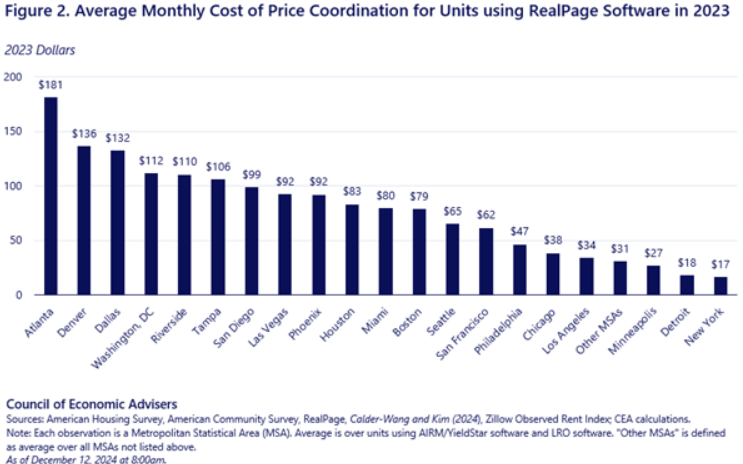
Renters In Atlanta, Denver and Dallas paid more than $100 a month more in rent to landlords who used rent-setting software algorithms

Renters In Atlanta, Denver and Dallas paid more than $100 a month more in rent to landlords who used rent-setting software algorithms, according to a report.

A White House report released in December estimates the nation’s renters overpaid by $3.8 billion in 2023.

The White House cited RealPage as the primary provider of rental-pricing algorithms. Companies like RealPage use their tools to suggest optimal rent for landlords to charge.

In order for the algorithm to work, landlords must provide data that they wouldn’t otherwise share with competitors.

Several states joined the lawsuit by the Department of Justice over the rent-setting software, including Colorado, Arizona and others.

Drew Hamrick, general counsel with the Colorado Apartment Association, told Denver7.com,  “If you’re trying to figure out what units are going for in a competitive area, figuring out the floor plans, the relevant levels of amenities, the square footage, all the things that factor into how valuable an apartment is, that’s a huge undertaking. And that information, in most cases, is not public.”

The report said, “We find that anticompetitive pricing costs renters in algorithm-utilizing buildings an average of $70 a month. In total, we estimate the costs to renters in 2023 was $3.8 billion. This estimate is likely a lower bound on the true costs.”

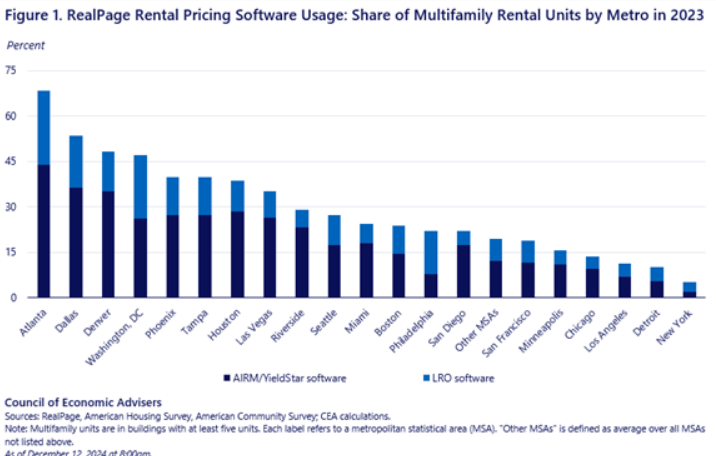
The report says “rental-pricing algorithms use extensive market data to predict and recommend profit-maximizing rents. RealPage is the primary provider of rental-pricing algorithms for multifamily housing. Its main pricing software is “AI Revenue Management” (AIRM, formerly “YieldStar”), but RealPage also owns “Lease Rent Options” (LRO), which it acquired from its main competitor in 2017. The two software products are used in at least 10% of all rental units nationally. Using data on software usage from a RealPage report and the American Community Survey, we estimate that in the multifamily housing sector nearly 1 in every 4 rental uses a RealPage pricing algorithm.”

The report released charts showing the top 3 metros where renters paid more due to the rent-setting software. Renters in Atlanta paid $181 more per month, Denver $136 more per month and Dallas $132 more per month.

Renters In Atlanta, Denver and Dallas paid more than $100 a month more in rent to landlords who used rent-setting software algorithms

Renters In Atlanta, Denver and Dallas paid more than $100 a month more in rent to landlords who used rent-setting software algorithms

Highlights of the report

  • “When algorithmic recommendations are based on profit-maximizing prices for a set of landlords collectively, the algorithm will recommend prices that are higher than the profit-maximizing price each landlord would set independently.
  • “RealPage pushes its software users to turn on the auto-accept setting so that price recommendations are automatically accepted,” according to the Department of Justice complaint.
  • “We find that coordinated rents from algorithmic pricing cost renters in algorithm-utilizing units $70 a month, or 4% of rent, on average nationally.
  • “In six major metros, the cost exceeds $100 a month,” the report says.

RealPage company spokeswoman Jennifer Bowcock told Axios Houston, “ This administration should stop scapegoating RealPage’s legally compliant technology for housing-policy failures and take care to not stifle the innovation that will strengthen America’s economy, now and in the future.”

In December, RealPage filed a motion seeking to dismiss the DOJ’s claims in the antitrust suit, arguing that the agency hasn’t shown any real anticompetitive effects of its product.

Axios wrote that it is watching “Whether the incoming Trump administration will pursue the suit against RealPage. The analysis looks like the White House’s last push to draw attention to the issue.”

Read the full White House report here.

Sign Up For Our Weekly Newsletter And Get Rental Property And Apartment News And Helpful, Useful Content Each Week.

* indicates required

Rents Forecast to Rise in 2025 and 2026

New rents forecast data shows there will be an increase in rents in 2025 and 2026, ending the lower prices many renters have had recently

CoStar Group forecasts that as the new apartment supply is absorbed, new data shows there will be an increase in rents in 2025 and 2026, ending the lower prices “many renters have had over the last couple of years as a result of the post-COVID multifamily supply glut,” the company says in a release.

The company, which specializes in real estate analytics and data information, says this is what renters should expect in the coming years. Key indicators, such as the national vacancy rate and construction starts, indicate a coming period of undersupply.

Jay Lybik, CoStar’s national director of multifamily analytics, recently analyzed the rental market outlook in a release and found:

  • After declining since Q1 2022, national rents are increasing once again, reflecting the end of oversupply conditions in most markets.
    • Rent growth for the latter half of 2024 is expected to match historical averages – around 3.5% – in contrast to the low of 0.9% in Q3 2023.
  • Expected multifamily property completions for 2024 total 533,000 units, a 10% decrease from the 40-year high of 588,000 units in 2023.
    • These numbers are expected to decrease even further; at the current pace of starts, the 2026 completion forecast sits at just 250,000 units.
    • This trend is further reflected in the sharp decline in construction starts, from a high of 210,000 units starting construction in the first quarter of 2022 to just 63,000 units two years later.
  • If demand remains at current levels into 2026, the market could transition quickly from oversupplied to undersupplied, causing vacancy rates to drop swiftly and rent growth to accelerate above historical averages.
    • Given the long lead times for construction, the market may not be able to respond quickly enough to compensate for the supply shortage, potentially exacerbating the supply and demand situation.

About CoStar

CoStar Group (NASDAQ: CSGP) is a leading provider of online real estate marketplaces and information in the property markets. Founded in 1987, CoStar Group conducts expansive, ongoing research to produce and maintain the largest and most comprehensive database of real estate information.

Rent Prices Rise in June, But Rentals Slow

Sign Up For Our Weekly Newsletter And Get Rental Property And Apartment News And Helpful, Useful Content Each Week.

* indicates required

5 Items For The Holiday Fair Housing Checklist

5 items on the holiday fair housing checklist to offer property managers a unique opportunity to demonstrate Fair Housing compliance.

Here are 5 items on the holiday fair housing checklist to offer property managers a unique opportunity to demonstrate their commitment to inclusivity and Fair Housing compliance.

By The Fair Housing Institute

The holiday season can be a joyous time for communities, but for property management professionals, it also presents unique challenges. Balancing festive cheer with the requirements of fair housing compliance and inclusivity is no small task.

Inspections may uncover non-compliance in resident decorations, while staff communication could inadvertently reflect language that alienates or excludes some residents. Addressing these issues promptly and thoughtfully is critical to fostering a harmonious, welcoming environment for everyone.

So, as the holidays quickly approach, take a few minutes and use this list that offers clear, actionable steps to see if your holiday plans are fair housing friendly.

Holiday Fair Housing Compliance Checklist

Use this checklist to address non-compliance discovered during inspections, reinforce inclusive practices among residents and employees, and ensure compliance with fair housing laws during the holiday season.

1. Addressing Resident Non-Compliance with Decorations

  • Evaluate All Resident Decorations: Confirm all decorations comply with established community policies (e.g., size, safety, and placement rules).
  • Issue Written Notices for Non-Compliance: Politely inform residents of any violations with clear instructions for corrections. Avoid specifying or targeting decorations based on cultural or religious themes.
  • Provide Policy Reminders: Reiterate decoration rules and highlight their purpose (e.g., safety, neutrality, and inclusivity).

2. Correcting Employee Language and Behavior

  • Review Recent Employee Communication: Identify instances of non-inclusive language (e.g., “Merry Christmas” instead of “Happy Holidays” or comments favoring specific traditions). Address any language that could be perceived as discriminatory or dismissive of resident concerns.
  • Hold Immediate Staff Training: Reinforce the importance of neutral, inclusive language during the holiday season. Use real examples from inspections to illustrate best practices and areas for improvement.
  • Provide Approved Scripts: Distribute a list of inclusive phrases (e.g., “Holiday Celebration” instead of “Christmas Party”) for staff to use in resident interactions and promotional materials.

3. Ensuring Common Area Compliance

  • Inspect Common Areas for Neutral Decorations: Remove any overtly religious or cultural displays unless balanced by representations of other traditions. Replace non-compliant decorations with universally festive, secular items (e.g., snowflakes, lights, or wreaths).
  • Verify Event Inclusivity: Ensure holiday events are advertised as open to all residents and reflect diverse traditions. Avoid promotional materials or language that may exclude or discourage participation from any group.
  • Reissue Common Area Policies: Communicate policies regarding the use of community spaces, emphasizing fairness and inclusivity.

4. Managing Complaints Effectively

  • Log All Complaints: Document complaints about decorations, language, or resident interactions, ensuring thorough records.
  • Investigate Promptly and Impartially: Address each complaint seriously, even if it appears minor or subjective. Discuss outcomes with all relevant parties and provide a clear explanation of resolutions.
  • Educate Staff on Complaint Sensitivity: Emphasize the importance of respectful listening and professional responses when addressing resident concerns.

5. Reinforcing Compliance Year-Round

  • Regular Policy Reviews: Schedule quarterly reviews of decoration and language policies to maintain compliance and inclusivity.
  • Continuous Staff Training: Incorporate holiday compliance scenarios into ongoing fair housing training programs.
  •  Promote Diversity and Inclusion Initiatives: Encourage year-round activities and practices that celebrate the community’s cultural and religious diversity.

Summary

The holiday season offers property managers a unique opportunity to demonstrate their commitment to inclusivity and Fair Housing compliance. By ensuring that all written and verbal communication reflects fair housing principles, you create a foundation of respect and equality within your community.

Use inspections and complaints not just as problem-solving tasks but as teachable moments to educate residents and staff about the importance of inclusivity. Maintain detailed records of all actions taken to address non-compliance to uphold accountability and provide legal protection.

By following this checklist, you can confidently navigate holiday challenges while fostering a welcoming, compliant environment for all residents—ensuring the season remains a time of joy and unity for everyone.

About the author:

In 2005, The Fair Housing Institute was founded as a company with one goal: to provide educational and entertaining fair-housing compliance training at an affordable price at the click of a button.

Little Change In Rents As Tenants Settle In For Winter

There was little change in rents in November as moving season is past and tenants settle in for the winter, Yardi Matrix says.

There was little change in rents as moving season is past and tenants settle in for the winter, Yardi Matrix says in the November Multifamily Report.

Of the last 10 Novembers, since 2015, the average U.S. advertised rent has changed more than $3 only three times.

Highlights from the report:

  • Multifamily advertised rents dropped $5 nationally in November to $1,744, as a rapid influx of supply continues to counteract strong demand in high-growth Sun Belt markets. Year-over-year rent growth fell 10 basis points to 0.9%.
  • Nationally, rent growth has been steady at just under 1.0% throughout the year, but performance is mixed by region. Sixteen of the Matrix top 30 metros have recorded positive advertised rent growth year-over-year, while 14 are negative.
  • Due to a seasonal slowdown and rising competition from deliveries, particularly in Florida and Texas, single-family rental rates are slumping. SFR advertised rents dropped $7 month-over-month in November to $2,150, and are down $25 since peaking during the summer.

The report says the question is whether the recent calm “belies a more turbulent time ahead as the multifamily industry anticipates changes to policy and interest rates.”

Clearly any talk of rent control at the federal level is gone, the report says.

Also, corporate tax breaks for real estate and deductions for pass-through entities from the 2017 tax law are likely to be extended or expanded.

Too, Fannie Mae and Freddie Mac, the most active multifamily lenders will likely face change based on previous statements from the Trump administration.

“At the same time, threats to implement steep tariffs and deport immigrants that comprise a solid chunk of construction workers raise concerns about rising costs, development delays and reduced demand for housing. Higher inflation could keep interest rates elevated and potentially stall increased transaction activity,” Yardi Matrix says in the report.

Read the full Yardi Matrix report here.

About Yardi Matrix

Yardi Matrix researches and reports on multifamily, office and self-storage properties across the United States, serving the needs of a variety of industry professionals. Yardi Matrix Multifamily provides accurate data on 18+ million units, covering more than 90 percent of the U.S. population. Contact the company at (480) 663-1149.

Sign Up For Our Weekly Newsletter And Get Rental Property And Apartment News And Helpful, Useful Information Each Week.

* indicates required

4 Ways AI is Transforming the Multifamily Housing Industry

4 Ways AI is being leveraged by multifamily owners and operators to optimize their marketing efforts from leasing to maintenance

4 Ways AI is being leveraged by multifamily owners and operators to optimize their marketing efforts from leasing to maintenance.

By Vickie Rodgers

Artificial intelligence (AI) is rewriting how the entire real estate industry operates, including improving the way multifamily properties market and advertise their residences. In fact, McKinsey predicts generative AI alone can create at least $110 billion to $180 billion in value for the entire real estate industry.

Property managers failing to invest in and adopt AI risk falling behind those in the industry that leverage the tool in their marketing and advertising efforts.

Although AI is not new technology, it has gone through a renaissance since ChatGPT popularized it in 2022. AI is not only here to stay, it is set to take root, grow and mature in the multifamily market because of the many tangible benefits it provides, including increasing marketing efficiency and improving resident satisfaction.

Here are four ways AI is being leveraged by multifamily owners and operators to optimize their marketing efforts.

No. 1 – Streamline the leasing and application processes

AI can help those on both sides of the leasing and application process – leasing office and prospective residents.

For leasing office team members, AI can be used to craft engaging apartment listings, which frees them from this manual task so they can focus on other efforts, such as spending one-on-one time with tenants or prospects. AI can even be used to create an image replacing an outgoing tenant’s dated furniture with AI-generated furnishings that make the space more appealing.

On the prospective resident side, a chatbot can answer questions 24/7 so the individual doesn’t need to wait for business hours to get an answer. Chatbots can also be used to schedule viewings or lead potential tenants through the application process, among other things.

No. 2 – Support stronger marketing activities

AI sets the competitive multifamily resident bar higher. For instance, if one property manager advertises a dimly lit, unappealing snapshot of an available unit and another provides a well-lit, AI-enhanced photo showing the property in a more engaging way, the second property is going to attract more prospects.

To reach the most relevant audiences, AI algorithms can also use targeted advertising to analyze certain demographics to optimize ad placements. The technology can also evaluate and prioritize leads based on conversion likelihood so leasing teams can focus their efforts on the prospective residents with the greatest leasing potential.

No. 3 – Analyze amenities and provide recommendations for upgrades

No two properties are the same, nor are their amenities. Consider swimming pools since many apartment complexes have them. AI can analyze and then point out that a property has invested in a high-end Infiniti pool that’s much more desirable than a competitor with a swimming pool installed in the 1980s.

AI can even recognize patterns in data to determine which amenities, like weight rooms, pools, greenspaces or smart home features, have the most appeal with tenants. If tenants lean toward reliable Wi-Fi throughout an entire property or would love an on-site dog park, AI can recommend these upgrades to property management.

No. 4 – Strengthen preventative maintenance operations through real-time monitoring

AI algorithms analyze data from sensors and historical maintenance records to predict when equipment might fail. This allows organizations to schedule maintenance before problems arise to decrease equipment downtime and increase tenant satisfaction.

AI can identify atypical patterns in real-time data, signaling potential issues before they escalate. For example, if water usage throughout a property doubles over two months, proactively looking into the issue can help address the problem, like detecting a water tank trickle or swimming pool leak, early. Similarly, if the refrigerator in a unit is acting up, AI can schedule maintenance before the appliance fails and the tenant is forced to throw out a refrigerator and freezer full of food.

AI set to unlock even greater potential

Although AI still has some growing pains, using the technology to enhance marketing and advertising efforts can help multifamily operators take advantage of greater efficiency, insight and innovation. As the technology grows and matures, it will be interesting to see the ways in which AI continues to redefine the possibilities in the growing multifamily market.

 About the author:

Vickie Rodgers, Senior Vice President of Cox Communities

Sign Up For Our Weekly Newsletter And Get Rental Property And Apartment News And Helpful, Useful Content Each Week.

* indicates required