Home Blog Page 2

2026 Pets and Housing Awards Are Open For Nominations

Raise the woof- the 2026 pets and housing awards are open for the fifth year for nominations from the Pet-Inclusive Housing Initiative.

Raise the woof- the 2026 pets and housing awards are open for the fifth year for nominations from the Pet-Inclusive Housing Initiative.

The connections between people and their pets have never been stronger, and the multifamily housing industry is leading the charge in celebrating this bond. With more renters seeking pet-inclusive communities, forward-thinking operators are redefining what it means to be a “pet-friendly” property—and now it’s time to recognize their groundbreaking work.

Michelson Found Animals Foundation says nominations are now open for the Fifth Annual Pets and Housing Awards, presented by the Pet-Inclusive Housing Initiative. These awards honor the trailblazers, innovators, and community champions who are making housing more welcoming for pets and their people.

Ross Barker, Director of the Pet-Inclusive Housing Initiative, describes the event as a highly anticipated opportunity to highlight outstanding efforts in pet-inclusive housing. “We eagerly anticipate this event every year because it lets us shine a spotlight on the outstanding organizations leading the pack with their pet-inclusive housing solutions,” Barker said. “This fifth annual event will be our best yet, and we’re excited to see the great work organizations nominate!”
Raise the woof- the 2026 pets and housing awards are open for the fifth year for nominations from the Pet-Inclusive Housing Initiative.
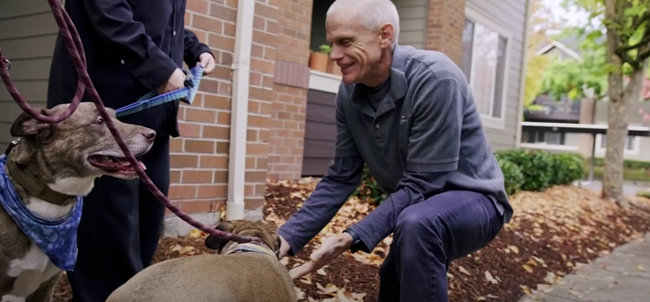
Ross Barker, Director of Michelson Found Animals Foundation’s Pet-Inclusive Housing Initiative.

Why Nominate For Pets And Housing Awards In 2026?

This is your chance to showcase your achievements and gain industry-wide recognition as a leader in pet inclusivity. Whether you’ve launched an innovative amenity, hosted successful pet-focused      events, or reimagined pet policies by easing or eliminating size and breed restrictions, we want to celebrate your dedication to improving the lives of pets and residents alike. Whether you’re part of a large company spanning multiple states, an independent rental operator serving a local community, an advocate for pet policy change or a nonprofit champion for pets in housing, we want to hear from you! Or you may know some great work in one of these categories you would like to nominate on behalf of someone else – go for it!

2026 Pets And Housing Awards Categories

With nine categories, there’s a spotlight for every kind of innovation:

  • Best Leap Forward: Recognizing significant progress in pet inclusivity.
  • Vanguard Award: Honoring a company with a sustained, long-term commitment to pet-inclusive housing.
  • Most Impactful Pet & Community Engagement Event or Program: Recognizing a rental housing property or company for its adoption or foster initiatives, partnerships, education, or other pet-focused programs.
  • Most Innovative Pet Amenity or Amenity Group: Shining a light on creative spaces and services for pets.
  • Most Innovative Pet Marketing Campaign: Showcasing campaigns that engage and attract pet-loving residents.
  • Most Pet-Inclusive Property: Celebrating a property that goes above and beyond for pets and their people, setting the pet-inclusive standard.
  • Paws & Progress Nonprofit Award: Celebrating nonprofits driving positive change in pet-inclusive housing.
  • Pets & Housing Policy Advancement Award: Recognizing advocacy and policy advancements that benefit pets and housing.

Key Details For 2026 Pets And Housing Awards

  • Nomination Deadline: March 27, 2026
  • Winners Announced: Virtually (details to follow)

How to Nominate

Submitting a nomination is simple and unlimited! Highlight the achievements in any—or all—categories. Share your (or another’s) story, inspire your peers, and claim your place as an industry leader. Simply click here to get started.

Let’s Celebrate Together

The 2026 Pets and Housing Awards are more than just accolades—they’re a celebration of the innovative and heartwarming ways the multifamily housing industry improves lives. Let’s honor the creativity, compassion, and commitment that make pet-inclusive housing a reality.

Don’t wait! Start your nominations today, and join us in setting the standard for pet-inclusive communities. Together, we’ll keep raising the woof!
Return To Positive Rent Growth With Small Increase In February

National rents returned to positive rent growth and inched up in February after falling for six straight months as the season is changing

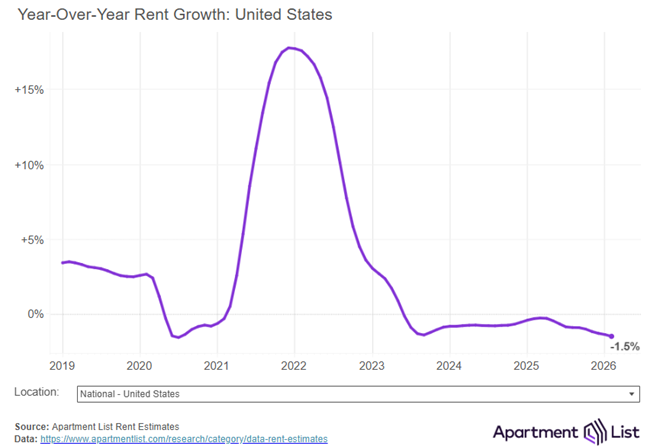
National rents returned to positive rent growth and inched up in February after falling for six straight months, according to the March report from Apartment List.

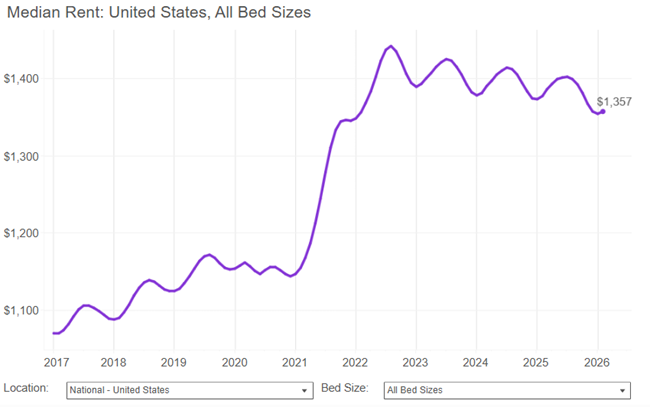
The national median rent ticked up by 0.2 percent in February, flipping positive after six straight monthly rent declines.

National rents returned to positive rent growth and inched up in February after falling for six straight months as the season is changing

This officially marks the start of the market creeping out of the off-season, and we’ll likely see continued increases in the months ahead as moving activity ramps up, Apartment List researchers say.

The timing of this month’s return to positive rent growth is in line with typical seasonal patterns – prices soften as fewer renters move during the fall and winter, and then gradually begin to increase as we get closer to the peak moving summer season. February has marked the return to positive rent growth in each of the last four years.

National rents returned to positive rent growth and inched up in February after falling for six straight months as the season is changing

Highlights of the return to positive rent growth report:

  • The national median rent increased by 0.2% in February, and now stands at $1,357. This marks the first monthly increase since last July, as the market begins to pull out of its off-season pricing dip.
  • Rent prices nationally are down 1.5% compared to one year ago. Year-over-year rent growth has been slightly negative for well over two years, and the national median rent has now fallen from its 2022 peak by a total of 5.9%.
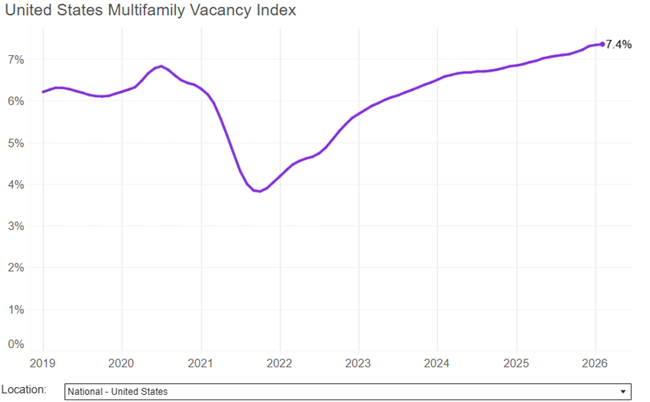
  • The national multifamily vacancy rate ticked up to 7.4% this month.  We’re past the peak of a multifamily construction surge, but a healthy supply of new units is still hitting the market and colliding with sluggish demand, causing vacancies to continue trending up.
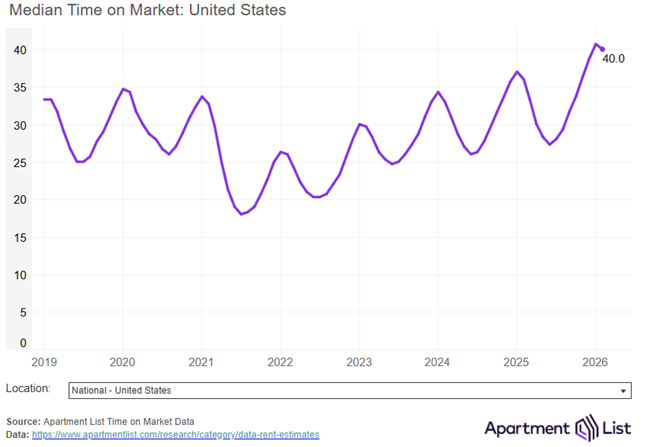
  • Units are taking an average of 40 days to get leased after being listed, which is four days longer than one year ago, and more than twice as long as it took units to turn over when the market was at its hottest in mid-2021.

Vacancy index continues to climb

The Apartment List national vacancy index – which measures the average vacancy rate of stabilized properties in our marketplace – increased to 7.4 percent in February. This represents the highest level since at least 2017, which is when we started tracking occupancy.

National rents returned to positive rent growth and inched up in February after falling for six straight months as the season is changing

Eventually, the market will absorb the swell of new units, and occupancy and pricing trends should begin to gradually tighten. But for now, conditions remain soft, and the runway for these sluggish conditions seems to have lengthened as a shaky labor market has put a damper on housing demand.

List-to-Lease time remains elevated at 40 days

As more vacant units have come onto the market, those units have also been sitting vacant for somewhat longer. The Apartment List “time on market” index tells us how long it takes for units to get leased after they are first listed on our platform.

Median time on the market it takes to lease

This “list-to-lease” time is a highly-seasonal measure, and ticked down slightly this month, in line with month-over-month rent growth flipping positive. Units leased in February had been sitting on the market for an average of 40 days, down from 41 days last month.

Read the full report here.

Oregon Landlords Could Face Financial Penalty If Leaking Tenant Immigration Status

Oregon landlords who leak confidential information about tenants such as immigration status or medical records could face financial penalties.

Oregon landlords who leak confidential information about tenants such as their immigration status or medical records could soon face financial penalties.

Under House Bill 4123, passed by the Oregon Senate on Monday by a 24-3 vote, lawmakers on both sides of the aisle moved to strengthen existing protections for immigrants without permanent legal status that the Legislature enacted last year. The bill now heads to Gov. Tina Kotek’s desk for final consideration.

The Oregon Capital Chronicle reported that a 2025 Oregon law already ensures that landlords may not discriminate against tenants due to their immigration status while prohibiting release of information about their citizenship with the intent to harass, retaliate against or intimidate. That also includes when a landlord threatens to release such information.

But that law didn’t establish explicit monetary compensation for individuals who are victims of discrimination, instead empowering them to sue in court or challenge discriminatory decisions such as an eviction based on immigration status. Affordable housing, civil rights and domestic-violence survivor advocates have urged lawmakers to support HB 4123 on the grounds that renting in Oregon shouldn’t further expose vulnerable communities.

If a landlord “knowingly violates” the bill’s protections, tenants whose confidential information has been disclosed could recover compensation that equals twice the amount of their monthly rent. Protected information would also include Social Security numbers and medical or disability records.

Sign Up For Our Weekly Newsletter And Get Rental Property And Apartment News And Helpful, Useful Content Each Week.

* indicates required

Portland’s Rent Growth Slows With Soft Fundamentals

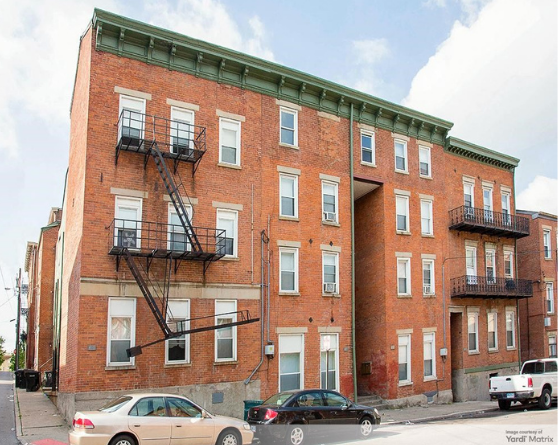
Portland’s average advertised asking rent dropped 0.6% on a trailing three-month basis as Portland's rent growth slowed with soft fundamentals

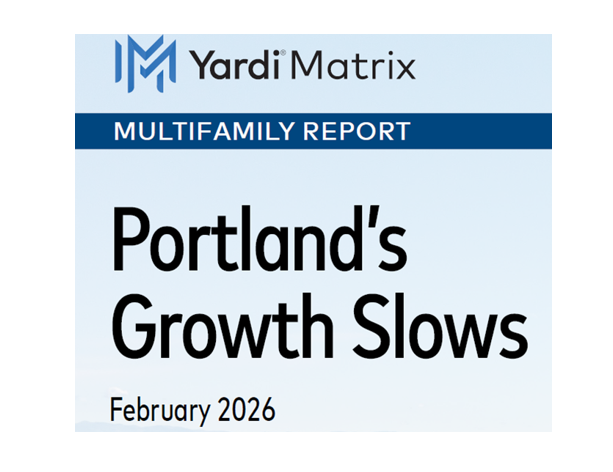
Portland’s average advertised asking rent dropped 0.6% on a trailing three-month basis as of December 2025, reaching $1,727, as Portland’s rent growth slowed with soft fundamentals, according to the most recent Yardi Matrix Multifamily Report.

Meanwhile, the national rate declined by only half that amount, sliding to $1,737. Metro Portland’s occupancy rate for stabilized assets was 95.0% in November, or 40 basis points above the U.S. average.

As of November, Portland unemployment stood at 4.8%, according to preliminary data from the Bureau of Labor Statistics. Job growth was limited to just four sectors, and those increases were not enough to offset wider employment declines, leading to a net loss of 7,200 positions.  Despite economic uncertainty, several developments were underway in Portland. Among these projects was the I-205 Abernethy Bridge improvement, which includes making the bridge earthquake-ready and adding walking and biking paths.

The $672 million project is scheduled for completion at the end of the year.

In 2025, developers added more than 5,800 units to the metro’s inventory and had close to 4,400 units underway as of December. The majority of recent deliveries and projects underway target the lifestyle segment. Transaction activity remained steady, as the metro recorded $1.2 billion in deals in the past year. That was a little short of the $1.4 billion recorded in 2024.

Read the full report here.

Return To Positive Rent Growth With Small Increase In February

HUD Proposes Removing Non-Citizens From Public Housing

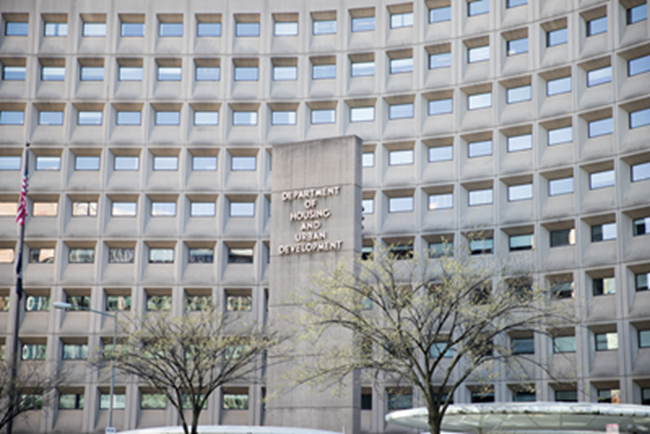
The U.S. Department of Housing and Urban Development has proposed a rule that would limit public housing mostly to citizens, which advocates fear could lead to tens of thousands of people being evicted.

The U.S. Department of Housing and Urban Development has proposed a rule that would limit public housing mostly to citizens, and remove non-citizens, which advocates fear could lead to tens of thousands of people being evicted.

The rule, published in the Federal Register, calls for limiting funding for those in public housing and other HUD-related housing to citizens and eligible noncitizens. The rule would require every resident in HUD-funded housing to show proof of citizenship or eligible status, including those 62 years and older who previously only had to show proof of age.

The measure would effectively bar mixed status families —- where some household members are eligible for help — from housing and is part of the government’s immigration crackdown. A similar rule was proposed but never finalized during the first Trump administration and is mentioned as a policy priority in the conservative blueprint Project 2025.

“Our country can ensure that every one of us, no matter where we come from or what language we speak, has a safe home,” Shamus Roller, the executive director of the National Housing Law Project said in a statement. “Instead, Trump is trying to evict immigrant families, citizen and non-citizen, from HUD housing.”

According to a HUD analysis in 2019, more than 108,000 people receiving housing benefits were in a household with at least one undocumented immigrant. Because many of those immigrants have children who are U.S. citizens or legal residents, HUD estimated at the time that as many as 55,000 children who were in the country legally would have been displaced from public housing under the policy.

Bill To Allow Tenants To Use Paper Rental Applications, Checks

An Oregon Senate Bill would require landlords to offer tenants options to use a paper application, pay by check or other non-digital methods

An Oregon Senate Bill would require landlords to accommodate renters by offering the option to use a paper application, pay by check or other non-digital methods and have non-digital keys to access rental spaces.

Sponsors of the bill Senate Bill 1523 say it’s a way to stop technological advancements from limiting housing access for older adults, low-income renters, renters with disabilities and those who are otherwise technology-averse.

The Oregon Capital Chronicle reported how mistyping one piece of personal information on her apartment’s online portal meant Beth Walker didn’t realize her rent payment hadn’t gone through until after her landlord applied a late fee and prepared to start an eviction filing.

“It ultimately took hours of frantic communication and a forced day off work just to ensure the process wasn’t initiated the following morning,” Walker wrote in legislative testimony. “The digital divide isn’t just about internet access — it’s about making sure that people who lack access to or familiarity with technology like smartphones and electronic portals can still meet their fundamental needs, including housing.”

Sybil Hebb, director of legislative advocacy at the Oregon Law Center, told lawmakers that some of her clients have nearly lost their housing because of technological mishaps from tenant portals that made rent payments appear late or even missing.

These concerns are exacerbated among low-income seniors, especially those at risk of homelessness, according to advocates at the Northwest Pilot Project. Often rental applications require multiple devices, like a computer and a phone, which some low-income residents cannot afford.

“The client is basically stuck with moving forward with an application, and these are not minor inconveniences. They directly prevent people from applying for housing, and some of these clients simply give up and they don’t apply at all,” said Jason Colthurst, housing access manager at Northwest Pilot Project, in an interview with the Oregon Capital Chronicle. “Access to housing should not depend on a person’s ability to afford or use technology.”

Most opposition to the bill came from landlords and housing providers, who noted that the lack of standardization of where applications come from could make the process less efficient, delaying housing approvals. Others mentioned that they felt many accommodation requests for renters were already covered through the Oregon Fair Housing Act.

“We are concerned about risk in not having equal opportunity for those needing housing due to delays in delivering paper applications and having too many paper applications that need to be processed,” wrote Jonathan Clay, government and public affairs manager with Multifamily NW.

Portland City Council Delays Vote On Unspent Housing Funds

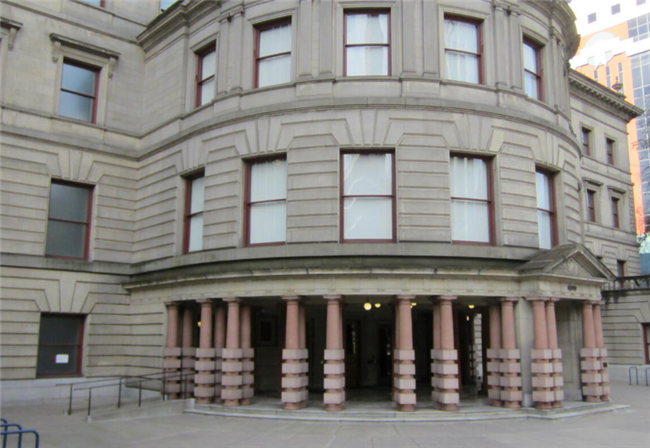
The Portland City Council has again delayed a vote and continued a months-long debate on how to spend unspent housing funds.

The Portland City Council has again delayed a vote and continued a months-long debate on how to spend unspent housing funds.

City officials first disclosed that the Portland Housing Bureau was sitting on $21 million of unbudgeted dollars in November.

That money was generated by a fee that landlords must pay to register new rentals, and is meant to be spent on programs that support renters. Shortly after that discovery, the three council members pitched a plan to spend that new cache of money on rent assistance, legal defense for people faced with an eviction, and other tenant-support programs.

The plan was delayed by the winter break and further complicated by news in early February that the city administrator’s office had found an additional $85 million in unallocated dollars in the housing bureau.

This money came from different housing revenue streams that had accumulated over the years, and were intended to grow until the money was needed to pay for large projects. But the housing bureau had never noted these accruing dollars in its annual budget.

Unlike the $21 million first identified, the $85 million is made up of a number of funds that all have different rules on how they can be spent. The most recent vote centered on how to spend the initial $21 million in housing dollars; but with the new information on the $85 million, the council was not ready to vote.

“Every time we have met so far, the number of dollars being identified has grown,” said Council President Jamie Dunphy, one of three District 1 councilors who introduced the initial funding package in December, according to Oregon Public Broadcasting.  “While finding money is a better problem than the alternative, this is certainly still a problem. I do not feel like this body is ready to make a decision of this magnitude.”

Rental Market Now Firmly Renter-Friendly as Vacancy Rate Climbs

The rental market has turned renter-friendly as the vacancy rate has climbed to 7.6% across the 50 largest metros

The U.S. rental market has officially tipped in favor of tenants and turned renter-friendly as the vacancy rate has climbed to 7.6% across the 50 largest metros.

Realtor.com says in their January Rental Report that 44 out of the 50 largest metros are now either renter-friendly or balanced, leaving just six markets more landlord-friendly.

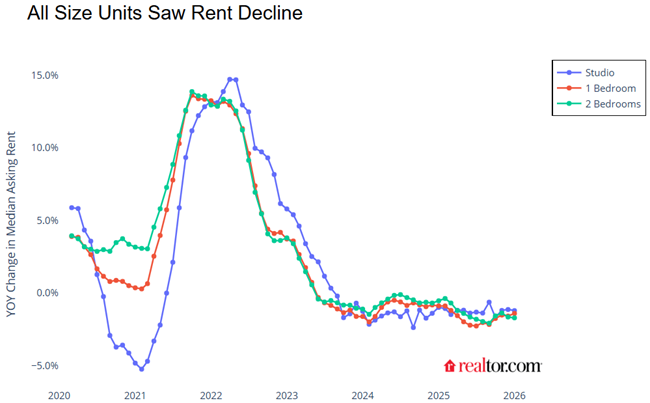
As vacancy rates rise, costs are adjusting downward. January marked the 29th consecutive month of year-over-year rent declines, with the national median asking rent dipping 1.5% year-over-year to $1,672.

“After years of being squeezed by limited inventory, renters are finally seeing the supply wave work in their favor,” said Danielle Hale, chief economist at Realtor.com. “This shift doesn’t just mean lower prices; it means that renters today have more options and more bargaining power. While the market isn’t uniform everywhere, the broader trend is a move toward a much-needed equilibrium that allows for more flexibility and choice in the housing search.”

The rental market has turned renter-friendly as the vacancy rate has climbed to 7.6% across the 50 largest metros


Key findings in the renter-friendly study:

  • Renter advantage: The surge in availability has pushed the national vacancy rate to a high, up from 7.2% in 2024.
  • The Milwaukee flip: Milwaukee recorded the most dramatic shift in the country, with vacancy more than doubling (from 4.9% to 10.8%) in just one year.
  • Regional exceptions: While the supply wave is helping renters nationally, coastal hubs such as New York and Boston remain supply-constrained with vacancy rates stuck below 5%.
  • Price softening: National asking rents fell for the 29th consecutive month, dipping 1.5% year-over-year to $1,672.

“We are seeing a fascinating tug-of-war,” said Jiayi Xu, economist at Realtor.com. “In the Sun Belt and parts of the Midwest, new construction is helping to create negotiating room for renters. But in traditionally more affordable areas like Richmond and Pittsburgh, the secret is out, rising demand from out-of-towners is starting to soak up that excess vacancy, proving that renter-friendliness can be fleeting if supply doesn’t keep pace with demand.”

Mission: Mastering Reasonable Accommodations

Most legal complaints about reasonable accommodations start because a resident felt ignored or disrespected by management.

Most legal complaints don’t start because a property manager missed something involving reasonable accommodations, they start because a resident felt ignored or disrespected.

By The Fair Housing Institute

The natural instinct for any good property manager is to doublecheck everything. You have a duty to protect the property and follow the rules fairly for everyone on the rent roll. However, in the world of fair housing, that “trust-but-verify” mindset can actually become a major legal headache. The real challenge is mastering the “calibration of inquiry”—knowing exactly when to stick to the standard playbook and when the law requires you to be flexible.

Professionalism today is about realizing that strict policy and great customer service are actually on the same team. Your policy keeps things consistent, while a service-first approach ensures those rules don’t inadvertently lead to a discrimination claim. When you find that sweet spot, you keep your property high-performing and your legal risks low.

Knowing When to Stop Asking

One of the easiest ways to get into trouble is asking for proof when the answer is already right in front of you. If a resident’s disability and their request clearly go hand-in-hand—like someone in a wheelchair asking for a ramp—it’s best that you stop the questions right there. In these cases, the need is obvious, and demanding a doctor’s note is seen as an unnecessary hurdle.

A smart management team knows such moments require setting the paperwork aside. When a need is self-evident, your best move is to say yes and move forward. Forcing a resident to jump through hoops for a visible disability isn’t just bad service; it’s a policy failure that invites a lawsuit. By recognizing these off-ramps in your procedure, you show you’re a pro who knows how to handle sensitive situations with common sense.

The Trap of the Official Form

We love our standardized forms because they make filing and auditing a breeze. But here’s the catch: A resident isn’t legally required to use your specific company document. If they walk in with a signed letter from their doctor that explains what they need and why, you generally have to accept it. Insisting that they go back to their doctor just to get it on your letterhead creates what the law calls “unreasonable friction.”

Under HUD guidelines, if the information is there, you should process it. Forcing someone through a bureaucratic maze just for the sake of your internal filing system can lead to delays—and in the fair housing world, a slow response is often viewed as a no. Focus on the substance of the info, not the stationery it’s printed on. This keeps your records straight without creating a timeline that invites litigation.

Keeping the Playbook Sharp and the Team Ready

Having a written policy is only half the battle; the real value comes from treating those procedures as a living document. Professional housing providers should regularly review their reasonable-accommodation policies to ensure they align with the latest regulatory updates and industry best practices. Because the housing industry sees high turnover, a policy sitting in a dusty binder does no one any good. It is essential to treat fair-housing training as an ongoing conversation rather than a one-time orientation task.

Consistency in the field only happens when every staff member—from the leasing office to the maintenance crew—is on the same page. Effective training moves beyond “what to do” and teaches staff “how to be,” helping them recognize requests that might be hidden in casual conversation. By investing in up-to-date training and designated authority roles, you ensure that decisions are made by people who truly understand the stakes. This proactive approach turns policy into a daily habit, making your team’s response to residents both uniform and legally sound.

Service is Just as Important as Compliance

At the end of the day, most legal complaints don’t start because a manager missed a tiny sub-clause in a manual; they start because a resident felt ignored or disrespected. By practicing active listening, your team can catch a request even if the resident doesn’t use the official legal terms. They might just mention they’re struggling with the stairs, and it’s your job to hear that as a potential request for help.

Building a culture where your team is proactive changes the entire energy of the community. When you respond quickly—ideally within that 14- to 30-day window—you show residents that you take them seriously. This builds a foundation of trust that acts as one of many shields for the property. When people feel like you’re on their side, they’re much more likely to work with you than to file a complaint against you. Don’t let reasonable accommodations in your community become a Mission: Impossible.

About the author:

In 2005, The Fair Housing Institute was founded as a company with one goal: to provide educational and entertaining fair-housing compliance training at an affordable price at the click of a button.

Sniffing Out Top Dog-Friendly Apartments Nationwide

Dog-friendly apartments nationwide are competing with single-family homes, not other apartments-embracing pets improves financial performance

Top dog-friendly apartments nationwide understand they’re competing with single-family homes, not just other apartments, and communities that embrace pets see stronger financial performance and help the pet housing crisis.

By Christin Tenpenny

With National Walk the Dog Day arriving on February 22, the pet housing crisis has reached a tipping point that’s reshaping how we think about multifamily living. As the proud parent of two little dogs who has witnessed significant changes in property management over three decades, I’ve seen the market shift dramatically to roll out the red carpet for our four-legged family members with dog-friendly apartments.

Apartments that welcome dogs from the beginning show support

The numbers tell a compelling story. Pet ownership among renters jumped from 46% in 2019 to 59% in 2023, while 72% of renters struggle to find truly pet-friendly housing. Dog ownership specifically rose from 31% to 40% during the same period; the ASPCA estimates that about 23 million households adopted a cat or dog during the COVID-19 pandemic, when more people worked from home. Even more telling: 92% of renters view pets as family members when making housing decisions. Twice as many renters now filter searches for pet-friendly apartments than any other amenity, proving that Fido’s needs often trump granite countertops. Trust me, my own two pups have made it clear that a good dog run beats a fancy kitchen island every time.

 Why Breed Restrictions Are Going to the Doghouse

 While 80% of properties claim to be “pet-friendly,” renters should ask questions because some may have limitations on weight, size and breeds. The same percentage still enforces breed restrictions that create significant barriers for some pet owners. A growing pack of communities welcomes pets of every size and shape, and they’re reaping the rewards.

Less-restrictive pet policies are becoming powerful competitive advantages. Properties that welcome all pets attract larger pools of qualified applicants and command higher rents. Pet-owning households demonstrate stronger income stability and sign longer lease terms, reducing turnover costs that average $3,872 per unit. As a pet owner myself, I know firsthand how willing we are to pay more for communities that truly welcome our furry family members.

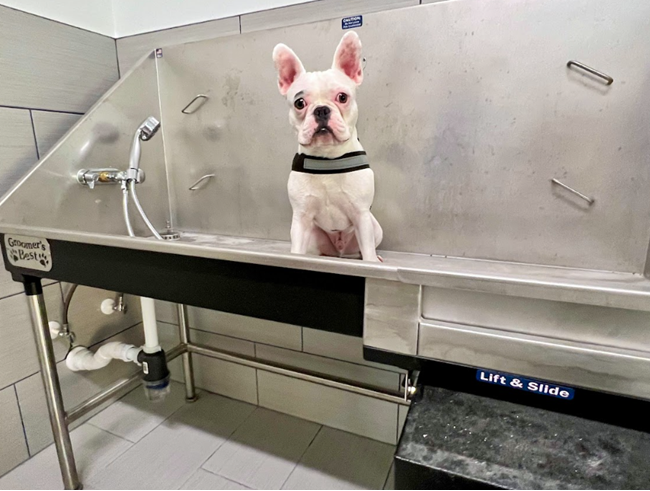
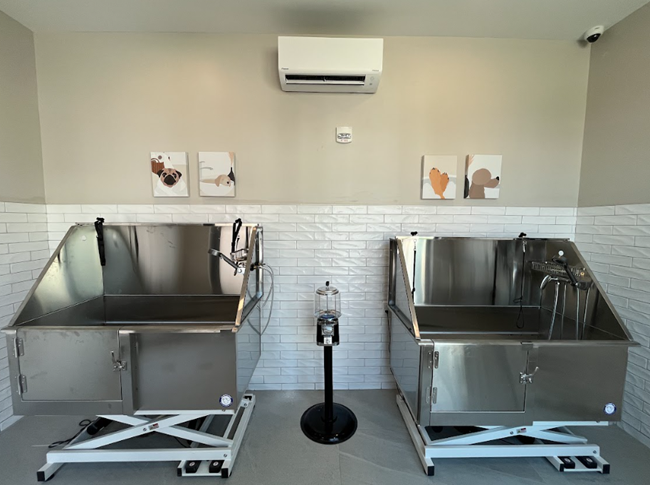
Dog washing stations are important

Communities That Fetch Premium Rents

Properties like Via and Citizen in Kansas City feature daily free treats for pet residents, and pet stations throughout the properties. These communities recognize that pet owners will pay premium rents for true inclusivity, especially when walk scores hit the 80s for easy neighborhood strolls to coffee shops and parks.

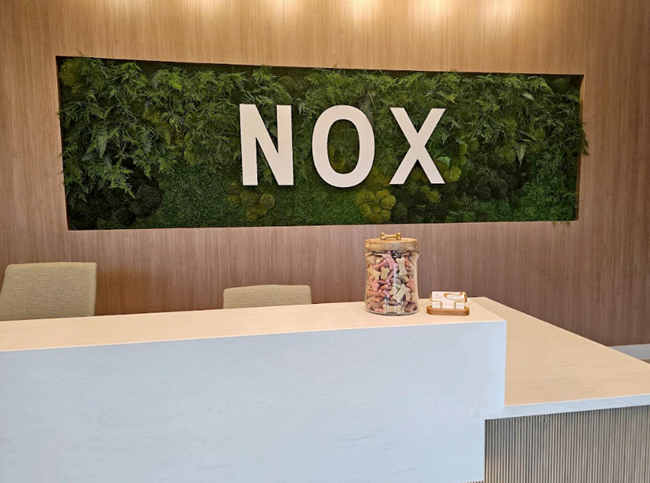
Regional differences in pet-amenity demand become apparent when comparing markets. Florida properties focus on outdoor spaces perfect for fetch sessions, while Pittsburgh’s NOX offers pet wash stations and dedicated dog areas that address urban-living challenges. Oxlley in Edmond, Okla., pampers pooches with bark parks and full-service pet spas while maintaining that coveted 80 walk score.

The magic happens when communities provide walkable neighborhoods that score above 80, giving easy access to veterinary services, pet stores, and grooming facilities. These aren’t just conveniences; they’re lifestyle necessities that keep lease renewals flowing. When my dogs need unexpected vet visits or grooming appointments, having these services within walking distance makes all the difference.

Dog-friendly apartments nationwide are competing with single-family homes, not other apartments-embracing pets improves financial performance

Apartment Amenities That Compete with the Suburban Dream

The most successful pet-friendly communities understand they’re competing with single-family homes, not just other apartments. Apartment amenities are evolving quickly, creating experiences that rival homeownership.

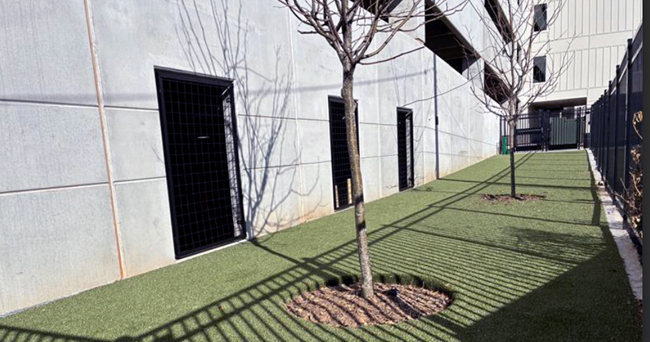
Some communities even provide private backyards attached to units, giving pet residents their own kingdom. Integra Avalon in Wintergarden, Fla., demonstrates this approach with personal outdoor spaces that mimic the suburban experience. Florida properties typically emphasize year-round outdoor living spaces and climate-controlled amenities that address the Sunshine State’s unique demands.

Dog-friendly apartments nationwide are competing with single-family homes, not other apartments-embracing pets improves financial performance

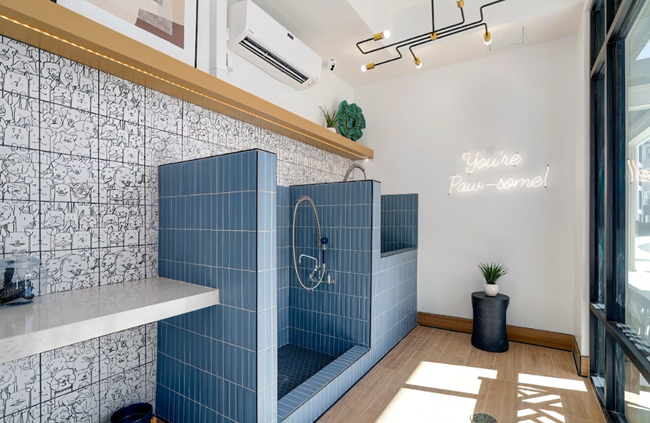
On-site pet-wash stations and grooming facilities eliminate external costs while providing convenience that busy pet parents crave. These spaces accommodate mastiffs to toy poodles through thoughtful design featuring multiple washing heights, and specialized equipment that would make any professional groomer jealous. Having battled muddy paws after rainy walks myself, I can vouch for how valuable these amenities become in daily life.

Dog-friendly apartments nationwide are competing with single-family homes, not other apartments-embracing pets improves financial performance

Full-service pet spas and specialized care amenities elevate the experience beyond basic accommodation. These spaces generate additional revenue streams while positioning properties as lifestyle communities where pets live like royalty.

Dog-friendly apartments nationwide are competing with single-family homes, not other apartments-embracing pets improves financial performance

The Economics Behind Pet-Friendly Apartment Policies Across Markets

The economics behind pet-friendly apartment housing vary significantly across different markets, but the trend is clear: communities that embrace pets see stronger financial performance. Huntsville, Ala. leads the pack with 100% pet-friendly rentals, followed by Tulsa, Okla. at 97.56% and Overland Park, Kan. at 97.26%. Oklahoma leads nationally at the state level with 92.77% of all apartments allowing pets.

These numbers reflect regional economic realities that smart property managers are capitalizing on. Pet deposits and monthly fees vary by market and property type, with most communities charging deposits of several hundred dollars plus a small monthly pet rent.

Property managers in high-growth markets understand that pet restrictions limit their pools of qualified applicants. When 72% of renters struggle to find pet-friendly housing, properties that welcome all breeds with open arms capture competitive advantages that translate directly to the bottom line.

Looking Forward: A Future Where Every Dog Has Its Day

The multifamily landscape continues evolving at breakneck speed, and properties positioned at the forefront of this transformation will capture the most value. Pet-friendly apartment policies aren’t just about allowing animals; they’re about creating communities where families truly want to live.

By focusing on operational efficiency and resident satisfaction through comprehensive pet amenities, property managers can create environments that maximize both resident retention and investor returns. The communities that succeed will be those that view pets not as problems to manage, but as beloved family members.

The pet housing crisis isn’t going away, but smart property managers are turning this challenge into their secret weapon. Those who adapt their policies and amenities to serve this growing market segment will find themselves with sustainable competitive advantages in an increasingly crowded marketplace. From one pet parent to another, I can say with confidence that residents notice when properties truly get what it means to be a pet-friendly community.

About the author:

Dog-friendly apartments nationwide are competing with single-family homes, not other apartments-embracing pets improves financial performance
Christin Tenpenny

Christin Tenpenny is the vice President of operations for property management overseeing the Milhaus portfolio. With more than 30 years of industry experience, Christin is a seasoned leader known for her expertise in managing both stabilized properties and new lease-up communities. Her background includes working with large institutions and individual investors, and she holds CAM and CAPS accreditations from the National Apartment Association Education Institute. When not at work, Christin enjoys spending time with her two beloved Frenchies: Bella and Biggie Smalls.

2026 Pets and Housing Awards Are Open For Nominations