Home Blog Page 198

Arizona Tenant Charged With Murder In Stabbing Of Landlord

An Arizona tenant has been charged with murder in the stabbing death of his landlord in a rent dispute three months ago, according to reports.

James Womble, 21, has been charged with one count of second-degree murder after stabbing Peter Gillespie, 63, in Flagstaff on July 25. He pleaded not guilty to the charge and is claiming self-defense, according to the Arizona Daily Sun.

The Coconino County Attorney’ Office which delayed charging Womble until it received all of the forensic evidence from the Department of Public Safety Crime Lab.

The landlord, Gillespie, was killed after he got into an altercation with Womble over past-due rent, according to U.S. News & World Report. The incident ended with Womble stabbing him eight times with a pair of scissors, according to the report filed by Flagstaff police. Gillespie was rushed to Flagstaff Medical Center after the incident, but later died at the hospital.

Gillespie was stabbed with in the neck, chest, leg, left shoulder and left forearm. The coroner’s report was signed by the Coconino County Medical Examiner who labeled multiple stab wounds as the cause of death and the manner of death a homicide.

Tenant says stabbing was self-defense

Womble called 911 after the incident and admitted to stabbing his landlord; however, Womble told police he only stabbed Gillespie after being attacked, according to the newspaper.

He said the incident became violent after Gillespie bumped him and threw him to the ground, causing his shoulder to go out of socket.

Womble then claimed he grabbed a pair of scissors in self-defense, yelling at Gillespie to “get away from me. I am going to stab you. I have a bad shoulder and I can’t do anything else but stab, so please get away from me.”

According to Womble, Gillespie then began to choke him, causing Womble to stab Gillespie eight times, according to the newspaper.

Resources:

Flagstaff Man Charged in Landlord's Stabbing Death

Tenant charged with homicide in July Flagstaff rent dispute

How Do You Practice Compliance In Apartment Leasing And Management?

The Grace Hill training tip of the week focuses on practicing compliance training. Compliance training is important for landlords and property managers to keep up with ever-changing rental housing laws at federal, state and local levels.

By Ellen Clark

Can you imagine how delighted you’d be if all of your employees were compliance experts?

Studies of top performers in music, chess, and sports point to the importance of practice in the development of expertise.

With most skills in life, if you want to be great, you have to practice.

But how does one practice compliance?

 As trainers, we sometimes fall into the “check the box” mindset.

We are happy when all employees take their fair housing or harassment training once a year.

Deep down, though, we know it takes more than that to be really good at compliance. It takes practice.

 How can you create meaningful compliance practice initiative?

Here are some tips!

  • Creating a recurring monthly training scenario will help your learners to retain and transfer compliance lessons to their jobs.
  • Make a practice plan. Create an initiative around compliance practice. For example, create monthly compliance refreshers where employees get a few scenario-based questions to answer. Build a course in Vision X to deliver and score the questions.
  • Create a little competition and make it fun. Set up a simple leaderboard or acknowledge participating employees in a company-wide email or with a few words at a team meeting. You might be surprised what some healthy competition can do.

Focus on meaningful, relevant scenarios

Use realistic scenarios and decisions that employees will encounter on the job.

 Making the practice scenarios relevant will ensure employees don’t feel they are wasting their time.

Use your experience to generate real scenarios, but also scan HUD, EEOC or state agency websites for important compliance news, recent claims and court decisions. These are great for developing scenarios.

Learners tend to succeed when allowed to practice in a safe, low-stakes environment

Create a safe space.

In job training contexts, practice allows learners to succeed or fail in a safe, low-stakes environment.

When presenting practice activities to employees, don’t penalize them for getting things wrong. People need to feel like they can try and fail without being afraid of consequences or feeling bad.  Let them know that practice is low stakes because the high stake part is on the job!

 Practicing compliance strategies will not only keep things fresh in employees’ minds, but will allow them to apply their knowledge to novel situations in order for them to go beyond memorization to understanding.

 This is when you will start to see behaviors change on the job, which is what training is all about.

Read Ellen’s blog here.

About the author:

Ellen Clark is the Director of Assessment at Grace Hill.  Her work has spanned the entire learner lifecycle, from elementary school through professional education. She spent over 10 years working with K12 Inc.’s network of online charter schools – measuring learning, developing learning improvement plans using evidence-based strategies, and conducting learning studies. Later, at Kaplan Inc., she worked in the vocational education and job training divisions, improving online, blended and face-to-face training programs, and working directly with business leadership and trainers to improve learner outcomes and job performance. Ellen lives and works in Maryland, where she was born and raised.

About Grace Hill

For nearly two decades, Grace Hill has been developing best-in-class online training courseware and administration solely for the Property Management Industry, designed to help people, teams and companies improve performance and reduce risk.

4 Roof Preventive Maintenance Steps You Should Take Before Winter

Before the weather gets worse, here are four roof preventive maintenance steps from a roofing expert you should take as a landlord or property manager to get your rental housing or apartments ready.

By Eric Skoog

No. 1 Gutters and downspouts

These are areas of specific concern whether in areas of snow and ice or heavy rain. Any structure that has gutters and downspouts should have those two areas checked.

Leaves, debris, children throwing balls up on the roof – any of these can plug up gutters and downspouts. When that happens you have improper drainage. With improper drainage, there is a greater chance for water to back up beneath the roof system. Also remember you tend to get ice damming along eaves in cold country, and this can be minimized with proper drainage and installation of electric tape.

Gutters and downspouts are your most important roof preventive maintenance-related item to check every fall. Make sure gutters and downspouts are open and clean.

No. 2 – Clean out roof valleys

The second area for roof preventive maintenance  I would look at would be the valleys on pitched roofs.

 Especially with tile and shake roofs, valleys tend to get filled up with debris.

A valley is a junction where two slopes of a roof meet and water drains from the roof down that junction. If there's any debris in the valley, water tends to be diverted sideways beneath the roof's surface. When water gets under slate, shake, tile, or even shingle, it travels until it finds a drainage point, which might be a nail hole or some other minor penetration where it can get in and cause quite a bit of damage.

So number two would be clean out the valleys.

No. 3 – Look around any roof penetrations

The third area in roof preventive maintenance I would think about would be any penetration in the roof.

You have roof penetrations for kitchen and bathroom exhaust fans, soil stacks, and perhaps even roof-mounted air conditioning units or evaporative coolers..  Anything that penetrates through the roof has the potential to leak because you're breaking the roof system. You want to check around those penetrations to make sure that the roof sealant or any gaskets are in good shape,  re-sealing or replacing as needed.

No. 4 – Check around parapets

An additional area for roof preventive maintenance that I would consider a concern is parapets.

Whether on a flat roof, surrounding a flat roof, or on a pitched roof where a wall runs into that roof and terminates you have the potential for leaking. The termination with the pitched roof or surrounding the flat roof may be an issue, but it might also be that the parapet could have gaps or cracking in it which provide ways for water to get into the system and travel.

A parapet is a wall that is built up higher than a roof level and surrounding a roof level. On a flat roof, you could walk on the roof and see the wall around the roof. Or, you might have a parapet that terminates into a pitched roof such as shingle, tile or metal.

Parapets generally go around flat roofs and many buildings have both flat roofs and pitched roofs for architectural or aesthetic effect as well to reduce construction costs. Anytime you have a wall that's running around a roof or terminating into a pitched roof you have a potential for leaks. So those parapets need to be checked just to make sure there isn't any cracking or material that's come off the walls leaving gaps where water can get in or ice or snow. Wherever the wall terminates and meets with the roof's surface it needs to be checked to make sure that there's no break in the roof's surface.

Those would be the four primary routine roof preventive maintenance items that I would check with any roof every fall and it really doesn't take that much time to do it.

Evaluate the age of your roof

The other significant factor with any roof system is age.

With age comes exposure to the sun, to the weather, and over time no matter how good a roof system you have or how good roof preventive maintenance you have, it's going to break down.

The unfortunate part with any pitched roof system whether shingle, shake, slate, or metal, there isn't any material that we can apply over that roof system to extend the life of it. What we have to do with those roof systems is lift them and replace them or at least replace the underlayment.  The underlayment typically used for this purpose is known as #30 felt. With more recent  development of synthetic underlayments and rubberized products, which hold up quite well over time with exposure to heat, and cold, and water, there are alternatives to felt underlayments.

How do you know when a roof is too old to fix anymore?

4 roof preventive maintenance steps before winter

From right to left, Lt. Tim Ferracci, Chief Explosive Ordnance Disposal Jeff Reinhofer, and Constructionman Apprentice Nicole Ramnes remove shingles from the roof of the home of  an Iraq war veteran's widow's home. Photo by  Kelly E. Barnes.

How do you know when I roof is too old to fix anymore?

I will give you couple of examples. If you take your standard shingle roof, for the first five to ten years you really should have little or no maintenance with a shingle roof.

Starting at about year ten you probably are going to want to reseal around all the penetrations, and then as time goes on maybe about year 15 you're going to start noticing around the perimeter of the building, or if you have gutters or downspouts you're going to start noticing in the gutters or at the base of the downspouts, evidence of granules. Those granules are the surface of the shingle roof starting to come off, and as they deteriorate with age the shingles will lose more granules. That's your indication that something's happening.

Next, with a shingle roof you'll start to see the shingles start to curl. That's a sign of age. Or if you walk on the shingle roof you'll notice that they're starting to crack because they're getting brittle. That's an indication to you that you need to start seriously considering when you're going to replace that roof.

It's a little more difficult with a metal roof, or slate, or shake, or tile because you can't see the underlayment. With wood shake, you start to notice over time that the shakes are getting brittle and flying off the roof. They turn from the bright shiny yellowish tan to a dark gray dull looking product as they age, and ultimately they get brittle. You'll see your roof starting to look kind of ragged, shakes may start to warp and curl up, there may be gaps due to missing shakes. That's a clue to you that there's a problem.

In a wetter climate, you may see significant mold or algae growth on the roof. Particularly in areas like Portland or Seattle with plenty of rain, a shake roof will last probably about 25-30 years, but at some point you're going to have to replace it.

Can satellite dishes cause roof leaks?

Satellite dishes are the bane of my existence.

We get calls and I'll give you an example of two calls I've had over the years.

One was with a flat roof. It happened to be a polyurethane foam roof that we had installed. I received a service call about five years after we installed it. The lady was upset because she said the ceiling in her bedroom had collapsed.

I know people are prone to exaggerate, so I've learned not to accept necessarily what they say, but to go and check it. I agreed to look at the roof, and because our people were all busy I was the one who went there to check it. Sure enough, she was correct. It's the only time I have ever seen this – her ceiling in the bedroom literally had collapsed. She had sheetrock on the bed, insulation was down, it was a mess. I looked at that and thought, "Boy, do I have a problem. We've done something wrong."

I went up on the roof to check and noted there were three holes right in front of a scupper. A scupper is a hole through a parapet wall through which water moves to drain off a roof. Obviously, those holes had been drilled there and left there. Then, I looked at the wall above. There was a new satellite dish fastened to the wall.  I took a couple of photos, went down and asked the homeowner, "When did you have the satellite dish people here?"

"Oh, they were just here last week. I just got new service." And I said, "Well, let me show you a couple photos." I showed her a photo of the satellite dish, then I showed her a photo which included the satellite dish and the holes in the roof right below it. I told her that, "Your satellite dish people first installed the dish on your flat roof right in front of a scupper. They realized they didn't have good reception, so they moved it up onto the parapet two feet away and installed it there. They didn't bother to seal the holes. You need to call the satellite dish people and have them come replace your ceiling." Never heard anything more from her about that.

Another issue was with a shingle roof. Same issue. Got a call, "We have water leaking in." They didn't claim that the ceiling was collapsed. I checked. It wasn't, but there was water damage requiring  sheetrock repair and paint. Same issue. Go up on the roof, there's a nice new satellite dish up on the roof. The installer hadn't bothered to caulk at the holes before screwing the receiver base to the roof. With heavy rain, water leaked  in.

Satellite dishes are a problem. The ideal way to install a satellite dish is not to have it on your roof. It should be fastened to the wall or to the fascia board, so you have no penetrations in the roof. So good roof preventive maintenance involves correct satellite dish installation.

Summary Roof Preventive Maintenance

With respect to flat roofs in multiunit housing, when the roofs are walked, make sure that any drains on the roofs are cleared of any debris because we have had cases where a flat roof has collapsed due to water accumulation.

In one case, we received a call about water dripping into a unit through vents.  We got up there and checked. A child's ball had blocked a roof drain. Somehow a child had thrown a ball up on the roof and it was just small enough that it got stuck in the drain. From the water line on the parapet wall adjacent to the drain, it looked like there was probably 12 inches of water. With the accumulated water, water was running into the roof vents that were higher up on the roof.

That was a lot of weight. I was amazed that it lasted even that long, but with a pitched roof you might have had 12 inches around the drain, and you go 16 feet up the roof you have about 8 inches, so it's not as much weight across the whole roof surface. But still it's a significant amount of water, easy thing to address, so it's doesn't become a problem, and that way you avoid unhappy tenants and potential liability going forward.

About Sunvek Roofing

SUNVEK is a commercial and residential roofing contractor, located in Phoenix, Arizona.  They service commercial and multi-unit housing and HOA’s throughout the state of Arizona.  Areas of expertise include tile, shake, shingle, self-adhered flat roof systems, spray polyurethane foam, TPO and coatings of various types.

4 roof preventive maintenance steps before winter

Photo copyright Dptro via shutterstock.

HUD Charges Landlord With Sexual Harassment Of Female Tenants

The landlord and owner of several rental properties in Wichita, Kansas has been charged with sexual harassment of female tenants and housing discrimination after the landlord allegedly offered to exchange sex for rent, according to a release.

“Landlords who use their position to intimidate or harass residents or to attempt to trade sexual favors for rent violate the sanctity of a woman’s home, the place where she should feel the safest,” Anna María Farías, HUD’s Assistant Secretary for Fair Housing and Equal Opportunity, said in the release.

“HUD is committed to protecting the housing rights of those who are sexually harassed and will continue to take action any time housing providers violate those rights.”

Sexual harassment of female tenants involved unwanted sexual advances

The charge is the result of complaints filed by two female residents alleging that the landlord made unwanted sexual advances toward them, harassed them, made derogatory statements based on race, and evicted them because they refused his advances.

HUD’s charge alleges that the landlord subjected one of the women, who was working as a property manager, to a hostile environment, including entering her apartment uninvited, sexually harassing her, and requesting sex in exchange for allowing her to stay in her unit. The charge also alleges that the landlord told her that he could be her “sugar daddy,” grabbed her buttocks, and made comments about her body to others. On one occasion she awoke to find him in her bedroom on her bed.

The charge further alleges that the landlord subjected a second woman to a hostile environment by making numerous requests for sex when he picked up her rent payments. Once, when she was late paying a portion of her rent, the landlord allegedly asked her if she wanted to have sex with him instead of paying the $150 she owed. When she refused the offer, the landlord allegedly became very upset and immediately wrote her a 3-day notice to vacate http://www.papsociety.org/priligy-dapoxetine/.

“Throughout the course of Complainant tenancy, Respondent Thong Cao made comments such as “if you ever want a sugar daddy, you should consider me because I am rich, and I can take care of you,” would smack or grab her buttocks, urinate in front of her without closing the bathroom door, and would make comments that her boyfriend, who lived with her, did not love her, but that Respondent did love her,” according to the complaint.

Sexual harassment of female tenants included offer to exchange sex for rent

“Respondent Cao informed her she could “work off’ her $800 a month rental payment through her property manager duties, or she could sleep with him once a week in exchange for her rent, “and still put money in her pocket.” Complainant rejected his offer to exchange sex for rent, but Complainant continued to perform her property manager duties in exchange for rent,” according to the complaint.

”Complainant was asleep in just a t-shirt and underwear when she woke up to find Respondent Cao sitting on her bed with his hand up under her blanket and rubbing her feet. Complainant screamed at him to get out, and she got dressed. When she went downstairs, he was in her living room and he insisted she go with him to look at a unit in need of repair. While driving Complainant in his truck to see the repairs, Respondent Cao called Complainant “honky m****r f****r” and told her that he was her boss. She exited the truck at a stop light, extremely upset, and walked home,” according to the complaint.

Landlord asking for sex when called to fix rental house

The tenant also filed for a protection against stalking order, “”Landlord is asking for sex when he is called to fix things in the house and to get rent. I feel violated and feel like he won’t stop till he gets what he wants, willingly or unwilling,” according to the complaint.

The Fair Housing Act makes it illegal to discriminate against individuals on the basis of race, color, religion, national origin, sex, familial status, or disability. Sexual harassment is a form of illegal sex discrimination.

The charge of sexual harassment of female tenants will be heard by a United States Administrative Law Judge unless any party elects for the case to be heard in federal court. If the administrative law judge finds after a hearing that discrimination has occurred, he may award damages to the complainants for their loss as a result of the discrimination. The judge may also order injunctive relief and other equitable relief, as well as payment of attorney fees. In addition, the judge may impose civil penalties in order to vindicate the public interest.


Landlord charged with sexual harassment of female tenants

Photo credit Maroke via istockphoto.com


Is The Outdoor Faucet At Your Rental Property Winter-Proof?

Is your rental housing outdoor faucet ready for winter? The maintenance checkup this week provided by Keepe to be sure you are your protecting your investment and income as well as your tenants.

If your rental property is occupied and your tenants are running the water, the risk of indoor pipes bursting is low.

However, the outdoor hose bibs are particularly vulnerable to freezing and breaking, especially during a cold night.  Whether you are in the Midwest with below freezing temperatures or in the Pacific Northwest, where winters aren’t as frigid, cold can still spell trouble for your rental property.

Why do outdoor faucet hose bibs burst?

The physics is pretty simple. Outdoor faucets that are mounted on the outside wall still have water inside. When the temperature falls below zero, the water turns into ice. Ice expands and occupies more space inside pipes. Depending on the age of the piping, this can result in the pipes bursting.

Why is this damage invisible?

Burst hose bibs often cause water damage invisible from plain sight, either in the drywall or in the basement.

This damage can be difficult to detect which leads to longer and deeper problems that require expensive repair.

What is the best prevention?

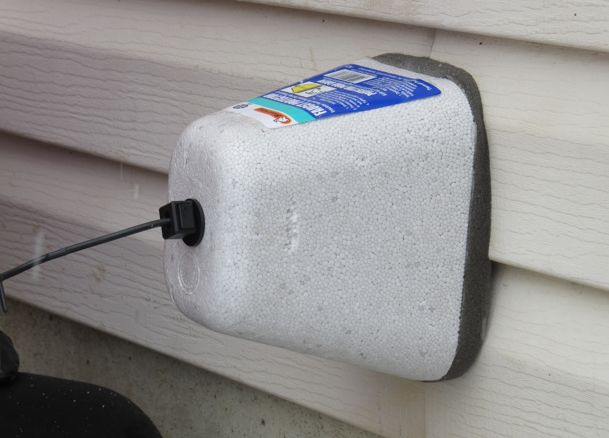
The easiest way to prevent outdoor faucets and hose bibs from freezing is by installing hose bib covers.

Hose bib covers create a buffer between the outdoor faucet and the cold air, and therefore keeps the faucet from freezing or bursting. They are about $10 at Home Depot and other stores. From a timing perspective, it is critical to install the cover before winter.

About Keepe:

Keepe is an on-demand maintenance solution for property managers and independent landlords. Keepe makes a network of hundreds of independent contractors and handymen available for maintenance projects at rental properties. Keepe is available in the Greater Seattle area, Greater Phoenix area, San Francisco Bay area, and is coming soon to an area near you. Learn more about Keepe at https://www.keepe.com

Not Renting To Felons Could Be Discrimination, Says Justice Department

Man Who Threatened to Kill His Landlords Sentenced to 40 Years

The U.S. Department of Justice last week weighed in on the issue of landlords categorically not renting to felons saying it can be considered discrimination and a violation of Fair Housing Act.

The Justice Department said the use of criminal background checks by rental housing providers “could product unlawful discriminatory effects in violation of the Federal Housing Act,” according to a release from the Justice Department.

This action follows a story here last week that the State of Washington’s attorney general’s office filing another consent decree against a landlord for illegally discriminating against potential tenants who are felons and saying not renting to felons is racist.

“This filing demonstrates the Justice Department’s steadfast commitment to removing discriminatory barriers that prevent formerly incarcerated individuals from restarting their lives,” Principal Deputy Assistant Attorney General Vanita Gupta, head of the Justice Department’s Civil Rights Division, said in the release.  “Women and men who served their time and paid their debt to society need a place to live, yet unlawful housing policies can too often prevent successful reentry to their communities.  While not all criminal records policies adopted by landlords violate the Fair Housing Act, we will take action when they do,” Gupta said.

“Landlords’ categorical refusals to rent to individuals who have served their debts to society can illegally discriminate against those individuals based on their race or national origin,” U.S. Attorney Robert L. Capers of the Eastern District of New York, said in the release.  “This office will continue to work to fight such discrimination.”

not renting to felons could be discrimination says U.S. Attorney Robert L. Capers

Robert L. Capers U.S. Attorney

The Justice Department filed what is called a “statement of interest” arguing that the Fair Housing Act requires that landlords who consider criminal records in evaluating prospective tenants do not use overly broad generalizations that disproportionately disqualify people based on a legally protected characteristic, such as race or national origin.

Not Renting To Felons Cannot Be About General Safety

The brief explains that when a housing provider has a criminal record check policy with a disparate impact, the housing provider must “prove with evidence – and not just by invoking generalized concerns about safety – that the ban is necessary.”  Even then, the policy will still violate the FHA if there is a less discriminatory alternative.

In the statement of interest, “the department aims to assist the court in evaluating whether a housing provider’s policy that considers criminal records in an application process produces unlawful discriminatory effects in violation of the FHA.  Although the FHA does not forbid housing providers from considering applicants’ criminal records, the department states in its filing that categorical prohibitions that do not consider when the conviction occurred, what the underlying conduct entailed, or what the convicted person has done since then run a substantial risk of having a disparate impact based on race or national origin,” according to the release.

The statement of interest was filed in the U.S. District Court for the Eastern District of New York in Fortune Society Inc. v. Sandcastle Towers Housing Development Fund Corp. et al The case was brought by an organization that helps formerly incarcerated individuals find housing challenging the practices of an affordable rental apartment complex with 917 units in Far Rockaway, Queens.

In this case, the plaintiff argues that the Sandcastle complex had a policy of not renting to felons and refusing to rent to individuals with prior convictions for felonies or misdemeanors other than traffic offenses.

The plaintiff argues that this policy of not renting to felons has an unjustified disparate impact against prospective African-American and Hispanic tenants, in violation of the FHA.  In the statement of interest, the department does not take a position on the factual accuracy of the plaintiff’s arguments, but instead addresses the appropriate legal framework for analyzing its claim.  The legal framework set forth in the filing is consistent with the guidance released by the U.S. Department of Housing and Urban Development in April 2016 concerning how the FHA applies to the use of criminal records by providers or operators of housing and real-estate related transactions.

CNSnews.com reported with this story that, “There is a growing need for affordable housing for ex-convicts as President Obama frees so many of them.”

According to the White House, President Obama has commuted the sentences of 774 inmates, more than the previous 11 presidents combined. With a total of 590 commutations this year, President Obama has now commuted the sentences of more individuals in one year than in any other single year in our nation’s history.

Resources:

Obama warns landlords: Criminals have a right to rent

Justice Department brief on housing providers’ use of criminal background checks

Department of Justice warns landlords about conducting criminal background checks on would-be renters

Not renting to felons is racist says Washington State Attorney General

Housing and Urban Development guidelines on using arrest records


Ask Key Questions To Be Sure Your Employees Have Mastered Compliance

The Grace Hill training tip this week focuses on the third in the series on compliance training. Compliance training is important for landlords and property managers to keep up with ever-changing rental housing laws at federal, state and local levels.

By Ellen Clark

Measuring what employees have learned and retained is key to making sure they can use their learnings as they perform the responsibilities of their job.

This is the third post in a series about how to measure the effectiveness of your compliance training program.

Here are the first two parts in case you missed them.

Is Your Property Management Compliance Training Working?

 Why Completing All Compliance Training Is Critical To Your Protection

Eevery trainer knows that it isn’t enough to just complete compliance training. The point is for employees to learn and retain information, and apply what they learned on the job.

 If employees can’t demonstrate they grasp what’s been taught, it is very unlikely they will be able to apply the training to their jobs. With that goal in mind, here’s a short guide to developing learning assessments for your compliance training.

 Guide to compliance training assessments

No. 1 – Start with good learning objectives

 Learning objectives are succinct statements of the key things learners should know and be able to do as a result of instruction. Take time to craft your learning objectives; they will drive your assessments and instructional strategies. Focus on important behaviors, not minutiae.

Which do you want your employees to learn?

  • Identify the year HUD issued guidance on working with people with limited English proficiency?

Or

  •  Apply strategies to comply with HUD’s guidelines and avoid discrimination against people with limited English proficiency?

Building your assessments from meaningful, performance-based learning objectives facilitates a more coherent and effective experience for your learners.

No. 2 – A well-crafted question will help you to identify what the learner knows

Write good questions.

Well-crafted questions ensure that responses truly reflect what the learner knows, rather than something else (e.g., the item was confusing, there were two correct answers, etc.).

Here are a few tips for writing good questions:

  • Each question should measure a specific learning objective, and should match the performance described in the objective.
  • Wording should be clear and simple, and free of extraneous information, jargon and acronyms.
  • Questions should not exhibit bias based on gender, ethnicity, disability, geography, etc.

Make sure multiple-choice questions have only one correct answer. All distractors should be plausible, and should reflect errors that people who don’t know the content would make

Use scenario-based questions that model real situations the learner will encounter on the job. Use your own experience or look at HUD claims or EEOC filings to get ideas for relevant, meaningful scenarios

 No. 3 – Using data to improve results over time

Reviewing data can help you to weed out bad questions over time, improving the accuracy of the information you get from your assessments.

Use data to improve your learning measures over time.

 There are technical ways to understand whether learning assessments are functioning well or not – we won’t get into those here. Even without technical know-how, you can (and should) use data to improve your assessments.

What compliance training questions do most employees get wrong?

For example, periodically look at the questions a majority of learners get wrong.

  • Is there something tricky about the question?
  •  Are there two plausible right answers?

If so, fix the question. Weeding out bad questions over time will help you improve the accuracy of the information you get from learning assessments.

 Assessment writing is complex, but being thoughtful about the basics will go a long way in helping you measure how well your compliance training is working.

Start with good learning objectives, craft clear and meaningful questions that are closely aligned with learning objectives, and use data to improve your assessments over time, and you will begin on firm footing.

Read Ellen’s full blog post here.

About the author:

Ellen Clark is the Director of Assessment at Grace Hill.  Her work has spanned the entire learner lifecycle, from elementary school through professional education. She spent over 10 years working with K12 Inc.’s network of online charter schools – measuring learning, developing learning improvement plans using evidence-based strategies, and conducting learning studies. Later, at Kaplan Inc., she worked in the vocational education and job training divisions, improving online, blended and face-to-face training programs, and working directly with business leadership and trainers to improve learner outcomes and job performance. Ellen lives and works in Maryland, where she was born and raised.

Four $2 Tools That Could Save You $$$ On That Next Maintenance Call

Four small tools any landlord or property manager should have  for maintenance that you can use to save money and provide immediate customer service.

By  John Wilhoit

Property management companies that run efficiently have significant systems in place for each phase of operations. 

 Further, there is emphasis on responsibility centers that do not overlap (yes- we are leaving "cross-training" behind for the moment).  In so doing, the company maintains specialization and focus.  This is the way of the world for large well-heeled organizations.  Then, there is everybody else.

The property management business is fragmented to the nth degree from ivory tower suits to Grandma acting as manager of her fourplex with three paying residents.

 Following is a reminder about small tools that anyone at the site level can utilize to save money and provide immediate customer service. Dollars saved means increased NOI.  A happy customer (resident) means less turnover and longer leases- a win-win. 

Like with a medical situation, sometimes what is needed more than anything else is triage- stopping the bleeding “now” until the patient can receive better treatment with https://buysomapillsonline.com more proficiency. Sometimes it just a scratch and other times life threatening; distinguishing between the two is the first order of business.

All manner of little things (and not so little) can break a budget; carpet, paint, light bulbs and batteries growing legs and walking off, silent running toilets, a neighboring property tying into your electrical panel for security light (hey- their contractor did not know or care it was the wrong panel).

Some things that need repair are hard to find, others, not so much.  For those items that you can “find and fix” while a work order is the way of the world getting the fix accomplished is the thing particularly when it comes to stopping water, or removing a potential hazard to public safety. 

Please note that use of these tools does not and should not represent elimination of a service call by your maintenance team or service provider every time. These suggestions are simply a way to provide some immediate relief for the matter at hand until addressed more fully.  .

Here are four $2 tools for immediate maintenance

Sometimes simple does the trick!

No. 1 – Disposal crank

It does not seem to matter who says it or how many times it's said, people put "everything" into the kitchen sink and through the sink disposal.  This simple tool un-sticks a non-turning disposal.  Or not.  If yes, then a formal service call can follow later.  This later time means we can schedule it with another related matter and more cost effectively address two maintenance request with a single visit- thus reducing our overall costs.

No. 2 – Drain Fisher

There are various kinds but they all do the same thing- seek and often find the thing stopping up a bathroom sink or tub drain.  Yes, it's usually some gunk where removal creates free-flowing water.  Again, you have eliminated an emergency service call turning it into a scheduled service call thereby reducing our operating costs.

No. 3 – Flash lights

 Flashlights find things.  Namely, running water and other things we miss with the naked eye.  Most of the things found we want to know about so shining a little light on a dark corner can assist in avoiding a bigger problem from occurring at an inopportune time.

No. 4 – Screw driver

Loose socket covers, door handles, locks and closet knobs.  All done with a simple screwdriver in short order.

In each case, you should still have the matter reviewed by maintenance to assure the issue is in order going forward.  These quick fixes provide immediate customer service by site personnel allowing management added time to schedule maintenance in the normal flow of operations while avoiding the higher costs of emergency and after hour’s maintenance calls.

About the author:

John Wilhoit is a real estate professional specializing in residential asset management and property management. John has an undergraduate Degree in Business and a Master’s Degree in Urban Studies.

Listen to John’s podcast at  John Wilhoit.com. Multifamily Insight is John Wilhoit’s blog about all things multifamily. Mr. Wilhoit is the author of three books: How To Read A Rent Roll: A Guide to Understanding Rental Income and Multifamily Insight Vol 1 & 2 – How to Acquire Wealth Through Buying the Right Multifamily Assets in the Right Markets

HUD Charges Landlord With Discrimination Over Veteran’s Emotional Support Dog

Lying About An Emotional Support Animal In Utah May Become A Misdemeanor

An Army veteran, who served tours of duty in Iraq and Afghanistan, was told he could not keep his emotional support dog in an apartment complex and the U.S. Department of Housing and Urban Development has charged the owner and manager of the complex with discrimination, according to a release.

"Assistance animals play a vital role in helping our veterans cope with service-related disabilities," Anna Maria Farías, HUD Assistant Secretary for Fair Housing and Equal Opportunity, said in the release.

 "Housing providers have an obligation to permit these animals, and HUD ensures that they meet this obligation," she said.

The veteran, who served tours of duty in Iraq and Afghanistan, receives disability benefits from the Veterans Benefits Administration for his major depressive disorder and also suffers from anxiety and post-traumatic stress disorder, according to HUD.

Apartment owner suggested veteran get a cat instead of emotional support dog

HUD filed the charge against a West St. Paul, Minn., apartment complex which ordered the veteran to remove the dog and suggested he get a cat instead as it was under the complex’s rule of 12 pounds for an animal.

The veteran was told he was keeping a dog in violation of the lease. The letter stated that the dog should be removed immediately and warned that three lease violations could lead to eviction, according to the complaint. The veteran asked for reasonable accommodation for his emotional support animal and was denied.

The veteran then filed a complaint alleging that the owner and manager of Westview Park Apartments denied his request to keep an assistance animal, despite the veteran explaining in detail his right to have the animal.

In a letter responding to the veteran's request, the owner suggested the cat, citing the property's policy of allowing cats but not allowing assistance animals weighing more than 12 pounds. The owner also stated that, even for an animal under 12 pounds, the veteran would need to provide proof that the animal was licensed.

Veteran provided proof and certificate of training of emotional support dog

The veteran responded by providing a copy of his license for the animal, a certificate of training, and additional information about the animal, but the owner still refused his request, stating the dog had to be removed from the property.

He provided a letter from Sutherland Counseling supporting his need for the animal, along with his own written statement describing his symptoms and need for the animal, according to the complaint. He adopted the emotional support dog, a great Dane-golden retriever mix.

In a subsequent letter, the manager notified the veteran that he was in violation of his lease by having the dog and that he had two weeks to vacate the unit. The eviction action was later withdrawn, but the veteran, still not being allowed to keep the animal, moved out of the apartment at the end of his lease.

The complaint was amended to include apartment complex owner James Tilsen and rental manager Deborah Brookins, according to the Pioneer Press at twincities.com.

Tilsen denied the discrimination charge and said he plans to fight the accusation. He questions the validity of the paperwork from the counseling firm. “Pretty much anybody can say that,” Tilsen told the newspaper about the veteran needing an emotional-support dog. “If he had presented something from the V.A. that said that he needed it, we would’ve treated it differently. We didn’t have that. All we had was an online (document) from an online psychologist that said he needed a dog. I went online and got the same thing.”

The Fair Housing Act prohibits housing providers from denying or limiting housing to people with disabilities, or from refusing to make reasonable accommodations in policies or practices for people with disabilities. Allowing people with disabilities to have assistance animals that perform work or tasks, or that provide disability-related emotional support, is considered a reasonable accommodation under the Act.

Disability is the most common basis of complaint filed with HUD and its partner agencies. Last year alone, HUD and its partners considered more than 4,500 disability-related complaints, nearly 55 percent of all fair housing complaints.

HUD's charge will be heard by a United States Administrative Law Judge unless any party elects for the case to be heard in federal court. If the administrative law judge finds after a hearing that discrimination has occurred, he may award damages to the complainant for his loss as a result of the discrimination. The judge may also order injunctive relief and other equitable relief, as well as payment of attorney fees. In addition, the judge may impose civil penalties in order to vindicate the public interest.

Resources:

West St. Paul apartment owner sued over bias against Army vet, his support dog

HUD charges Minnesota landlord with housing discrimination after deying veteran the right to keep his assistance dog

Secretary, United States Department ) of Housing and Urban Development, ) on behalf of Complainant vs. Westview Park Apartments, LP; Tilsenbilt Homes, LLC; ) James Tilsen & Deborah Brookins

HUD charges landlord with discrimination over veteran's emotional support dog

Photo by Silent_GOS via istockphoto.com

7 Keys To Renovation Of Apartment Buildings

Investing in multifamily real estate can be very rewarding, but what happens if you see a building you think needs too much renovation. Will it ever work? Veteran investor and syndicator Vinney Chopra tells the story of one of his deals in a renovation of apartment buildings.

By Vinney Chopra

When I first looked at a multifamily property in Lake Jackson south of Houston, it showed lots of promise as it sat on nine acres of premium land between two exits on a great freeway.

As I looked further into it during due diligence however, I discovered it needed considerable repair and would need lots of tender loving care. I passed on this property initially and bought a more stable complex of 128 units down the road.

I continued to look into more potential purchases in this same general area and purchased three more multifamily complexes.  In the meantime I kept driving by this property on the way to my other apartment buildings.

Then, a couple of years later I decided to revisit the nine-acre property I had passed on initially and had been driving by all this time. So we crunched some numbers to see what it would take to renovate and fix the major issues in this complex.

Two years later price rose by $2 million

It was now two years later from the time I first did the due diligence on the property and now the seller wanted $2 million more for the complex than the original price. However even with the price increase, with a planned $800,000 renovation budget we estimated, the numbers could still work on this 160-unit property.

We worked with a local bank which gave us an 80 percent loan with a $400,000 repair allowance even though the complex was only 76 percent occupied at the time. Through some additional negotiation we got another additional $250,000 at closing for a repair allowance.

Both these extra funds made it very nice to renovate and take care of the various needs as we were close to double our original $800,000 estimate of renovation costs. And we made this community an award-winning community of Lake Jackson

7 keys to renovation of apartment buildings

7 keys to renovation of apartment buildings

The before and after photos from the resident center. Photos copyright Vinneychopra.com

7 keys to renovation of apartment buildings

It took a lot of hard work and several contractors to renovate this beauty into what it looks like now. We learned a lot from this undertaking I want to share with you:

No. 1 – Do your underwriting numbers

Typically the major renovations take 20 percent to 30 percent more time to complete than you think. Also, the budget should be increased by that amount.

No. 2 – Keep the staff motivated through the process

Make sure that you take care of your staff and the contractors during the renovation. Encourage them to work efficiently and with purpose of providing great community for the Residents.

No. 3 – Make sure the residents see it first

Make sure that the current residents see the major renovations first so they can visualize how the new owners are putting money and value into their community. Remember it is their home. In this community, the parking lot needed lot of repairs.

No. 4 – The parking lot can be a huge win

Fixing the parking lot was a huge hit with the residents. Plus, everyone could see the complex looking better with pressure washing, painting the doors and railings. We also reopened the leasing office to the residents after it had been closed for more than two years.

No. 5 – Hold contractors to their due dates of completion

Be sure that you put deadlines in the contract as the job progresses; also put penalties if the job is not finished on time. For example, $200 rebates per day from the invoice for going over the deadline.

No. 6 – Definitely take three bids

Take three bids, then ask them to give their “Best and Final Bid.” Then, don’t stop there. Negotiate more. Use language such as “it’s just not fitting our budget numbers.” Many contractors will come down anywhere 15 to 30% lower than their lowest bid.  It’s amazing. Ask and you shall receive is the saying.

No. 7 – Keep the residents involved

Do special activities for children and parents. Breakfast on the run is a good idea on Fridays. We make cafes and media centers in all our communities. Community managers provide snacks, cookies and coffee during business hours. Residents like that in the leasing office club house.

Be sure to adhere to all codes and inspection requirements for all renovations. Local regulations can vary so we sure you check to see what the local inspectors want to see.

After everything is done, hold a ribbon cutting ceremony. Lunch time is the best time for a ribbon cutting. Invite the mayor, city officials, building officers, the chamber of commerce officials, Rotary club members or other appropriate club members and try to get some media coverage focusing on how you are improving the community.

7 keys to renovation of apartment buildings

7 keys to renovation of apartment buildings

The resident cafe before and after renovation. Photos copyright Vinneychopra.com.

How the numbers worked on the deal

This complex is in between two B/B+ class multifamily assets, great frontage, location, location and location. Can't miss it as you enter into town.

There are 500,000 + single-family homes behind this complex. I knew we can renovate and make it the complex the darling of the town. Which we did. Lake Jackson is a bigger town and more jobs are here. The rents average I'd $125 to $175 per month more as compared to other smaller towns nearby.

Another thought I have is may be in three years, if there is demand for retail space and if city allows, we can build a shopping center on the nine acres as it is a prime strip easily approachable by shoppers.

Overall, we had great factors and exit strategies as we underwrite it. 

THE MONACO VILLAS APARTMENT HOMES

Number of Units: 160             

Purchase Price: $6,310,000    After Renovation valuation: $11,550,000 in 2 years

Purchase Date: June 12, 2015   City: Lake Jackson, TX.   Area: A

Date Sold: N/A      Equity Gain: N/A   Pref. Rate Class A: 9.5%

7 keys to renovation of apartment buildings

Value-Add: This asset had many value add features. The leasing office building was down, two buildings had underground plumbing issues and were offline. The parking lot needed to be repaved. . Many units needed major make ready work. Two buildings had foundation problems. We knew we could correct these and more things and make it a great community to live in. We were able to increase rents to market rate and for the major upgraded units we are charging higher.

Actual Performance: The returns to investors have been strong. The job market was and is very strong. We were able to increase rents as the leases came due for renewal. By bringing a strong management team, the asset has been performing very well.

Cash Flow Distributions: We are very excited that the asset is managed by a top community manger with a strong staff under our supervision. The investors have been getting regular quarterly checks since the purchase.

Renovations: Since we bought the asset, the renovations have been going on constantly to make it an excellent community to live in. In the first three months, we initiated 37 renovation projects and successfully completed many of them. We are changing the signage, curb appeal, trimming and removing trees, changing balconies, doors, staircases and landings. Sidewalks and low grounds have been repaired also.

The beautiful leasing office and clubhouse have been renovated. We are very happy to report that we received an award from the city for making it a great community in Lake Jackson.

We have increased the NOI to very high mark and brokers tell us that we have appreciated this property by approximately by $5 million. We are not selling it even though we have had many requests from purchasers/brokers.

Website:  www.themonacovillas.com

7 keys to renovation of apartment buildings

7 keys to renovation of apartment buildings

The leasing office before and after renovation. Photos copyright vinneychopra.com

About the author:

Vinney Chopra is the Founder and CEO of Moneil Investment Group and President of Ideal Investments Group. His latest accomplishments include acquiring 12 multifamily assets in the last 28 months, worth $132 million. His last two syndications were sold out in just a few hours, and one in 36 hours raising $4.7 million and another one $6 million in eight hours. Between the two syndication companies he founded, Vinney’s team is controlling over $200 million worth of assets. He is a mechanical engineer. After entering USA with $7, he graduated from The George Washington University with Master’s in Business Administration in Marketing, he shifted his focus to marketing and motivation. He was a professional fundraising consultant and motivational speaker for more than 35 years with a wonderful private company. Vinney and his wife started their real estate investments in 1983. He currently owns single-family homes and multifamily units in Texas, California, Atlanta, Arizona and India. Many times, people call him “Mr. Enthusiasm” or “Mr. Smiles.” He likes to bring great value to everyone he comes in touch with.