
Home Blog Page 197

How To Make Apartment Move-In Easier For Tenants And Managers

The apartment move-in process can often frustrate both tenants and property managers as it is not just the physical move-in. It is all the processes that need to be done before that moving truck ever shows up.

By John Triplett

Landlords and property managers know that tenant communication is one of their biggest challenges. Technology can improve that communication, including digital tools that improve the move-in experience. Millennials especially appreciate easy-to-use technology from apartment management.

“The issue for the resident is the average American takes 10 to 15 hours to just deal with the actual process of moving,” said Ash Bell, vice president and executive director of property management for moving website  Updater.com,  in an interview with Rental Housing Journal.

“And it is not only the physical move, but the process of moving.  Think of all the things from utilities, to forwarding the mail and the businesses you interact with on a day-in-day-out basis.  All those companies need to be notified of your new address. You need to turn off utilities at your current place and turn them on at your new place. If you’re moving into an apartment that requires renter’s insurance, you need to get that renter’s insurance to protect your assets,” Bell said.

And the list goes on.

“You need to book a moving company. You need to reserve an elevator if you’re moving into a class A property in the city. There are just hundreds of tasks that a person needs to deal with when they look at moving,” Bell said.

Communication is key to solving apartment move-in  issues

“Single-family management is the same as multifamily as far as some of the move-in problems,” Bell said. With larger multifamily properties, “maybe they have it on more of a mass scale because they may have a 400-unit property that has people moving in every day, where with a 50-unit property the likelihood is that we only have one or two moves a month. But it’s still all of the same issues.

“There’s just a lot that every stakeholder in running a property encounters when it comes to moving,” Bell said. And it is what he looked at in developing the technology.

Three moving stakeholders in multifamily:

    • The resident
    • The site team
    • The ownership

“Those are the only three stakeholders so any time you look at processes or technology, you have to filter through those three stakeholders. If it brings value to any one of them, it’s something you should consider. If it brings value to all three, you’ve got to do it,” Bell said.

An apartment move-in customer service tool

Vikki Sherman, senior director of marketing at Fairfield Residential said, “I think it’s a challenging time in a customer’s life, so we really approach the move-in process in particular, as well as the move out, in the eyes of the customer. We’re trying to make their lives easier, simpler, better, the whole process improved, so that they have a good experience when they’ve got a lot of other things happening.

“Oftentimes there’s a big life event that is preceding the move, kind of causing a move, whether it’s an addition to the family, a marriage, a divorce, something big in their life that’s happening. So the move has different nuances depending on that, right? It could be a very happy occasion. It could be a sad occasion, and so, in essence, we just want to make sure that we’re offering them something and making that transition a smooth one, and a positive one for them.

Benefits to property management

“The benefits from the property management side of a tool like Updater is, it’s very easy for us to onboard, and implement, and be able to quickly provide the extra level of service to our customer,” she said regarding her company which manages 44,000 units across the country. “In 2017, Fairfield averaged about 1,500 move-ins per month across our portfolio.”

“Updater is very, very quick. They do a lot of the heavy lifting. The email invitation for the resident to use the service is automated, so it’s not anything manual that the property manager needs to do, yet they’re able to give this time-saving tool to a future resident,” Sherman said.

Jennifer Staciokas, senior vice president at Pinnacle, seconded what Sherman said about the customer service aspect, “I would say it’s saving more time for the renter than it is for the property manager. For the property manager, the value to them is that it’s an added amenity that they can offer to their renters to make their move-in seamless.

She said the property managers are “making sure that they’re letting their clients, as customers, know, ‘Hey, you’re going to be receiving an email. This is the benefit that you’re going to receive from it, and this is what you should do to utilize that service,” Staciokas said.

How To Make Apartment Move-In Easier For Tenants And Managers

How many tenants use Updater when it is offered?

Staciokas said Pinnacle saw more than 9,000 moves last November (they have 165,000 units) and invited a total of 9,799 residents to use the tool. She said about 70 percent of the tenants adopted and used at least some features of Updater.

Sherman said that overall they have seen about an 80 percent adoption rate of the tool in their properties.

“We actually see really good usage of the tool,” Sherman said. “I don’t have the official open rate for a whole year but I would say in the last 90 days, we’ve seen about 80 percent of those emails get opened, which is an incredible open rate to begin with. We see about 60 percent of those invites be accepted. Meaning, someone opens it, they read the content, they say, ‘Yes, I’m interested in this tool.’ Then, the actual usage ends up being at about 50 percent, which is great. I mean, it’s hard to get a customer’s attention during that busy time.

“You know, the really fun thing about Updater is, they give you a dashboard. So you can really kind of quantify the results. We find that residents are using about half of the services offered within the Updater tool because there’s things like connecting with utilities, there’s changing your address, there’s sharing your move digitally on social media, there’s moving services.

“So when we quantify the tools that our residents are using, and the number of residents over the last 90 days, our residents have saved over 3,000 hours. If they had to manually change their address, if they had to call all these utility companies, they would have spent quite a bit more time,” Sherman said.

Three top items most tenants use in apartment move are:

    • Change of address
    • Utility changes
    • Local offers where they can save money

Reducing frustration for the property management team

“Our customers, today, are expecting things to be frictionless. They like things to be easy. They like things to be quick. They’re used to doing things online. The ability to offer a customer what they want and need I think definitely reduces frustration for a property management team,” Sherman said.

“We’re meeting the demands of today’s customer and it is also a feel-good, right? You’re saving your new resident time. You’re making their move-in experience better. Ultimately, you’re improving the satisfaction with the process.

“Once you have happier customers, you yourself are able to focus on the things to make better next. I definitely think it reduces some frustration on the property manager side, in that aspect.

“On the customer side, I think our industry certainly has a reputation for doing things in an old-school manner. This is one more way that we are meeting that demand of the tech-savvy customer who finds doing things on paper in a manual process to be not in their normal day-to-day experience, right?

“They’re shopping online. Having food delivered to their house. They’re doing all these things in a digital world, so it makes sense that not only can they lease online, and pay rent online, but they can coordinate some of their move-in details, as well,” Sherman said.

Updater integrated with many companies

Bell said Updater is integrated with all of the major property management software companies.  And Updater white labels (allows apartments to put their own brand) the service so the apartment community gets the credit and it can fit with core property management tools.

“We’re doing all the heavy lifting. The property gets all the credit,” Bell said.

He said having a good move-in process helps tenant retention and “statistics have shown that that move-in experience – how things go during that time – increases the likelihood that they will renew.

“Why waste all those dollars that you deal with from a marketing standpoint to get somebody attracted to your property and ruin it with a really bad move-in experience? If you give them a great moving experience, you’re helping there,” Bell said.

A sales tool for the property

Bell said Updater can serve as a sales tool for the property.

“So if I were a leasing associate and I were taking you on a tour of apartments, I would let you know as I’m showing you a model unit,” Bell said. “I’m showing you the workout facility and the pool, and also say, ‘One of the things that we want to let you know is we understand that moving can be very time consuming and stressful. So one of the things that we do, is we provide a free moving concierge, digital moving concierge to every one of our residents that move in here, and it’s our gift to you.

“ ‘It’s going to help you with sorting the mail, booking a moving truck, getting those utilities turned on, getting the renter’s insurance required, notifying businesses of your new address. You name it, you’re going to be able to handle it within Updater. And that’s just how much we care for our residents,’ “Bell said.

Cost of Updater to the property

In terms of the cost of Updater.com to the property, Staciokas said, “Using the app is a time-saver, and it’s really viewed as an amenity to make a seamless and successful move-in for the renter.

“I had several meetings with Updater before we decided to move forward. To me, it was really a no-brainer decision, because it was low-cost for a high-value amenity, which is going to translate into potentially more rentals moving forward,” Staciokas said.

What size are the properties using Updater?

Bell said the company has many of the top industry leaders deployed.

“We have 30 of the National Multifamily Housing Council  (NMHC) top 50 fully deployed. I have another couple that are in partial deployment, meaning they’re doing it in phases.

“We are all over the place from a standpoint of size, we can have anybody. Obviously as the NMHC top 50 goes, typically so goes the market. But we have some of the largest single-family providers in this space. We have some of the smallest single-family providers. We have people like myself that have a few properties that utilize our platform,” Bell said.

“The average size I would say is probably the average size in the industry, which is 5,000-, to 7,000-unit portfolios. But again, we have people that have two properties, and we have single-family companies as long as they’re utilizing one of the single family property management providers we integrate with.”

Bell said the site has features specific to property managers and others specific to residents. The site sorts them by login. “So residents see something different when they log in than the property manager,” he said.

Updater, based in New York City, has just under 100 employees.  “A lot of people often say with startups, “Are they going to be around, are they going to be here five years from now?” Bell said. “Well, absolutely yes we are. We’re a very stable company. But I think the biggest thing that I would want to stress is that we’re really excited about some of the features that are coming down the pipeline.”

About Updater:

The nation’s leading moving app for property management companies. The company works with real estate brokerages, mortgage lenders, student housing, and others to streamline the move-in and out process. The company describes its tool as “Turbo Tax for moving,” helping with all the tasks involved in a move. Updater works with over half of the NMHC Top 50 Managers and Owners, including full rollouts with Greystar, Fairfield, Pinnacle, Avalon Bay and Village Green, among others. The company was named NMHC’s Apartment Innovator of the Year in 2015, #3 Best Place to Work in NYC according to Crain’s in 2016, and Most Innovative Tech Company of the Year by the American Business Awards in 2016 and 2015.


 

Do You Know How To Respond To a Sexual Harassment Complaint?

The Grace Hill training tip of the week focuses on The Fair Housing Act and how to respond to a sexual harassment complaint.

By Ellen Clark

HUD aggressively pursues violations of The Fair Housing Act (FHA) involving harassment in housing and complaints often name property managers directly, so do you know how to respond and stay on top of the situation?

Photo credit Microgen via istockphoto.com

Remember courts have consistently recognized sexual harassment as a form of discrimination that violates the FHA.

In addition to individual property managers directly, the complaint may name the corporate entity or owner associated with the complainant’s housing.

Any individual or company that has witnessed or experienced housing discrimination, including sexual harassment, may file a complaint with HUD, free of charge

4 ways  to respond if you find yourself facing a sexual harassment complaint

If a complaint has been filed against you, you will be notified by HUD, and you will have 10 days to respond.

No. 1 – Prioritize mail from HUD

Due to the tight window a company has for responding to a complaint, make sure anyone responsible for collecting mail at your facilities is trained to give mail from HUD priority attention and to forward it to the appropriate person immediately.

No. 2 – Respond to complaints

Although filing an answer is not mandatory, it is strongly encouraged.

Responding gives you an opportunity to give your version of the story and provide sufficient information that may convince HUD that it should not pursue the matter further.

No. 3 – Involve legal counsel early

Because your answer will become part of the official case record and any representations can and will be used against you in future proceedings, it is strongly encouraged that you seek the assistance of legal counsel in responding to a HUD complaint.

In addition, legal counsel can likely negotiate an extension of time to respond.

No. 4 – Notify your insurance company early

As soon as you know a complaint has been filed, you should notify your insurance company.

There may be insurance to cover the allegations of the complaint. If there is coverage, the insurance company will only be there to help you if they are notified early.

It is a situation we all hope we never have to face. However, in this time of increased awareness around harassment, it is important to have a game plan for a quick and appropriate response to harassment complaints.


Ellen Clark is the Director of Assessment at Grace Hill.  Her work has spanned the entire learner lifecycle, from elementary school through professional education. She spent over 10 years working with K12 Inc.’s network of online charter schools – measuring learning, developing learning improvement plans using evidence-based strategies, and conducting learning studies. Later, at Kaplan Inc., she worked in the vocational education and job training divisions, improving online, blended and face-to-face training programs, and working directly with business leadership and trainers to improve learner outcomes and job performance. Ellen lives and works in Maryland, where she was born and raised.

About Grace Hill

For nearly two decades, Grace Hill has been developing best-in-class online training courseware and administration solely for the Property Management Industry, designed to help people, teams and companies improve performance and reduce risk.


6 Insights About Rental Property Owners And Property Managers

What are the keys to the relationship between rental property owners and property managers? These insights could help rental property owners better set their expectations and help property managers better understand the owners.

The rental property owners’ survey from Buildium.com revealed 6 insights about rental property owners and the relationship with property managers.


Photo credit istockphoto.com


6 insights about rental property owners and property managers


    1. Rental owners fall into two distinct categories but share many of the same concerns


    1. Maintenance and tenant management are the biggest areas of owner pain


    1. Communication is the #1 reason owners love a property manager. Poor service is why they leave.


    1. Most rental owners find their property managers by searching online


    1. Cost is the #1 reason self-managing rental owners don’t use a property manager


    1. There is an inertia effect in property ownership.


No. 1 – Intentional and accidental owner-investors


    • Intentional investors: “These owners typically set out to acquire a real-estate portfolio as a way to invest their incomes for retirement. They might begin with their own starter home, but typically they currently own between 2 and 40 units. They focus more on growth and on cash flow, and are either expanding or seeking to expand their portfolio. They are more often male, and a bit older than accidental investors. They are more likely to say they always enjoy property ownership,” Buildium.com writes in the report.


    •  Accidental investors: These owners tend to fall into property management, either through inheritance or more commonly due to moving away from a property they own and being unable or unwilling to sell. They have a slight bias toward being female and younger than intentional investors. Though they see their property as a solid investment, they commonly own just one rental unit— usually a single family home—and are not as likely to grow their portfolio. Accidental investors are less likely to say they always enjoy property ownership.


    • Note: There was a 12% crossover between the two, where owners indicated they had a portfolio that was inclusive of a former residence and property purchased as an investment.


6 Insights About Rental Property Owners And Property Managers


Charts courtesy of Buildium.com survey.


No. 2 – Maintenance and tenant management are top headaches


Maintenance emerged as the biggest stressor overall, with 62% of respondents reporting it as stressful.


However, finding and keeping tenants was a very close second, at 58%, and indeed more painful for many owners.


“When we delved into the numbers, we discovered that finding and dealing with tenants was actually the No. 1 biggest stressor for property owners who are seeking property management in 2016,” Buildium.com said in the report. “62% of owners were concerned about keeping good tenants, and 56% worried about dealing with problem tenants.


Tenant issues was, in aggregate, a major stressor, occupying the No. 2 and No. 3 spots for owners, overall. This suggests that particular pain around tenant management is driving property owners to seek third party management.


No. 3 – Good communication needed between property managers and owners


Though a majority of owners say they are happy with property management, there does seem to be room for improvement, in particular around the areas of communication and customer service.


Those who love their property manager say:


    • “Very pro-active and engaged in the overall process.”


    • “They are very transparent, efficient and sensible.”


    • “They are brilliant and save me time and money.”


However those who are unhappy with their property manager say:


    • “Their goal is to make money for themselves, not for me.”


    •  “Poor communication and no value add.”


    • “They make decisions without consulting me which cost me money.”


No. 4 – Rental owners find their property managers online


While a majority of owners already have a property manager, about 25 percent are looking for a property manager.


Many owners lean on local associations or personal referrals to find property managers—with investors tending to do this in higher numbers than accidental owners.


In fact, referrals emerged as the second most popular technique both for those who intend to look and those who have already secured a property manager. However, most owners seem to be doing their own research online. We found that owners of all kinds overwhelmingly rely on the web to find property management, using either search engines—or a proven online resource such as All Property Management.com—that can connect them to high quality property owners.


In addition to property websites, owners who acquire property as investors are slightly more likely to get information from professional associations, publications or real estate investment websites, versus investors whose property was a former home, who have a moderate bias toward getting information from family or friends.


property managers and owners survey


Where survey participants live.


No. 5 – Cost is the reason owners do not hire property managers


As you might expect, reluctance to spend money is the top reason self-managing rental owners decide not to use a property manager, with 50% saying they simply don’t want to pay for one.


As one owner suggested: “If a property management team wants to get a piece of my investment, then they need to bear a part of the burden of loss as well. Hire a team that doesn’t charge for removing tenants, viewing work done on property etc. I get that the property owner bears the cost of repairs and reasonable legal fees, but the property management team needs to beat the costs of having to directly deal with the tenants, going to court, reviewing repairs etc.”


What are the costs that these owners seem sensitive to?


“We asked our survey respondents how they like to pay—and what they expect to pay—property management firms. Owners were split on whether or not to be charged via flat fee or % of rent.


A slight majority (53% vs 47%) prefer to be charged a percent of rent. Interestingly in our 2015 State of the Property Management Industry report we found that 72% of property management companies also choose to charge a % of rent rather than a flat fee. In this sense, property managers and owners seem to have come to a sort of agreement


No. 6 – Owners who are expanding their portfolios are likely to continue


“We found that there is a momentum (or inertia) effect in property ownership,” Buildium.com writes in the report and “75% of owners who have grown in the past are likely to say they will grow significantly in the future. Likewise, 58% of those who predict a stagnant portfolio have also not grown in the past 5 years.


And finally, of those who expect their portfolio to shrink, 51% have already been experiencing a retracting portfolio over the past 5 years.


“We also found, perhaps unsurprisingly, that growth, profitability and love of property ownership go hand in hand. Those whose portfolios have expanded are most likely to report that property ownership has been extremely profitable for them.”


Summary on 6 insights about rental property owners and property managers


What do property owners of all kinds offer as best advice they had gotten on property ownership? Find a strong property management partner.


    • “Get a property management company that you trust.”


    • “Do get references and speak to them before choosing a property manager”


    • “Property management is the key to success”


    • “Don’t deal with tenants directly. Let your management company handle all issues.”


    •  “Good property management doesn’t cost—it pays!”


Get the full report from Buildium.com here.


About Buildium:


Buildium and All Property Management are the chosen solution of more than 12,000 property managers and HOAs.

Sign Up For Our Weekly Newsletter And Get Rental Property And Apartment News And Helpful, Useful Content Each Week.

* indicates required

Are Your Social Media Posts Compliant With Fair Housing Laws?

The Grace Hill training tip of the week focuses on how Fair Housing Laws apply to social media posts and property management.

By Ellen Clark

 Social media is a great tool for marketing in the multifamily industry to help build strong connections and community with your customers, but did you know Fair Housing laws apply?

When you share information in print or in person you may be aware of the Fair Housing issues, but are you watching all of your social media posts as closely?

The same rules apply. You are responsible for complying with anti-discrimination and anti-harassment laws, no matter what form of communication you are using.

Do you display the equal housing opportunity logo on your social media posts?

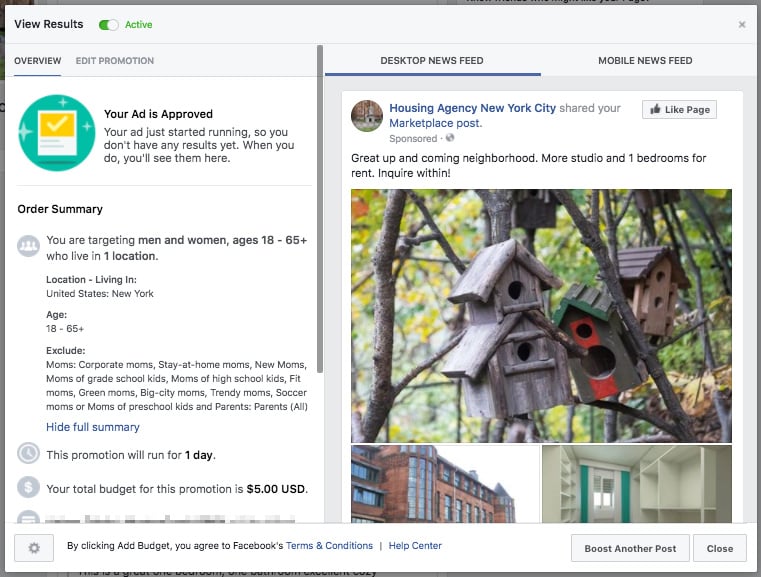
Last year, ProPublica revealed that Facebook advertisers could target housing ads to whites only.

After that report, Facebook said it had built a system to spot and reject discriminatory ads. However, ProPublica recently retested and found lapses in the company’s monitoring of the rental market.

Here is what ProPublica said late last year, “Last week, ProPublica bought dozens of rental housing ads on Facebook, but asked that they not be shown to certain categories of users, such as African Americansmothers of high school kids, people interested in wheelchair rampsJewsexpats from Argentina and Spanish speakers.

“All of these groups are protected under the federal Fair Housing Act, which makes it illegal to publish any advertisement “with respect to the sale or rental of a dwelling that indicates any preference, limitation, or discrimination based on race, color, religion, sex, handicap, familial status, or national origin.” Violators can face tens of thousands of dollars in fines. Every single ad was approved within minutes.

How is this relevant to property management companies?

 Discrimination in advertising is prohibited by the Fair Housing Act. It is illegal to create, publish or distribute housing ads that discriminate, limit or deny equal access to housing because of membership in any federally protected class. But “advertising” doesn’t just apply to traditional advertising, such as newspaper and Internet ads, banners and signs, and commercials.

 Social media communications are often considered advertisements.

 5 ways to comply with Fair Housing on social media

Here are some tips to help ensure your employees use social media in a way that complies with fair housing law.

No. 1 – Train everyone in Fair Housing

  •  Before being given access to your social media accounts, each person should complete fair housing training and acknowledge your company’s policies and procedures. Do the same for any agency or service that has access to your social media. When sharing images, show males and females, people of different races, people with disabilities, a variety of ages, and families with and without children in order to comply with fair housing laws.

No. 2 – Show diversity in images

  • Consider all federal, state, and locally protected classes. For example, show males and females, people of different races, people with disabilities, a variety of ages, and families with and without children. Show diversity when using avatars, animated characters, and illustrations, too. 

No. 3 – Use welcoming language

  •  Social media messages must not position your community as more or less suitable for someone based on membership in a protected class. Avoid things like racial or ethnic terms, references to religion, exclusions based on disability, and limitations based on familial status. A good rule of thumb is to describe the community, not the people.

No. 4 – Designate a point person to regularly review all social media posts

  •  Reviews should look for words or images that discriminate, limit or deny equal access to your community based on membership in any federally, state or locally protected class. Also look for posts in which prospective or current residents indicate they feel they’ve been treated unfairly, don’t feel welcome in your community, or feel they are being discouraged from living in your community.

No. 5 – Display the Equal Housing Opportunity Logo

Are your social media posts compliant with Fair Housing Laws

  • Always show the Equal Housing Opportunity slogan, logo or statement on your social media pages and on your website.

Make sure employees understand that it is important to be just as mindful of fair housing laws when sharing information and interacting with customers online as it is when sharing information and interacting in print and in person.

The same rules apply. They are responsible for complying with anti-discrimination and anti-harassment laws, no matter what form of communication they are using.

For more information Grace Hill has a mini-training course on this issue that covers:

  • How to apply the FHA’s rules about discrimination in advertising to social media posts.
  • How to develop policies and procedures to help social media posts comply with the FHA.
  • Guidance for using information customers post on social media without violating the FHA.
  • Strategies to avoid and handle problematic social media posts in ways that comply with the FHA.

Resources:

Facebook (Still) Letting Housing Advertisers Exclude Users by Race

Fair Housing Advertising

About the author:

Ellen Clark is the Director of Assessment at Grace Hill.  Her work has spanned the entire learner lifecycle, from elementary school through professional education. She spent over 10 years working with K12 Inc.’s network of online charter schools – measuring learning, developing learning improvement plans using evidence-based strategies, and conducting learning studies. Later, at Kaplan Inc., she worked in the vocational education and job training divisions, improving online, blended and face-to-face training programs, and working directly with business leadership and trainers to improve learner outcomes and job performance. Ellen lives and works in Maryland, where she was born and raised.

About Grace Hill

For nearly two decades, Grace Hill has been developing best-in-class online training courseware and administration solely for the Property Management Industry, designed to help people, teams and companies improve performance and reduce risk.


Liberty Rent Guarantee Partners With GreenPath Financial Wellness

Sponsored Blog

Liberty Rent Guarantee, a cosigner for potential residents of multifamily properties who have less-than-perfect credit, is proud to announce that it is partnering with GreenPath, Inc., a non-profit, financial wellness organization that has been empowering people to lead financially healthy lives since 1961.

“I’m very proud, in this season of giving, that Liberty Rent Guarantee was able to launch its latest initiative for tenants with less-than-perfect credit,” said Liberty Rent Guarantee CEO Bubba Grimsley.

“It has always been part of our mission to reduce the risk in the multifamily rental space. Now, we take it a step further by partnering with GreenPath. Our strategic alliance with GreenPath will allow all of our residents the availability of live, online, and web-based assistance in all of their financial endeavors.”

GreenPath is a Michigan-based 501c3 with a 50-year history of teaching financial literacy to consumers. It offers live, certified financial analysts who can help tenants during times of financial crisis. Liberty Rent Guarantee is on a mission to help build communities by reducing the risk of defaults in the multi-family market. The company is committed to helping its customers fill units at no risk and no cost to the property owners.

Liberty Rent Guarantee and GreenPath together help familes with finances and housing

GreenPath has engaged in a deep re-think of its work in the last two years, looking for ways to radically change the culture around personal finances in America. The company helps to improve financial security for the 54 million American households that do not have three-months savings. GreenPath is exploring new ways of influencing and measuring financial health for families, as well as looking for innovative ways to partner with organizations.

Liberty Rent Guarantee is committed to increasing access to safe and affordable housing for economically vulnerable individuals and families. They do this every day through their primary service, the co-signed rental guarantee agreement. However, they recognize that there is a need for improved financial literacy and improved financial behaviors among their customers, as well as the broader population in America. The company is contributing a portion of its profits toward the development and deployment of financial wellness programs as a way to give back to its customers and the broader community.

GreenPath and Liberty Rent Guarantee recognize that there is clear mission alignment between the two organizations.

“GreenPath is a leader in intuitive mobile-based programs that help consumers manage and improve their credit,” Grimsley said. “Through improving financial literacy, Liberty Rent Guarantee and GreenPath continue to further our mission of reducing risk, and helping consumers. It’s a huge win for the multi-family industry and a huge win for the consumers. We are all in this together.”

About Liberty Rent Guarantee

Liberty Rent Guarantee helps property owners fill units without risk of default, while simultaneously helping consumers find a good home and re-build their credit. Operating nationwide, Liberty Rent Guarantee has helped secure homes for thousands of families by serving as a limited co-signer on every lease it agrees to guarantee. To learn how it works, please visit www.libertyrent.com.

Liberty Rent Guarantee parnters with Green Path Financial wellness

Liberty Rent Guarantee Partners With GreenPath financial wellness

A Passion For Helping Tenants With Poor Credit Get Apartments And Homes


How Apartment Rules To Protect Children Could Be Discrimination

The Grace Hill training tip of the week focuses on how rules you think could protect children, could actually open up landlords and property managers to charges of discrimination.

By Ellen Clark

Normally, when you think of familial status discrimination, you likely think of things like refusing to rent to families with children, charging families with young children higher deposits, or steering them to certain buildings.

But what about rules or policies that are intended to protect children?

Could these be discriminatory?

 A story from a condominium complex in Fremont, California brings to light the issue around policies or rules that are intended to protect children, but actually could subject the property management to discrimination charges.

A condominium complex had a long-standing rule that tenants’ children could not run and play outside within the complex gates. The rule was set up by the homeowners’ association, citing safety concerns, and threatened to fine residents for violations.

 One of the residents claimed that she and her children were subjected to threats, intimidation, and harassment. A housing nonprofit called Project Sentinel brought a class action lawsuit pro bono and recovered $800,000 from the condo managers. Additionally, board members of the homeowners’ association must undergo fair housing training and post signs indicating that children are allowed to play outside.

 Excluding children from areas other residents can use could be discrimination

This news item reminds us that excluding children from areas that other residents can use could be considered discrimination—even if the intent of the exclusion is to protect them.

 Here are some tips for working with families with children in a way that complies with fair housing law.

 When working with prospective residents, it is ok to ask about the number of people who will live in the apartment home, but do not ask questions specifically relating to children.

Three questions to avoid asking:

  • How many adults and children will be residing in your apartment home?
  • How many children are in your family?
  • How old are your children?

Instead, ask: “How many people will be residing in your apartment home?”

Do not discriminate against families with children by stopping or restricting children’s use of community facilities or services. Safety and liability are still important, but you must create your community policies carefully.

 Avoid statements like:

“Children may not skateboard on community property.”

 Instead say: “Skateboarding is prohibited on community property.”

You may require direct adult supervision during children’s use of community provided services and facilities. However, the rules must not unreasonably restrict a child from using the amenities.

 Don’t prohibit children from using amenities

Avoid rules such as:

“Children under the age of 14 are prohibited.”

 Instead, say: “Persons under the age of 14 must be accompanied by an adult.”

 Familial status was added as a protected class in 1988 with the signing of the Fair Housing Amendments Act.

 This act made housing discrimination against families with children illegal and protects not only married couples with children, but also those who are single parents, legal guardians, mothers who are expecting, and people in the process of obtaining legal custody of a child.

Take time to review this important area of the law with employees so that families with children feel both safe and welcome in your community.

 Read Ellen’s blog post here.

About the author:

Ellen Clark is the Director of Assessment at Grace Hill.  Her work has spanned the entire learner lifecycle, from elementary school through professional education. She spent over 10 years working with K12 Inc.’s network of online charter schools – measuring learning, developing learning improvement plans using evidence-based strategies, and conducting learning studies. Later, at Kaplan Inc., she worked in the vocational education and job training divisions, improving online, blended and face-to-face training programs, and working directly with business leadership and trainers to improve learner outcomes and job performance. Ellen lives and works in Maryland, where she was born and raised.

About Grace Hill

For nearly two decades, Grace Hill has been developing best-in-class online training courseware and administration solely for the Property Management Industry, designed to help people, teams and companies improve performance and reduce risk.

How To Get Started In Owner Occupied Multifamily Investing

Owner occupied multifamily investing can be a great starting point for new investors. Veteran multifamily investor Vinney Chopra has some ideas for you to think about in owner occupied multifamily investing.

By Vinney Chopra

I enjoy teaching investor students and helping them learn about multifamily investing and syndication and all of the benefits it brings, but some ask how to get started?

Not everyone is ready to start out buying large apartment complexes for many reasons.

It takes time to learn the right emerging markets. It takes time to learn how to finance big projects. Plus, it takes time to raise money and build relationships with investors and real estate brokers. And don’t forget it takes time to learn how to analyze the deals. That’s a lot!

So when students ask how to get started now, I talk about the advantages of owner occupied multifamily investing in real estate.

What is owner occupied multifamily investing?

Simply put, owner occupied multifamily investing real estate is when an investor resides in one part of the property while renting out the other units.

Many new investors in this owner occupied multifamily investing area start out with duplexes, triplexes or fourplexes.

However this is not for everyone as it puts the investor in the position of being a hands-on property manager with the tenants and dealing with all the property management issues such as tenant screening, repairs and even evictions.

Here is a set of pros and cons from fortunebuilders.com that sets out some of the basics of learning the owner occupied multifamily investing business:

  • It can pay for itself
  • Easier to finance
  • Learning property management first hand
  • Tenant screening becomes very important as they are your neighbors now
  • First step toward larger properties and your multifamily investing career

However there are downsides:

  • Tenants complain
  • Renters may not want to live in same building with landlord
  • Avoid becoming friends with your tenants
  • Tenants are your neighbors and you may not like them
  • Conflicts can occur

The distinct advantage of owner occupied multifamily investing

owner occupied multifamily investing education

Vinney Chopra meeting with a student

There a very distinct advantages that we must keep in mind in owner occupied multifamily investing.  Not only can you use rental income to offset the amount you pay against the mortgage, there are several tax deductions and depreciation advantages to living in the same property you also rent.

Living in your own rental property, of course, isn’t for everyone.  Whether you will gain greater income from an investment property or an owner-occupied rental property ultimately depends on your individual circumstances. You should consult a financial consultant or tax advisor to discuss your bottom line. But here are several of the advantages to owner-occupied income properties to consider:

  • Higher quality tenants. Many renters are particular about who they have to live next to, and having an owner-occupied building is reassuring. Owners are also selective about who they allow to live next door, thus attracting higher-quality tenants. It’s a beneficial dynamic that brings tenants who are willing to pay higher rent.
  • Writing off expenses. Simply put, owners who occupy their rental properties are allowed to write-off their rental expenses against their rental income. Any expenses that apply to tenant-occupied units can be used as an advantage.
  • Lower management and maintenance costs. Occupying your own rental property minimizes property management and maintenance costs that are typically handled by third parties, thus saving a certain percentage of gross income.
  • The value of depreciation.  Depreciation allows an owner to deduct a portion of the building’s cost, plus the cost of capital improvements, annually from the income of the building. While it is allowed only for the portion of the building used for rental purposes, it can sometimes shield rental income from taxation.
  • The tax advantages. Along with depreciation tax, owners who live in their rental buildings can deduct the prorated part of the mortgage interest from their income. Property taxes can also be deducted.
  • Selling the property. Owner-occupied housing is also shielded from property gains taxes (at certain limits) when sold, and those that have been lived in for certain time periods – usually more than a year – are subject to lower capital gains taxes than other investments. Through a tax-deferred exchange, owners who rent where they reside can combine both tax advantages and also defer gains on the sale of the property when they purchase another property within a limited time frame.
  • Finally, owner occupied properties are exempt from certificate of occupancy and most rent control programs, therefore, the owner is not required to make certain repairs and improvements that these programs require of property that is used strictly for income producing purposes.

Michael Blank writes that he thinks duplexes are a great way to start.

 “Many real estate entrepreneurs who want to get into multifamily investing are frustrated by how long it can take to do their first deal. It takes a while to educate yourself, learn how to analyze deals, and to raise money. You have to be consistent with contacting brokers and generating deal flow. And you have to make as many offers as possible,” Blank writes.

Vinney’s duplex purchase

I want to share with you a story of a duplex that came across my desk in our early years of investing.

 It was in an emerging market and it only was selling for $119,000. With just 20% down we bought it with mortgage of $648 a month. Since it was in an emerging market with good rental demand, each unit rented for $1, 100 a month. It was a huge cash flow machine. I wish I would have found a fourplex!

My mantra is go for more number of units. Live in one and rent the other three and you live rent free.

Even though we purchased a lot of single-family homes early on, in many cases the cash flows were just not that good, especially when the tenant left and it would be 100% vacant. Plus there was the expense of getting it ready for the next tenant etc.

Your vision for owner occupied multifamily investing

Once an investor has a clear vision of what they’re looking for in owner occupied multifamily investing, the next part is to go out and find it.

Unlike the investment days of old, technology today has granted investors an invaluable resource that provides up-to-date and highly detailed information with the click of a button online.

The majority of today’s research for real estate investment is accomplished using the Internet, with investors taking full advantage of these online super tools. It should be noted that an investor’s due diligence when investing in multifamily properties shouldn’t conclude with online research only, but rather serve as the prelude in the research process.

Your best bet is to find a property that the owner has great interest in selling, whether because of moving, divorce or frustration with tenants.

Actually, if you are currently renting and thinking about using this technique perhaps your landlord would be happy to help you out!  There are a few variations that can be used depending on you and your seller.  Do they want the market price or are they just eager to get out from the monthly payments – perhaps facing foreclosure? Ask for owner financing rather than going through the loan qualification process. You can also approach the seller with a master lease option.

The simplest method is to take over their mortgage payments – called ‘assuming’ the mortgage.  Although these loans are rare these days, some lenders still offer assumable loans.   You will need to be approved by the original lender to assume the mortgage.  If you cannot get approved for an assumable mortgage you may also try a ‘subject to’ assumption where you merely make payments while the property remains in the seller’s name.

You take over the original mortgage and create a second mortgage on the remaining cost of the house with the seller.  Offer a high, interest-only payment for a short period of time – two or three years.

Why I preach to all?

Please leap forward to multifamily as soon as you can!

Move from fourplexes to eightplexes to 20 units and 50 units and then 100 units.

It’s just one transaction with some extra zeros.  The rewards are many:

  • Economies of scale
  • Ease of management
  • One transaction
  • Easy maintenance
  • Depreciation benefits
  • More consistent cash flows
  • Value add to increase revenue and NOI
  • Equity gains

While purchasing a multifamily unit may seem more costly up front, it is surprisingly easier to finance. Why? Because multifamily properties generate significant cash flow on a consistent basis.

When banks see this, they are more willing to provide a loan. This is great news for investors because there is less risk involved with the investment. If one tenant leaves your multifamily property, finding a replacement becomes far less urgent. If your tenants decide to vacate your single-family unit, you won’t earn passive income until a new tenant is found.

Another reason to invest in multifamily properties is because it becomes financially sensible to utilize a property management company. This means, as an investor, you don’t have to deal with day to day operations of your rental. You can sit back, relax, and watch your passive income checks roll into your bank account.

Resources:

The Pros & Cons Of Owner Occupied Multifamily Real Estate

Why Duplexes Are the Perfect Way To Get Started With Multifamily Investing

An FHA-Financed Duplex is an Ideal First Investment Property

About the author:

Vinney Chopra is the Founder and CEO of Moneil Investment Group and President of Ideal Investments Group. His latest accomplishments include acquiring 12 multifamily assets in the last 28 months, worth $132 million. His last two syndications were sold out in just a few hours, and one in 36 hours raising $4.7 million and another one $6 million in eight hours. Between the two syndication companies he founded, Vinney’s team is controlling over $200 million worth of assets. He is a mechanical engineer. After entering USA with $7, he graduated from The George Washington University with Master’s in Business Administration in Marketing, he shifted his focus to marketing and motivation. He was a professional fundraising consultant and motivational speaker for more than 35 years with a wonderful private company. Vinney and his wife started their real estate investments in 1983. He currently owns single-family homes and multifamily units in Texas, California, Atlanta, Arizona and India. Many times, people call him “Mr. Enthusiasm” or “Mr. Smiles.” He likes to bring great value to everyone he comes in touch with.


Free Online Sexual Harassment Training For Property Managers

With a new initiative from the U.S. Department of Justice to combat sexual harassment in housing, it is more important than ever that landlords and property managers know the Fair Housing Act and state laws on the issue.

By John Triplett

The online training leader in the multifamily industry, Grace Hill, is offering free sexual harassment training for the property management industry to help with the new U.S. Justice Department initiative to combat sexual harassment in housing.

The Justice Department initiative “specifically seeks to increase the Department’s efforts to protect women from harassment by landlords, property managers, maintenance workers, security guards, and other employees and representatives of rental property owners,” according to a release.

The Justice Department settled over $1 million in housing sexual harassment so far in 2017

Since January of this year, the Civil Rights Division has filed or settled five cases and recovered over $1 million for victims of sexual harassment in housing.

“No woman should be made to feel unsafe in her own home,” Acting Assistant Attorney General John M. Gore of the Justice Department’s Civil Rights Division said in the release.  “The Justice Department is committed to vigorously enforcing the Fair Housing Act’s ban on sexual harassment and is looking forward to working closely with state and local partners to combat this problem.”

Dru Armstrong, CEO of Grace Hill, said in an interview with Rental Housing Journal that it is important to provide tools that managers and employees need to navigate the sexual harassment laws and changes going on today.

“We’re very focused on ultimately helping employers and employees create an ethical culture, and a welcoming workplace. I think one of the key ways that you do that, is by empowering your employees with knowledge, and understanding of what those laws are, and how to act appropriately in a situation, which is exactly what our courses do.”

The free course can be accessed here online. Anyone in some type of role in an apartment community, whether landlord, a property manager, maintenance person or anyone can go in and look at the course, even though their manager may not have told them to, or hasn’t instructed them to.

Armstrong said, “I felt very strongly that given our leadership position, it made complete sense to make this course as widely available as possible.

“If folks felt like they needed to better arm themselves in order to stay in adherence with the laws, and behave appropriately on site, then we should absolutely do that. I think it’s really powerful when training is effective, everyone wins, because you’re helping both the employer, and the employee create a welcoming workplace, and I think that’s what, at the end of the day, compliance training, and sexual harassment training is all about,” Armstrong said.

“It covers all of the basic federal laws that anyone needs to know, and the great thing about our courseware is, not only does it teach you the law, but it allows you to practice applying that, and then actually tests you to see whether or not you’d successfully been able to apply those principles. You want people to feel prepared when they actually go on-site, and are in those situations real time,” Armstrong said.

“We’ve actually written scenario-based assessment questions based on real case law. Often times you’re answering a question that a real court decided, and so it can be hard.

“That’s the whole point of training people, and using online training, so people can keep going back to the materials, keep accessing, and I think nothing is more powerful than when a learner raises their hand, and says, “I want to go take this course, because I want to feel more prepared, so I can be successful at my job,” Armstrong told Rental Housing Journal.

“That is exactly why we made it free on Visto, so that anyone in our industry that feels like, “Wow, there’s a lot happening in sexual harassment today, I want to make sure that I’m really on the right side of the law,” can go do that right now, and start practicing, and feel equipped to be successful on site,” Armstrong said.

Do people understand Fair Housing covers sexual harassment?


Free Online Sexual Harassment Training For Property Managers

“I think that when they hear that it’s a law in general, they tune out,” Armstrong said. “When in reality, fair housing, and sexual harassment, and on-site discrimination, really at the end of the day, it’s a very simple idea.

“The idea is that every prospect, every employee, every resident, should feel welcome on-site, and should feel comfortable. Once you understand some of the core principles of the law, which is what our courses teach, then it makes a lot more sense that fair housing would cover sexual harassment,” she said.

Leasing agents can be on the front line with potential tenants

“Often you’re trying to do your job. You’re trying to be successful at your job, and yet you’re in an uncomfortable situation, and the question is, how do you handle that?

“The reason why it’s so important that we made sexual harassment training available to our industry, is you want everyone to go on-site ready to do their job, armed and prepared, and not have to worry about:

    • What are the sexual harassment laws?
    • What are the fair housing laws?
    • How do I handle these situations?

One of the things that we work really closely with our clients on, is putting their own courseware in the system that goes even further.

“Policies and procedures are really important when it comes to something like that, and so I think any time a client asks me, “How can I really manage my risk?” I say, “Well number one, you gotta train people on an annual basis, on all the core compliance topics, so that they’re ready, willing, and prepared to perform, but number two, you guys need really great policies, and procedures in training on those, to make sure that your team members know at your company, how to navigate that.” That’s something else that we talk a lot about with our clients.”

Launching a California-specific sexual harassment course

“This month we are relaunching our California specific sexual harassment course, so all of our corporate clients have access to that. I think one of the interesting things, is California really does have almost a higher standard. And that’s important, because we know how large California is, and how many apartment communities are in California.

“One thing that’s critical is, that everyone in this industry – if they are on properties in California or have properties in California – that they are also adhering to those laws because there are additional requirements specific to California sexual harassment laws. For example, one of the core areas is, you need to have a designated person at your company that people can ask California sexual harassment questions of.

“We’ve found that our clients really like combining our online courseware with some of our features, so that they can designate specific people in the system to respond to that specific requirement. It takes some of that burden off of them. It is important that everyone realize that they’re not just federal laws, but also state laws, that they need to be in adherence with.

“We are hosting a webinar in mid-December on the big California sexual harassment update that’s coming out, and some of the ways that the law has changed,” she said.

What type of sexual harassment happens most often in multifamily?

“We have so many leasing consultants that come into our industry. They find themselves on a career path, which is one of the things that I love most about this industry.

“This is often the first time someone is working in our industry on a property. Trying to navigate how to manage residents, how to manage prospects, and trying to understand how to navigate all those situations, can be very challenging.

“What we hear most often from our clients is, ‘How do we successfully onboard people into these roles, so that on day one they get it, and really understand how it works in housing and that they can actually apply it. That they can handle a potentially gray area when it comes to sexual harassment or to disability.”

“One of the things that we work really hard on is translating complicated laws into short compliance courses that are interactive. Grace Hill’s interactive courses allow people to apply the laws that they’ve learned, and then feel empowered to go out on site and be successful and navigate any of these situations that are not necessarily intuitive. It’s very much, ‘How do we quickly get people up to speed on all of the different regulations?’ I think in particular fair housing, and obviously sexual harassment is part of that.

“California, in my tenure at Grace Hill, has had a number of major changes. And so for us, not only do we stay on top of the federal law, but we spend a lot of time thinking about California, because we have many clients with communities there, and we have many learners on-site there. We want to make sure that they are able to follow those laws, and that our broader learning platform helps them from an operational side, manage some of those requirements.

“For example, they’re able to take our California sexual harassment course, and build their own version of it, where they designate who their corporate representative is that should receive all the sexual harassment questions, and actually receive that through the platform, right? We try to give them not just a technology solution from really great online training materials, but a way to manage staying in compliance with those laws as well.”

Take the free course here.

Here is the Spanish version.

Resources:

Justice Department Announces Initiative to Combat Sexual Harassment in Housing

Since January of this year, the DOJ has recovered over $1 million for victims of sexual harassment in housing

Grace Hill Makes Sexual Harassment Training Free for the Property Management Industry

About Grace Hill:

Grace Hill is the market leader in compliance, and specifically sexual harassment training for the property management industry, is responsible for helping learners have the tools that they need in order to navigate the sexual harassment laws. We’re very focused on ultimately helping employers, and employees create an ethical culture, and a welcoming workplace, and I think one of the key ways that you do that, is by empowering your employees with knowledge, and understanding of what those laws are, and how to act appropriately in situation, which is exactly what our courses do.


Do You Give Feedback People Can Actually Learn From?

The Grace Hill training tip of the week focuses on providing feedback that is useful to your tenants, leasing agents and property managers.

By Ellen Clark

Did you ever have a teacher who marked up your essays with feedback like, “unclear”, “poor word choice” or “watch your sentence structure”?

If so, you might remember feeling a bit helpless, wondering what the comments meant and what to do with them.

Comments like these may have given you some information about your performance, but did they really help you become a better writer?

 When we are learning new things, it is important to get timely information about what we are doing right or wrong and why, along with information about how to improve. This is called feedback, and it is a critical component of improving learner performance.

 How can you create meaningful feedback for your learners?

Here are some tips!

 "We want your feedback!" megaphone

Using explanatory feedback is key to provide learners with guidance on how to move forward.

  • In addition, to “correct” or “incorrect”, provide an explanation of why the response is correct or incorrect. Refer back to key points or examples from the training. Explanation is most useful when it provides learners with an understanding of where they are, and some guidance on how they can move forward.
  • Be timely. Feedback is most effective when it is given immediately, rather than days or weeks after the learner responded to the question or submitted the assignment. An advantage of some online learning formats is that you can provide feedback immediately. If that’s not possible, just try to follow the rule, “the sooner, the better.”
  • Display the question, response, and feedback together. Having to flip between the question and the feedback can add cognitive load to learning. If possible, position the feedback so that the learner can see the question, his or her response, and the feedback at the same time. This is most feasible when using online formats but think about this when providing feedback in other formats as well.

In a pinch, have learners generate their own feedback.

What if you don’t have the time or resources to provide explanation on written assignments or more complicated work products?

 In these cases, ask learners to evaluate their responses against a scoring rubric and a sample answer.  Purposeful comparison to an exemplar, even if the learner doesn’t get feedback from you, can be helpful in getting things into long-term memory.

A missed question or imperfect assignment provides just the right opportunity to teach and correct any misconceptions the learner has. Don’t let these important moments go by!

Instead, use targeted, timely, explanation to improve performance and keep learners headed in the right direction.

Read Ellen’s blog post here.

About the author:

Ellen Clark is the Director of Assessment at Grace Hill.  Her work has spanned the entire learner lifecycle, from elementary school through professional education. She spent over 10 years working with K12 Inc.’s network of online charter schools – measuring learning, developing learning improvement plans using evidence-based strategies, and conducting learning studies. Later, at Kaplan Inc., she worked in the vocational education and job training divisions, improving online, blended and face-to-face training programs, and working directly with business leadership and trainers to improve learner outcomes and job performance. Ellen lives and works in Maryland, where she was born and raised.

About Grace Hill

For nearly two decades, Grace Hill has been developing best-in-class online training courseware and administration solely for the Property Management Industry, designed to help people, teams and companies improve performance and reduce risk.

Photo credit ihorzigor via istockphoto.com

How To Raise Money For Multifamily Property Investing

Multifamily property investing requires raising money because it typically involves acquiring apartments that cost more than a single-family homes you buy for real estate investment. Veteran multifamily investor Vinney Chopra has some ideas for you to think about to raise money for multifamily investing.

By Vinney Chopra

I love multifamily property investing and I love to help others who would like to learn how to invest in this area that I have been enjoying success in for more than 20 years.

Multifamily property investing provides nice, steady cash flow and checks every quarter to investors in many cases.

Many of my students ask how to get started in multifamily property investing and how do I raise money for it?

In raising money, it is important to have an understanding of the SEC (Securities Exchange Commission) rules and regulations. Second, it is important to build a strong team with at least one high net worth partner. Then, add a supporting team including a real estate attorney, a syndication attorney, real estate brokers in the emerging markets you are planning to invest in and a loan broker.

I have the attitude that we are serving many through multifamily syndication process – the valued investors, residents and staff.

I love to speak to larger groups of investors and help them explore commercial investing from the funds in self-directed IRAs, 401(k) and other tax deferred alternatives.

I believe it’s a great art in understanding the psychology in having the investors invest with you. You need experience and a good track record to share with them.

Four types of multifamily property investing financing

A recent article in Fits Small Business sets out four common multifamily financing options available to real estate investors who are looking to purchase or renovate a property with between 2 – 20+ units. Each of these loans have their own unique terms, rates, and qualifications.

The four multifamily financing option are:

  • Conventional Mortgage – Terms between 15 – 30 years. Loans are capped at 80% LTV and typically have interest rates between 4% – 6%.
  • Government-Backed Loan – Terms between 5 – 35 years. LTV capped at 87%. Interest rates between 3% – 6%.
  • Portfolio Loan – Terms between 3 – 30 years. LTV of up to 97%. Interest rates from 3.70% – 5.70%.
  • Short-Term Multifamily Financing – Terms between 1 – 3 years. Interest rates of 4% – 12%. Monthly payments are typically interest-only.

Changes happening in capital raising activities

“Banks are really pulling back,” David Hanchrow, CIO of Bristol Development Group, said in a panel discussion according to Multifamily Executive. “The biggest challenge for us is the amount of equity we’re having to raise for each deal,” as banks that issued 75% loans a few years ago are now offering loans at 60% or 65%.

Kirk Motsenbocker, CFO of JPI/TDI, said that “smaller regional banks are seeing an opportunity, with the big banks pulling back, to grab some market share.”

So smaller regional banks or boutique banks are one potential source of financing. This is the avenue I have taken quite a few times. The local banks close to the apartment community, know the location, the neighborhood and the potential that a savvy buyer can do to add value. This happened to me four times in recent months.

One such instance happened when I purchased a not-so-good looking asset of 160 units in small city of Lake Jackson, TX. Ultimately we won a top award from the city after we changed it for the better for our valued residents by adding many great amenities such as those below.

How multifamily syndication financing works

How To Raise Money For Multifamily Property Investing

Vinney Chopra apartment complex amenities. Photos copyright Vinneychopra.com 

You can raise money from others to begin your multifamily property investing.

 But remember, there are specific more government regulations that dictate what you can, and cannot do, when raising money from others for your multifamily property investing. So do your due diligence and consult a good attorney so you stay out of trouble.

When you invest in multifamily properties and raise money from others to fund it, you enter a whole new world of government regulations that dictate what you can and cannot do while raising that money

Advertising for investors

“In the wake of the JOBS Act, when advertising for investors became legal under Regulation D, Rule 506(c), crowdfunding platforms like have sprung up to meet investor demand for access to the types of investments that institutions, pension funds and other larger entities have secretly enjoyed for years. No matter their size, in today’s market investors are looking for high cash returns, tax advantages and equity growth. Many also prefer the hard asset of real estate, as opposed to stocks, bonds, etc., and the ability to use leverage in their deals to enhance investor returns,” writes attorney Kim Lisa Taylor on her blog.

I have been very fortunate to work with Kim for the last 10 years. She is a top professional syndication attorney. My team and I have done 26 syndications so far and are moving into a $50 million fund in 2018. The market is getting tougher and it’s wise to have the money committed/raised as the opportunities arise that are conducive to syndication.

You see the cash-on-cash needs to be in the 12-12.5% range for the deal to be able to syndicate. We pay out to the Investors who are Class A of the LLC that owns the asset and we pay them 8-9.5% per year.

“Another plus that has arisen post-JOBS Act is that with platforms posting their deals online, investors and syndicators have a gauge to see what others are doing that they never had when all such offerings were “private” under the original Regulation D, Rule 506 [now 506(b)], which is still alive and well. As a refresher, Rule 506(b) doesn’t allow any form of advertising or solicitation, but you can include both Accredited and Sophisticated Investors, and there are a lot more Sophisticated Investors than there are Accredited, so there is still a need for private offerings under this rule for those willing to take the time to develop pre-existing relationships before making offers to investors,” she writes.

One very important fact about this 506 (C) fund is that only Accredited Investors can only participate and invest in it.

What is an 'Accredited Investor'

An accredited investor is a person or entity that can deal with securities not registered with financial authorities by satisfying one of the requirements regarding income, net worth, asset size, governance status or professional experience. The term is used by the Securities and Exchange Commission (SEC) under Regulation D to refer to investors who are financially sophisticated and have a reduced need for the protection provided by regulatory disclosure filings. Accredited investors include natural individuals, banks, insurance companies, brokers and trusts.

To be an accredited investor, a person must have a net worth of $1,000,000 or more excluding the equity in the primary residence or demonstrate an annual income of $200,000, or $300,000 for joint income, for the last two years with expectation of earning the same or higher income.  Also, if an entity consists of equity owners who are accredited investors, the entity itself is an accredited investor.

A sophisticated investor is a type of investor who is deemed to have sufficient investing experience and knowledge to weigh the risks and merits of an investment opportunity. For certain purposes, net worth and income restrictions must be met before a person can be classified a sophisticated investor.

Resources:

Multifamily Financing: The Ultimate Guide to Multifamily Loans

Apartment Finance Today: What’s Impacting Investments?

What are Investors Looking For?

What is an accredited investor?

What is 'Regulation D – Reg D’

What is the 'Securities And Exchange Commission – SEC'

Jumpstart Our Business Startups (JOBS) Act

About the author:

Vinney Chopra is the Founder and CEO of Moneil Investment Group and President of Ideal Investments Group. His latest accomplishments include acquiring 12 multifamily assets in the last 28 months, worth $132 million. His last two syndications were sold out in just a few hours, and one in 36 hours raising $4.7 million and another one $6 million in eight hours. Between the two syndication companies he founded, Vinney’s team is controlling over $200 million worth of assets. He is a mechanical engineer. After entering USA with $7, he graduated from The George Washington University with Master’s in Business Administration in Marketing, he shifted his focus to marketing and motivation. He was a professional fundraising consultant and motivational speaker for more than 35 years with a wonderful private company. Vinney and his wife started their real estate investments in 1983. He currently owns single-family homes and multifamily units in Texas, California, Atlanta, Arizona and India. Many times, people call him “Mr. Enthusiasm” or “Mr. Smiles.” He likes to bring great value to everyone he comes in touch with.