
Midway through 2026, multifamily is “muddling along,” a condition likely to persist through the rest of the year, Yardi Matrix says in their mid-year report for 2026.
“While demand is positive it is not strong enough to make more than a dent in the nearly 1.3 million units in the lease-up phase nationally. Rent growth is inconsistent, depending on the market.
“Also, capital is plentiful, but deal flow remains mired, as expectations of lower rates have been put on hold. Investors should focus on finding niche segments and improving operating efficiency in existing portfolios,” Yardi Matrix writes in the report.
Uncertainty is the leading indicator at mid-year as productivity gains and corporate spending on AI look good. However, consumer spending is muted. With the issues over the Strait of Hormuz it is unclear if there will be any help for gas prices and inflation. Plus a rate cut from the Federal Reserve is looking unlikely.
What is happening with rents?
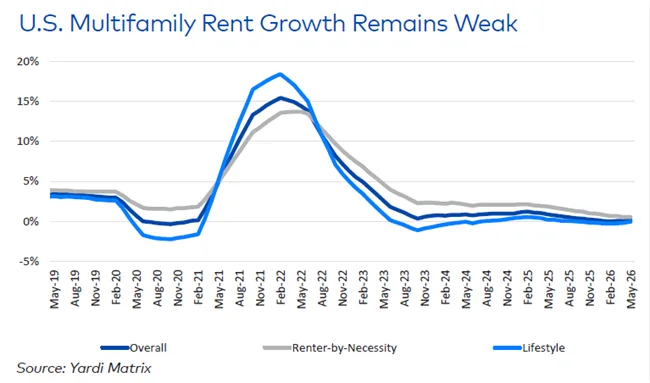
Multifamily advertised rents increased modestly in the first half of the year, “but if the post-pandemic pattern is a guide, full-year growth is likely to be limited. Demand is positive, but with a ceiling from slowing population growth and cautious consumer sentiment.
“The direction of rents continues to be market-specific, with gains concentrated in undersupplied gateway markets and low-cost Midwest markets, while high-supply markets are still struggling to fill recent deliveries despite relatively strong demand.”
Multifamily starts are dropping
Yardi Matrix says declining starts “provide hope that the glut caused by rapid deliveries in recent years will soon turn around and give property owners some pricing power.” Including categories such as affordable housing, student housing and single-family build-to-rent (SF-BTR) projects, Matrix is forecasting roughly 450,000 rental units will be delivered in each of the next two years.
The economy is pulling in opposite directions
The U.S. economy is “being pulled in different directions by global events and rapid changes in technology. Inflation is eroding consumer purchasing power and keeping interest rates from falling. AI spending is boosting productivity but could weaken job growth. The net effect on multifamily is that demand should be positive but limited in the near term,” the report says.
Workforce growth is limited
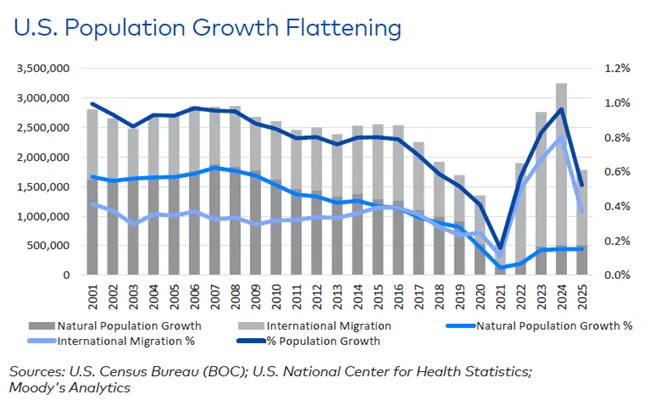
The withering birth rate and immigration policy that discourages new workers have reduced the potential growth in the workforce. A paper published in April by Federal Reserve economists Seth Murray and Ivan Vidangos noted the average U.S. population growth going back to 1960 was 1.3% per year, but that could drop to 0.2% in 2026.
So, with the uncertainty in the economy as well, it is likely that the push and pull of opposite forces will continue to produce moderate growth.
Overall: Regional differences and the look at mid-year
Multifamily rent growth was soft through the first half of the year, reflecting elevated supply and weakening economic conditions.
“We expect demand to remain relatively flat through the remainder of 2026, as elevated supply continues to constrain rent growth despite these underlying supports. Rent growth remains highly regional,” Yardi Matrix says in the report.