
National single-family rents declined 1.6% year over year during the first half of 2026, marking the first sustained national slowdown since the post-pandemic rental boom, according to a mid-year report from rentometer.com
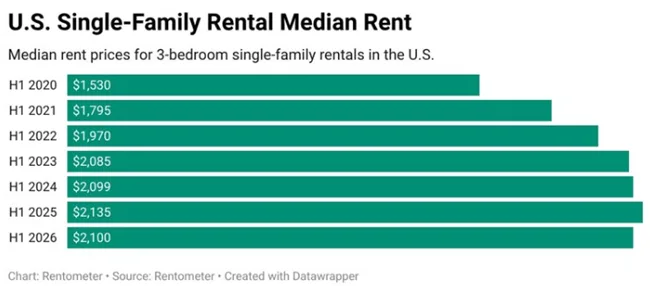
The report focuses on median rents for 3-bedroom single-family homes in 1,099 cities nationwide. Single-family home rentals house 41% of the U.S. renter population, and three-bedroom single-family homes are a preferred option for many families and investors.
The data set includes over 10 million new rental records annually, based on advertised asking rents, which serve as the foundation for the market reports.
The U.S. single-family rental market continued to cool during the first half of 2026, with the national median rent reaching $2,100, down 1.6% year-over-year. The decline represents a notable reversal from the 1.7% increase recorded during the first half of 2025.
“While annual figures suggest only modest movement, they conceal a more significant turning point that occurred over the past year. Rents increased by approximately 1.7% during the first half of 2025 but began declining during the second half of the year, effectively erasing those gains by year-end. That softer pricing environment has carried into 2026.
“Another notable feature of the first half of the year was the absence of the typical seasonal lift. The national median rent remained unchanged at $2,100 in both the first and second quarters, even as the market moved through its traditional peak leasing season. Historically, rents tend to increase during the spring and early summer months as demand picks up. The lack of any seasonal increase suggests pricing momentum remained weak even during some of the year’s busiest leasing months,” the report says.
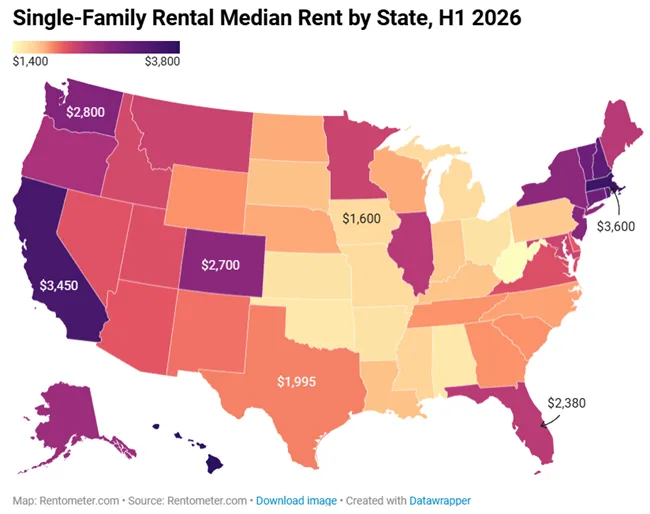
Highlights of the report
- Growing rental supply continued to pressure pricing, as elevated apartment deliveries, build-to-rent communities, concessions, and “accidental landlords” increased competition across many markets.
- Nearly half (49%) of the 1,099 markets analyzed recorded annual rent declines, with larger cities proving the weakest-performing segment.
- Regional performance diverged sharply. Many Sun Belt markets continued to cool, while technology-driven Bay Area markets such as San Francisco and San Jose recorded some of the strongest rent growth among large U.S. cities.
- The most expensive and affordable rental markets remained concentrated at opposite ends of the country, with California dominating the highest-priced markets and the Midwest and parts of the South remaining the nation’s most affordable.
Rental Supply, Concessions, and Market Competition
The decline in single-family rents has occurred against a backdrop of rising vacancy rates and increasing rental supply across the broader U.S. rental market.
According to the U.S. Census Bureau, the overall rental vacancy rate reached 7.3% in the first quarter of 2026, the highest level since the third quarter of 2017.
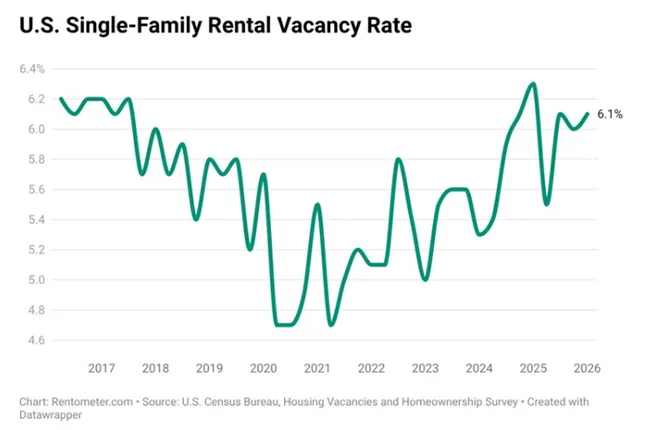
While this measure includes all rental housing types, it reflects a market where renters have significantly more options than they did during the post-pandemic supply crunch.