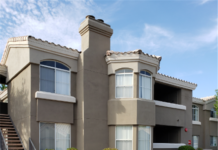


A Portland non-profit landlord that manages more than 1,000 low-income apartments in the metro region area says chronic crime and non-paying tenants could force it to cease operations in as little as six months without a financial lifeline from the city, the Oregonian is reporting.
Innovative Housing Inc. said chronic crime inside and outside its Portland buildings, coupled with fewer tenants paying rent while more struggle with behavioral health and addiction challenges, had placed it on a collision course with insolvency.
In a letter to Mayor Keith Wilson and city councilors last month, the affordable housing landlord implored the elected leaders to provide dollars from the $8.8 million recently set aside to help low-income property operators pay down debts. Otherwise, the non-profit said it might have to start selling buildings.
Also, recent pleas by Innovative Housing helped spur Wilson to send a memo to the City Council on that called for a crackdown on drug dealers at and near low-income apartments as well as a wholesale review of affordable housing policies.
In the memo to councilors, Wilson called on the 12-member legislative body to roll back tenant protections under Portland’s Fair Access in Renting, or FAIR, ordinances in order to allow property managers to screen for renters with “a history of violence, arson, criminal sexual acts and narcotics distribution.”
Landlord groups claim many owners of small rental properties have sold and left Portland because the city is too heavily regulated by the FAIR ordinances, which went into effect in 2020. The ordinances established new restrictions on advertising vacant rentals, background checks and income requirements. For instance, if a landlord plans to advertise a unit for rent, they must publish notices of the rental’s availability at least 72 hours before they start accepting applications.
Wilson also called for streamlined evictions and barring of problem tenants “who engage in trafficking humans or narcotics,” trespass in low-income units, vandalize properties or those who don’t pay rent and refuse “engagement.”
The Portland City Council in April approved those bailout funds as part of a $56 million allocation of previously unbudgeted Portland Housing Bureau dollars.
“Over the last three years our downtown and central city properties have faced unprecedented operating cost increases, extreme security needs and low rent collection due to physical and economic vacancy,” wrote executive director Sarah Stevenson, according to a copy of the May 27 letter obtained by The Oregonian/OregonLive.
“We need these funds now to keep our doors open,” Stevenson said. She said Innovative Housing had six months to a year’s worth of cash reserves, resulting in a “financial crisis” for the nonprofit founded in 1984. Most of its units are concentrated in Portland.
Innovative Housing has spent more than $1.3 million on private security since 2023, according to the letter. It spent more than $300,000 to board up windows and doors, replace broken windows and complete other repairs from 2022 to 2026. And it went through three property management firms in the two-year period from 2022 to 2024.
“The situation was particularly dire for our 255 units in Old Town and downtown, where one building was taken over by a fentanyl dealing gang and another fell victim to squatters who broke in and kicked in the doors of every vacant unit over and over until we boarded up half the building,” Stevenson wrote.
money doesn’t come through, she said her organization is looking at selling some buildings to generate more immediate cash flow.
She said that although nonprofit officials would prefer not to sell – the units under consideration don’t have formal affordability restrictions but are kept low-income and inexpensive by dint of Innovative Housing’s ownership — they may have to as the organization bleeds red ink.
“It’s a business decision,” Stevenson said, noting that selling runs counter to her group’s mission. “At this point, we have no options.”
And ultimately, she said, “if we fail, we have more than 1,000 units in the metro region that would not have an operator.”