
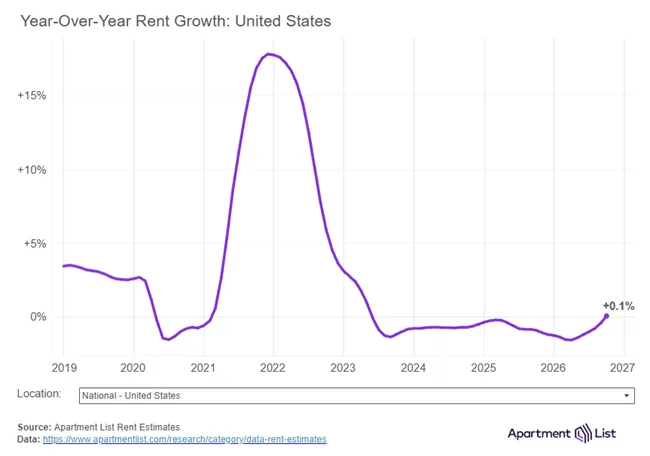
Year-over-year rent growth in the U.S. flipped positive in October for the first time since mid-2023, Apartment List reported in November.
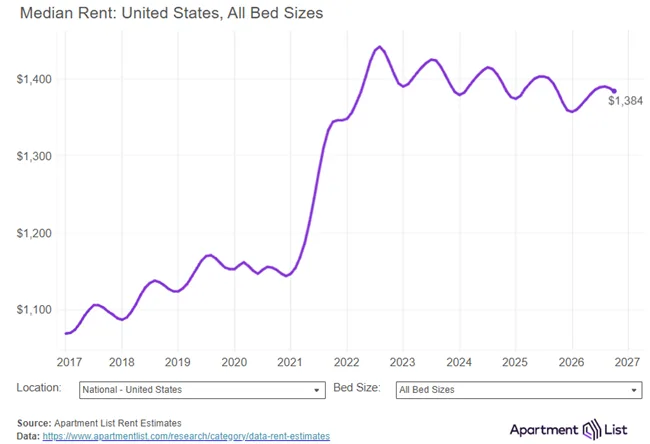
The national median rent currently stands at $1,384, and is now 0.1% greater than it was at this time last year. The vacancy rate is also gradually tightening, as the market transitions out of the soft conditions that have prevailed in recent years.
“That said, our newest market indicator tracking the concession rate, continues to show signs of softness,” Apartment List economists and researchers Chris Salviati and Rob Warnock write in the report.
Positive Move For Rent Growth
“For years, the U.S. rental market has been experiencing a prolonged period of sluggishness, as a large wave of multifamily construction had been driving soft pricing and occupancy. However, we’re now at the tail end of that construction boom, and the market has been gradually moving toward more balanced conditions. This month’s data marks a significant milestone in that transition, as year-over-year rent growth flipped positive for the first time in over three years,” the researchers write.
Key Stats From Rent Growth Report
- Month-Over-Month Rent Growth: Rents decreased 0.3% in October 2026 as the rental market enters its off-season; this marks the second consecutive monthly decline.
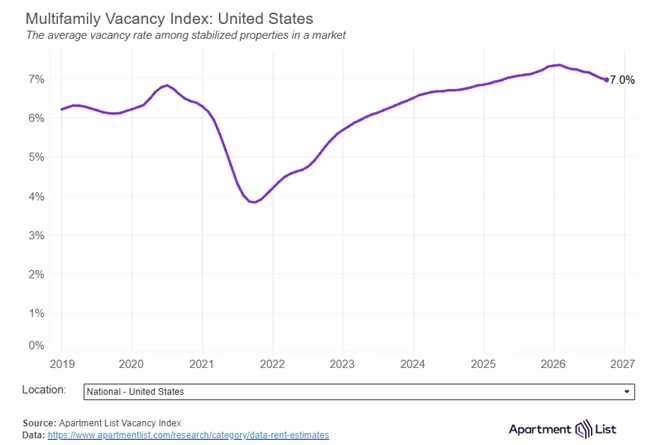
- Vacancy Rate: The national multifamily vacancy rate sits at 7% as of October 2026, remaining elevated compared to long-run norms, but continuing to decline after peaking earlier this year.
- Time on Market: Units are taking an average of 36 days to get leased after being listed, a bit longer than is typical for this time of year.
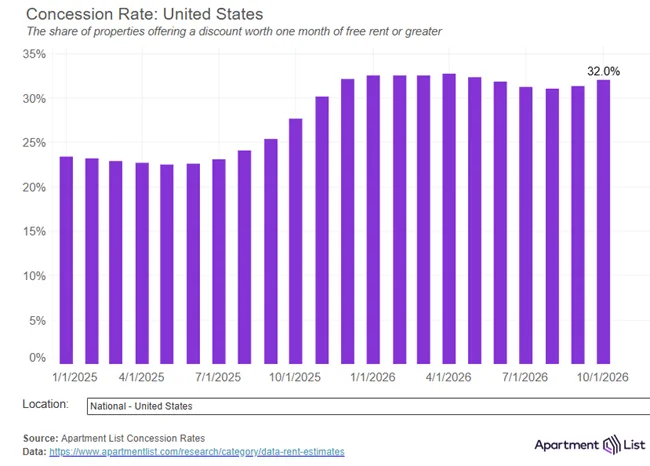
- Concessions Rate: 32% of multifamily properties nationally are offering concessions on new leases valued at one month of free rent or greater in October. The concessions rate remains four percentage points higher than at this time last year.
New Rent Concessions Indicator
The Apartment List Economics Team is “adding a new dataset to our suite of market indicators: concession rates. Properties that are struggling with occupancy often employ concessions as a strategy for securing new leases. Concessions can take many forms, including discounted rents, cash back offers, gift cards, or free amenities. Such concessions are not factored into our rent estimates, and so tracking them separately provides additional nuance on market conditions. Our published concession rate represents the share of properties offering any discount whose total value is equal to one free month of rent or greater.”
Multifamily Vacancy Rate Continues Decline Down To 7%
The vacancy rate remains elevated above its long-run average, but it has now moved past its peak and is slowly returning to levels more in line with balanced market conditions.
“That said, we expect that it will still be some time before the vacancy rate falls back to its 2017 to 2019 average of 6.4 percent,” the economists write.
List-to-Lease Time Remains Elevated At 34 days
As more vacant units have come onto the market, those units have also been sitting vacant for longer. Our time on market index – also referred to as “list-to-lease” time – tells us the typical number of days between when a unit is first listed on our platform and when it is eventually leased.
This month’s reading is the longest that we’ve seen in any October going back to 2019 when tracking began.
Units leased in October had been sitting on the market for an average of 36 days, up two days compared to last month and somewhat elevated for this time of year.
Multifamily Conditions Remain Cool Overall Even As They Start To Thaw
The research team concludes that, “elevated concession rate and extended list-to-lease times offer reminders that multifamily conditions remain cool overall, even as they thaw. As we look ahead, weak consumer sentiment and stubborn inflation concerns could present downside risks to household formation.
All-in-all, it appears that the rental market is poised for continued strengthening in pricing and occupancy. Barring any sudden shift in conditions, 2026 will be the first year since 2022 with positive full-year rent growth, and that trajectory is likely to continue into 2027.
How Fraud Tactics, Verification And Tenant Applicant Behavior Has Shifted