

Resident experience is key according to a new report from property technology company AppFolio which has released its annual Renter Preferences Report, which surveyed over 3,000 renters across the U.S.
The report shows the top trends defining today’s rental landscape and the services property managers must prioritize to stay competitive, including:
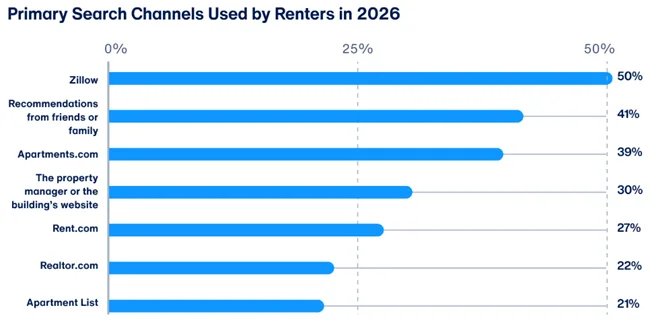
- Online reputations: In the digital age, online presence and reputation are more important than ever, with the majority of renters stating that a property manager’s online reputation is a vital factor in their decision-making process.
- Improving quality of life: Modern property management now directly influences a renter’s quality of life. Residents using integrated financial services and move-in tools score 14% higher for life satisfaction than non-users.
- The Move-in moment matters most: Most renters consider bundled services a vital factor when evaluating a new home, but only one-third currently have access to them, representing a massive advantage for operators who can close this gap.
The report says the modern renter’s definition of a home has expanded, and simply providing a roof is no longer enough to meet their expectations.
To remain competitive and profitable, property management companies must evolve their strategies to prioritize the resident experience as the primary engine for growth. By delivering standout service and high-value resident services throughout the rental journey, operators can drive long-term satisfaction that leads to high occupancy, retention, and diversified revenue streams beyond traditional rent collection.
The landscape of early 2026 presents a tug-of-war for many operators. Although financing pressure has eased, sticky operational costs — from insurance to maintenance — continue to compress margins. At the same time, a surge in new supply has handed the leverage back to the resident. National vacancy rates have hit a modern peak of 7.3%, driven largely by high-density construction in regions like the Sunbelt.
In this environment, property managers need to go beyond simply managing assets; they must optimize them by focusing on “resident impact.” Our research proves that when residents are supported with the right tools and services, they don’t just stay longer — they become partners in the success of the property.
This report explores how to master the “move-in moment,” close the gap between resident demand and service availability, and create a virtuous cycle where resident well-being and business success fuel one another.
Key Takeaways On The Resident Preferences And Experience Report
- Resident Services as a Competitive Differentiator and Additional Value Driver There is a significant first-mover advantage for operators that offer services including Resident Benefits Packages (RBPs), a customizable suite of paid services offered by the property management company to the resident, usually at lease signing.
- While 78% of renters consider these services a vital factor when evaluating a new home, only one-third of residents currently have access to them. This 45-point gap represents a massive opportunity to stand out and deliver on the needs of renters.
- Furthermore, nearly 80% of residents are willing to pay for these services, likely due to the immediate cost savings and convenience they provide, compared to sourcing them independently. By offering these services through a transparent, digital move-in process, operators transform a traditional lease into a value-driven relationship that benefits both the resident’s well-being and the property’s performance.
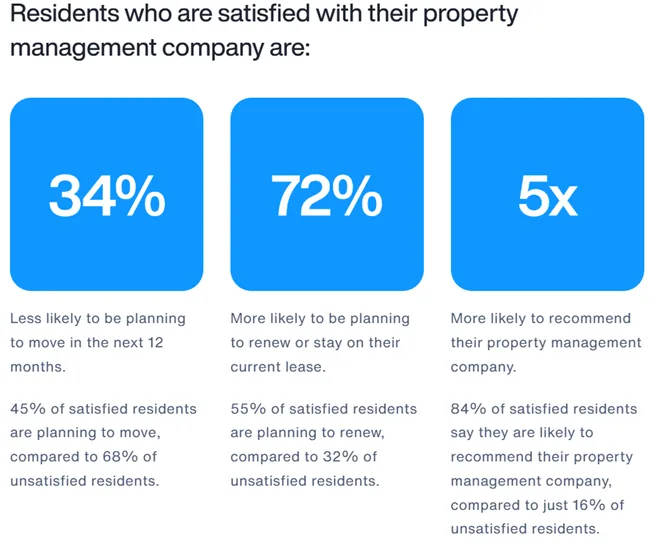
- The Criticality of Retention in a Competitive Market In 2026, resident satisfaction has evolved from a soft metric into a primary strategy. With a higher rate of renters planning to move (39% this year compared to 35% in 2025), national vacancy rates hitting modern peaks, and rent growth remaining subdued, property managers must prioritize retention to protect NOI.
- The Rise of Resident Impact Beyond simply providing a roof, modern property management now influences resident impact — the intersection of a renter’s financial health and quality of life. Data shows that users of resident services report higher overall life satisfaction and financial well-being than nonusers. By providing convenient home services and financial empowerment tools — from credit-building resources to bundled utilities — property managers offer the support residents need to simplify their daily lives and build a stronger financial future, naturally resulting in a more stable, satisfied community that chooses to stay longer.
- Capitalizing on the Move-In Moment As a high-engagement period, the move-in window is the most effective time to provide residents with the essential services, support, and convenience they need to settle in. What’s more, a transparent, digital onboarding process replaces the friction of traditional phone tag with a clear, stress-free path to their new home — creating a foundation of trust that delivers immediate convenience for the resident and drives long-term portfolio stability for your business.
To maximize retention in 2026, property managers must combine the high touch of personalized maintenance and communication with the high tech of portals, AI, and integrated resident services. These aren’t just amenities; they are the foundation of a stable, high-performing business.