CoStar and Apartments.com have released the latest update on U.S. multifamily vacancy trends, showing improving market conditions as apartment demand continues to absorb the recent wave of new supply.
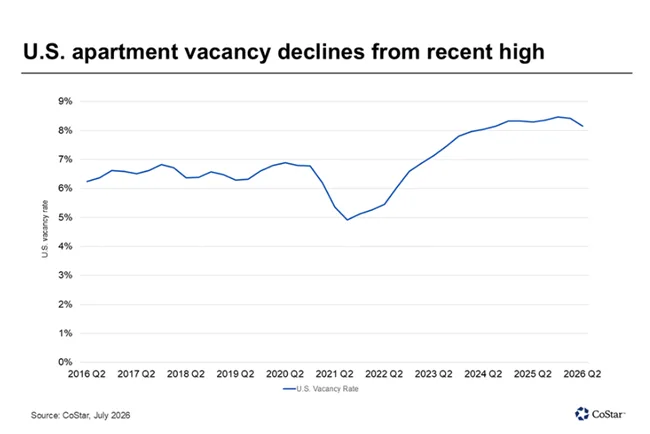
The national apartment vacancy rate declined to 8.2% in the second quarter of 2026, down 26 basis points from the prior quarter and 14 basis points from one year earlier. The improvement reflects stronger renter demand and a moderation in apartment deliveries as the industry’s construction pipeline continues to shrink.
U.S. apartment absorption totaled approximately 164,000 units during the second quarter, a 13% increase from one year ago. At the same time, apartment deliveries fell to roughly 118,000 units, down 22% year over year. As a result, demand exceeded new supply by more than 45,000 units during the quarter.
“Apartment market conditions continued to improve during the second quarter as renter demand remained healthy while new supply pressures eased,” said Grant Montgomery, national director of U.S. multifamily analytics at CoStar Group. “Although operating conditions vary across markets, the national supply-demand balance has become increasingly favorable over the past year.”
The improvement comes as apartment construction activity continues to contract nationally. Annual apartment deliveries have begun to moderate from recent highs and are expected to continue trending lower as fewer projects remain under construction.
Regional performance remained uneven during the second quarter. The Northeast and Pacific regions reported the lowest vacancy rates at 5.1% and 5.7%, respectively, while vacancy rates remained highest in the South (at 10.8%) and Mountain region (at 10.2%). Despite those differences, vacancy rates generally stabilized or improved across many markets as new supply pressures eased.
Market conditions remain uneven across the country, though several high-supply markets have begun to show improvement as construction activity slows. Austin’s vacancy rate declined to 12.3% in the second quarter, nearly 300 basis points below year-ago levels as new deliveries fell sharply. Raleigh also posted a notable improvement, with vacancy declining more than 240 basis points year over year to 9.0% as supply pressures eased.
Tide May Be Turning As Rents Increase Again In July For Sixth Month