
A near-record number of homeowners are becoming rental property owners as accidental landlords rise when they turn their unsold properties into rentals, according to Zillow.
Properties owned by these accidental landlords account for more of the listed rental stock than at any time since 2022 — and the trend may not have peaked yet.
- 2.3% of homes listed for rent on Zillow were recently listed for sale, according to a new Zillow analysis. Only once in Zillow’s nearly six-year record has the share of “accidental landlords” been higher nationwide.
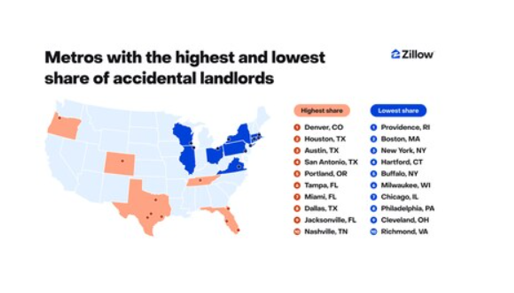
- Texas and Florida markets, along with Denver, Portland and Nashville, have the largest share of these accidental-landlord properties.
- Would-be sellers resorting to renting instead of accepting a serious price cut indicates these homeowners don’t need to liquidate distressed properties.
“Sellers are facing a different reality than they did a few years ago,” said Kara Ng, senior economist at Zillow. “Bargaining power is tilting toward buyers and homes are taking longer to sell, making renting out a property one way to buy time rather than compete aggressively on price.”
An accidental landlord is a property owner who becomes a landlord unintentionally, often by inheriting a home, moving for work without selling their previous house, or due to a slow housing market. Unlike intentional investors, they typically rent out of necessity rather than a planned business strategy
Because Zillow is a destination for both for-sale and rental listings, the platform offers a view into how unsold homes are increasingly reentering the market as rentals.
Detached single-family homes are the most common property type owned by an accidental landlord — 3.4% of single-family homes listed for rent on Zillow are owned by accidental landlords. That’s compared to 2.2% for townhomes and 1.1% for condos.
The rise of would-be sellers turning into accidental landlords rather than selling for a loss — or at least a lower price than they are willing to accept — is a good indication that homeowners aren’t selling out of necessity or because they are at risk of foreclosure.
Oregon Tenant Confidentiality Bill Goes To Governor For Signature