
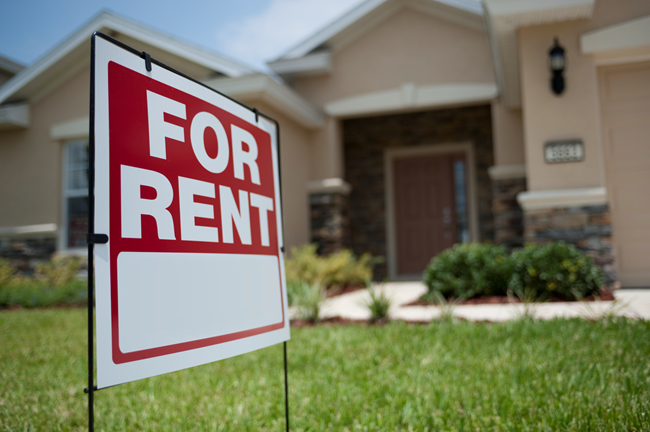
Many homeowners who cannot sell are becoming accidental landlords in areas dominated by institutional investors, according to Parcl Labs, a real estate research company.
The New York Times reports the accidental- landlord trend is accelerating, the researchers found, particularly in markets where large institutional investors — businesses that own more than 1,000 single-family homes — hold a substantial chunk of available properties.
“Since the end of the pandemic, those large investors have flocked to the states lining the bottom of the United States from coast to coast, chasing job and population growth,” the Times writes. “But surging inventory and a declining number of buyers have given rise to a competitive crop of former sellers who are now ‘accidental landlords’.”
Most are individual owners competing with those large institutional investors in the rental market. Six Sun Belt markets — Houston, Dallas, Phoenix, Tampa, Atlanta and Charlotte, N.C. — contain 37 percent of large institutional real estate nationwide, according to Parcl Labs.
Highlights of the Parcl Labs report:
- Parcl Labs’ data reveals increasing numbers of failed home-sellers shifting into rentals and becoming accidental landlords is up year-over-year in five of six institutional markets, led by Houston (+41.4%) and Dallas (+32.3%).
- Institutional markets face weakening fundamentals. Surging inventory and declining buyer activity have intensified supply-demand imbalances, led by Charlotte (38.2% YoY inventory growth), Dallas (37.7%), and Atlanta (34.1%).
- Institutions are responding by reducing exposure and capitalizing on home appreciation gains. Over the past year, large institutions became net sellers nationwide, with 76.7% of their net selling concentrated in those six core markets, led by Atlanta, Dallas, and Houston.
The trend of accidental landlords is one of several signs that the real estate market is becoming increasingly unfriendly to sellers. De-listings increased by 57 percent in July compared with last year, according to an August Realtor.com report, which called 2025 “the least seller-friendly summer since Realtor.com began tracking data in 2016.”