
National rents held steady in July as the vacancy rate hit a new peak, according to the August report from Apartment List. Rents grew month-over-month early in the year, but have now been flat during the peak moving season.
“After increasing by 0.6 in March, our national rent index has seen its growth rate trending down over the past four months, at odds with the typical seasonal trend,” the Apartment List Research Team writes in the report.
“The late spring and summer months are normally the peak season for moving activity, and rent growth tends to ramp up at this time of year in tandem with demand. The fact that we’ve instead seen rent growth get increasingly sluggish indicates softness in the market, possibly reflecting declining consumer confidence amid a more uncertain macroeconomic outlook,” the report says.
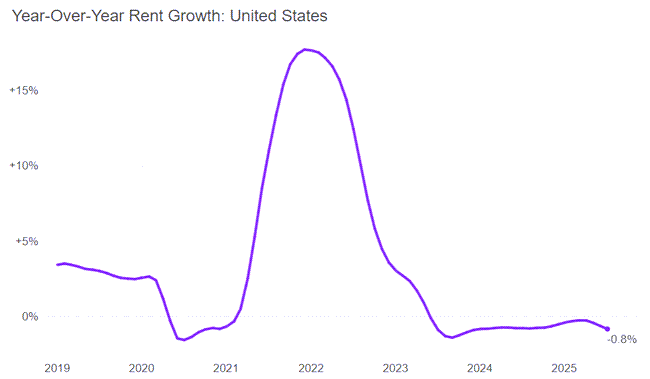
In dollar terms, the national median monthly rent now stands at $1,402, down $11 compared to July 2024. With the overall trajectory of rents trending modestly downward in recent years, the national median rent has now fallen below its August 2022 peak by a total of 2.8 percent, or $40 per month.
But that cooldown came following a period of record-setting rent growth, and the typical rent price remains 22 percent higher than its January 2021 level.
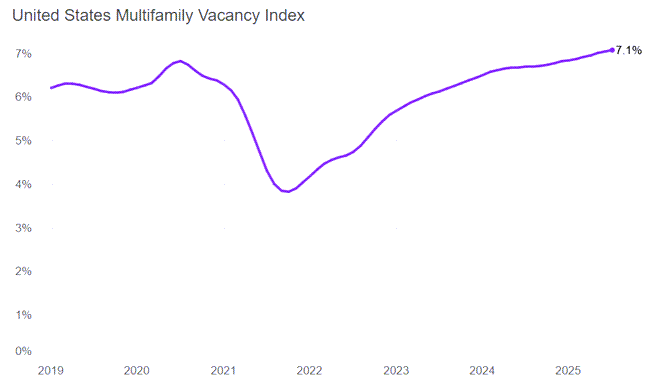
Multifamily vacancy rate hits 7.1%, a new peak
“Our national vacancy index – which measures the average vacancy rate of stabilized properties in our marketplace – ticked up this month and now stands at 7.1 percent.
“This represents an all-time high for this data series, which goes back to the start of 2017. We are now past the peak of the apartment construction wave, but even as the level of new supply hitting the market falls sharply compared to last year, it remains robust by historic standards. The vacancy rate will begin to tighten eventually, but for now it continues to rise as the market is still absorbing a swell of new units,” the report says.
List-to-Lease time ticks up for first time this year
July saw time on market tick up from the first time this year, increasing from 27 days in June to 28 days in July.
As more vacant units have come onto the market, those units have also been sitting vacant for somewhat longer.
Report Summary
The research team writes, “All of our key indicators are pointing toward ongoing sluggishness in the multifamily rental market – rent growth is slipping and the vacancy rate is at an all-time high. The outlook has been complicated by macroeconomic whiplash being caused by tariffs and other policies being pursued by the Trump administration.
“That uncertainty appears to have modestly dampened demand during this moving season. And although the supply wave is receding, the number of units that hit the market in the first half of this year was still above the long-run average. With construction expected to slow further in the second half of this year and into 2026, conditions are likely to shift.”
Read the full report here.